














The NRTK “Courier” (Kuryer) has officially shed its reputation as a simple utility vehicle. In a series of frontline reports surfacing this week, the Russian Armed Forces have debuted their most aggressive configuration yet: an NRTK Courier chassis equipped with a North Korean Type 75 Multiple Launch Rocket System (MLRS).

This integration represents a significant leap in “sim-lite” robotic warfare, transforming a 250kg transport drone into a remote-controlled rocket battery capable of area saturation without risking a single human life.

The Hardware: North Korean Firepower Meets Russian Robotics
The Type 75 is North Korea’s iterative take on the classic Chinese Type 63. While the standard towed version typically features 12 launch tubes, the drone-mounted variant has been modified to an eight-tube configuration.

This weight reduction is a tactical necessity, ensuring the Courier maintains its 35 km/h top speed and 10km operational range while carrying a live payload.
- Caliber: 107mm
- Effective Range: Approximately 8.5 kilometers
- Ammunition: High-explosive fragmentation (RSZO-107-OF) and specialized cluster munitions.
- Rate of Fire: Capable of ripple-firing all 8 rockets in under 15 seconds.
A Universal Carrier: The Courier’s Modular Identity
The “Courier” has long been documented as a “universal carrier,” but 2026 has seen its modularity go into overdrive. Russian Telegram channels, including the defense-focused milinfolive, have tracked the platform’s evolution from a simple supply runner to a multi-role combatant.
| Configuration | Tactical Role | Primary Armament |
| “Small Solntsepek” | Thermobaric Breaching | RPO-A Shmel Flamethrowers |
| Bagulnik-82 | Indirect Fire Support | 82mm Automatic Mortar |
| Type 75 Courier | Area Saturation | 107mm Rocket Artillery |
| Logistics/EW | Support & Protection | Cargo Pods / Jamming Suites |

Philly PI Analysis: The “Expendable Battery” Strategy
What makes the Type 75 Courier particularly dangerous isn’t just the rockets; it’s the signature. Unlike a traditional truck-mounted MLRS, which is easily spotted by counter-battery radar and aerial surveillance, a 58cm tall tracked drone can maneuver through tree lines and “gray zones” with minimal thermal or acoustic detection.

Wanted: Suspect for Homicide in the 15th District [VIDEO]
PHILADELPHIA — The Philadelphia Police Department is asking for the public's assistance…

Rep. Perry Unveils Major Sunshine Protection Act Update in Crucial House Address
As lawmakers on Capitol Hill navigate the legislative priorities of the summer…
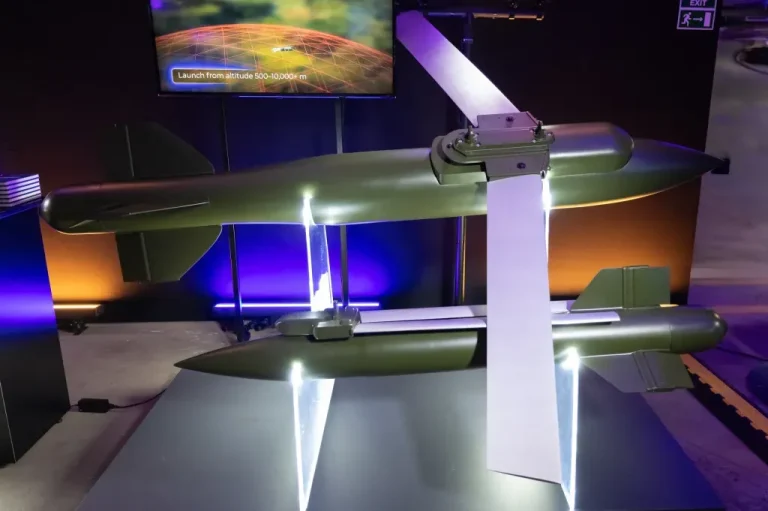
The first Ukrainian: the "Virivnyuvach" guided aerial bomb
The "Virivnyuvach" bomb at a recent exhibition. Photo by The War ZoneOver…

Dr. Joyce Demands Crucial Solutions to Overhaul Modernizing Drinking Water Fund
As communities across the United States grapple with aging municipal infrastructure and…

Ultimate Phantom Blade Zero Weapon Tier List: Complete Rankings & Best S-Tier Primary Blades
If you have spent hours swapping blades only to still feel underpowered…

Rep. Meuser on National Report
As Capitol Hill navigates a dense legislative calendar and mounting economic pressures,…
By the time the rockets are launched, the drone—often considered operationally expendable—can either retreat or be abandoned, leaving the enemy to strike an empty launch point. It’s a hardware-focused solution to the high-attrition environment of modern trench warfare.