














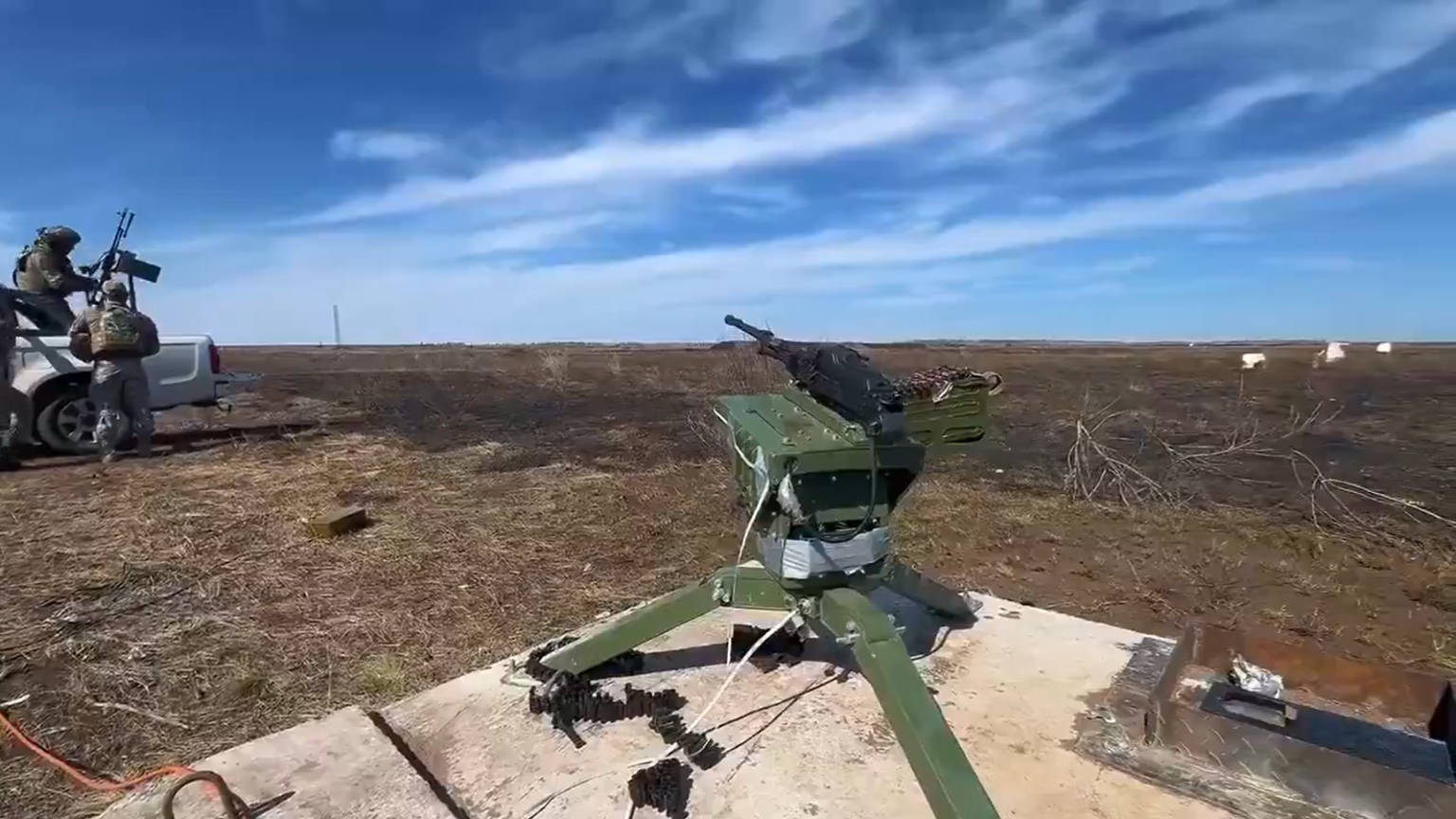
The “shadow war” of autonomous weaponry just got a lot more visible. Viral footage circulating on social media has revealed a new Russian AI-powered machine gun turret reportedly being deployed to high-risk sectors of the front.
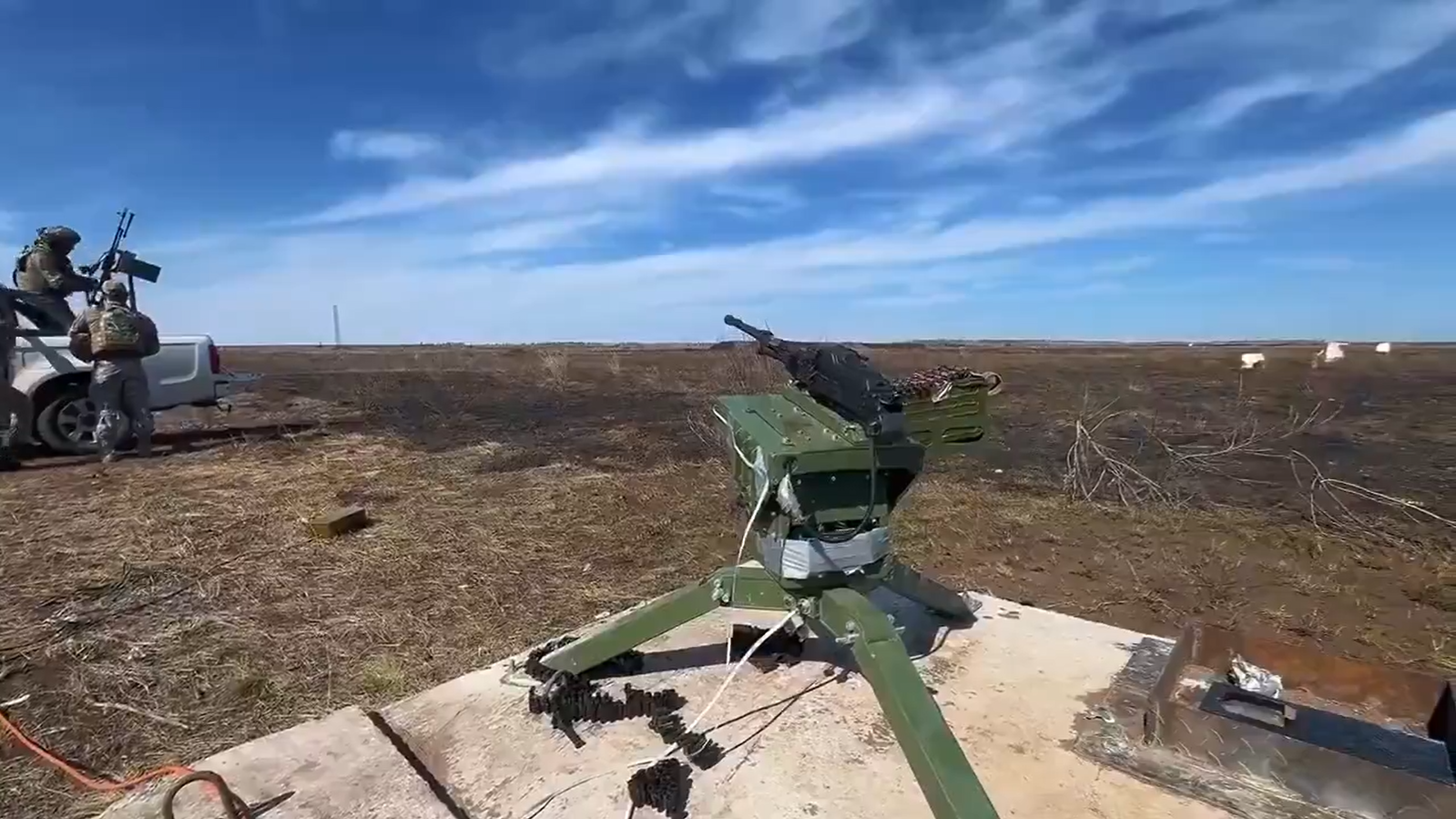
While the West has focused on FPV drones and Starlink-guided systems, this latest Russian development—often referred to by military bloggers as the “Red Sentry” or part of the Rubikon autonomous initiative—represents a shift toward ground-based “set and forget” lethality.
The Tech: Search, Track, Destroy
The system shown in the latest footage is a gyro-stabilized platform armed with a standard 7.62mm PKT machine gun. However, it’s the “brain” behind the trigger that has analysts talking.
According to technical breakdowns of the unit:
- Computer Vision: The turret uses an onboard AI model trained on thousands of hours of combat footage to distinguish between human silhouettes, drones, and local wildlife.
- Electronic Warfare Resistance: Unlike remote-controlled UGVs, these turrets can function in “Autonomous Mode,” meaning they don’t require a constant radio link that can be jammed by Ukrainian EW.
- Ballistic Integration: The system calculates windage and elevation in real-time, allowing it to “delete” targets at ranges of up to 800 meters with higher precision than a human gunner.
The “Robot War” Escalation
Russia isn’t alone in this race. Just last month, the Ukrainian-made Sky Sentinel turret made headlines for autonomously downing four Shahed-class drones. However, the Russian version appears optimized for anti-infantry roles, designed to be dropped in “grey zones” or near trench lines to suppress movement without risking a single Russian soldier.
Critics of the technology point to the “Invasion of the Body Snatchers” effect—a term recently popularized by filmmaker Roger Avary—where the battlefield looks the same, but the human element is being “hollowed out” and replaced by cold, algorithmic logic.

Dr. Joyce Demands Immediate Action on Crucial Data BRIDGE Act in House Markup
WASHINGTON — In a recent high-stakes legislative session, members of the House…

Conflict Hits 6 Months: Iran Says Diplomacy Can Return But "Pressure Doesn't Work"
In what will likely prove to be a very limited and ultimately…

China-linked Amaranth-Dragon hackers target Southeast Asian governments in 2025
China-linked hackers tracked as Amaranth-Dragon targeted government and law enforcement agencies across…

The Colorado River Is Drying Up and the West Is Running Out of Easy Choices
Flow in the Colorado River has shrunk by about 20% since 2000,…
Massive Rebuilding Effort Unveils Critical Progress 14 Years After Hurricane Sandy
PHILADELPHIA — Fourteen years after Superstorm Sandy carved a path of unprecedented…

Turkey Recruits Trump Insiders For New Washington Lobbying Push
Via Middle East Eye The Turkish government hired a lobbying firm with close ties…
The Tactical Reality
The deployment of these turrets is a response to the massive manpower shortages defining the 2026 conflict. By using a “ghost squadron” of automated guns, Russia can effectively hold a line of defense with a fraction of the personnel.
“We are seeing the birth of the ‘Lethal Perimeter,'” one defense analyst noted. “If you can’t see the operator, you can’t kill the operator. You’re just fighting a machine that doesn’t get tired and doesn’t get scared.”