







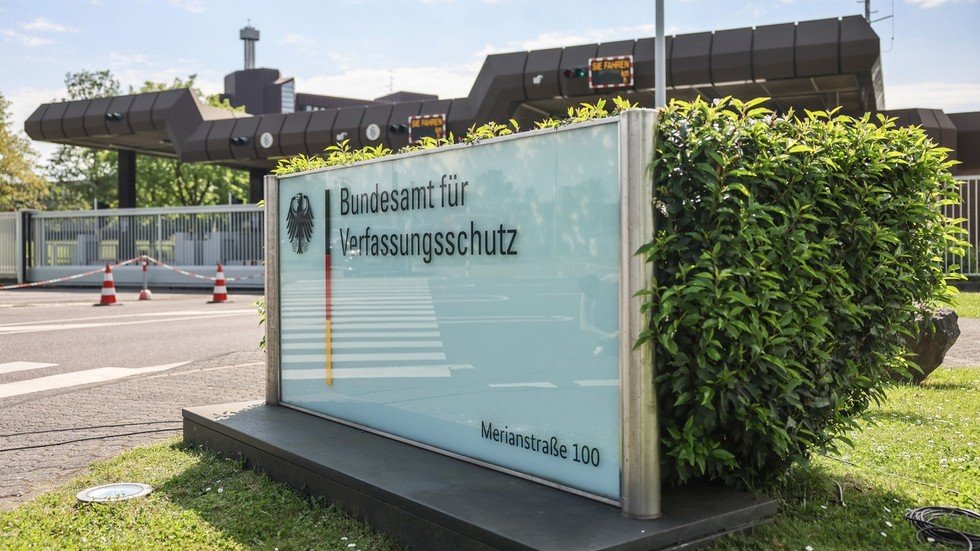
The government is seeking broad new powers for the BfV to conduct active operations on home soil
A sweeping overhaul of Germany’s intelligence services proposed by the government could infringe on police powers in violation of constitutional safeguards, opposition politicians have warned.
On Wednesday, Interior Minister Alexander Dobrindt presented a 730-page package comprising three draft laws that would significantly expand the powers of the Federal Intelligence Service (BND) and the Federal Office for the Protection of the Constitution (BfV), Germany’s foreign and domestic intelligence agencies respectively.
While there is broad political agreement that Germany’s security apparatus requires modernization, critics say the proposed expansion of the BfV’s mandate goes too far. Germany has traditionally maintained a strict separation between intelligence gathering and police work to prevent concentration of power.

Did Sam Houser Confirm GTA 6 Bans for Antisemitic Content? Fact-Checking the Rumors
As anticipation builds for Grand Theft Auto VI, online discussion surrounding the…

Was Gloria Steinem a CIA agent working to overthrow the family?
Top feminist Gloria Steinem who died this week at age 92 may…

The Iran War Has Turned VLCCs Into $650,000-A-Day Assets
Authored by Julianne Geiger via OilPrice.com, More Gulf oil is moving again.…

Cassandra Peterson: Life Beyond the Bouffant for the Queen of Halloween
For over four decades, Cassandra Peterson has reigned supreme as the ultimate…

From the Ashes of Empire to the Fire of the Bubble: How the War Economy Built Modern Japan
In August 1945, General Douglas MacArthur stepped off his aircraft at Atsugi…

European Commission probes cyberattack on mobile device management system
The European Commission is investigating a cyberattack after detecting signs that its…
“Dobrindt, with these demands that he hastily dictated into the draft legislation, is doing far more harm than good,” Free Democratic Party (FDP) leader Wolfgang Kubicki told the Frankfurter Allgemeine Zeitung.
The BfV is currently focused on collecting and analyzing data. Under the proposed reform, however, the agency would receive new “operative powers” allowing it to actively disrupt suspected threats. These could include hacking computer systems, feeding false information to targets, altering or deleting data, and secretly sabotaging equipment believed to be connected to hostile operations.
Dobrindt has argued that the proposed intelligence “revolution” is necessary to tackle an evolving “hybrid threat landscape.”
Critics contend that the proposed reform would fundamentally alter the relationship between the state and citizens, particularly because the BfV operates under a different system of legal oversight from ordinary law-enforcement bodies, which generally require judicial authorization for intrusive measures.
“Equipping a secretive security agency with such powers will predictably create more chaos and problems,” Kubicki said.
Green Party MP Konstantin von Notz likewise argued that the reform represents a fundamental departure from existing norms and would “end up before the Federal Constitutional Court.”
Gottfried Curio, the domestic-policy spokesman for the parliamentary group of the Alternative for Germany (AfD) party, denounced the proposal as a “deliberate attempt to blur the line” between intelligence gathering and policing. He also described it as an “arrogant self-empowerment” by the federal government that should be rejected.
The BfV has for years scrutinized the right-wing, anti-immigration AfD over suspected threats to Germany’s constitutional order, giving the agency expanded legal grounds to surveil its leaders. The AfD has rejected the allegations and accused the authorities of using the agency for politically motivated pressure.
Christian Wirth, another AfD lawmaker, warned last month that the proposed reform could transform the BfV “from an early warning system of democracy into an architect of a totalitarian reality.”
The AfD continues to post strong polling numbers despite other major German parties maintaining a policy of refusing to form governing coalitions with it.
Party co-leader Alice Weidel argued this week that the trend could eventually allow the AfD to form single-party governments in some federal states.
She pointed to recent polling in Saxony-Anhalt showing the party at 43% ahead of an election in early September, more than twice the share of the vote it received there in 2021.