







![Wanted: Suspects for Commercial Burglary in the 12th District [VIDEO]](https://thephillypi.com/wp-content/uploads/2026/09/Wanted-Suspects-for-Commercial-Burglary-in-the-12th-District-VIDEO-330x220.jpg)









Bill Adair, the Knight Professor of the Practice of Journalism and Public Policy at Duke University’s Sanford School of Public Policy, occupies a central yet heavily contested role in contemporary media criticism and political discourse. Best known as the founder of the website PolitiFact, Adair’s career spans traditional Washington reporting, academic media research at the Duke Reporters’ Lab, and frequent commentary on political rhetoric across major news networks.

While credited with pioneering the structured “fact-checking” industry in digital journalism, Adair’s methodologies, conclusions, and institutional posture have drawn sharp scrutiny across the political and academic spectrum—raising persistent questions regarding selection bias, subjectivism, and whether modern fact-checking functions as objective reporting or partisan advocacy.
Background & The Creation of PolitiFact
Adair spent over two decades as a reporter and editor for the Tampa Bay Times (formerly the St. Petersburg Times), serving as its Washington Bureau Chief. In 2007, he launched PolitiFact, introducing the signature “Truth-O-Meter” to assign cartoonish ratings to statements made by public figures. The organization was awarded the 2009 Pulitzer Prize for National Reporting.
  [Tampa Bay Times Washington Bureau Chief]
                     │
                     ▼
  [Launched PolitiFact & "Truth-O-Meter" (2007)]
                     │
                     ▼
   [Pulitzer Prize for National Reporting (2009)]
                     │
                     ▼
[Director, Duke Reporters' Lab & University Professor (2013–Present)]
In 2013, Adair joined Duke University to direct the Duke Reporters’ Lab, a research initiative that tracks global fact-checking outlets and develops automated tools designed to institutionalize verification workflows.

Beyond the Big Lie and Asymmetry Claims
In 2024, Adair published Beyond the Big Lie: The Epidemic of Political Lying, Why Republicans Do It More, and How It Could Burn Down Our Democracy. In the book, Adair explicitly abandoned any pretense of party neutrality, asserting that political dishonesty is inherently asymmetrical.

U.S. CISA adds SolarWinds Web Help Desk, Sangoma FreePBX, and GitLab flaws to its Known Exploited Vulnerabilities catalog
U.S. Cybersecurity and Infrastructure Security Agency (CISA) adds SolarWinds Web Help Desk,…


China’s First Bamboo Offshore Solar Platform Could Change How We Build for Energy at Sea
For centuries, people along China’s rivers and coasts lashed bamboo together and…
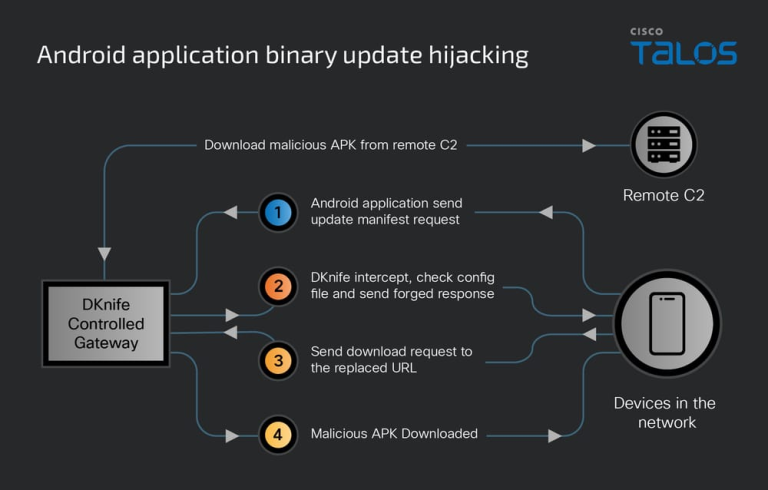
DKnife toolkit abuses routers to spy and deliver malware since 2019
DKnife is a Linux toolkit used since 2019 to hijack router traffic…

New Fluke USB Acoustic Imager Smartphone Camera
Fluke has launched a more affordable acoustic imaging camera, model II01, that…

Former Halo Creative Director Urges Activision to Hire former Halo Studios Staff
Halo Season 1 Rotten Tomatoes scores Former Halo franchise development director Frank…
Citing internal tallies and database records collected between 2016 and 2021, Adair claimed that Republican politicians received “False” or “Pants on Fire” ratings far more frequently than Democrats (55% versus 31%). He attributed this disparity to institutional incentives within conservative media, campaign strategies, and right-wing political culture.
Key Criticisms, Debates, and Skepticism
Adair’s work and the broader fact-checking framework he helped build face substantial criticism from political analysts, media scholars, and campaign strategists:
1. The Flaw of Selection Bias and “Counting the Uncountable”
The core methodological critique leveled against Adair and PolitiFact is the inherent impossibility of measuring “dishonesty” through selective sampling.
- Fact-checkers do not review a random, statistically valid sample of every word spoken by politicians.
- Critics note that by choosing which statements to fact-check—and deciding how to frame those queries—outlets like PolitiFact create a self-fulfilling dataset. A fact-checker who disproportionately chooses to audit aggressive claims by one party will naturally produce a tally that reflects their own editorial selection rather than an objective reality.
2. Conflating Policy Opinions with Factual Claims
Opponents argue that the “Truth-O-Meter” frequently applies binary labels (“True,” “Barely True,” “Pants on Fire”) to complex, subjective political debates. By assigning “truth ratings” to economic forecasts, intent, or nuanced policy interpretations, critics argue that Adair’s system obscures genuine policy disagreements under the guise of pseudo-scientific objectivity.
3. Admissions of Previews and Narrative Shifts
In a 2024 essay, Adair admitted that during a earlier C-SPAN appearance, he openly misdirected viewers by claiming PolitiFact “didn’t keep score” between political parties. Adair explained he did so to project impartiality and shield the organization from accusations of bias.
Media analysts on both the left and right noted that this admission highlighted a fundamental tension in Adair’s career: maintaining the stance of a neutral, objective referee while building a career on partisan tallies that inherently act as a scorekeeper.
4. Naïveté and Practical Limits of “Fact-Checking” Solutions
Even media critics sympathetic to Adair’s focus on misinformation have criticized his proposed remedies as out of touch. In reviews of Beyond the Big Lie, media commentators pointed out that proposals such as asking politicians to sign “anti-lying oaths” or expecting tech executives to issue “truthfulness badges” demonstrate a naive understanding of political power and media incentives.
Media & Academic Profile Overview
| Platform / Context | Associated Intersection | Key Dynamics / Controversies |
| National Media (NPR, The Atlantic) | Commentary on press ethics, political messaging, and misinformation. | Frequently cited as an authority, though critics argue his commentary reflects Beltway media consensus rather than neutral oversight. |
| Academic Research (Duke University) | Automated fact-checking tools, structured data, and newsroom technology. | Focuses on automating and scaling fact-checking models across regional newsrooms. |
| Public Sphere & Political Commentary | Author of Beyond the Big Lie (2024). | Central figure in debates over whether third-party “fact-checking” has become an ideological tool for enforcing political narratives. |