








![Wanted: Suspect for Assault in the 9th District [VIDEO]](https://thephillypi.com/wp-content/uploads/2026/09/Wanted-Suspect-for-Assault-in-the-9th-District-VIDEO-330x220.jpg)




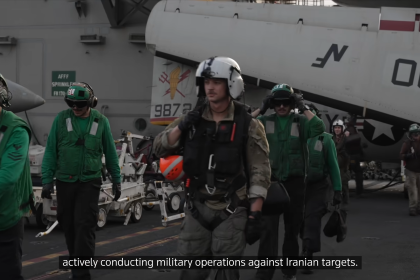
THE PERSIAN GULF — The U.S. Air Force faced its most challenging day of “Operation Epic Fury” on Friday as two manned combat aircraft were downed in separate incidents involving Iranian air defenses.
While the White House had previously claimed that Iran’s anti-aircraft capabilities were “annihilated,” today’s losses suggest that mobile or hidden “pockets” of air defense remain active and lethal.
The Warthog Down: A-10 Thunderbolt II
Reports confirmed that an A-10 Thunderbolt II, known for its ruggedness and “low and slow” close air support role, was struck by Iranian fire near the Strait of Hormuz.
- The Incident: After sustaining damage, the pilot managed to navigate the crippled “tank killer” toward Kuwaiti airspace before being forced to eject.
- The Outcome: U.S. Central Command (CENTCOM) has confirmed the pilot was safely rescued by a combat search-and-rescue (CSAR) team.
The F-15E Strike Eagle: First Loss Inside Iran
Earlier in the day, an F-15E Strike Eagle was shot down directly over Iranian territory—the first manned American fighter jet lost inside the country since the war began on February 28.
- Search & Rescue: One crew member has been successfully recovered by special operations forces. However, a massive search continues for the second crew member (the Weapons Systems Officer).
- High Stakes: Iranian state media has reportedly offered a $60,000 bounty for the capture of the missing airman, escalating the urgency of the U.S. rescue mission.
Analysis: The “Low Altitude” Trap
Military analysts, including experts from the Center for Strategic and International Studies (CSIS), suggest that these losses may force a drastic change in U.S. tactics.
- The Risk: Flying at low altitudes to engage targets like the “Shahed” drones or mobile missile launchers makes aircraft vulnerable to even older-generation Man-Portable Air Defense Systems (MANPADS) and anti-aircraft guns.
- The Shift: We expect the Air Force to curtail low-altitude missions in the coming days, relying instead on high-altitude precision strikes to avoid the “iron umbrella” of Iran’s remaining ground defenses.
Context of the Incident
The A-10 was operating in this specific corridor to provide overwatch for a Combat Search and Rescue (CSAR) mission. They were looking for the crew of an F-15E Strike Eagle that had been downed earlier today inside Iranian territory.

Congressman Scott Perry Exposes Major Washington Overreach During Live TeleTown Hall
Rep. Scott Perry (R-PA) recently connected with constituents across Pennsylvania's 10th Congressional…

BREAKING: Lindsay Clancy mistrial threatened as male juror holds out
The Lindsay Clancy murder trial is expected to end with a hung…

U.S. CISA adds SolarWinds Web Help Desk, Sangoma FreePBX, and GitLab flaws to its Known Exploited Vulnerabilities catalog
U.S. Cybersecurity and Infrastructure Security Agency (CISA) adds SolarWinds Web Help Desk,…

Attackers abuse SolarWinds Web Help Desk to install Zoho agents and Velociraptor
Huntress confirmed active SolarWinds Web Help Desk exploits, where attackers installed Zoho…
China’s First Bamboo Offshore Solar Platform Could Change How We Build for Energy at Sea
For centuries, people along China’s rivers and coasts lashed bamboo together and…
How Mikoyan and Sukhoi Design Bureaus Achieved Variable-Sweep Wings
Continued. Part one: The Origins of the Soviet Tilt-Wing: From the Bell…
While the A-10 pilot has been rescued, reports from The Washington Post suggest the plane may have been hit by enemy fire over Iran before the pilot attempted to reach friendly airspace, eventually coming down in the Gulf waters.