



The judges have cited disputed war crimes charges against the countries’ leaders as the basis for their decision
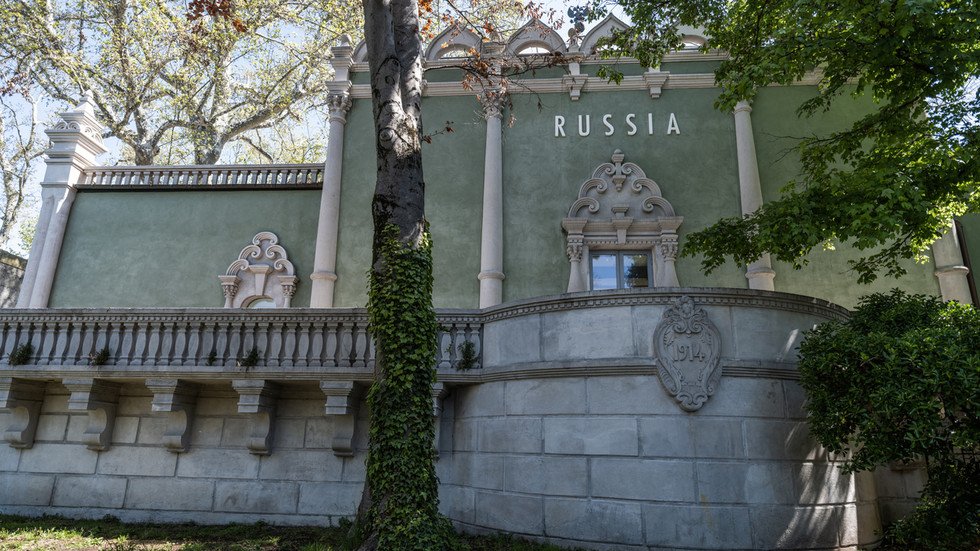
The jury of the Venice Biennale, an annual international cultural exhibition, will not give awards to artists from countries whose leaders are facing charges of crimes against humanity, according to a statement issued on Thursday.
It affects Russia and Israel, whose leaders are subject to International Criminal Court (ICC) arrest warrants, something both countries have rejected.
The five-member jury announced the decision despite the event’s stated policy of non-exclusion. One member, Marta Kuzma, professor at the Yale School of Art, is of Ukrainian descent.
Ukraine’s STING S Downs Jet-Powered Geran-5 as Drone Air Defense Enters New Race
Ukraine’s 1020th Anti-Aircraft Missile Regiment publicly documented a combat interception of a…
Idaho daycare must allow parents to opt out of vaccines, court rules
A federal court upheld the rights of parents to decline vaccines for…

New threat actor UAT-9921 deploys VoidLink against enterprise sectors
A new threat actor, UAT-9921, uses the modular VoidLink framework to target…
Moscow Warns It Could Target British Military Facilities In Unprecedented Statement
From the very start of the Ukraine war, the United Kingdom has…

Scientists Made Tobacco and Lettuce Produce a Meat Protein That Could Make Fake Meat Taste More Real
Scientists have engineered tobacco and lettuce plants that carry the gene for…
Was Gloria Steinem a CIA agent working to overthrow the family?
Top feminist Gloria Steinem who died this week at age 92 may…
The move effectively introduces a separate criterion within the event, creating a divide between the Biennale’s institutional stance and the position taken by its own judges.
Although the statement does not explicitly mention Russia and Israel, it says the “jury will refrain from considering those countries whose leaders are currently charged with crimes against humanity by the International Criminal Court (ICC).”
An ICC arrest warrant was issued for Russian President Vladimir Putin in 2023 over alleged deportations of Ukrainian children. Moscow, which does not recognize the court’s jurisdiction, has dismissed the charges as politically motivated.
Likewise, a warrant for Israeli Prime Minister Benjamin Netanyahu was issued in 2024 over alleged war crimes and crimes against humanity in Gaza. Israeli officials have also dismissed the case and denied the court’s authority.
It comes as the European Commission said it was slashing a €2 million ($2.3 million) grant to the event over Russia’s participation. The Biennale has welcomed Russia back for the first time in four years despite the ongoing conflict in Ukraine, saying the exhibition is “an open institution” that “rejects any form of exclusion or censorship of art.”
However, the jury criteria are tied specifically to ICC charges, which are not uniformly applied across all conflicts.
Earlier this month, a group of artists and curators issued an open letter opposing the participation the US, along with Russia and Israel, citing “occupation, and war” in Cuba, Iran, and Venezuela. However, the presense of American artists in the event running from May 9 to November 22 remains unaffected.