















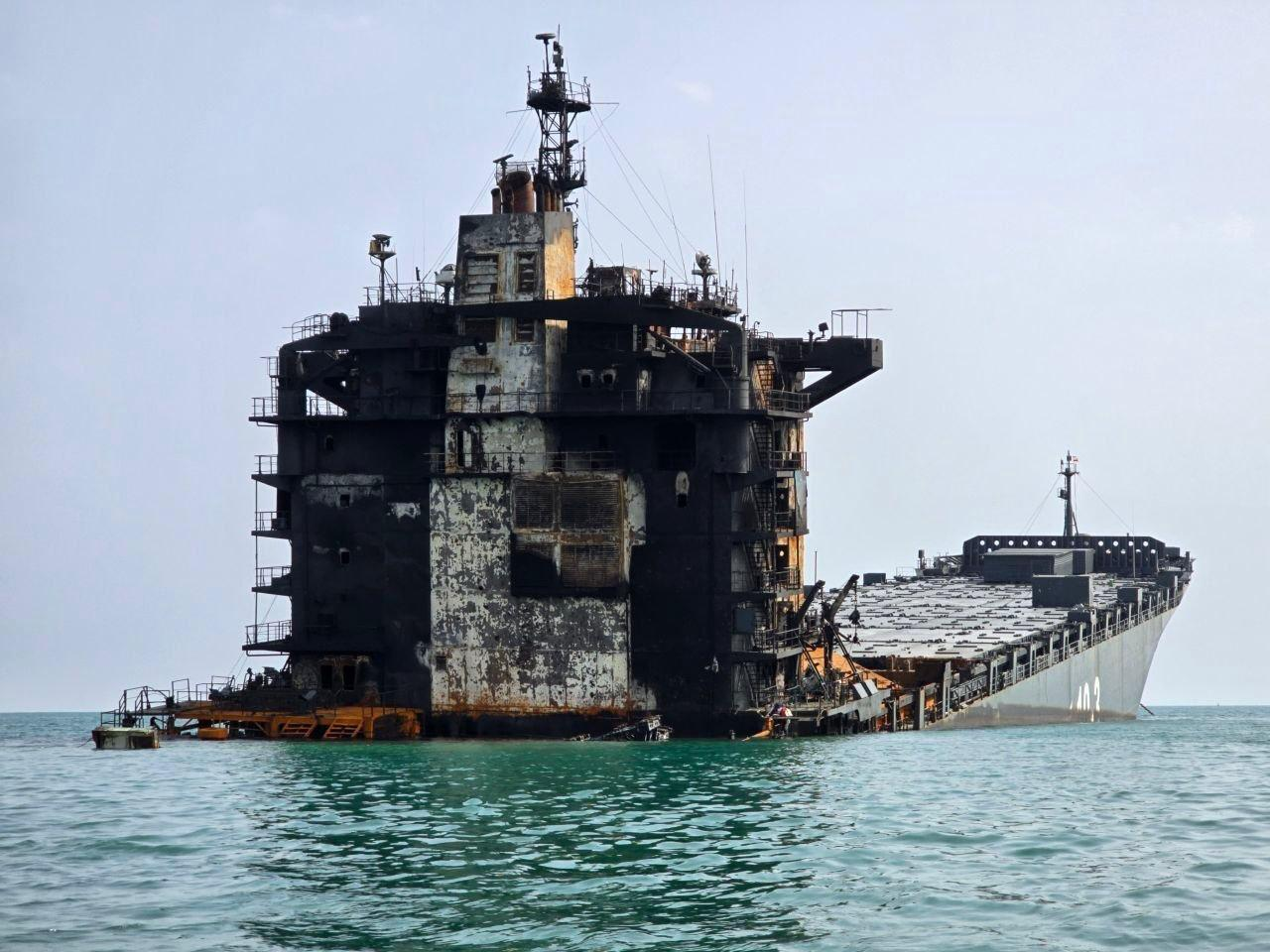
The Persian Gulf has become a graveyard for the Islamic Revolutionary Guard Corps (IRGC) Navy’s experimental fleet. Following the recent wave of “Epic Fury” strikes, the IRIS Shahid Mahdavi, one of Iran’s most ambitious maritime projects, has been confirmed in a semi-sunken state near Qeshm Island.
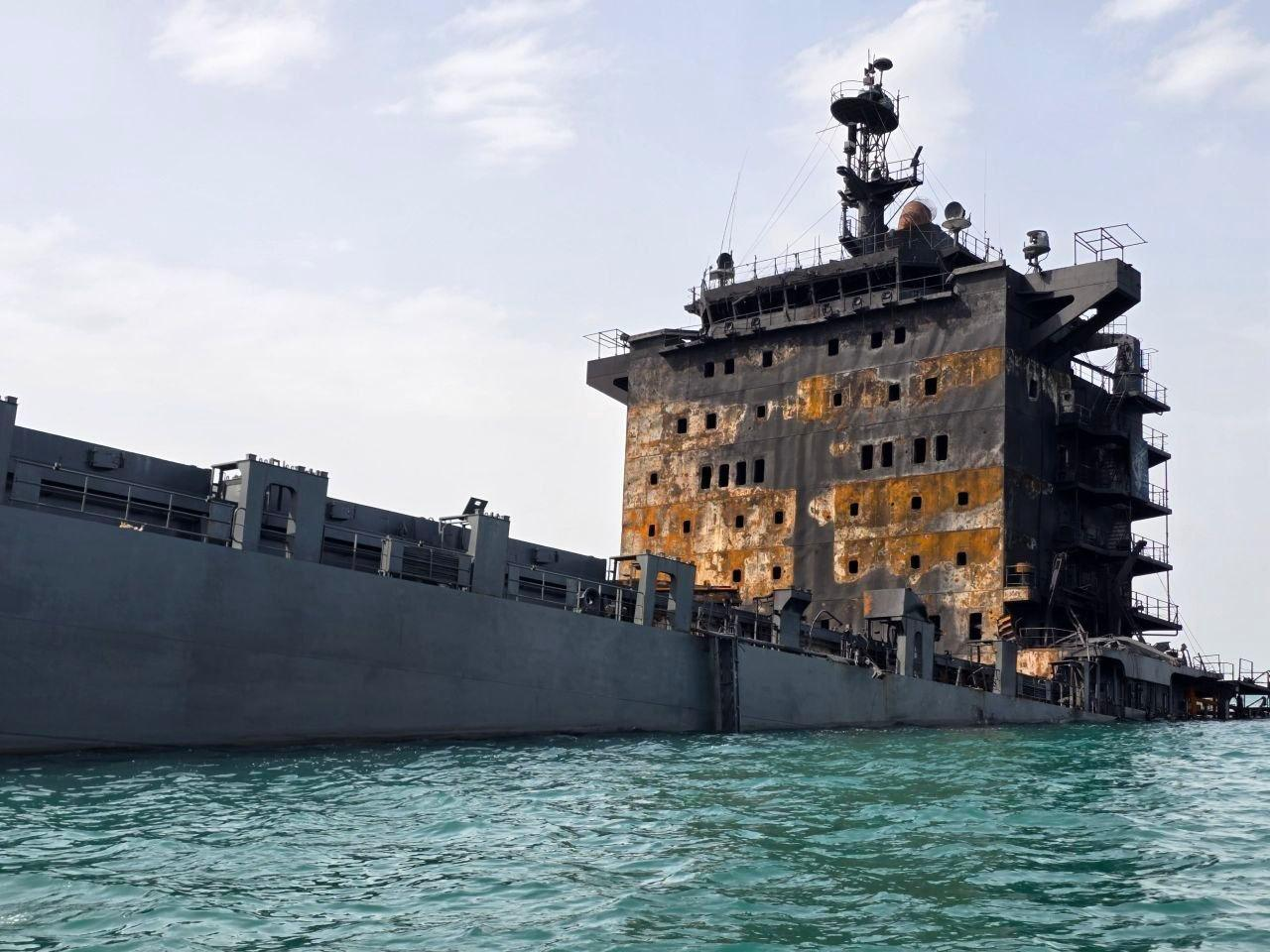
Once a symbol of Tehran’s “asymmetric” power projection, the massive floating base now sits dead in the water—a charred, listing monument to the high cost of the ongoing regional conflict.
The Conversion: From Cargo to Combat
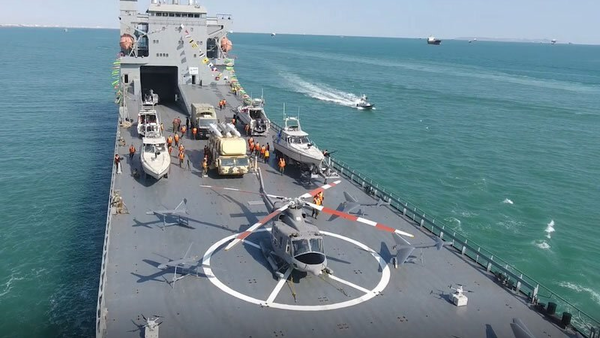
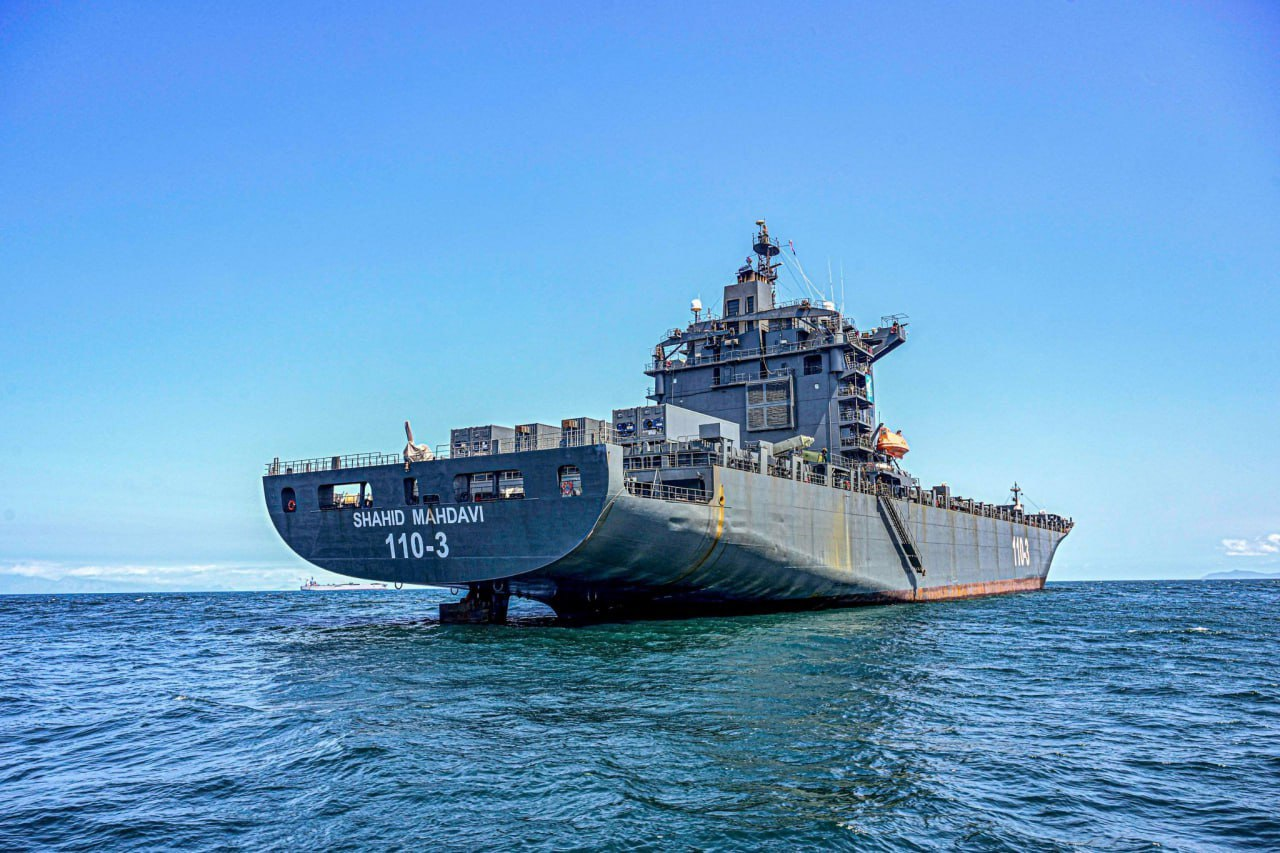
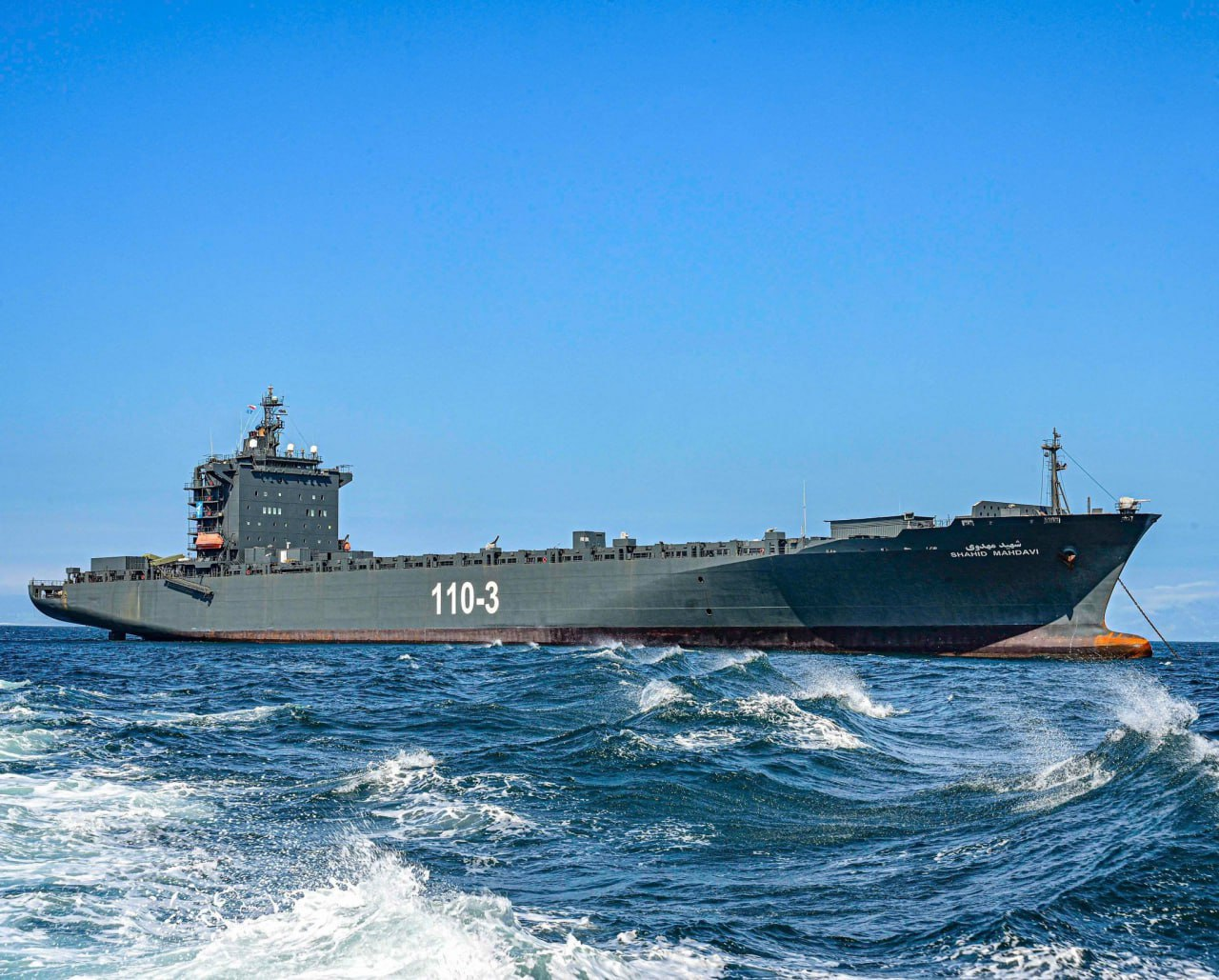
The Shahid Mahdavi was never a purpose-built warship. In a move we’ve followed closely at The Philly PI for its “sim-lite” ingenuity, the IRGC took a civilian container ship (the former Sarvin) and “hollowed it out” to serve as a modular mothership.
Before the strikes, it was a multi-purpose beast of burden, equipped to carry:
- Aviation: A sprawling deck for attack helicopters and long-range suicide drones.
- Firepower: Launchers for anti-ship cruise missiles and, most notably, ballistic missiles—a rare feat for a converted merchant vessel.
- Special Ops: A staging ground for the IRGC’s fast-attack craft and “frogman” units.
[Image showing the Shahid Mahdavi in its operational prime, bristling with radar and missile canisters]
The Strike: Operation Epic Fury
As part of the US-led effort to neutralize Iran’s naval “hubs,” the Shahid Mahdavi was targeted while positioned near the strategic chokepoint of the Strait of Hormuz. Satellite imagery and local reports from Qeshm confirm that multiple precision munitions struck the ship’s midsection and hangar areas.

Labor Shortages Drive Record Bankruptcies in Japan in First Half of Fiscal Year
The number of corporate bankruptcies in Japan caused by labor shortages has…

DeepMind’s AI Solved a 50-Year Math Problem—And It’s Accelerating Future Game Engines
Google DeepMind’s AlphaTensor is an AI system designed to discover faster, more…

Stacy Garrity Exposes Josh Shapiro and Vows to Fix Pennsylvania Budget Crisis
As the political landscape in the Commonwealth heats up, Pennsylvania State Treasurer…

SoftBank Seeks $100 Billion from Gulf States for AI
SoftBank Group seeks to raise as much as $100 billion from Gulf…

Walmart Pricing Error Score: $2,299 CyberPowerPC Gaming Rig With RTX Specs Slashed to $1,099
Lucky Shopper Scores $1,200 Discount After Walmart Honors Massive Price Mistake One…
The resulting damage has compromised the hull’s integrity, leaving the vessel partially submerged. While the IRGC has attempted to frame the status as “operational maintenance,” the visual evidence suggests the base is currently unusable for flight or missile operations.
Philly PI Analysis: The End of the “Converted” Era?
The loss of the Shahid Mahdavi, alongside the sinking of the drone carrier Shahid Bagheri earlier this year, suggests that Iran’s strategy of turning old tankers and cargo ships into “floating fortresses” has a fatal flaw: survivability.
These ships lack the compartmentalization and damage-control systems of true naval vessels. When they get hit, they don’t just take damage—they fail. For the US Navy, removing these “hubs” effectively “de-clutters” the Gulf, forcing the IRGC back to its smaller, more vulnerable fast-boat tactics.