





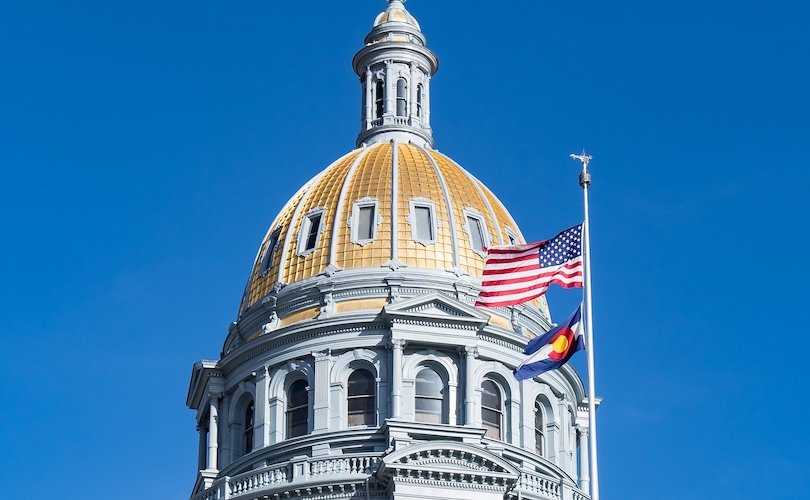
DENVER – A bill proposed in the Colorado General Assembly would mandate that universities in the state offer abortion pills regardless of whether they are public or private institutions.
HB26-1335 requires any higher educational institution with a student health center or pharmacy to distribute abortion “medication” onsite and requires any that does not to “either submit a prescription for abortion medication to a pharmacy located off campus or dispense abortion medication through the institution’s student health center if permitted by the student health center’s licensure.”
The bill exempts schools with conflicting “bona fide religious beliefs or practices” (potentially leaving open the danger of the state deciding for itself what it does and does not consider religious enough to qualify) but explicitly applies to private institutions as well as those operated or funded by the state, a significant expansion of presumed government authority.
Further, Live Action noted that Christian Home Educators of Colorado director of government relations Colleen Enos warned lawmakers that while the religious exemption covers the schools themselves “there is nothing in the statute to affirm a health care worker’s right to refuse to provide abortion pills or prescriptions according to their deeply held religious beliefs.”
![Wanted: Suspect for Multiple Robberies in the 3rd District [VIDEO]](https://thephillypi.com/wp-content/uploads/2026/07/Wanted-Suspect-for-Multiple-Robberies-in-the-3rd-District-VIDEO-768x512.jpg "Wanted: Suspect for Multiple Robberies in the 3rd District [VIDEO]")
Wanted: Suspect for Multiple Robberies in the 3rd District [VIDEO]
Incident #1:DC# 26-03-012131 On March 26, 2026, at 12:15 AM, the victim,…

Two couples reach custody agreement after IVF business mixed up embryos
A Florida couple who gave birth to a child with no genetic…

More earthquakes rock Venezuela as death toll rises to 1,430
The tremors with magnitudes of 4.7 and 4.8 struck off the country’s…
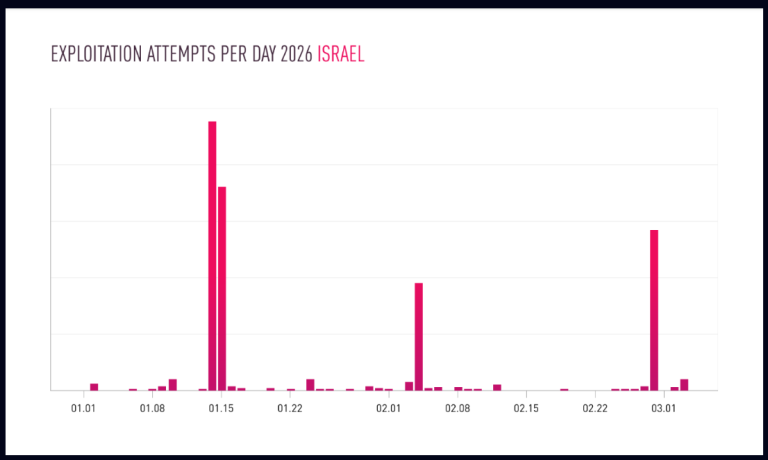
Iran-linked hackers target IP cameras across Israel and Gulf states for military intelligence
Researchers observed Iran-linked actors targeting IP cameras across Israel and Gulf countries,…

Popular TikTok tarot card reader announces conversion to Christianity
A popular online tarot card reader abandoned her new-age practices and “WitchTok”…

Birthright citizenship makes Chinese billionaire’s 100+ surrogate babies eligible to become US president
A Chinese tech tycoon posted a photo of the more than 100…
HB26-1335 passed the House Education Committee 8-5 on April 16.
Several states have taken to offering abortion pills to college students as a way to sustain abortion-on-demand post-Roe v. Wade, with some going so far as to put abortion-inducing drugs and birth control pills in school vending machines. Abortion pills have become key to the abortion lobby’s effort to preserve “access” in a post-Roe v. Wade environment despite the risks to the women who take them as well as their fatal harm to the unborn.
Pro-lifers point to an April 2025 analysis by the Ethics & Public Policy Center (EPPC) that concluded that almost 11 percent of women suffer sepsis, infection, hemorrhaging, or other major conditions after taking mifepristone, according to insurance data, plus similar findings by the Restoration of America Foundation, as part of a “growing body of evidence indicating that the health risks associated with mifepristone abortions are severe, widespread, and significantly underreported.” States such as Louisiana are currently suing the federal government to challenge the U.S. Food and Drug Administration’s lax abortion pill regulations.
Colorado law allows abortion for effectively any reason, enabling an “all-trimester” abortion center to be opened last year in Boulder, the same city that once hosted notorious abortionist Warren Hern.
Despite being such a haven for the “choice” of killing the unborn, the state has little respect for the choices of those who disagree; it is currently under federal investigation for suspicion of coercing health providers into covering abortions and, in January, was forced to pay $5.6 million to a pro-life medical clinic it targeted for offering abortion pill reversal.