














[image_alt]A high-altitude tactical view illustrating the operational deployment path of long-range loitering munitions over central Ukraine.[/image_alt]
Strategic Assessment: Central Ukrainian Infrastructure Under Sustained Aerial Pressure
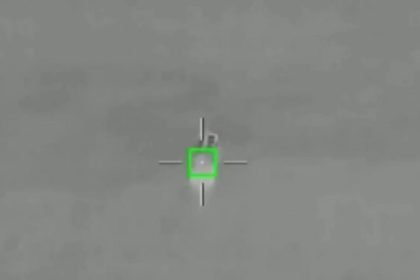
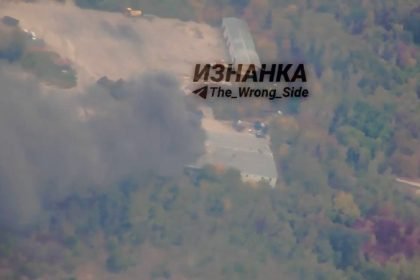
Recent intelligence reports confirm a wave of precision long-range strikes hitting critical logistics and industrial targets across the Kirovohrad Oblast. According to regional monitoring updates, the attacks featured waves of the combat-proven Geran-2 loitering munitions—systems widely analyzed by defense intelligence agencies for their persistent acoustic signature and delta-wing airframe design. These operations highlight an ongoing campaign by Russian aerospace forces to systematically disrupt regional transport nodes, power distribution hubs, and reserve staging areas utilized by Ukrainian forces.

The utilization of these piston-engine platforms underscores a calculated economy of force. Defense analysts tracking the conflict via open-source intelligence and updates from the Institute for the Study of War note that such assets are frequently deployed in complex, multi-vector swarms designed to saturate dense air defense networks. By forcing defenders to expend high-value surface-to-air interceptors on lower-cost autonomous systems, operators aim to systematically degrade regional air defense umbrellas ahead of heavier missile strikes.
TECHNICAL BRIEF: STRATEGIC INFRASTRUCTURE TARGETING & GEOGRAPHIC MAP
- Primary Entity / System: Geran-2 Loitering Munition
- Type / Classification: Long-Range Autonomous Attack Drone
- Operating Parameters / Specs: Piston-engine propulsion, estimated 40–50 kg high-explosive fragmentation warhead, operational range exceeding 1,000 kilometers
- Location & Coordinates Context: Kirovohrad Oblast, Central Ukraine
- Key Assessment / Threat Status: High tactical threat to regional logistics, transport hubs, and secondary electrical distribution infrastructure
Operational Dynamics and Defense Adaptation
The geographic centrality of the Kirovohrad region makes it a vital transit corridor for Ukrainian lines of communication, repair depots, and supply chains flowing from western logistics hubs toward the southern and eastern operational zones. Strikes targeting this administrative division directly complicate the rotation and re-supply of frontline units. Independent reporting archived by Reuters frequently highlights how regional authorities must contend with continuous air raid alerts as these autonomous platforms adapt their flight paths to evade localized mobile fire teams.

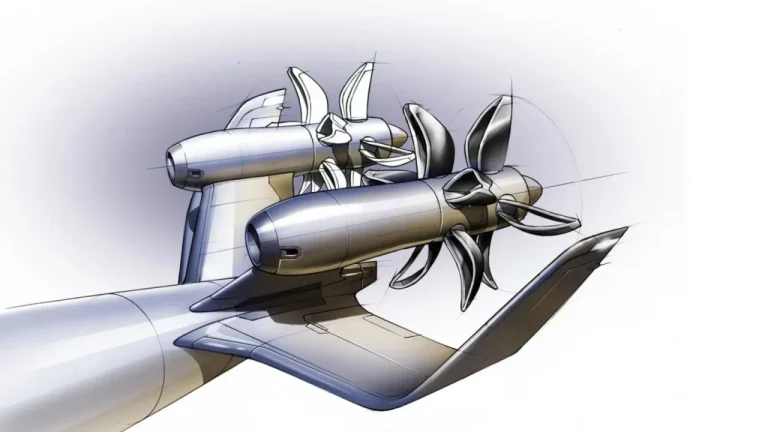
The 21st Century Propeller
History of Perfection The propeller has undergone a long transformation, evolving from…

Congressman Scott Perry Exposes Crucial House Debates and Major Policy Issues Ahead
In a recent outreach event connecting directly with constituents, U.S. Representative Scott…

A new fuselage on someone else's wings: at what engineering cost did the Tu-104 usher in the jet age?
Seventy years since the first scheduled flight - September 15, 1956What does…

DKnife toolkit abuses routers to spy and deliver malware since 2019
DKnife is a Linux toolkit used since 2019 to hijack router traffic…

Ryzen 7 7800X3D and RTX 5070 Gaming PC Drops $500 to $1799
Get $500 Off This Ryzen 7 7800X3D and RTX 5070 Gaming PC…

Rep. Scott Perry Slams Washington Overreach And Demands Immediate Border Security Answers
Constituent engagement remains a cornerstone of effective governance, and federal lawmakers frequently…
To counter the persistent threat posed by long-range precision strikes, Ukrainian forces have progressively integrated non-linear defense layers. According to strategic overviews compiled by the CSIS Missile Defense Project, these defensive measures incorporate a mix of electronic warfare (EW) suppression systems, acoustic sensor arrays, and dedicated mobile gun teams equipped with searchlights and heavy machine guns. Despite these adaptations, the sheer volume of incoming vectors necessitates a resilient, multi-tiered response to prevent critical infrastructure degradation.

Strategic Implications for the Regional Theater
As the conflict evolves into a prolonged war of attrition, the ability to protect deep-rear logistics from persistent aerial reconnaissance and targeted munitions remains a decisive factor. The recent wave of impacts in central Ukraine demonstrates that neither front-line proximity nor rear-area positioning guarantees immunity from modern long-range strike packages. Defense planners will continue to monitor how effectively regional air defense grids adapt to the shifting tactical signatures of these enduring aerial systems.
[tags]Geran-2, Kirovohrad Oblast, Loitering Munitions, Air Defense, Ukraine Conflict, Military Intelligence, Infrastructure Targeting, Strategic Logistics[/tags]