
















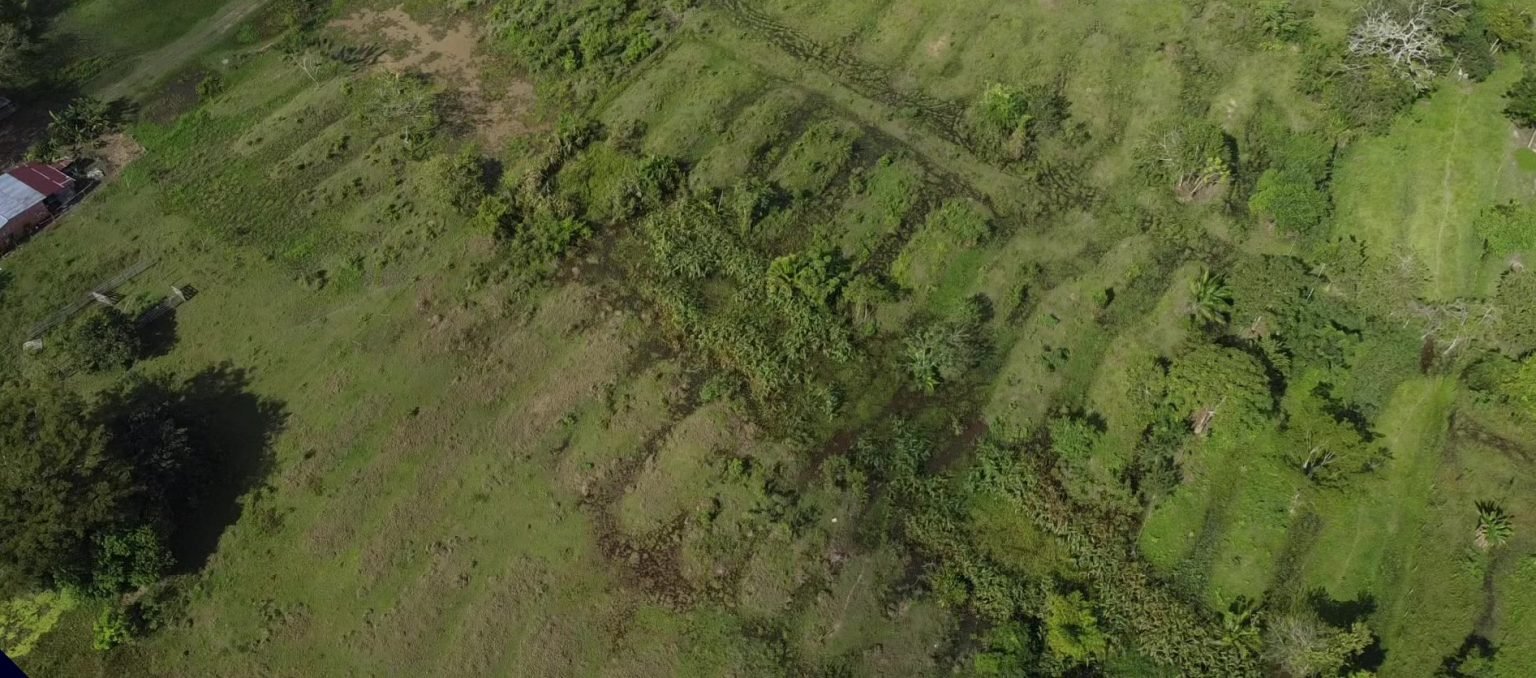
Satellite imagery of northern Colombia’s wetlands revealed an extraordinary human experiment: thousands of raised fields and canals spanning more than 500,000 hectares. That’s an area three times bigger than Greater London. But that’s just the first part of it.
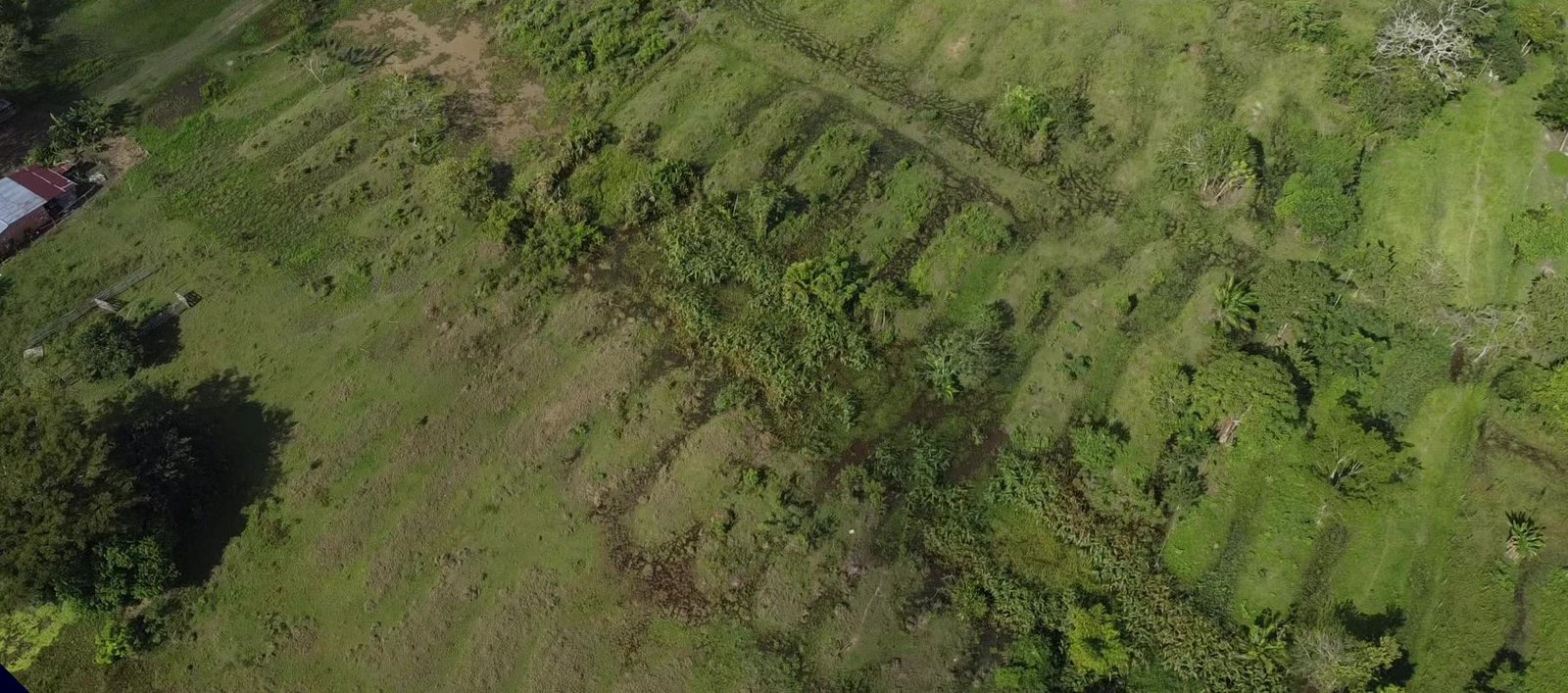
New research suggests the communities that built it may not have needed kings, bureaucrats or a central authority directing the work. Instead, relatively small groups could have built and maintained the system through collective labour — a finding that challenges a stubborn assumption about how complex societies work.
A giant system without a giant government
The landscape lies in La Mojana, a vast floodplain where the Magdalena, Cauca and San Jorge river systems converge.
In the centuries before Christ, pre-Hispanic communities reshaped this watery terrain into networks of canals and elevated strips of farmland.
This had a very practical component. The channels moved water and fertile sediment. Raised fields kept crops above seasonal floods. Some structures may even have funneled fish toward settlements. The system remained in use, in changing forms, until roughly the 10th or 11th century.
So, the structure wasn’t really a city, or at least not as we’d envision a city today. Human settlements were dispersed, and the large network grew and accumulated over centuries. Scientists can’t say for sure whether it all operated simultaneously at any point.

Zionism and the Ottoman Empire: The Final Step to Conquering Palestine
The final step, which lasted until the fall of the Ottoman Empire,…

Phillies name breakout shortstop prospect, current rookie reliever Paul Owens Award winners as minor-league players of year
Alex McFarlane will receive the Paul Owens Award. (Courtesy of the Reading…

When the Gallic cock really pecked
Well, that's it, really. The finish line, which is also the start.…

Hackers exploit unsecured MongoDB instances to wipe data and demand ransom
Over 1,400 exposed MongoDB servers have been hijacked and wiped by hackers,…

Idaho daycare must allow parents to opt out of vaccines, court rules
A federal court upheld the rights of parents to decline vaccines for…

Hackers abused React Native CLI flaw to deploy Rust malware before public disclosure
Hackers exploit a critical React Native CLI flaw (CVE-2025-11953) to run remote…
But its sheer scale encouraged archaeologists to assume that powerful leaders must have organized the work. That’s where the new study comes in and says “not really.”
The math is mathing
The researchers found no concrete evidence that a ruling elite coerced people into building the system. So, they started calculating whether such coercion was even necessary.
Researchers mapped 1,601 surviving ridges and 63 elevated housing platforms across a 500-hectare section of La Mojana. They estimated about 1,600 people lived there and conservatively assumed only half could contribute to construction. Then they calculated how much soil those people needed to move: roughly 353,000 cubic meters.
An 800-person workforce could have built the entire local system in about 22 to 44 working days — comfortably within one dry season. Maintaining it was cheaper still. Spread across a generation, a full rebuild would amount to only a few days of communal work each year.
Dr. Jasmine Vieri, study author, explains: “We are confident that one of these canal-ridge systems could have been built in less than two months, around half of a dry season. That’s a far lower labor investment than has been previously assumed, and manageable through cooperation.”
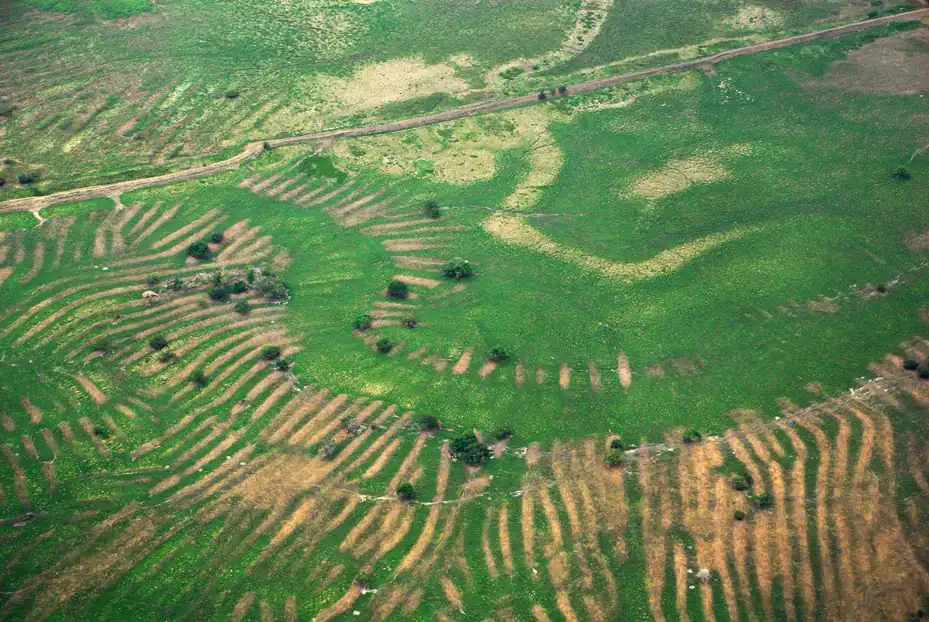
Settlement was dispersed, with canal-and-ridge systems clustering around groups of housing platforms, which also fits with the idea of local organization, not top down .
“These field systems are so impressive that people have assumed they were achieved by hierarchical chiefdoms. Our data tells a very different story,” said the study’s lead author, Dr Jasmine Vieri, from the University of Cambridge’s McDonald Institute for Archaeological Research, in a press release.
“Our findings indicate that local communities were capable of building these systems in very short periods of time, and organising themselves rather than relying on a powerful external force.”
There’s no clear evidence that there was no ruler, but this would fit very well with the data.
Why this could matter for our modern world
The bigger lesson may have less to do with ancient farming than with how we think about power.
Large infrastructure is often treated as evidence of large institutions: governments, bureaucracies or rulers capable of directing thousands of workers. But in La Mojana, the researchers found that scale alone cannot tell us who was in charge. Their labor estimates show that local communities could plausibly have built and maintained substantial sections of the system themselves.
Professor Marcos Martinon-Torres, REVERSEACTION’s lead and senior author, said: “Arguments for centralized, top-down planning, unsupported by data, risk obscuring the agency of indigenous pre-Hispanic populations. Pre-Hispanic societies were inventive and cooperative; they worked with nature rather than trying to obstruct it. And we already know that recovering ancestral practices has positive societal impact today through local populations connecting with their heritage through technology.”
But this matters beyond archaeology. It suggests that complex infrastructure does not always have to emerge from the top down. Some systems can grow through cooperation between households, with different groups building, extending and maintaining different parts over time.
The authors see a modern implication in that model. Rather than governments directly controlling every part of a project, they argue that the state can sometimes play a supporting role — providing money, legal frameworks and technical expertise while communities manage infrastructure locally.
La Mojana offers a strange but important lesson: the size of a human achievement doesn’t necessarily reveal the size of the authority behind it. Sometimes, people just got organized.
The study was published in Nature Communications Sustainability.