














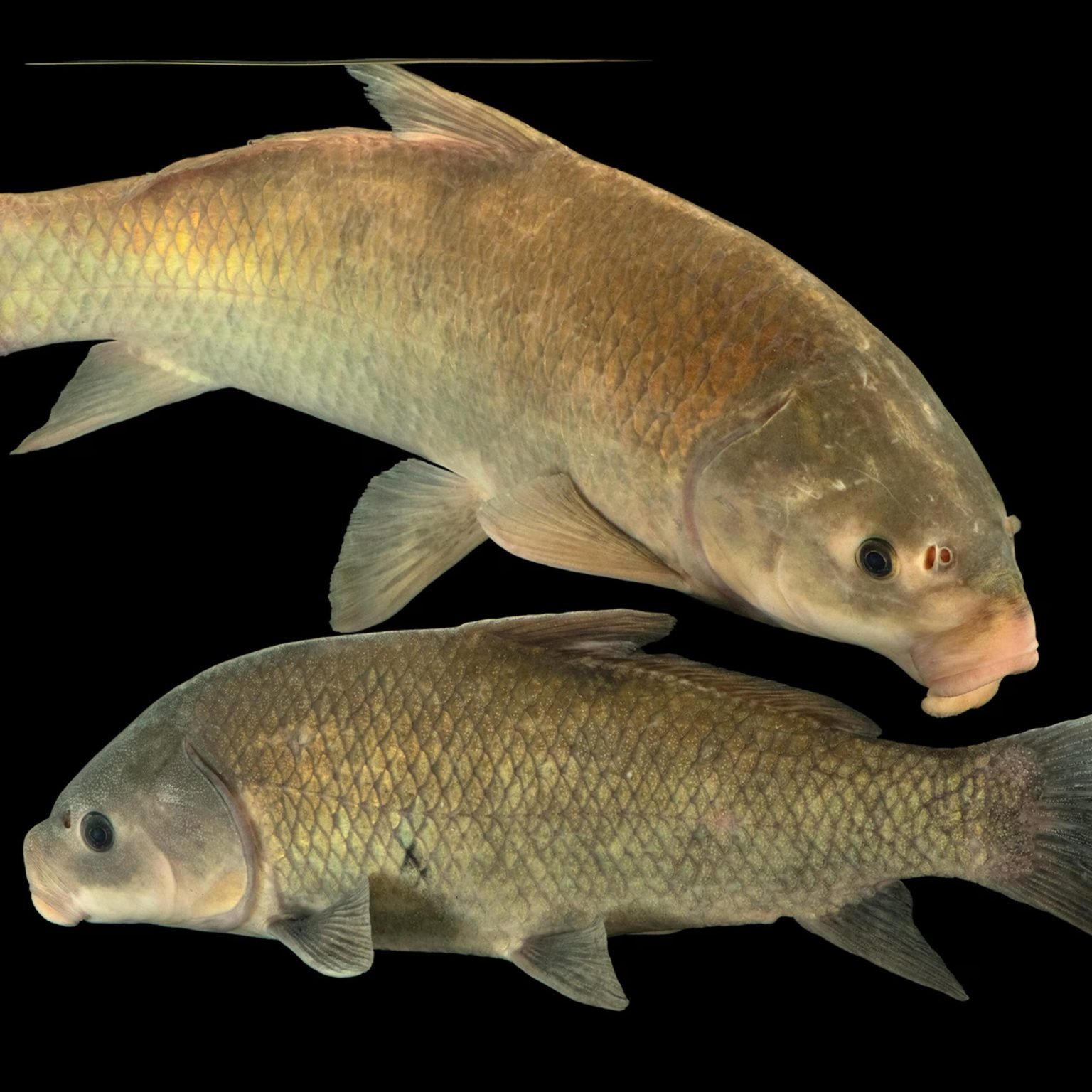
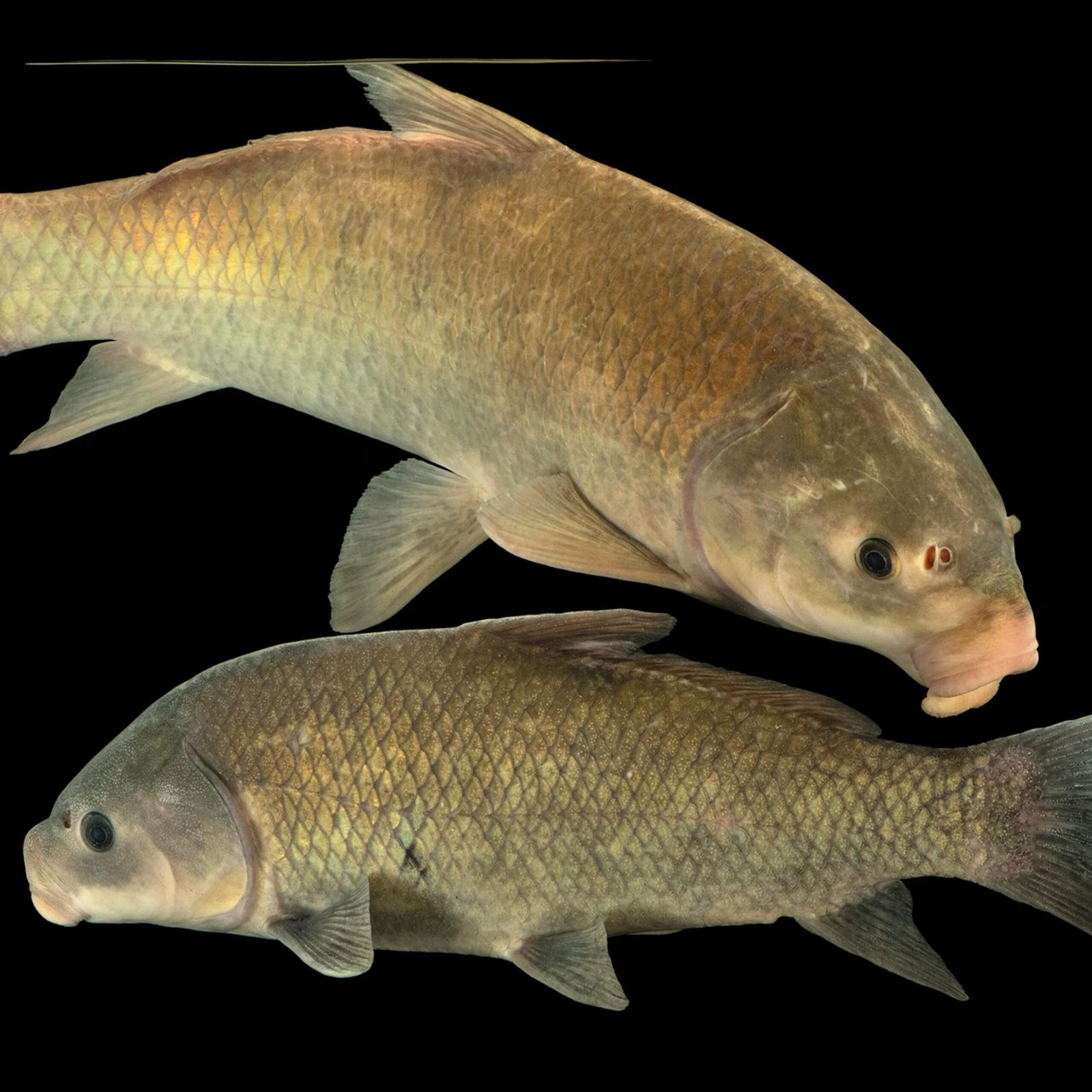
A bigmouth buffalo reached an estimated 148 years old. New evidence suggests its extraordinary lifespan may be all that stands between some populations and collapse.
The female bigmouth buffalo from Saskatchewan’s Last Mountain Lake belonged to the 1876 year class. Researchers estimated that she lived for 148 years. When she hatched, Queen Victoria still had another quarter-century on the British throne.
That fish has now pushed the known lifespan of the bigmouth buffalo (Ictiobus cyprinellus) far beyond the already astonishing 127-year record reported previously. A study published in November 2025 found that the species can approach a century and a half of life — an extraordinary span for a warm-water freshwater fish.
But the new record comes with a grim companion finding. In the Saskatchewan watershed where the 148-year-old fish was found, researchers saw almost no successful recruitment in recent decades. About 90% of the sampled bigmouth buffalo had hatched before 1949, and not one belonged to a year class from the 2000s.
Can This Fish Help Us Solve Aging?
The scientific world first took notice of bigmouth buffalo in 2019, when Alec Lackmann, a fish ecologist at the University of Minnesota Duluth, started slicing into their otoliths — the stone-like structures in the inner ear that track age like tree rings.
“The first bigmouth buffalo I aged was almost 90 years old,” Lackmann told The BBC. “I was like, ‘Wow, holy smokes.’ It was hard to believe at first.”
He kept going. Soon, he and his team found fish over 100. Subsequent work pushed the known maximum to 127 years. Then, in 2025, a much larger Saskatchewan analysis pushed it again, to 148.
Researchers reached that estimate by thin-sectioning the fishes’ otoliths and counting annual growth increments using multiple readers. Previous work has validated otolith ageing in bigmouth buffalo, including with bomb radiocarbon techniques. As with almost any wild fish age record, 148 is an estimate rather than a birth certificate — but it rests on a considerably stronger ageing method than some historical freshwater-fish longevity claims.
That alone would be remarkable. But the surprises didn’t stop there.
In a 2021 study, Lackmann and colleagues examined markers of biological aging in individuals ranging from 2 to 99 years old. They found that telomeres — DNA caps that typically shorten with age — remained stable. Older fish actually had stronger immune systems and lower stress levels than younger ones.
“We’re really not seeing a decline with age in these organisms,” said Britt Heidinger, a biologist at North Dakota State University and co-author of the study.
More precisely, the researchers found no age-related deterioration in the physiological systems they measured: a chronic-stress indicator, one measure of innate immune function and telomere length. They described the results as consistent with “negligible senescence” in multiple physiological systems
In the bigmouth buffalo, it seems, age doesn’t necessarily mean deterioration.
This is not to say that other animals can’t achieve remarkably long life spans. Greenland sharks have the greatest longevity of any living vertebrate, reaching at least 250 years old.
Centenarian Fish

Despite spawning in predictable annual cycles, the population at Rice Lake hasn’t successfully produced a new generation in over 60 years. In a survey published in Scientific Reports, researchers analyzed 390 individual fish. Only one was under 50. The median age was 79.
These fish spawn every year, and the eggs are hatching. But by midsummer, all the young are gone.
Researchers suspect predation is an important reason. Northern pike, a native predator, spawn just before the buffalo, giving their young a deadly head start. By the time buffalo larvae emerge, they’re swimming snacks. The study found young-of-the-year buffalo shortly after spawning but could no longer detect them by mid-to-late summer; predation is considered likely rather than directly demonstrated as the sole cause.
Researchers call this recruitment collapse. But the fish themselves have evolved a workaround: live long enough to wait for rare windows when environmental conditions align. This strategy, known as episodic recruitment, hinges on extreme longevity.
In most species, a 60-year reproductive gap would be a death sentence. For the bigmouth buffalo, time is on its side.
And Rice Lake no longer looks like an isolated oddity.
In Saskatchewan’s Qu’Appelle watershed, researchers aged 173 bigmouth buffalo collected between 2018 and 2024. Their year classes stretched all the way back to 1876, yet only one successful year class (1997) appeared after 1949. No sampled adult belonged to a year class from the 2000s. Meanwhile, invasive common carp showed much more regular recruitment and outnumbered bigmouth buffalo captures by at least an order of magnitude.
The Bigmouth Are in Big Trouble
Bigmouth buffalo are native to North America, ranging from Canada’s prairies to the bayous of Louisiana. Despite their long history, they’ve been historically ignored or lumped in with invasive carp species. They’re legal to kill year-round in many states. In Minnesota, where Rice Lake lies, there are no harvest limits. Bowfishers often shoot them in large numbers.
“Oftentimes we’ll find piles of them dumped a short distance away,” said Walt Ford, the Rice Lake refuge manager and a co-author on the recent studies.
The irony is thick. These ancient fish, often mistaken for pests, may hold the biological keys to healthy aging. Yet there is no federal protection. In most of the U.S., there isn’t even basic monitoring.
“It’s one of the oldest populations of animals in the world,” Lackmann told The BBC. “And there’s no management or protection of the species.”
That may be slowly starting to change, though.
A 2024 Minnesota state law formally separated native “rough fish” from common carp, and in February 2026 the Minnesota Department of Natural Resources proposed harvest limits for several native species. For bigmouth and smallmouth buffalo combined, the proposal would allow five fish in a northern zone and 30 in a southern zone. If approved, the limits would take effect March 1, 2027. For now, however, buffalo harvest in Minnesota remains unlimited.
What we don’t know might hurt them
Researchers still know little about the bigmouth buffalo’s basic biology.
“We have very little understanding about the temperature ranges they can tolerate, or how they might respond to climate change,” said Eva Enders, a fish ecologist at the National Institute of Scientific Research in Québec.
That knowledge gap makes protection harder to argue for — and harder to design. It’s a vicious cycle: the fish are ignored because they’re poorly understood, and they remain poorly understood because no one funds the research.
Meanwhile, time ticks on.
With each passing year, the remaining fish grow older. No young have made it in over half a century. If mortality rises — even slightly — the entire population could collapse in a single generation.
The scary thing is that their population stability might just be a mirage.
They have outlived wars, floods, and generations of humans. But they may not survive our indifference.
This article originally appeared in March 2025 and was republished with additional information.