















() — After the midterm elections, “the Democrats are moving in for the kill,” constitutional scholar Jonathan Turley wrote. With a wave of new Democratic governors and one-party control in key states, party leaders and activists now believe they can recruit enough states to join the National Popular Vote Interstate Compact and effectively nullify the Electoral College before the 2028 presidential election.
Turley, the Shapiro Professor of Public Interest Law at George Washington University and a Fox News contributor, argued that the midterms represented only a “fleeting and indeed predictable shift in power.”
Without addressing the massive swings to Democrat leadership in red state strongholds, he noted Republican losses of roughly 46 House seats were modest compared with those under Franklin D. Roosevelt (79), Barack Obama (69), Harry Truman (68), or Bill Clinton (54).
Yet Democrats are not waiting to see whether Republicans rebound as has happened in previous cycles. They are moving to lock in structural advantages that would help them capture the White House and then implement far-reaching changes into the indefinite future.
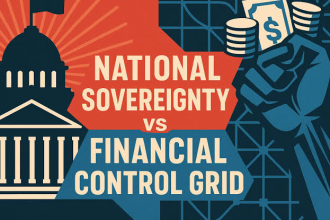
Central to that effort is the National Popular Vote Interstate Compact whereby participating states pledge to award all of their electoral votes to the presidential ticket that wins the national popular vote regardless of how their own residents voted.
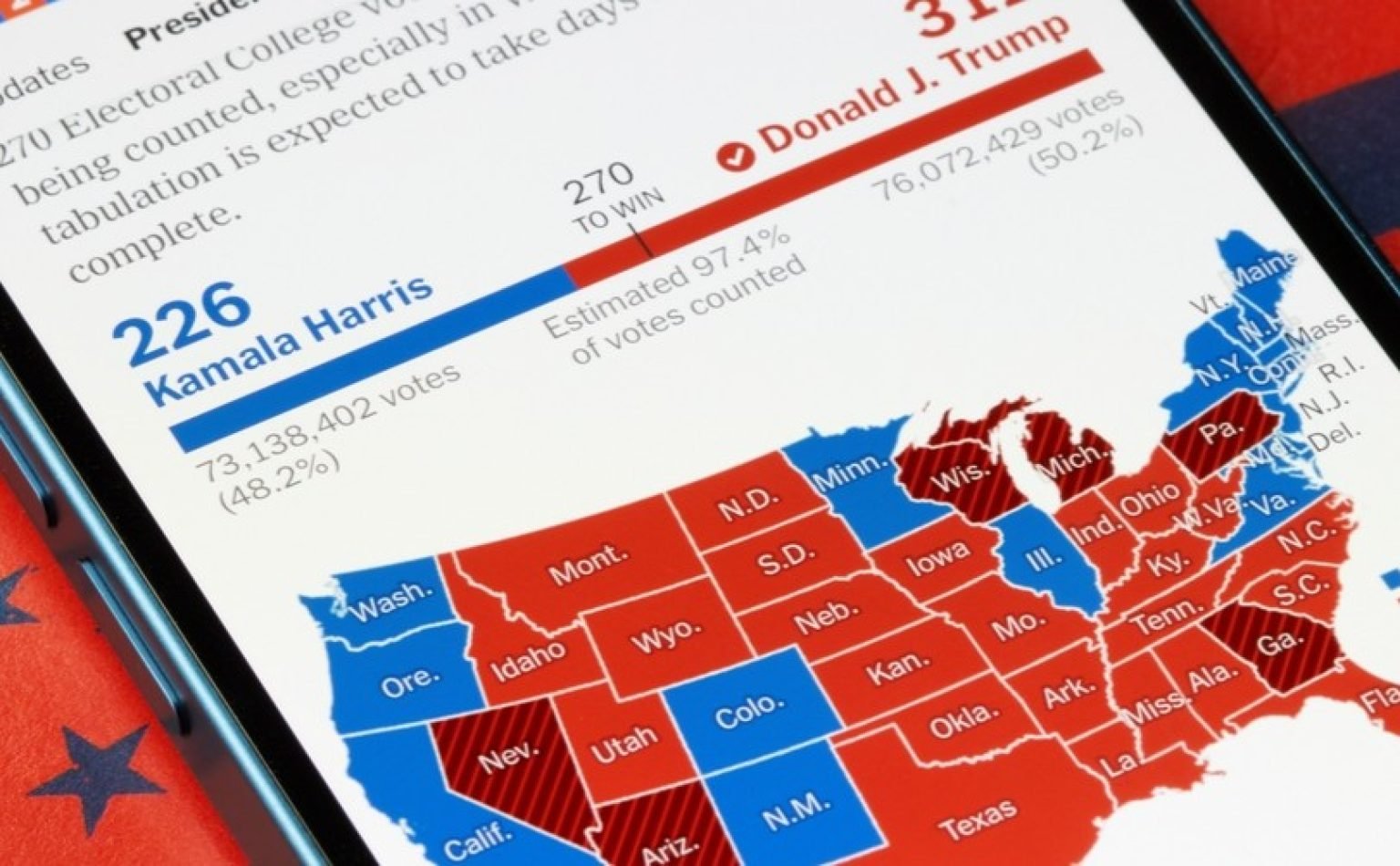
Once states totaling at least 270 electoral votes join, the compact would take effect and render the Electoral College a formality. Turley noted that one-party Democratic control in states such as Michigan, Nevada, Pennsylvania, and Wisconsin has put the threshold within reach.
The Framers designed the Electoral College precisely to prevent large-population states from overwhelming smaller ones and to ensure that presidents must take minority and regional interests seriously. “It was designed to get presidents to take the interests of small states seriously and to protect political minority populations,” Turley wrote.
The popular legal commentator and author described himself as a late convert on the issue. He once shared the view held by a majority of Americans that a president elected without a popular-vote majority is “deeply problematic.” After watching the broader push for direct-democracy reforms, however, he changed his mind. “This is not, however, the time for such a change,” he concluded.
Turley warned that the compact is a deliberate end-run around Article V of the Constitution. “There are compelling arguments that such a constructive amendment of the Constitution is unlawful,” he wrote. The Supreme Court has described the constitutional system as a “finely wrought” balance designed to prevent both the concentration of power and majoritarian abuse. Advocates of the compact, Turley argued, chose the interstate agreement route “precisely because the advocates know that they would have a difficult time securing such a change to our Constitution.”
The effort fits a larger pattern. Turley pointed to long-standing academic and activist agendas that include abolishing the filibuster, adding the District of Columbia and Puerto Rico as states, and packing the Supreme Court so these objectives, which would certainly be struck down by a conservative Court, may instead survive.
Years ago, Harvard professor Michael Klarman outlined a plan to guarantee that Republicans “will never win another election” while warning that the Court “could strike down everything I just described.” Therefore, Turley noted, court-packing is a prerequisite.
Part of a longer-term project
These moves echo earlier Democratic statements. In December 2024, U.S. Sens. Dick Durbin, Brian Schatz, and Peter Welch introduced a constitutional amendment to abolish the Electoral College in favor of a pure popular vote. Durbin called the Founders’ system an “18th-century invention that disenfranchises millions of Americans.”
In October 2024, then-vice-presidential nominee Tim Walz told a Democratic fundraiser at California Gov. Gavin Newsom’s home, “I think all of us know the Electoral College needs to go.”
Critics have long argued that eliminating or bypassing the Electoral College would replace a federal republic with a pure democracy dominated by a handful of dense urban centers. One analysis warned that the change would amount to “America’s suicide,” a permanent solution driven by short-term, anti-conservative passion that the Founders deliberately rejected.
Another noted that once the compact reaches 270 electoral votes, “51 percent of us will be able to rule the other 49 percent with an iron fist,” and that the resulting one-party control would be extremely difficult to reverse.
Turley placed the current push in a longer historical frame. In his recent book Rage and the Republic, he compared contemporary demands for unicameral (single chamber) legislatures, direct democracy, and the elimination of institutional checks to the Jacobins of the French Revolution.
Benjamin Rush, a signer of the Declaration of Independence, warned that pure democracies become “mobocracies.”
“We are now toying with the very elements that could produce the mobocracy that the Framers sought to avoid,” Turley wrote. “With the assault on our constitutional values and traditions, citizens cannot afford to ignore a broader agenda unfolding in the wake of the midterm elections.”
Whether the compact will survive legal challenge remains untested. Turley observed that 10 years ago he “would have applauded this effort. Now I am deeply concerned.”
The midterms, in his view, have simply accelerated a project that has been under discussion for years: using temporary electoral majorities to rewrite the rules so that future majorities become permanent.