















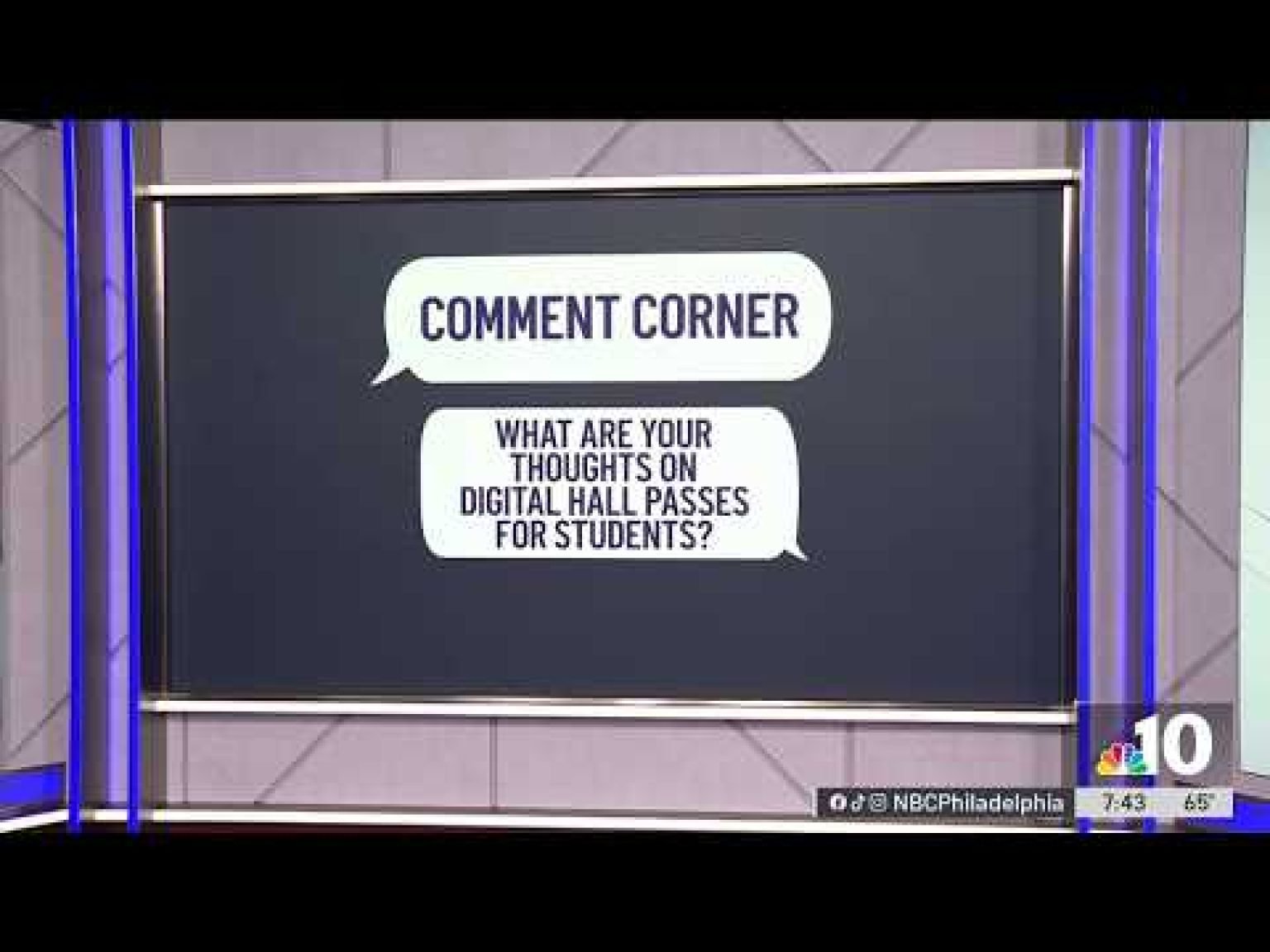
PHILADELPHIA — As students across the Greater Philadelphia area navigate another academic year, hallways look significantly different than they did a decade ago. Traditional paper slips and honor systems are increasingly being replaced by glowing smartphone screens and software platforms that track every minute a student spends outside the classroom. A recent debate captured in our digital community segment, Comment Corner, focuses on a pressing modern dilemma facing Tri-State area educators, parents, and teenagers: Should schools implement digital hall passes?
While school districts across Pennsylvania, New Jersey, and Delaware lean into technological solutions to improve campus security and streamline administration, the shift has sparked intense pushback. From privacy concerns to the physical wear and tear on personal devices, communities are grappling with the balance between maintaining order and respecting student autonomy. NBC10 Philadelphia explores both sides of an issue that is rapidly transforming the daily school experience.
The Shift Toward Digital Tracking in Tri-State Classrooms
Over the past few years, administrative software systems like SmartPass have gained immense traction in middle and high schools nationwide, including several districts throughout the Delaware Valley. Proponents of these digital platforms argue that they offer unprecedented levels of accountability. In an era where campus safety is a top priority for local authorities and parent-teacher associations, knowing exactly who is out of a classroom and where they are supposed to be can be critical.
Administrators point out that digital systems prevent hallways from becoming overcrowded, reduce instances of truancy, and help curb behavioral issues that frequently occur in unsupervised areas like restrooms and stairwells. Furthermore, in the event of an emergency or evacuation, school staff can instantly pull up a digital manifest showing which students were legally out of their designated rooms. For school boards working to satisfy state education mandates and safety guidelines—often referenced through resources like the Pennsylvania Department of Education—these technological tools seem like a logical step forward.
Privacy Concerns and the Screen-Time Debate
Despite the operational advantages, critics and student advocates raise valid alarms regarding privacy and digital fatigue. Many platforms require students to use their personal smartphones to scan QR codes or request transit time. This policy inadvertently penalizes students who cannot afford a smartphone or a reliable data plan, creating an unintended equity gap in the hallway.
Google Tensor vs Snapdragon 888 Benchmarked: Which Processor Dominates the Test?
As the mobile processor landscape evolves beyond raw core counts and brute-force…

Rakuten Medical Targets U.S. Market with Novel Cancer Therapy
Biotech startup Rakuten Medical is eyeing the U.S. market for its novel…

Putin Gets The Photo, Trump Gets Nothing? What Analysts Expect From The Shenzhen Summit
Authored by Michael Zhuang via The Epoch Times,A planned meeting between U.S.…

Rep. Meuser Floor Speech 21st Century Housing Act
As housing affordability continues to dominate kitchen-table conversations across the United States,…

Bell starts production of 12 AH-1Z Viper attack helicopters for Nigeria
Bell starts production of 12 AH-1Z Viper attack helicopters for Nigeria. 17…

Congressman Dan Meuser on Wake Up America
As Capitol Hill navigates a dense legislative calendar and mounting economic pressures,…
Additionally, privacy watchdogs question how long student movement data is stored and who has access to it. Tracking the frequency and duration of restroom breaks can cross a line into intrusive surveillance, leading to heightened anxiety among adolescents. Parents in suburban and urban districts alike have voiced frustration that students are already spending too much time staring at screens throughout the school day, making the digitization of a simple bathroom break feel excessive and counterproductive to a healthy learning environment.
Striking a Balance: What Local Districts Are Doing
As the debate continues to simmer, local school leadership teams are forced to evaluate whether these software platforms genuinely improve school culture or simply add another layer of administrative friction. Some districts have opted for hybrid models, utilizing school-issued Chromebooks rather than personal phones to manage hallway traffic, thereby mitigating equity and personal data concerns.
Community feedback remains deeply divided. While some parents appreciate the transparency and enhanced safety measures, others argue that building a trusting school environment is more effective than relying on algorithmic supervision. As digital integration evolves across Greater Philadelphia schools, educators will need to weigh administrative efficiency against student well-being carefully.
What are your thoughts on this growing trend? Join the conversation and let your voice be heard in our next community segment.
[tags]Digital Hall Passes, Philadelphia Schools, Education Technology, NBC10 Philadelphia, School Safety, Student Privacy, Local News[/tags]