











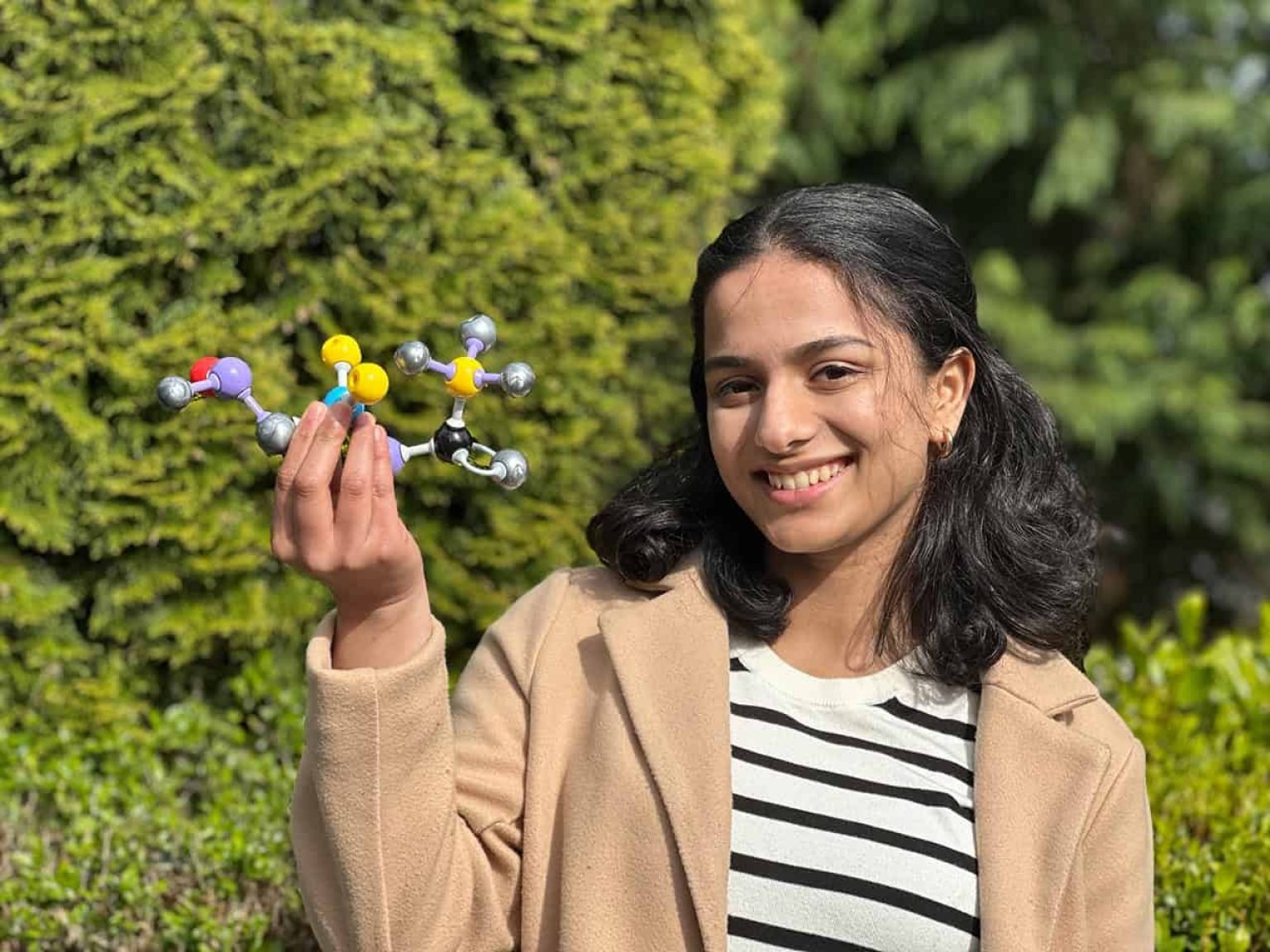
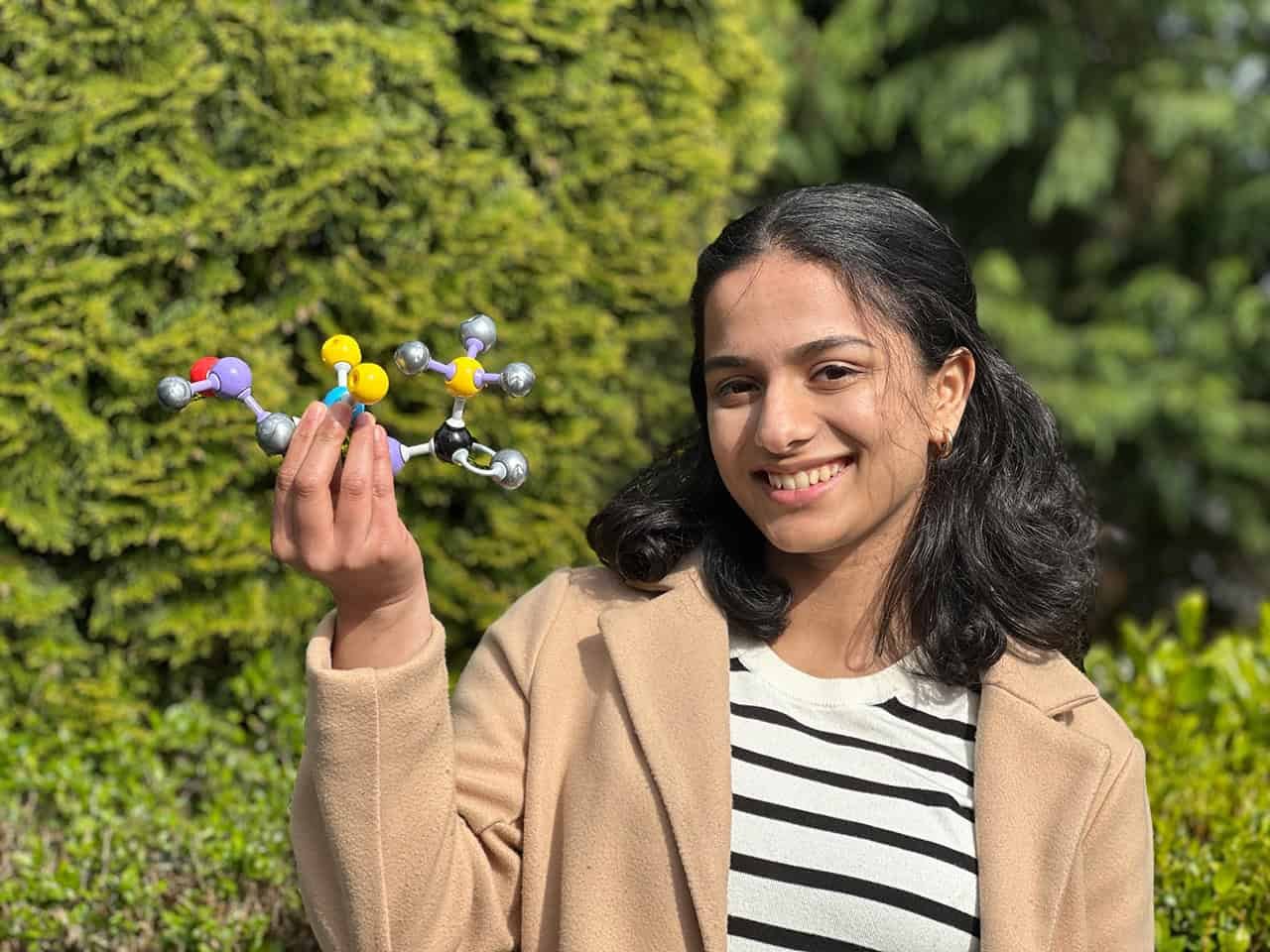
What if the plastic we throw away tomorrow could help clean up the plastic we threw away yesterday? That is the unusual idea behind Eco Purge, a plant-based biodegradable plastic developed by 18-year-old Arya Satheesh in Ireland.
Unlike other plastic alternatives, this material does more than simply replace conventional plastic. After use, it breaks down and releases enzymes that can attack existing PET microplastics in soil and water.
“Eco Purge is designed to both replace plastic and help remove existing microplastics, and this is just the beginning, and I hope it can become a scalable solution that makes a real difference,” Arya said.
In a world that has reached a point where microplastics have made their way into our food and water supply, Eco Purge could offer a new way to fight the pollution that has become nearly impossible to remove.
From detecting microplastics to fighting them
Microplastics are generally defined as plastic particles smaller than 5 millimeters (about one-fifth of an inch). They are now widespread across ecosystems and have also been detected in humans and animals. Their small size makes them particularly difficult to remove once they enter the environment.
“Microplastics can act like toxic sponges in our ecosystems, absorbing heavy metals and synthetic chemicals,” Charles Rolsky, an expert on microplastic pollution, told Smithsonian Magazine.
Satheesh became interested in the problem while working on an earlier project for SciFest, Ireland’s largest second-level STEM fair program. She developed a smart water monitor to detect contaminants in drinking water. However, the project soon made her realize that there is no good in detecting microplastics if we cannot do much about them afterward.
Ultimately, this led to the development of Eco Purge. The idea is surprisingly simple. Satheesh wanted to make a biodegradable plastic from plant-based material and incorporate an enzyme into it.
When the material is discarded and begins to break down, an enzyme is released, which can then help degrade nearby microplastics. The enzyme targets PET-derived plastics, a common material used in packaging and textiles.
However, this isn’t an entirely new idea. In the past, researchers have increasingly explored enzymes and biological systems capable of breaking down plastics, although these approaches remain difficult to deploy on a large scale.
For example, a 2026 study proposes a ‘living plastic’ containing Bacillus subtilis spores engineered to produce two plastic-degrading enzymes.
Another study from Cornell University investigated an enzyme capable of breaking down PET under conditions found in sewage sludge, suggesting that wastewater treatment could eventually become another place to tackle plastic pollution.
Satheesh’s idea differs in where the enzyme is delivered. Rather than bringing contaminated material to a treatment system, the biodegradable plastic itself becomes the carrier.
Turning an idea into a working prototype
Getting the right enzyme was one of the biggest obstacles. Satheesh found that only a few companies were working with the enzyme she needed, and the material was far beyond what a student could easily afford.

To track down the enzyme she needed, Satheesh used ChatGPT to identify companies in Europe and the US that were working with it and then contacted them. Several companies offered to sell it, but the price was prohibitive.
“But it was really expensive for me to buy as a student. Around three milligrams cost about $2,500,” she added.
After several unsuccessful attempts, she contacted Kevin O’Connor, director of BiOrbic, Ireland’s National Bioeconomy Research Centre. Although he did not initially have the enzyme, he offered to obtain it from elsewhere.
“He sourced two types of enzymes from Denmark and Germany for me, and he sent them to Atlantic Technological University, a nearby college that helped me keep this enzyme safe,” Satheesh said.
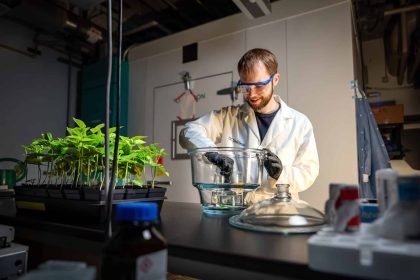
Satheesh presented an early proof of concept at the Stripe Young Scientist & Technology Exhibition in January. She then continued developing the material, eventually testing Eco Purge in soil, salt water and fresh water.
For each test, she placed a measured amount of microplastic alongside Eco Purge and monitored the samples for six weeks. When she checked the samples six weeks later, the Eco Purge had biodegraded, while the microplastic in the tests had also broken down.
A promising idea with some big hurdles
Eco Purge’s unusual approach has already earned Satheesh international recognition. In May 2026, she was named the European winner of The Earth Prize, a global environmental competition for young people aged 13 to 19.
The award came with $12,500, which she plans to use to further develop the material.
However, it won’t be that easy.
Eco Purge is still a prototype, and several hurdles remain. For instance, its enzyme targets PET, meaning it cannot break down every kind of microplastic. In open settings, the enzyme could also become diluted before it reaches enough plastic to make a difference.
“In open ecosystems, released enzymes will probably dilute into surrounding soil and water, limiting their contact time and ability to break down nearby particles,” Rolsky said.
Moreover, enzymes can be damaged by the high temperatures used in conventional plastic manufacturing, so producing Eco Purge cheaply at an industrial scale could be difficult.
Overcoming these limitations will take time. Satheesh now plans to spend the next five years improving the material and exploring its use in packaging, compost bags and garbage bags. Whether Eco Purge can eventually work outside controlled experiments remains to be seen.
However, her journey from a school project to a working prototype offers an encouraging reminder that big environmental problems can sometimes begin with a simple question—and the determination to keep looking for an answer.