





Stepping Into the Third Dimension: Reviewing Acer’s Glass-Free Stereoscopic Gaming Laptop
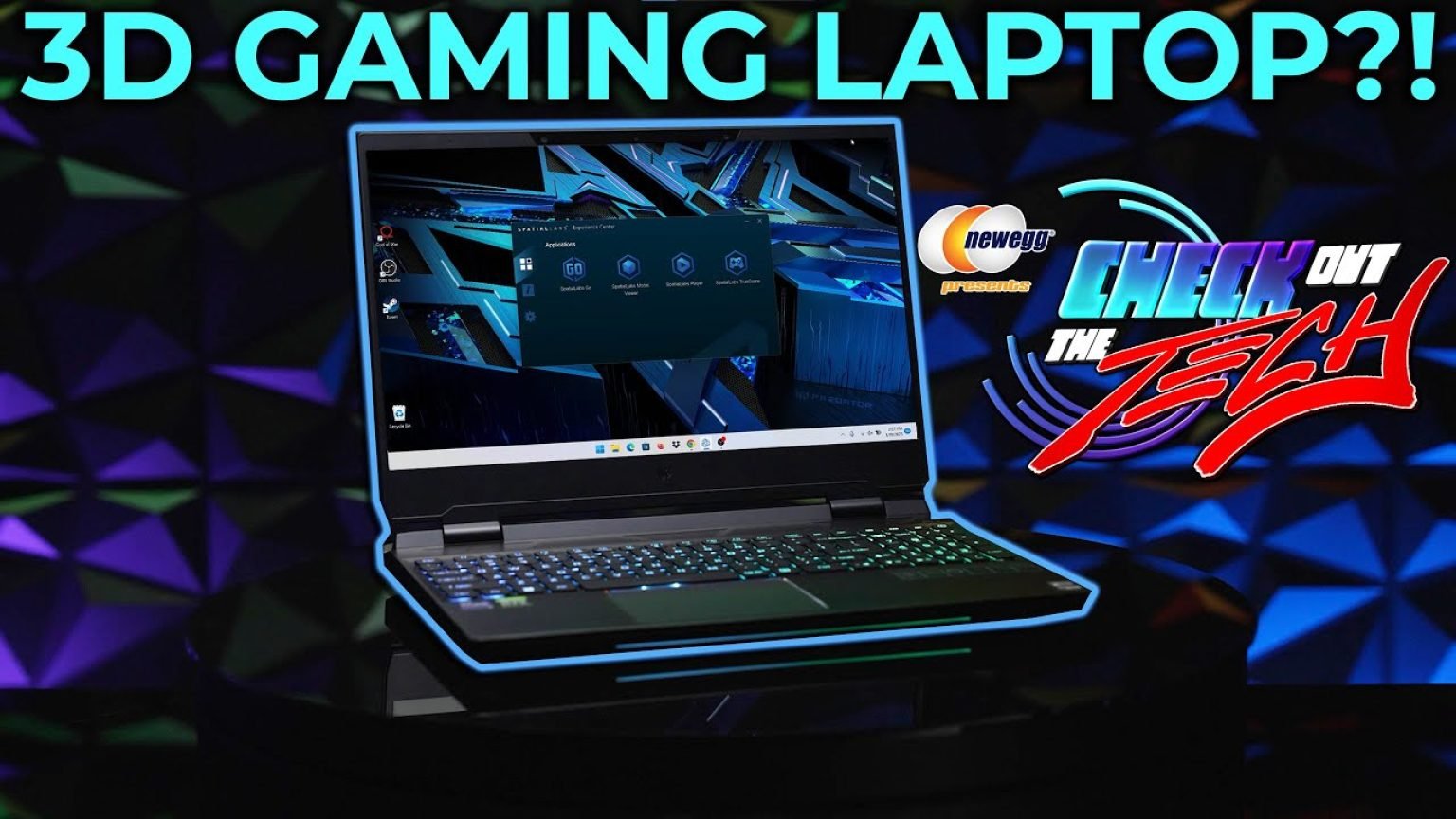
For decades, stereoscopic 3D gaming has lived in a frustrating purgatory of proprietary glasses, clunky software layers, and niche adoption. But as display technology matures, manufacturers are finding new ways to trick our eyes without requiring uncomfortable eyewear. Enter the Acer Predator Helios 300 SpatialLabs Edition—a machine that drops glasses entirely in favor of eye-tracking sensors and a specialized lenticular lens. Recently put through its paces via Newegg Studios, this portable powerhouse promises to alter how we experience digital environments, blending high-end mobile computing with cutting-edge visual tech.
As gaming laptops become increasingly homogenous, focusing primarily on iterative generational bumps in processors and graphics cards, Acer’s willingness to experiment with stereoscopic depth stands out. But does this glasses-free 3D gimmick actually enhance gameplay, or is it merely an expensive party trick for early adopters? Let’s dive deep into the hardware, performance metrics, and overall user experience.
Under the Hood: Raw Performance and Architectural Breakdown
Beneath the eye-catching stereoscopic display lies a heavily armed gaming machine built to handle the intense computational load of rendering two distinct perspectives simultaneously. Driving the core processing is a high-performance Intel Core processor paired with a robust mobile graphics architecture from Nvidia. Rendering true real-time 3D requires pushing nearly double the frame data compared to traditional 2D gaming, making a top-tier GPU mandatory.

Congressman Scott Perry Exposes Major Washington Overreach During Live TeleTown Hall
Rep. Scott Perry (R-PA) recently connected with constituents across Pennsylvania's 10th Congressional…
Ryzen 7 7800X3D and RTX 5070 Gaming PC Drops $500 to $1799
Get $500 Off This Ryzen 7 7800X3D and RTX 5070 Gaming PC…
![Wanted: Suspect for Assault in the 9th District [VIDEO]](https://thephillypi.com/wp-content/uploads/2026/09/Wanted-Suspect-for-Assault-in-the-9th-District-VIDEO-768x512.jpg)
Wanted: Suspect for Assault in the 9th District [VIDEO]
Central Detective Division is seeking the public’s help identifying the individual seen…

Rep. Dan Meuser at House Small Business Committee Hearing
WASHINGTON — In an era marked by shifting economic landscapes and regulatory…

Senate Blocks Report on Deaths of 9 Americans in the West Bank After Key 47–51 Vote
WASHINGTON, D.C. — In a 47–51 roll-call vote, the United States Senate…

French Rafales and South Korean F-35As Deepen Strategic Airpower Cooperation in the Indo-Pacific
South Korean F-35A stealth fighters trained alongside French Rafales at Cheongju Air…
Memory bandwidth and storage speeds are equally critical here. The system is configured with fast DDR5 RAM and high-speed NVMe PCIe solid-state storage, ensuring that asset streaming keeps pace with the demands of SpatialLabs TrueGame application profiles. Thermal management is another vital piece of the puzzle; keeping a high-wattage mobile CPU and GPU cool while processing complex spatial rendering algorithms demands aggressive cooling solutions. Acer utilizes custom 5th Gen AeroBlade 3D fan technology and liquid metal thermal grease to dissipate heat efficiently under heavy loads.
The SpatialLabs Experience: How Glasses-Free 3D Actually Works
The crown jewel of this laptop is its 15.6-inch UHD 2D-to-3D convertible display. Unlike traditional screens, this panel features an eye-tracking module mounted above the display, consisting of dual stereo cameras that track head position and eye movement in real-time. A liquid crystal grating lens is bonded optically over the top of the panel, refracting light rays separately to the left and right eyes.
- Eye-Tracking Precision: The cameras map your face instantly, adjusting the viewing angle dynamically as you shift in your seat.
- TrueGame Integration: Acer’s proprietary software suite includes pre-configured profiles for dozens of AAA titles, injecting depth maps and real-time geometry into standard games.
- Dual-Mode Versatility: When you aren’t gaming in 3D, the display functions as a standard, color-accurate 4K IPS panel for everyday productivity and content creation.
In practice, the effect is remarkably immersive. Titles like Cyberpunk 2077 and God of War take on a diorama-like depth that traditional flat screens simply cannot replicate. Particles pop off the screen, UI elements hover naturally in the foreground, and depth perception adds a tangible sense of scale to sprawling open-world environments.
Thermal Performance, Ergonomics, and Value Proposition
Pushing hardware to its limits inevitably introduces thermal and power challenges. During extended gaming sessions with the SpatialLabs mode active, the fans ramp up audibly to keep core temperatures in check. While the cooling solution does a commendable job of preventing thermal throttling, the chassis—particularly around the upper keyboard deck—can get quite warm.
Ergonomically, the device maintains the aggressive, RGB-heavy aesthetic typical of the Predator lineup. Connectivity is comprehensive, featuring modern I/O ports including Thunderbolt 4, HDMI 2.1, and high-speed USB-A ports, making it easy to hook up external peripherals, high-refresh monitors, or VR headsets.
Priced as a halo product, this notebook is not aimed at budget-conscious buyers. It represents a significant financial investment targeted squarely at developers, content creators, and bleeding-edge enthusiasts who want to experience the future of display technology today. While standard laptops offer better raw price-to-performance ratios in 2D gaming, few can match the unique spatial visualization capabilities packed into Acer’s innovative chassis.