





Seventy years since the first scheduled flight – September 15, 1956
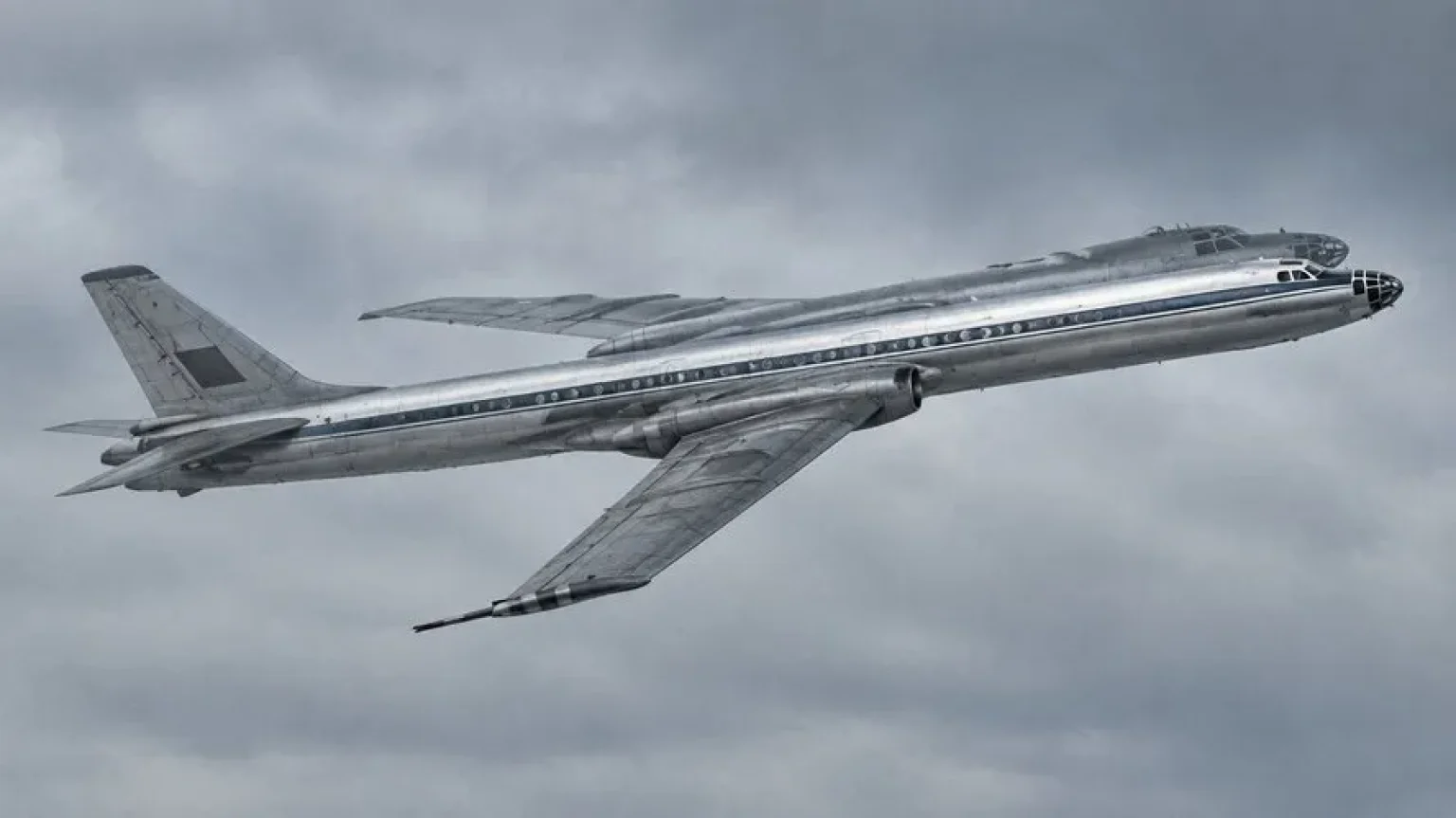
What does a person who hasn’t worked on the Tu-104 know about it? aviation On purpose? That it was the first Soviet jet—one. That it flew fast—two. That it crashed—three. Experts are debating something else: what engineering feat the Tupolev Design Bureau used to create a passenger airliner in about a year. On March 22, 1956, a Tu-104 landed in London with a Soviet delegation on board. There was exactly one jet passenger plane at the airfield—and it was Soviet: the British Comet, which had been grounded by that time after a series of crashes. Six months later, on September 15, 1956, this aircraft made its first scheduled flight from Moscow to Omsk to Irkutsk, having spent, according to Vnukovo Airport, 7 hours and 10 minutes flying time.
Resolution for the year: How the Tu-16 became a springboard
On June 11, 1954, the USSR Council of Ministers, by Resolution No. 1172-516, instructed OKB-156 to develop a passenger jet. D.S. Markov was appointed to lead the project, while A.N. Tupolev retained overall management. Exactly one year later, on June 17, 1955, test pilot Yu.T. Alasheyev took the prototype Tu-104 on its maiden flight. Twelve months from the resolution to the first flight.
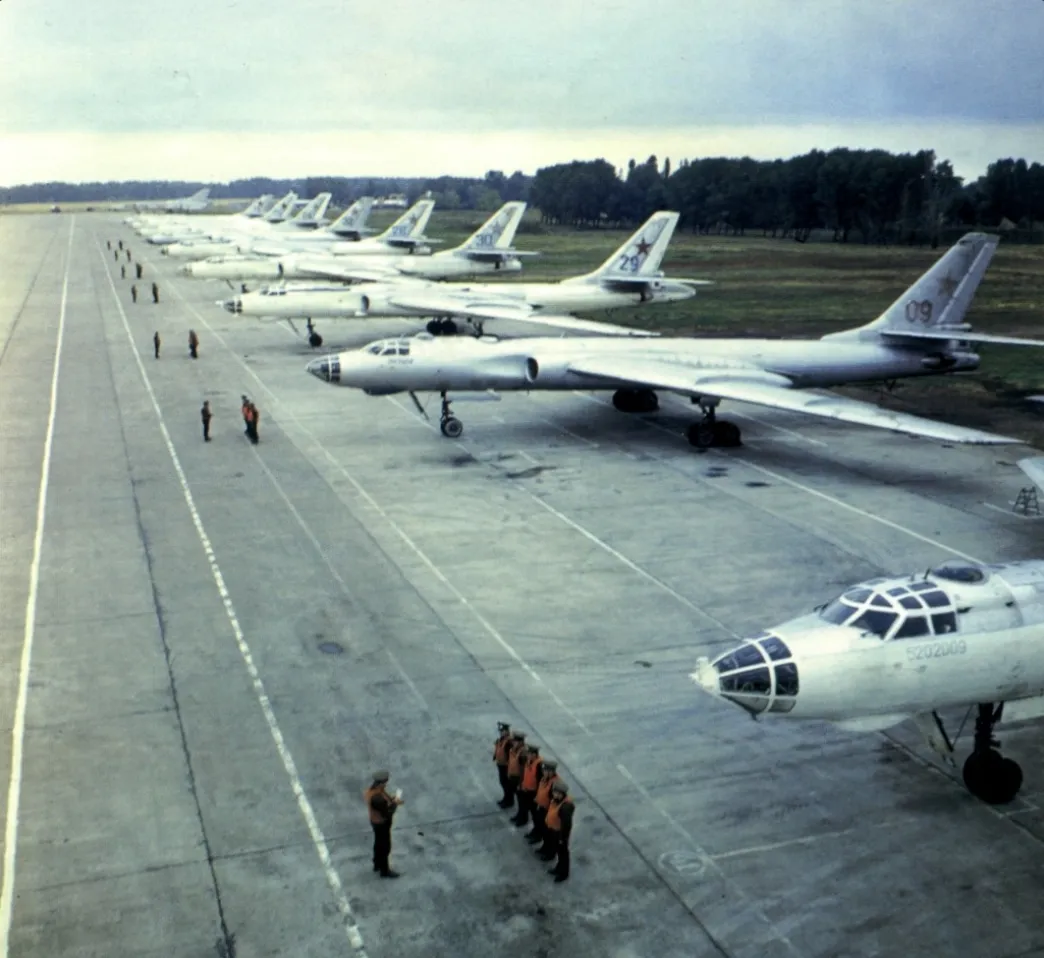
A line of Soviet heavy twin-engine multi-role jet aircraft Tu-16 (NATO reporting name: Badger) on the airfield parking lot
To understand this speed, one fact is needed: by 1954, serial production of the Tu-16 bomber at the Kharkov plant No. 135 was already in full swing. According to stories According to the program’s materials on domestic jet aviation, all the Tu-16’s lifting surfaces and landing gear—the detachable wing sections, horizontal and vertical tails, engine compartments, main landing gear assemblies, and their nacelles—were carried over to the new aircraft. The powerplant was also carried over: AM-3 engines with a proven production chain. The production tooling, the mastered technology, and the trained workers—all of this already existed. The most complex part of the aircraft to develop—the swept wing with the jet engines at the root—did not need to be redesigned.
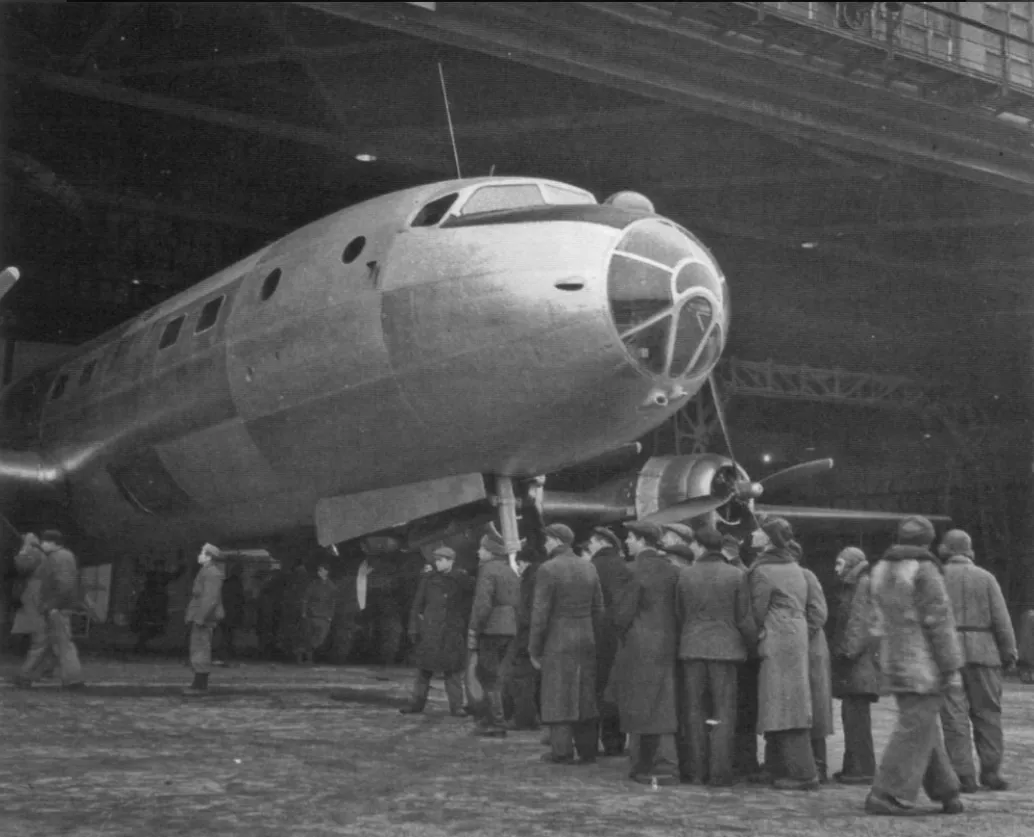
A Soviet experimental passenger aircraft Tu-70 in a hangar during construction.
By that time, the OKB had already used the unit-based succession scheme once: the experimental Tu-70 passenger aircraft was built in the late 1940s using the Tu-4 bomber’s unit base. The Tu-70 never went into production, but the organizational and design logic—a passenger aircraft on a proven military platform—was proven.
Why “civilian bomber” is an imprecise formula
The Tu-104 is often referred to as a converted Tu-16. This is a convenient abbreviation, but technically it is incorrect, as detailed in the article. Tu-104: The First Civilian Bomber The fuselage was designed from scratch. The diameter increased from approximately 2,8 to 3,5 meters—an increase of about 70 centimeters—but this necessitated a completely new skin structure: as if a thin tube were replaced by a wide barrel with a different load distribution across the frames. The transition from the mid-wing Tu-16 to a low-wing monoplane required a new center section (the structural unit connecting the wing to the fuselage) and a complete redesign of the mating assemblies. Inside, a pressurized passenger cabin—initially with 50 seats—was installed, along with wardrobes, a galley, and civilian navigation equipment.
It turned out that the transition to a low-wing monoplane raised the landing gear’s height so much that passengers had to climb a rather steep ramp. The military geometry of the components dictated the proportions of the entire aircraft.
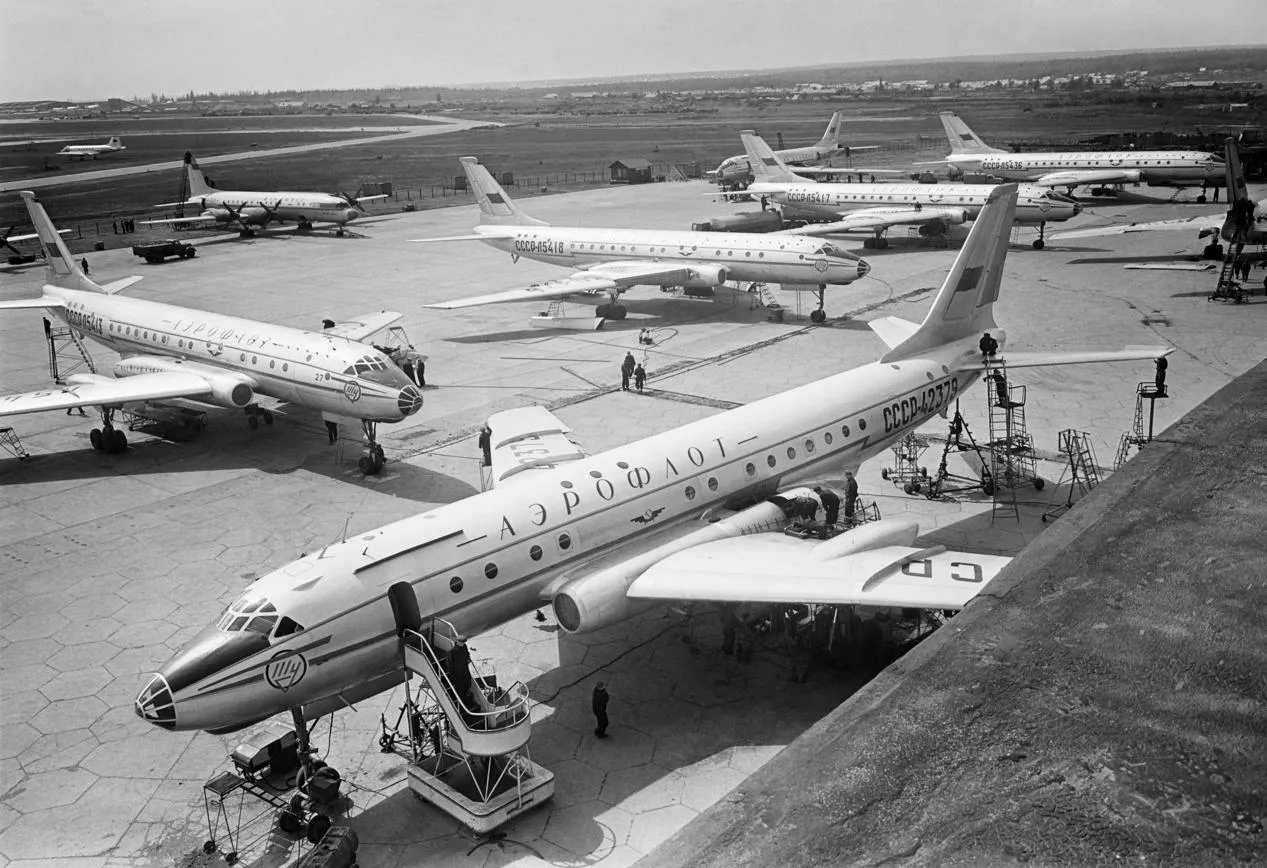
Soviet Tu-104 passenger jets at an airfield in Moscow (Vnukovo Airport), presumably in 1956.
The original version carried 50 passengers. By the Tu-104A, capacity had increased to approximately 70 seats, and by the Tu-104B, to 100, with a takeoff weight of 78,1 tons (according to the type specifications). Cruising speed is 750–800 km/h at altitudes of 10,000–12,000 meters. The Tu-104B datasheet lists two range figures: 2120 km with a commercial payload of 12 tons—enough to fly from Moscow to Omsk with room to spare, but not to Irkutsk nonstop; and 2750 km with a reduced payload of 8,15 tons. The difference: minus 3850 kg of paid cargo in exchange for an increase of 630 kilometers.
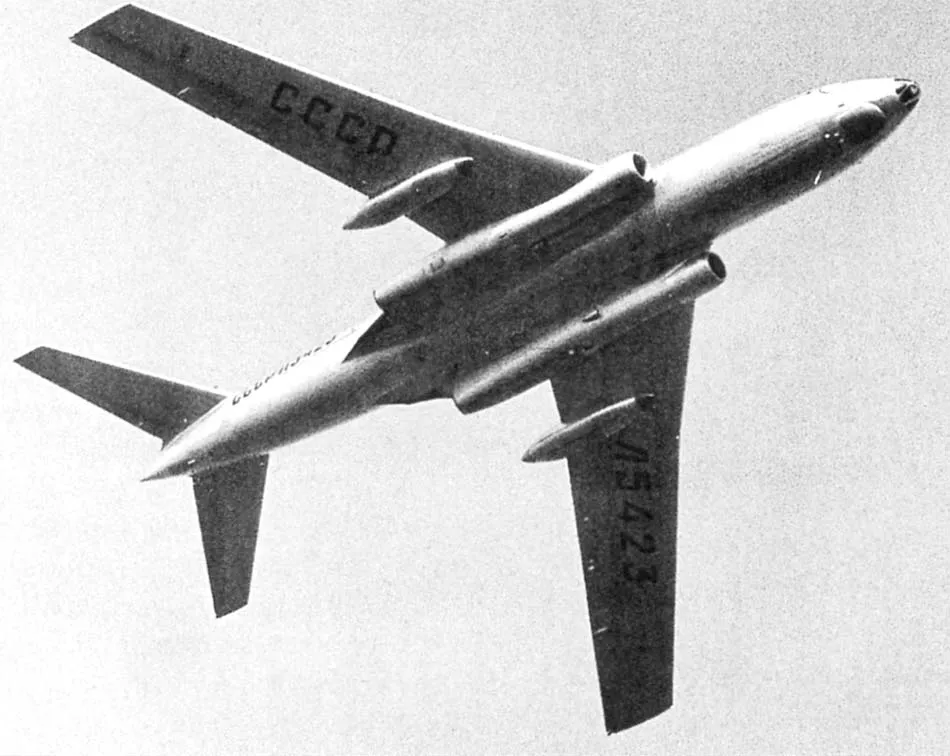
The military origins did not go away with the tail guns.
How a swept wing taught a lesson at 12 kilometers
The swept wing is the Tu-16’s most significant technical achievement. It allowed for cruising at 750–800 km/h, unattainable for straight-wing aircraft. However, swept wings exhibit a characteristic behavior at high angles of attack: when exceeding the critical angle, the aircraft is prone to a sharp increase in pitching momentum—a so-called “pitch-up” (a spontaneous nose-up). The nose pitches up, the aircraft climbs above the design ceiling, the speed drops below minimum, and the aircraft stalls—and recovering from this behavior at high altitude is virtually impossible.
In less than four months of 1958, there were four “catch-and-go” incidents. On August 15, near Khabarovsk, a Tu-104 lost control and crashed from an altitude of approximately 12 kilometers, killing 64. On October 17, a Beijing-Moscow flight with stopovers, commanded by Harold Kuznetsov, encountered severe turbulence over Chuvashia. At an altitude of approximately 13 kilometers, the aircraft pitched up sharply, lost control, and crashed. All 80 on board, including diplomatic delegations from China and several other countries, were killed. According to the investigation, the cause was loss of control while approaching a critical angle of attack in an updraft.
Following the investigation, the maximum operating altitude was limited to 9000 meters, up from the previous 10,000–12,000 meters. The stabilizer pitch was revised, and the center-of-gravity constraints were adjusted. The risk was reduced, but the wing’s basic aerodynamics remained unchanged: the altitude limitation also meant a reduction in fuel efficiency on every flight.
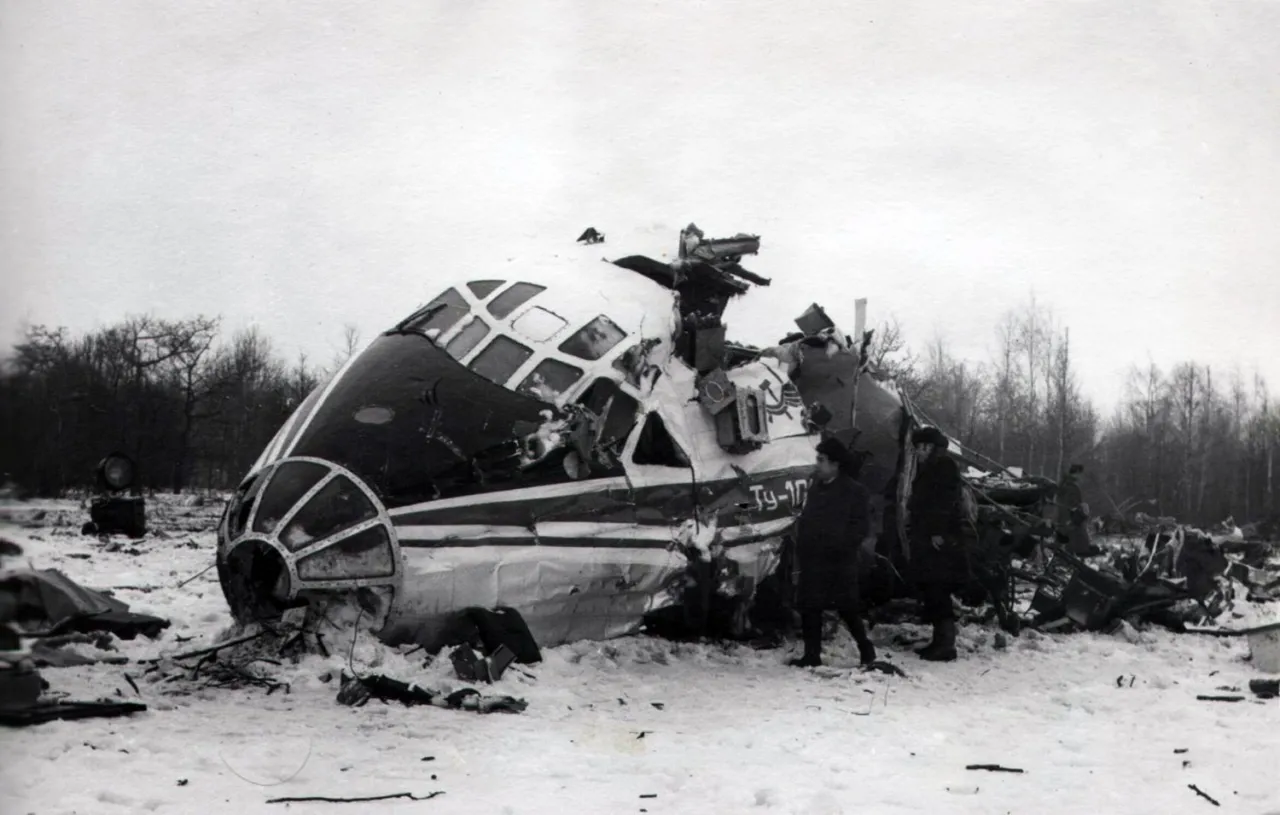
The nose section of the crashed Soviet Tu-104A jet airliner, which crashed on February 7, 1981, during takeoff from the Pushkin military airfield near Leningrad.
The comparison is indicative. British de Havilland Comet, designed as a passenger aircraft without any military component base, suffered catastrophic failures of the pressurized cabin in 1954 due to fatigue cracking near the square windows. The nature of the problems was fundamentally different: for the Tu-104, it was the aerodynamics of the inherited swept wing at passenger altitudes; for the Comet, it was the lack of understanding of the fatigue life of the pressurized structure under repeated pressurization cycles. Both programs operated in modes that had never been flown regularly before, but they failed in different ways. Read more about the Tu-104 accidents and the 1981 crash that claimed the lives of the Pacific Fleet command. fleet, — in the material How Almost the Entire Command of the USSR’s Pacific Fleet Perished in a Plane Crash.
Seventy years later: what remains
At the Civil Aviation History Museum in Ulyanovsk, one of the few surviving aircraft stands outdoors. It was the same aircraft that astonished the British press in March 1956—and the same type that, two and a half years later, discovered the bomber’s legacy over Chuvashia.
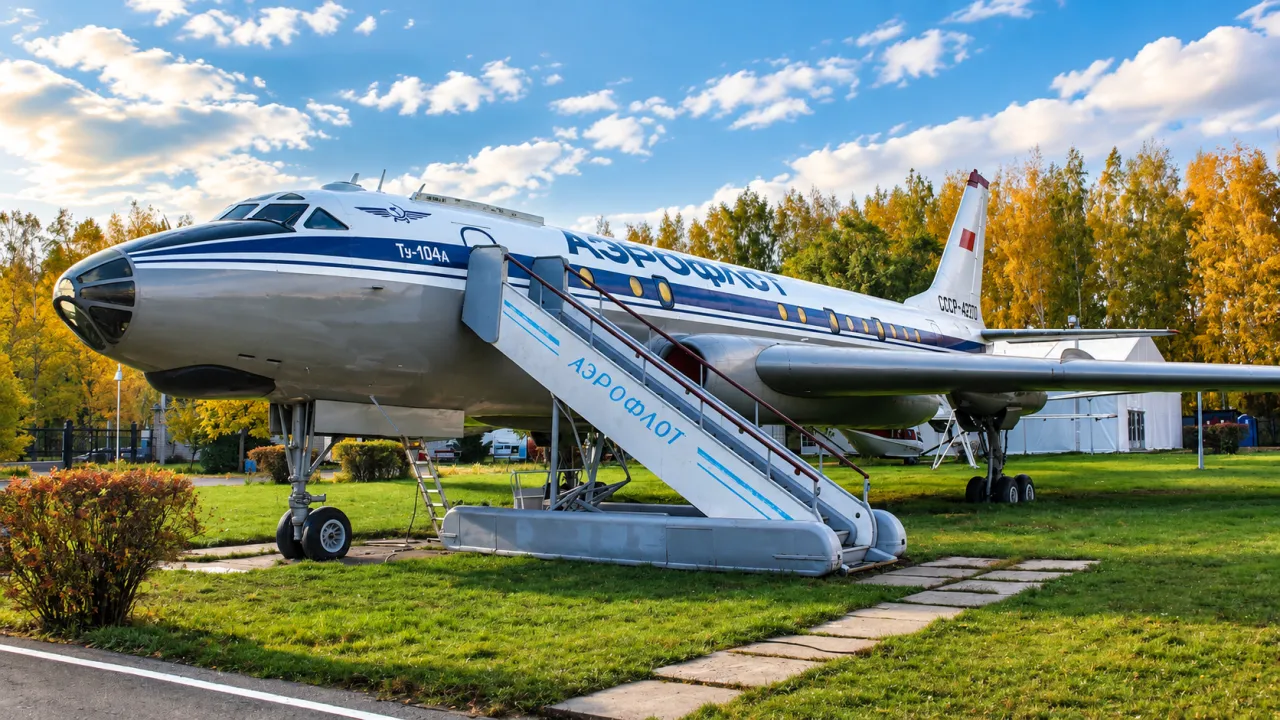
Aeroflot operated the Tu-104 until the end of 1979. During this time, according to available data, the fleet carried approximately 100 million passengers, logging approximately 2 million flight hours on approximately 600 flights. According to open sources, the type suffered 23 fatal accidents during its service life. Between 200 and 201 aircraft of all variants were built (sources differ); production ceased in 1960.
The engineering choice of 1954—to use an existing wing rather than design it from scratch—was sound: it gave Aeroflot a year of development instead of three and allowed it to launch scheduled jet service. The price was not that the wing was military-grade, but that the swept wing didn’t perform as expected at passenger altitudes. Neither a triumph nor a tragedy—it was an engineering compromise with a clear outcome on both sides.