









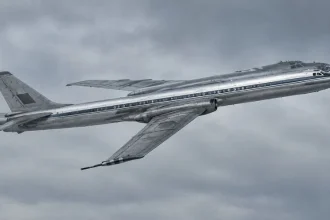





Tu-22M and Tu-160 – from the experimental Project 145 to the Tu-160M
Variable-sweep wings are usually considered a compromise: they were resorted to when thrust or computing resources were insufficient. The logic is clear: powerful turbofan engines and digital control systems were developed, and the concept should have become obsolete. But the Tu-160 still flies. And the Tu-160M program continues.
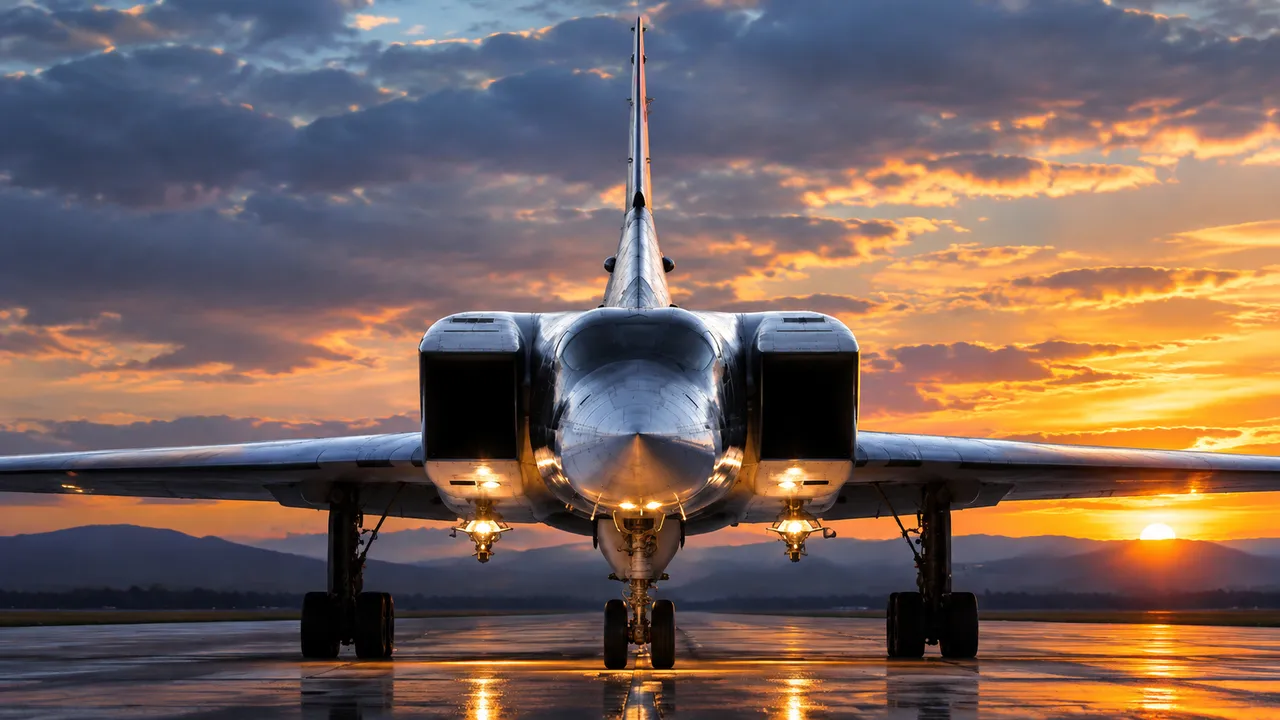
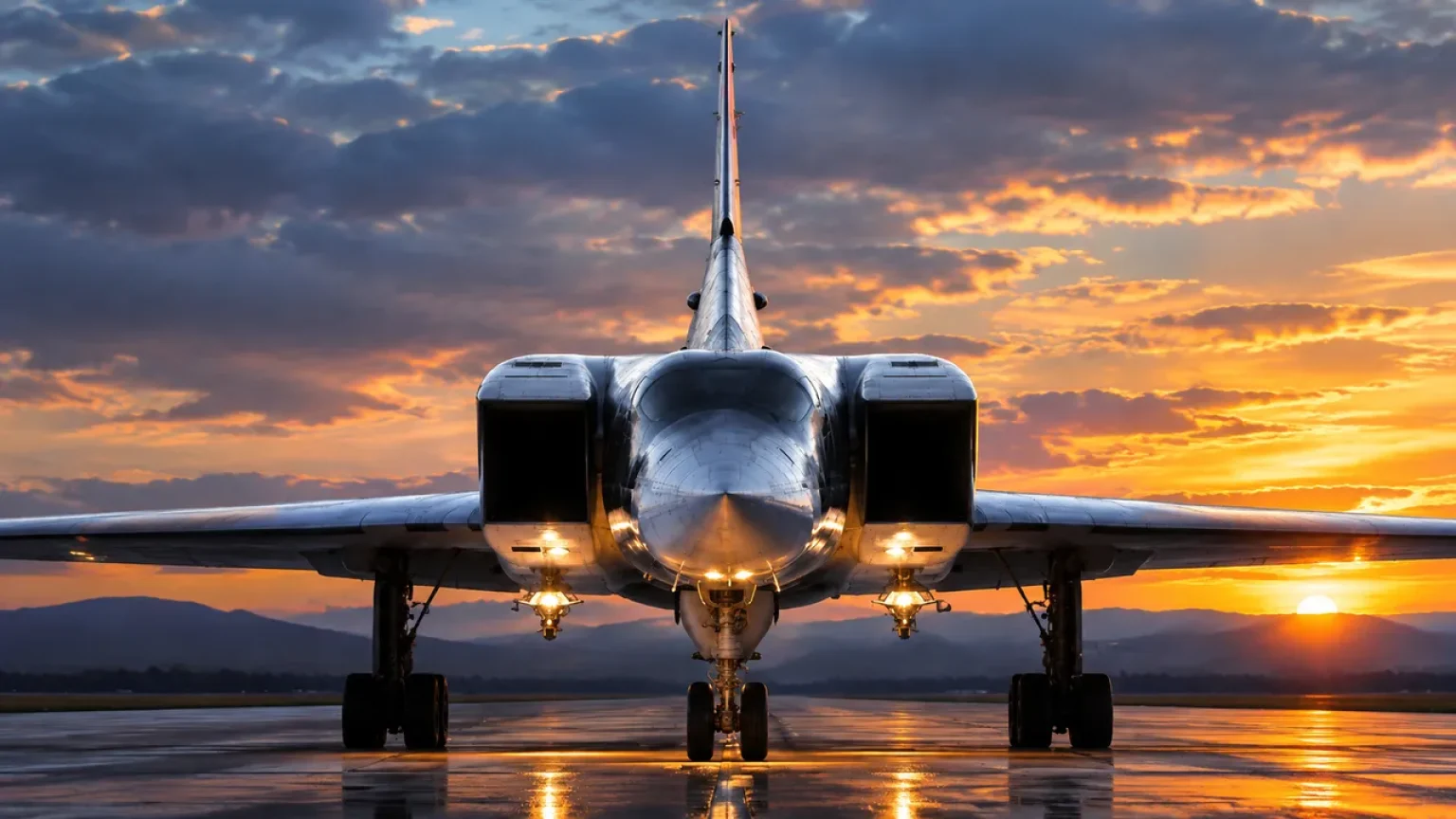
It’s not a matter of conservatism or procurement inertia, although both factors are present. It’s a matter of the task itself. For an aircraft with a long range, a supersonic section, and internal cargo compartments, a variable-sweep wing is one of the few ways to combine a fully loaded takeoff, a sprint, and a fuel-efficient cruise on the return leg. It’s precisely this combination of conditions that makes the design work.
Almost Not a Tu-22: How Project 145 Came to Be
On August 30, 1969, an aircraft that barely appeared under its current name in public documents of the time took to the air. Its factory designation was “145.” According to the description of the Tupolev Design Bureau Museum exhibit, the first design proposal generally followed the Tu-22’s layout; as development progressed, the aircraft diverged so much from these concepts that the serial Tu-22M is no longer a major modification, but an aircraft with a different layout.
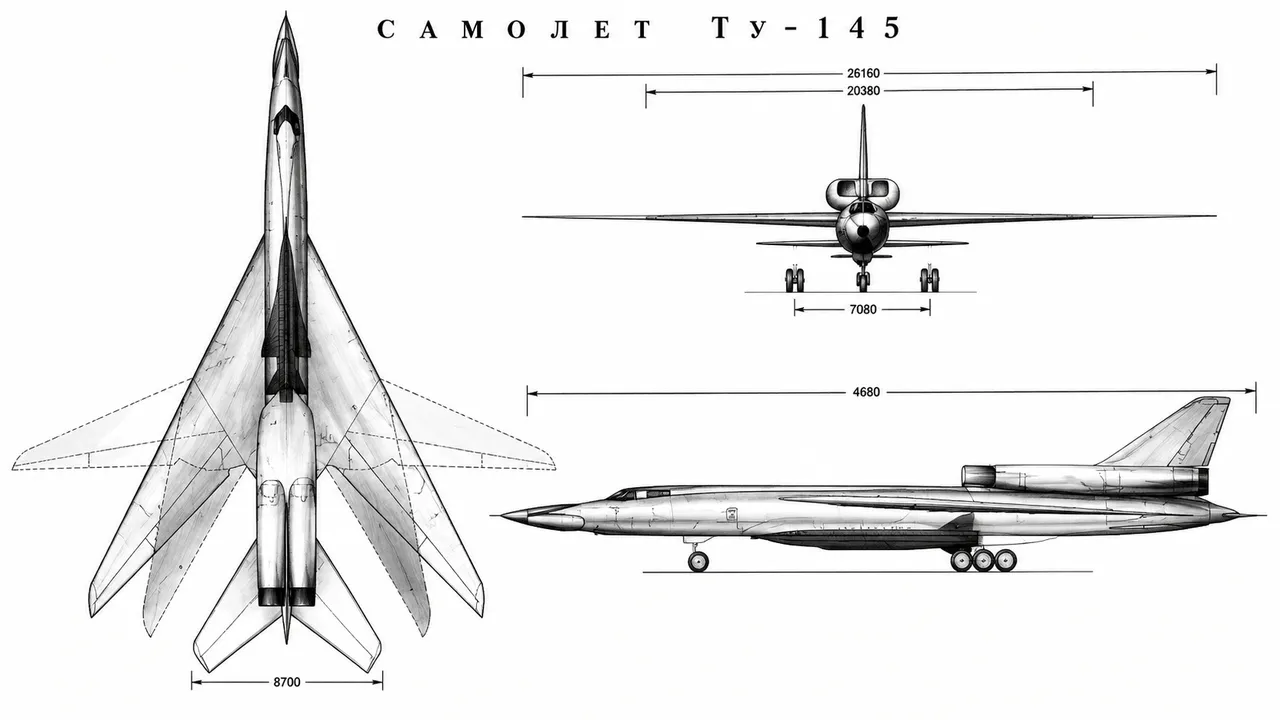
The Tu-22 was a long-range supersonic bomber with a fixed swept wing and two tail engines. Operation proved challenging: its handling characteristics required extensive training, and upgrades were scarce. The Tupolev Design Bureau’s task—a long-range missile carrier capable of operating in any weather at high speed and carrying a payload—required a fundamentally different aircraft.
The Tu-22 and Tu-22M retained the role of a long-range missile-carrying bomber, some of the ground infrastructure, and the organizational continuity of the program. The aerodynamic design, wing, engine placement, air intakes, landing gear, and a significant portion of the fuselage were all redesigned or started from scratch. The term “Tu-22 with variable wings” does not describe the continuity of the airframe, but merely the recognizable silhouette and the general name of the program.
The Kazan plant was to master the variable-sweep wing for the first time. According to Vladimir Buznitsky’s memoirs, published by Respublika Tatarstan in 2020, when launching production, it was necessary to incorporate the experience of Su-17 production in Komsomolsk-on-Amur. Transferring production experience is not borrowing the design, but it demonstrates how new the task was for the plant.

THE DEAD MMORPG SURVIVOR: How Dragon Nest Transformed Fast-Paced Action Combat—And Why Fans Refuse to Let It Die
LOS ANGELES, CA — Long before modern action RPGs dominated mainstream gaming…

CIA Chief's Moscow Trip Was About Iran, Not A NATO Warning: Estonia's Ex-President
Speculation has abounded over the nature of CIA Director John Ratcliffe's surprise Tuesday…

Hermit crabs and cockroaches are acting as gardeners for a parasitic plant
Hermit crab. Image via Wiki Commons. In the humid, coastal forests of…

Rep. Meuser FSC Hearing
As Capitol Hill navigates complex economic pressures and regulatory policy debates, key…

The journey from the “145” to the production Tu-22M3 took nearly a decade: the M0–M3 modifications successively refined the design, aerodynamics, and instrumentation, without changing the basic variable-sweep wing configuration. The Tu-22M3’s maiden flight took place on June 20, 1977, according to the official UAC report. Manufacturer: Kazan aviation a plant that would later produce the Tu-160.
Mechanics: What a variable-sweep wing offers and what it costs
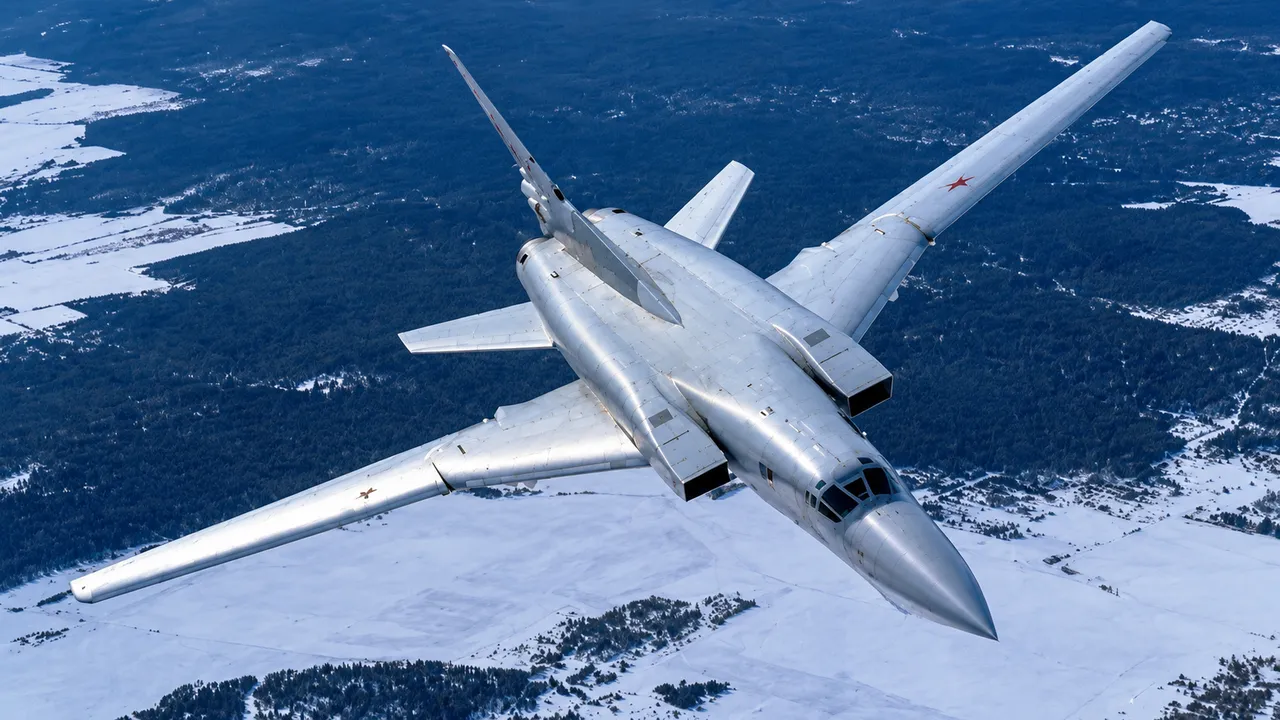
What does changing the sweep angle achieve? A small sweep angle increases the effective wingspan and lift during takeoff and low speeds, while a large sweep angle reduces wave drag at high speeds. At the same time, the position of the aerodynamic focus, longitudinal stability, and the effectiveness of the high-lift devices change.
The price for this comes in the form of weight and complexity. The rotating wing panels require powerful hinges and actuators, and the airframe requires a reinforced center section: all of this is designed to withstand the heavy loads associated with sweep changes in flight. This cost depends on the calculated loads and the specific design. There’s no single rule that says it automatically pays for itself on a heavy aircraft—and there’s also no data to compare the Tu-22M3 and Tu-160 with hypothetical fixed-wing aircraft.
But the heavy carrier’s task itself is structured differently, and this is more important than weight proportions.
On a light tactical aircraft with external hardpoints, a variable-sweep wing creates a separate problem: the pylon on the rotating console either has to be deployed synchronously with the wing, or it narrows the available sweep range. As a result, the MiG-23 carried its main armament under the fixed wing and fuselage. The Tu-160 avoids this problem by design: weapon — in the internal cargo compartments, the pods are free. Internal placement alone doesn’t eliminate restrictions on operating modes and loading, but it does eliminate the need to coordinate the pod’s rotation with the pylon mounted on it. The Tu-22M3 is more complex: in addition to internal, it also allows for external pod options, and the issue of coordination returns.
The operational envelope is a separate issue. One possible profile: takeoff with maximum payload, route on a fuel-efficient cruiser, low-altitude breakthrough, and, if necessary, acceleration to high supersonic speed, with a significantly easier return. The standard combat profile isn’t described in open sources—it’s an illustrative diagram, not a document. But it’s precisely this spread, from low-speed takeoff to supersonic breakthrough, that’s the reason the diagram was included in the design. At a low angle, the Tu-22M3’s wingspan is 34,28 meters, according to UAC data; switching to a high sweepback changes not the fine-tuning, but the aerodynamic envelope itself.
“Product 70”: Tu-160 and the Price of Scale
A new competition for a promising strategic bomber was announced in the early 1970s; full-scale work began in the middle of the decade. The requirements were compiled into a list, each point contradicting the next: intercontinental range and long rocket load, supersonic section at final and acceptable takeoff distance, the ability to operate from existing airfields.
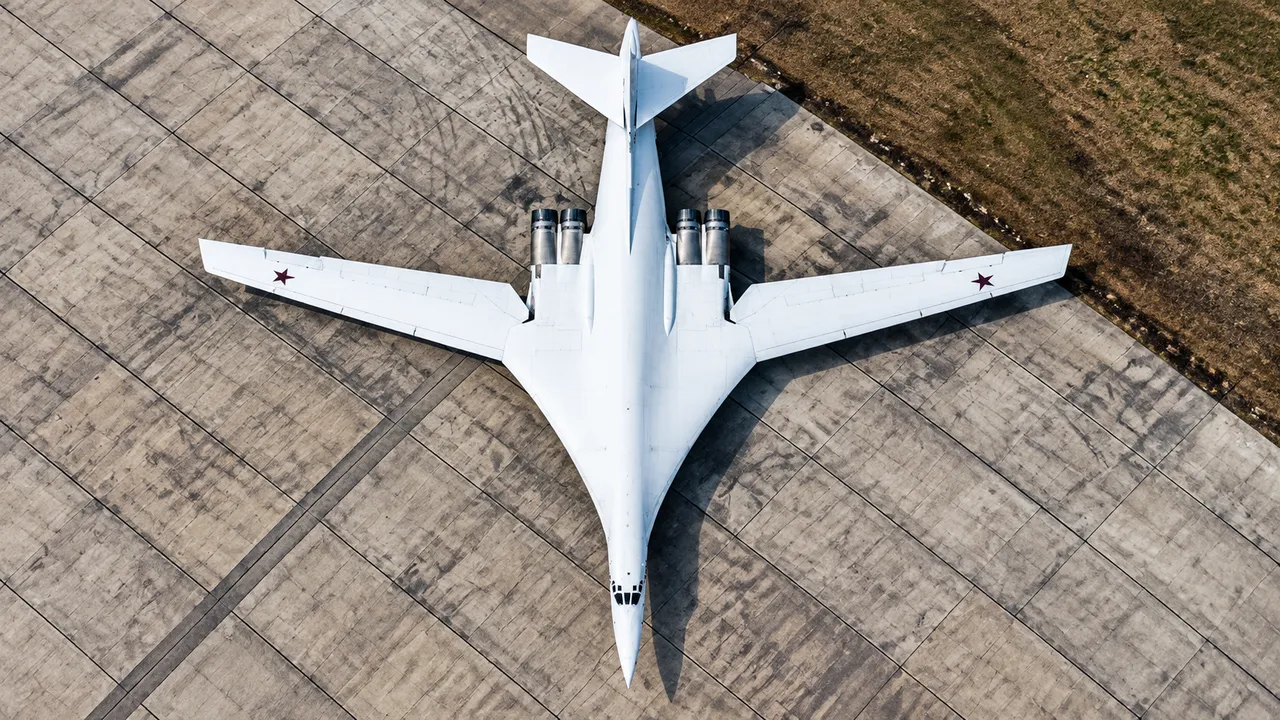
The first flight took place on December 18, 1981. The aircraft received the factory designation “Product 70”; in open sources, it is known as the Tu-160.
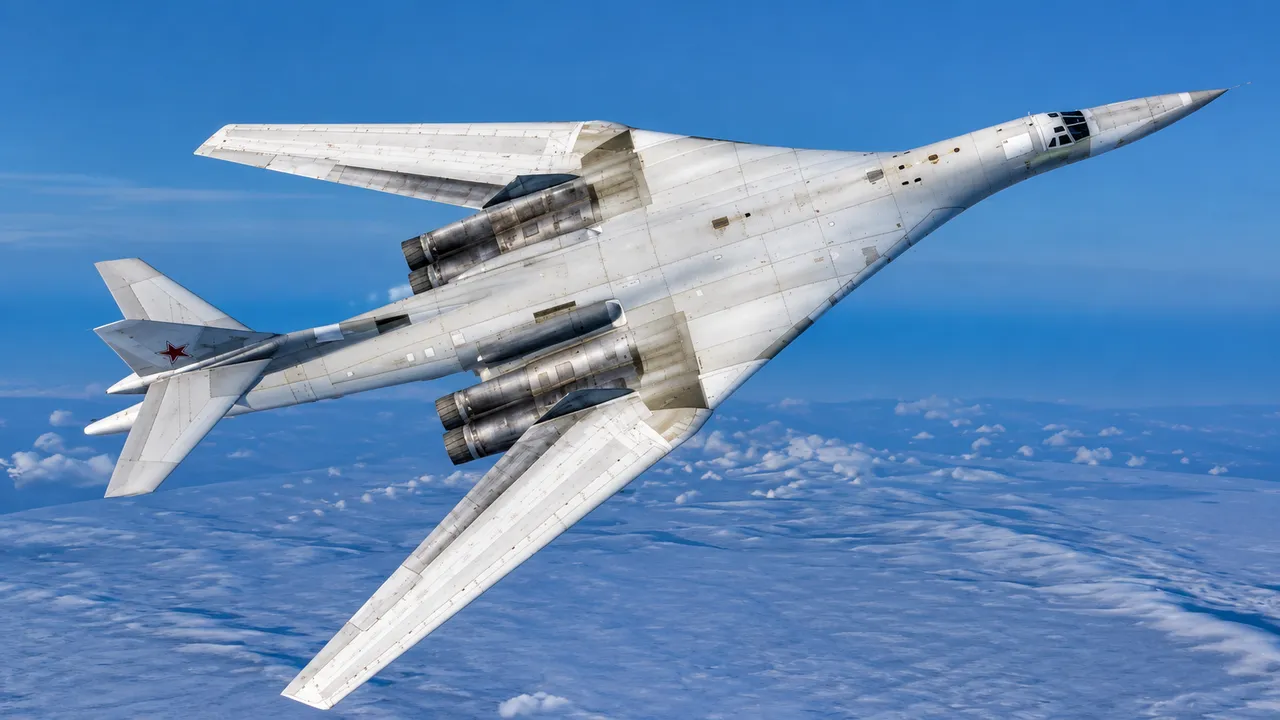
Wing geometry: at minimum sweep, the Tu-160’s wingspan reaches 55,7 meters, and at maximum, 35,6 meters. According to UAC, the angles vary between 25 and 60 degrees along the quarter-chord line; other sources cite different ranges, and this remains an open question. Four NK-32 engines are mounted in pairs in ventral nacelles; two internal cargo compartments accommodate cruise missiles on drum-type launchers.
This scale has a production cost. The Tu-160’s central power unit is a titanium beam weighing approximately six tons, welded together from several parts. Both wing sections and landing gear hinges are attached to it, so it’s not the pure weight of the yaw mechanism, but a functioning element of the airframe. Production of this beam ceased in the post-Soviet years. The electron beam welding and vacuum annealing section for titanium structures was restored and modernized; PAO Tupolev announced its launch in May 2017. This isn’t just a scrap of paper: the design has been in use for half a century, and its maintenance requires dedicated production infrastructure.
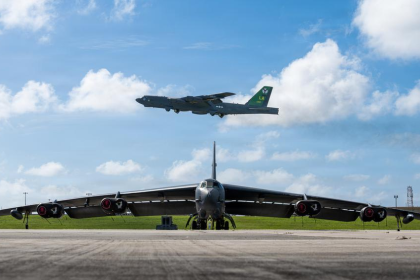
It is this layout—internal compartments plus a variable-sweep wing—that makes the Tu-160 unlike most of its contemporaries. The American B-1B has the same layout and the same four engines with internal compartments. However, the B-1B has significantly different priorities: the official US Air Force report lists its maximum Mach number as 1,2 versus 2,2 for the original B-1A. The lower speed limit was intentional—redesigned air intakes reduced radar signature. Supersonic speed was not abandoned: 1,2 is supersonic, but speed was no longer the primary consideration. Both programs independently arrived at a similar basic architecture with a similar set of requirements: high takeoff weight, internal weapons placement, and a wide range of flight modes. Two different design bureaus came up with the same answer for a similar set of tasks—this doesn’t prove the optimal design, but it also doesn’t seem coincidental. But the B-1B’s shift toward stealth shows something else: it’s not the design itself that matters, but a shifting set of priorities.
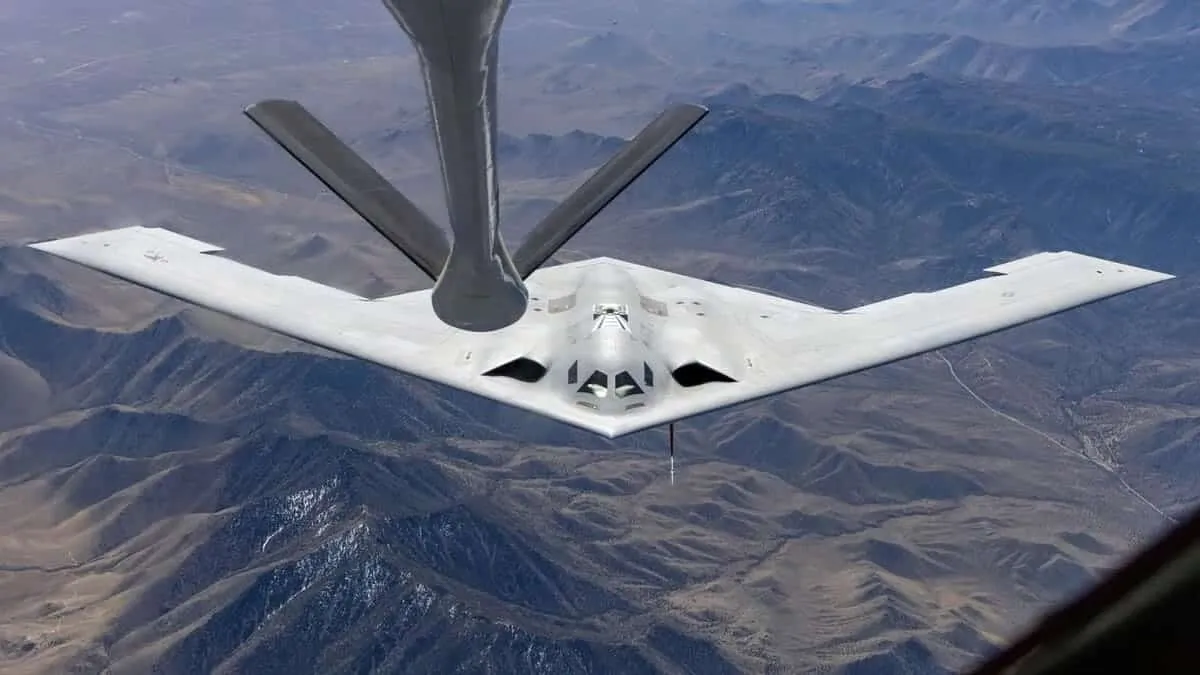
The next-generation American bomber, the B-21 Raider, is built using a fixed-geometry flying wing design. The developer emphasizes stealth, long range, and the ability to penetrate sophisticated air defense systems. Defense; there is no data in the public domain explaining the choice of this particular aerodynamic design. It remains to be noted as an engineering assumption: the flexible joint between the rotating and fixed parts of the wing creates variable gaps and non-uniform radar angles, which is poorly combined with stealth. In this prioritization, supersonic performance has faded into the background—however, there is insufficient public data on the B-21 to attribute the change in concept to a single reason.
Tu-160M: Why continue
On January 12, 2022, the Tu-160M took to the skies in Kazan. Rostec presented it as the first newly manufactured aircraft under resumed production, not as a modernized version of a Soviet-era aircraft. This is an official statement; it is not backed by an independent analysis of the origin of each component.
On December 17, 2025, at the final board meeting, the Russian Minister of Defense announced the transfer of two more Tu-160Ms to the Aerospace Forces. Open sources do not allow us to differentiate between new airframes and heavily modernized Soviet-era aircraft; the actual month of transfer is not specified.
Why the program is being continued should be analyzed not as a list of ready-made motives, but as several independent circumstances.
The first is the design itself. For an aircraft with internal cargo compartments, a wide range of flight modes, and a takeoff weight estimated at over 270 tons, the design remains viable, although not necessarily optimal from scratch. This doesn’t mean it would be chosen for a new aircraft with a different set of requirements. A separate question is how relevant these requirements are in today’s air defense environment, where stealth is increasingly replacing high-speed breakthroughs. There is no data on the Tu-160’s effectiveness in these conditions.
Second, the conditions for replication. Complete design documentation, restored infrastructure at the Kazan plant, including the titanium beam production facility, trained personnel, and the existing weapons system. These are all arguments in favor of continuation, but they have nothing to do with the merits of the wing design itself. There is no full, publicly available cost estimate for the program, so there is no basis for comparing its cost with alternatives. If the same task had been set from scratch, without the legacy design and without deadline pressure, the choice of aerodynamics might have been different.
Third, the timeline. The PAK DA program is ongoing; public descriptions link it to a subsonic stealth design that does not include a variable-sweep wing. The confirmed fact is the program’s ongoing development, not its technical design, much less its dates. Meanwhile, construction continues on the Tu-160M—the youngest of Russia’s heavy missile carriers still in production.

As for the design itself: the variable-sweep wing, as seen on the Tu-22M or F-14, is not returning to new designs. One area of current research is changing the wing’s profile and camber without rotating the rigid outer panels; this is a different way to adjust the geometry to the flight mode. The goal is the same, the implementation is different.
So why didn’t they abandon the variable-sweep wing? Because where long range, internal suspension, and several fundamentally different operating modes converged, the design proved viable—not proven optimal, but viable enough to make it into production. Publicly available data provides no evidence that this is the only correct path. Fifty years after the first flight of the “145,” the consoles are still being rebuilt in Kazan.