










![Wanted: Suspect for Shooting Incident in the 15th District [VIDEO]](https://thephillypi.com/wp-content/uploads/2026/10/Wanted-Suspect-for-Shooting-Incident-in-the-15th-District-VIDEO-330x220.jpg)

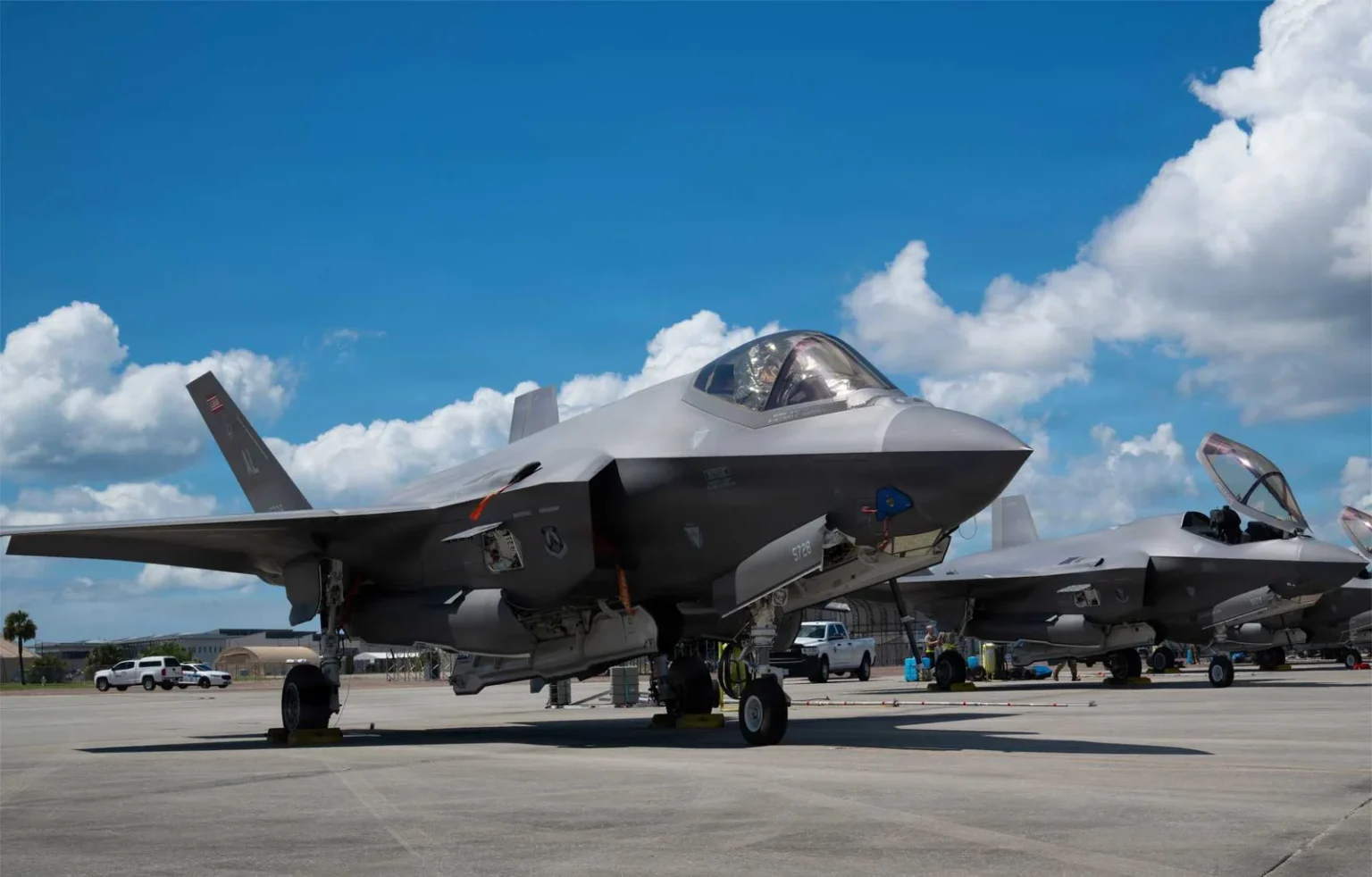
The United States is expanding the sustainment network supporting its F-35 Lightning II fleet as the stealth fighter becomes more central to U.S. Air Force, Navy, and Marine Corps combat planning despite continuing readiness pressures. Announced on September 18, 2026, the $871.24 million increase in support capacity aims to enable more land-based and maritime operating sites, giving U.S. forces greater flexibility to generate F-35 sorties from dispersed locations during high-intensity conflict
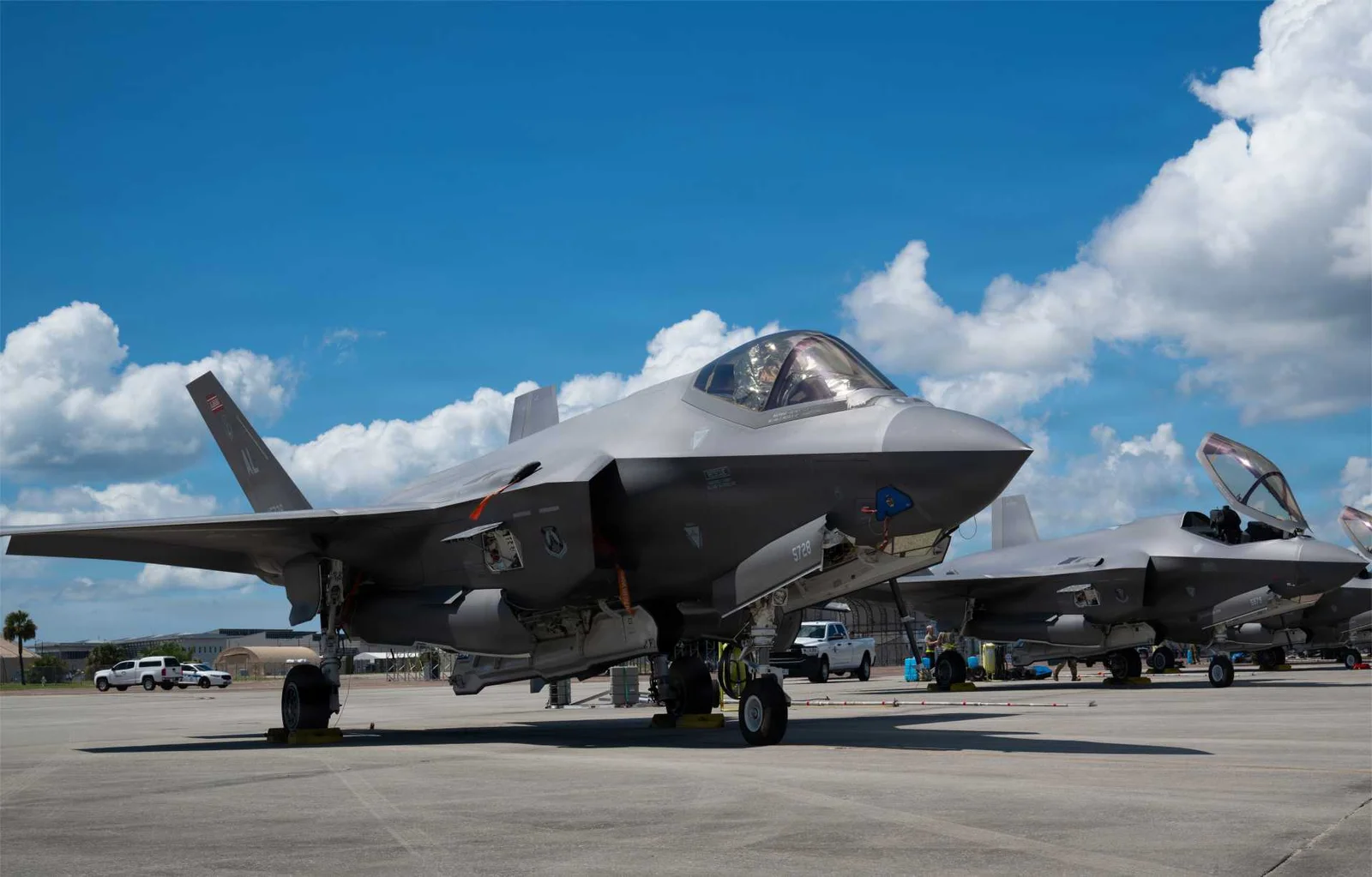
The investment will expand the equipment and infrastructure needed to maintain, service, and support F-35 operations away from a limited number of established bases. That distributed support model is increasingly important for survivability and operational tempo in contested theaters, where aircraft may need to relocate frequently while remaining capable of sustained combat operations.
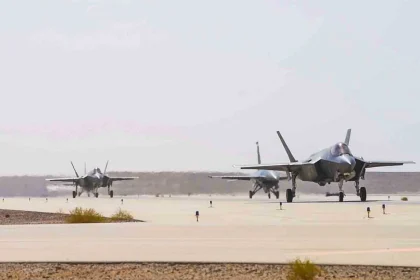
U.S. F-35 Lightning II on the ground as the Pentagon expands sustainment capacity to improve readiness and support dispersed operations from land bases and maritime sites. (Picture source: U.S. Department of War/Defense)
The expansion comes as U.S. F-35 fighter jet availability remains under pressure. According to a U.S. Government Accountability Office report released on June 11, 2026, the fleet-wide mission-capable rate fell from 67% in fiscal year 2021 to 44% in fiscal year 2025, while the full-mission-capable rate declined from 38% to 25% over the same period. The figures highlight a central Pentagon challenge: expanding the number of F-35s in service while ensuring that enough of them can actually generate combat sorties when required.
The September 18, 2026, action increases capacity for support equipment under the F-35 site activation and hardware non-recurring sustainment effort and covers initial sustainment supplies and services needed to establish and activate F-35 operations at land bases and at sea for the U.S. Air Force, Marine Corps, Navy, cooperative program partners and Foreign Military Sales customers. Its military significance lies less in the contract ceiling itself than in the requirement to make more operating locations viable for sustained combat use. Establishing an F-35 location requires far more than deploying aircraft and pilots; maintenance personnel need specialized diagnostic systems, servicing equipment, tools, replacement components, technical support, and dependable access to spares before fighters can repeatedly return to the air. In a major conflict, these support functions directly influence how many aircraft commanders can employ, making sustainment infrastructure part of combat power rather than a purely logistical concern.
That requirement matters because the F-35 now occupies a central position in U.S. high-end combat planning. Its low-observable design, advanced sensors, electronic warfare systems, data fusion, and precision weapons allow it to operate in defended airspace while detecting and sharing information on enemy aircraft, surface-to-air missile systems, and other threats. The fighter therefore contributes not only as a strike aircraft but also as a forward sensor and targeting node that can pass information to other aircraft, ships, and ground forces. In the opening stages of a high-intensity war, when sophisticated integrated air defenses could restrict less-survivable combat aircraft, F-35s would be expected to penetrate contested airspace, locate threats, and help create conditions for the wider joint force to operate more freely. Low readiness therefore has consequences beyond the number of available strike aircraft, because each unavailable F-35 can also remove a sensor and information-sharing asset from the broader kill chain.
North Korea tests new weapon system (PHOTOS)
DPRK media released photos showing the launch of a road-mobile missile tipped…


Newegg Reveals Massive Working Roblox Race Horses Codes Breakdown For Maximum Rewards
Welcome back to The Philly PI’s hardware lab, where we keep a…
Russia Issues Final Warning to West as Dobropillia Becomes a Critical New Cauldron
The geopolitical landscape of Eastern Europe stands at a razor-thin precipice as…

Wi-Fi Routers Can Identify People with Stunning Precision (Even When Their Phones Are Off)
Researchers in Germany have warned that ordinary Wi-Fi could become a surprisingly…

Newegg Unveils the Ultimate Fall 2026 Prebuilt Gaming PC Dominance Breakdown
As the leaves begin to turn and the fall gaming season kicks…
The Indo-Pacific makes this sustainment problem even more significant. China possesses extensive inventories of conventional ballistic and cruise missiles capable of threatening military infrastructure across the region, creating a serious vulnerability for forces concentrated at a limited number of major air bases. Distributing F-35 units across a wider network of locations can complicate enemy targeting and reduce reliance on predictable operating sites, but dispersion yields a military advantage only if fuel, weapons, spare parts, maintenance equipment, and trained personnel can move with the aircraft. The $871.24 million support expansion is not officially described as a China-specific measure, but increasing the number of locations that can sustain F-35 operations is directly relevant to a conflict environment in which established airfields, logistics hubs, and supply routes could be attacked early and repeatedly.
The three U.S. F-35 variants give commanders several ways to apply that dispersed approach. The F-35A forms the largest portion of the Air Force’s fifth-generation fighter force and supports air-to-air combat, precision strike, suppression of enemy air defenses, intelligence collection, and electronic warfare. The carrier-capable F-35C gives Navy and Marine Corps aviation a low-observable fighter that can operate from mobile sea bases, while the Marine Corps’ F-35B can use amphibious assault ships and shorter expeditionary sites through its short takeoff and vertical landing capability. Together, these variants reduce reliance on any single basing model, but they also create different sustainment demands. Air Force F-35As need support that can move between established and contingency airfields, carrier-based F-35Cs must be maintained within the physical constraints of operations at sea, and F-35Bs operating from dispersed or austere locations require maintenance and rearming capacity that can function without the full infrastructure of a permanent fighter base.
The Marine Corps’ F-35B illustrates why support equipment is inseparable from operational flexibility. Its ability to operate from shorter runways and amphibious ships can make U.S. tactical aviation less predictable and potentially more survivable, but an austere operating site is useful only if the fighter can be refueled, rearmed, inspected, and repaired there. The Navy faces a comparable challenge with the F-35C: an aircraft carrier provides a mobile air base that can reposition without depending on host-nation runways, yet shipboard crews still need the tools, parts, and technical resources to sustain low-observable fighters during extended deployments. In both cases, the practical value of dispersed or mobile basing depends on whether support systems can keep pace with the aircraft.
The readiness challenge will grow as the fleet expands. GAO reported on June 11, 2026, that the Department of Defense operates and sustains more than 800 U.S. F-35s and plans to acquire approximately 1,700 additional aircraft by the mid-2040s. Expanding inventory without simultaneously increasing maintenance capacity, spare-parts availability, and deployable support equipment risks widening the gap between the number of aircraft owned and the number that can be used in combat. GAO also identified scarce parts and maintenance problems as factors affecting readiness, while Air Force officials cited software delays, corrosion-related work and component shortages as contributors to lower availability. This is why the 44% mission-capable rate matters operationally: it does not mean 56% of the fleet is permanently grounded, but it does show that aircraft availability remains well below the level required to fully exploit the force’s size and capability.
The Pentagon is therefore trying to improve two problems at the same time: aircraft readiness and the resilience of the infrastructure supporting the fleet. Additional support equipment capacity can help activate new operating sites and strengthen existing ones, giving commanders greater flexibility to reposition fighters if primary bases are threatened, damaged, or temporarily unusable. In a missile-intensive conflict, the ability to move aircraft is only one part of survivability; the larger challenge is ensuring that maintenance, munitions, and supply networks can also survive and continue functioning. Dispersed basing increases the number of locations an adversary must track and target, but it also spreads U.S. logistics resources over a larger area, making sustainment planning more complex and more important.
The deeper significance of the September 18, 2026, F-35 support expansion is therefore its connection to sustained combat availability. The fighter already gives U.S. forces a combination of stealth, precision strike, advanced sensing, electronic warfare, and networked targeting that is critical for operations against sophisticated air defenses. Equally important is the ability to keep those fighters operational after combat begins, particularly in an Indo-Pacific scenario where bases, logistics hubs, and supply lines could become primary targets. The $871.24 million increase does not add new F-35s directly, but it strengthens the support structure needed to convert a growing inventory of stealth fighters into usable combat power from more locations, under greater pressure, and for longer periods.