















[image_alt]Emergency responders operating near a large structural fire and smoke plume following an aerial strike near Bucha, Kyiv Oblast.[/image_alt]

Strategic Overview and Escalation in Kyiv Oblast
A significant structural fire broke out early this morning in the vicinity of Bucha, located in the Kyiv Oblast, following an intensive overnight series of long-range aerial strikes. Local emergency services and territorial defense units were dispatched to contain the blaze, which sent towering columns of dark smoke visible across multiple municipal sectors. According to preliminary incident reports gathered by regional monitors, the conflagration was triggered by the impact of a precision-guided loitering munition, causing extensive collateral damage to local infrastructure.
Military analysts tracking the trajectory of these sustained campaigns note a persistent shift in targeting patterns across the broader capital region. As documented in ongoing assessments by the Institute for the Study of War, long-range aerial systems are frequently utilized to probe regional air defense networks, occasionally resulting in direct kinetic impacts on industrial, logistics, or transportation nodes. The proximity of the incident to high-density residential zones has heightened public safety concerns and prompted immediate structural integrity assessments by municipal engineers.

Technical Assessment of Long-Range Loitering Munitions
The deployment of delta-wing unmanned systems in nighttime raids remains a core tactical vector for long-range strikes. Open-source defense intelligence and data compiled by organizations such as Reuters indicate that these platforms are engineered for extended operational range, low acoustic signatures, and pre-programmed waypoint navigation to bypass conventional early-warning radar arrays.

Colleges admit students who didn’t apply to boost ‘diversity’: report
() – “Hundreds” of colleges across the United States are sending unsolicited…

Congressman Dan Meuser on National Report
In a recent media appearance on Newsmax’s National Report, U.S. Representative Dan…

Castlevania: Belmont’s Curse Best Weapon Tier List and Relic Guide
Mastering Combat and Exploration in Castlevania: Belmont's Curse The sheer variety of…
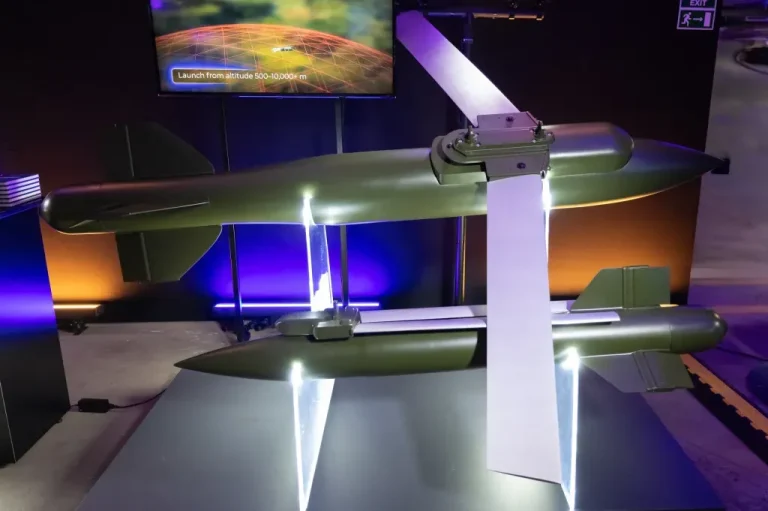
The first Ukrainian: the "Virivnyuvach" guided aerial bomb
The "Virivnyuvach" bomb at a recent exhibition. Photo by The War ZoneOver…

Meteorites Don’t Burn Up the Way Scientists Thought
Credit: Pexels Have you ever wondered what actually happens to a shooting…

Urgent Search Underway After Multiple Armed Robberies Terrify Philadelphia Neighborhoods
PHILADELPHIA — Local law enforcement agencies are actively searching for multiple suspects…
To understand the tactical mechanics and geographic positioning of today’s engagement, we examine the following technical intelligence dossier:
TECHNICAL BRIEF: STRATEGIC INFRASTRUCTURE TARGETING & GEOGRAPHIC MAP
- Primary Entity / System: Geran-2 / Shahed-136 Loitering Munition
- Type / Classification: Long-Range Autonomous Precision Strike Asset
- Operating Parameters / Specs: Estimated range 1,000+ km, warhead payload ~30-50 kg high explosive fragmentation, cruise speed ~185 km/h
- Location & Coordinates Context: Bucha, Kyiv Oblast, Ukraine (50.5476° N, 30.2223° E)
- Key Assessment / Threat Status: High tactical risk to regional logistical nodes and civil infrastructure assets
Operational Implications and Regional Defense Response
The kinetic impact near Bucha underscores the continuous challenges faced by regional air defense commanders. Interception protocols frequently rely on a layered defense architecture, combining mobile fire groups equipped with heavy machine guns and electronic warfare countermeasures to disrupt guidance systems. Despite high interception rates reported by regional military administrations, falling debris and unexploded sub-components continue to pose severe secondary hazards to civilian populations on the ground.
Defense specialists referencing data from the CSIS Missile Defense Project emphasize that neutralizing these persistent airborne threats requires a combination of kinetic interceptors and advanced radar cueing systems. As winter approaches, analysts anticipate further escalations in long-range strikes directed against critical infrastructure nodes, demanding heightened vigilance and rapid emergency response capabilities across all central Ukrainian oblasts.
[tags]Bucha, Kyiv Oblast, Geran-2, Shahed-136, Air Defense, Strategic Infrastructure, Military Intelligence, Ukraine Conflict[/tags]