















Have you ever wondered what actually happens to a shooting star?
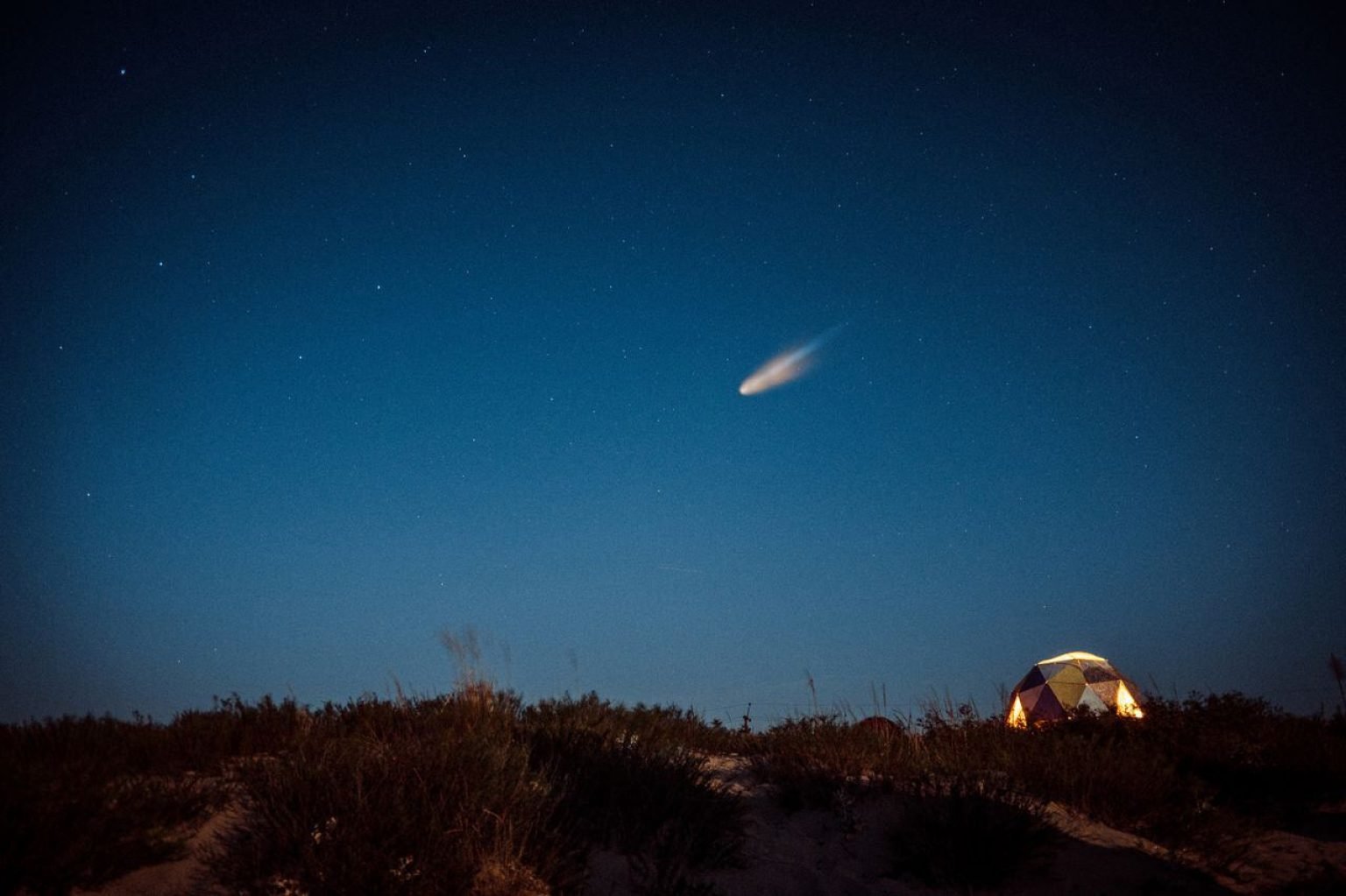
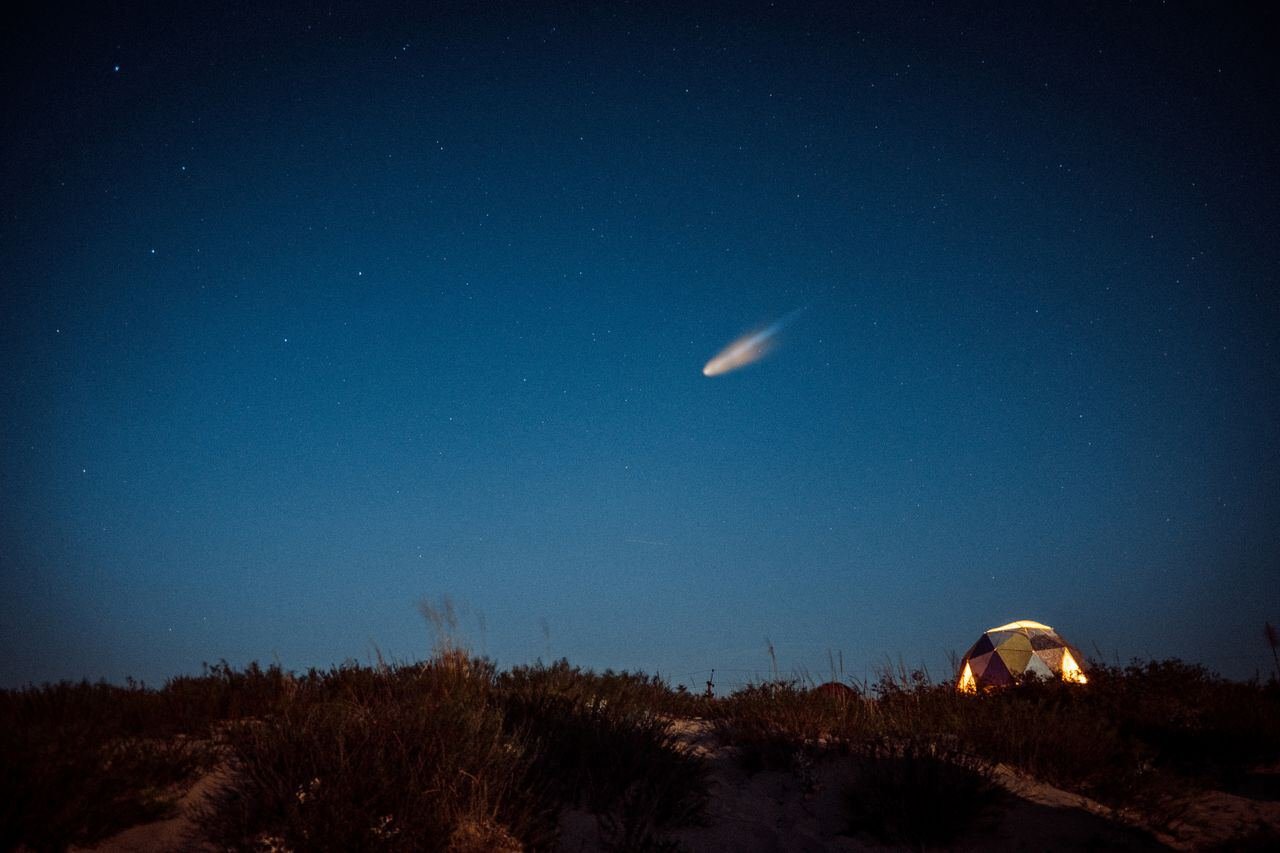
The name is a little misleading. A shooting star is the streak of light produced when a small space rock, called a meteoroid, barrels into Earth’s atmosphere. Most never reach the ground, but some larger pieces survive the plunge and become meteorites.
Researchers have now traced that journey in unusual detail by analyzing the light curves and velocities of 75 meteorite-producing fireballs captured by cameras. In a new study, they identified seven recurring phases in atmospheric entry. They thus found that a rock’s fate depends less on simply “burning up” than on melting, cracking, and breaking apart as it punches through increasingly dense air.
Meteor, meteoroid, meteorite

A meteoroid is a small natural piece of rock or metal traveling through space, often originating from an asteroid or comet. When one enters Earth’s atmosphere at tremendous speed, the air in front of it cannot move aside quickly enough. Instead, it becomes intensely compressed and heated, creating a shock wave.
Excited atmospheric gases, together with material stripped from the meteoroid, produce the bright streak we call a meteor—the familiar “shooting star.” An especially bright meteor is called a fireball. If fragments survive atmospheric entry and reach the ground, those pieces are meteorites.
For years, scientists pictured much of this process as evaporation under extreme heat. The new study challenges that view.
“We used to think that solid rocks would evaporate from the enormous heat and brilliant light generated in collisions with air,” Dr. Peter Jenniskens, a meteor astronomer at the SETI Institute and NASA Ames Research Center, said in a statement. “We found instead that first melting and then fragmentation control how a rock loses mass.”
Knowing how a meteorite melts, cracks and slows helps researchers work backward from a fireball to the patch of ground where fragments are likely to land. The same physics also helps explain airbursts, when larger space rocks break apart in the atmosphere and release energy before reaching the surface.
The Seven Phases of a Fall

To make sense of that plunge, the researchers broke the fall into seven phases. The stages are not precise steps that every rock follows in exactly the same way but a way to track what dominates at each point as the meteorite moves from thin upper air into denser atmosphere.
- In Phase 1, the meteoroid reaches air dense enough for intense atmospheric heating to make the event brighten rapidly. A shock wave forms in front of the incoming body, and the meteor becomes visible.
- In Phase 2, the meteor brightens as it falls deeper. Some rocks flicker in patterns that reveal rapid spin. In the study, the fastest rotating rocks completed a turn every 0.5 to 5 seconds.
- Phase 3 marks the fireball stage. Melting takes over. Fast-moving air tears molten material from the surface, leaving droplets that continue to evaporate.
- At around 60 kilometers (40 miles) above Earth, Phase 4 begins as the meteoroid approaches a melting equilibrium. The fireball’s brightness levels off or increases more steadily even as the object continues shedding mass.
- Phase 5 is when fragmentation becomes a dominant process. As the meteoroid reaches denser air, growing dynamic pressure and thermal stresses exploit cracks and other weaknesses inside it. Pieces break away, producing flares and fragments in the meteor’s wake, while the surviving body begins to decelerate much more strongly. Importantly, this breakup can occur at pressures far below the strength measured for recovered meteorites in laboratory tests. The researchers argue that cracks, shear forces, thermal stresses, and damage inherited from earlier collisions can help explain why incoming rocks fail sooner than their measured tensile strength alone would suggest.
- Phase 6 brings the end flare. In the researchers’ interpretation, the surviving rear portion of the meteoroid finally disrupts, changing the surrounding flow and throwing fragments outward at higher relative speeds. By this point the object has slowed considerably, and these late flares often appear redder than the blue-green light seen earlier.
- In Phase 7, the remaining fragments stop glowing. Melting ends, leaving a thin fusion crust. Winds push the dark pieces as they fall the rest of the way.

Finding Where They Go
The study gives researchers a clearer map for predicting where meteorites land after a fireball. It also helps connect small meteorite falls with larger, more dangerous asteroids that burst in the atmosphere.
“The 20-m-diameter asteroid that caused the airburst over Chelyabinsk, Russia, in 2013 went through the same phases,” Jenniskens explained.

The Chelyabinsk airburst damaged thousands of buildings and injured more than 1,600 people, mostly through flying glass after its shock wave shattered windows. Understanding where an incoming asteroid breaks apart, how quickly it slows, and where it deposits its energy is therefore more than a meteorite-hunting problem. It matters for planetary defense.
Still, the study has limits. The sample comes from recorded meteorite falls, which means it favors events bright enough, close enough, and well documented enough to analyze. Meteorites also vary widely in composition, structure, and collision history. But the main takeaway is that meteorites do not simply “burn up.” They are shaped by melting, pressure, cracking, and fragmentation throughout the fall. By the time a piece reaches the ground, it is only what remains after a much larger object has been stripped apart in the atmosphere.
The study was published in the journal Meteoritics & Planetary Science.