













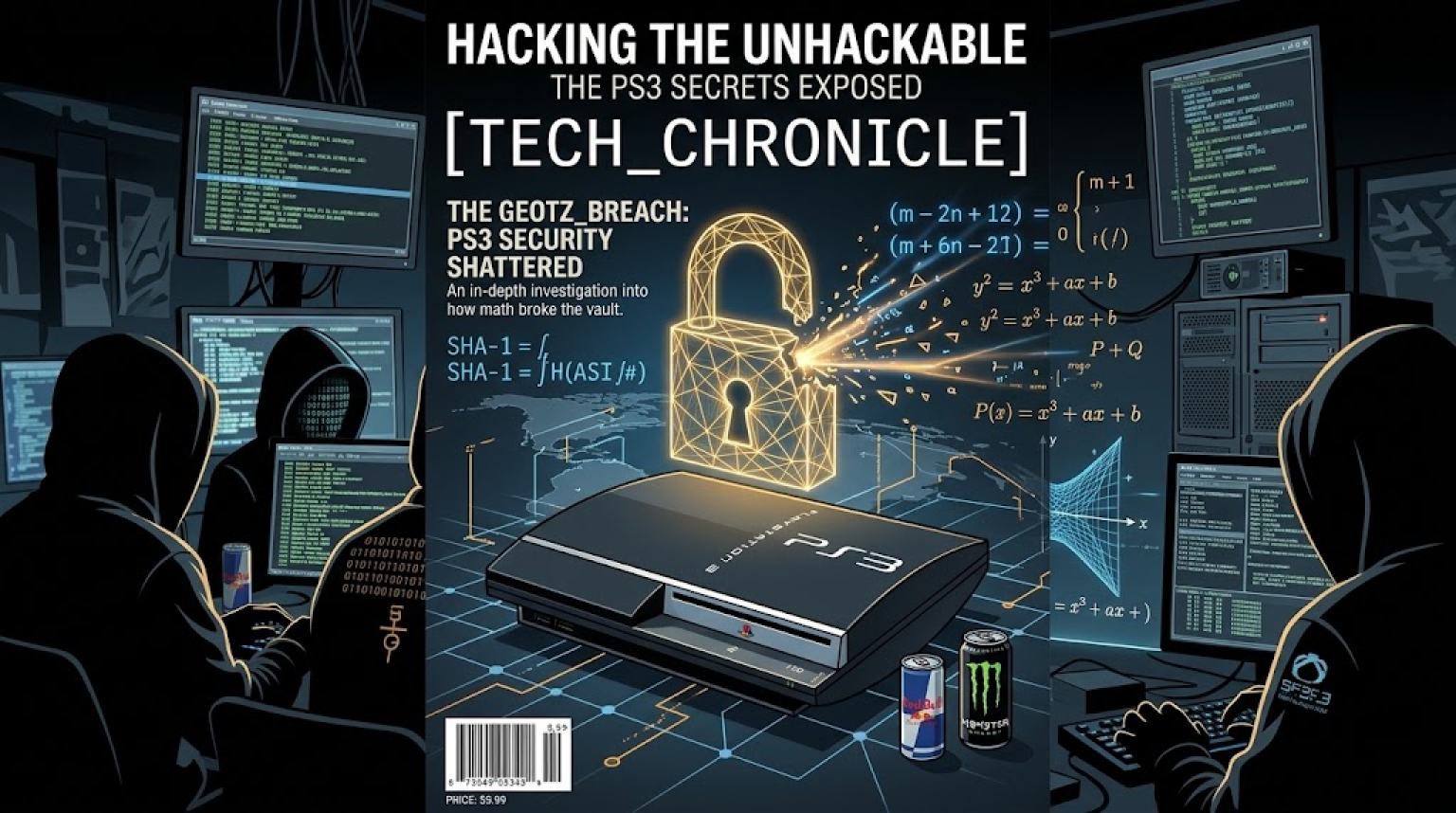
In the mid-2000s, Sony built what it believed was an unhackable citadel.
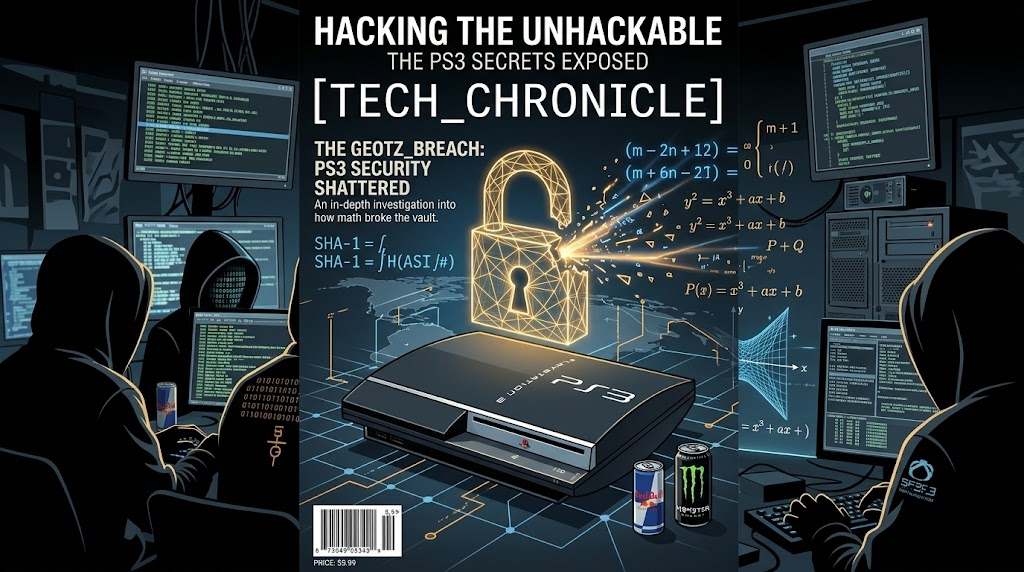
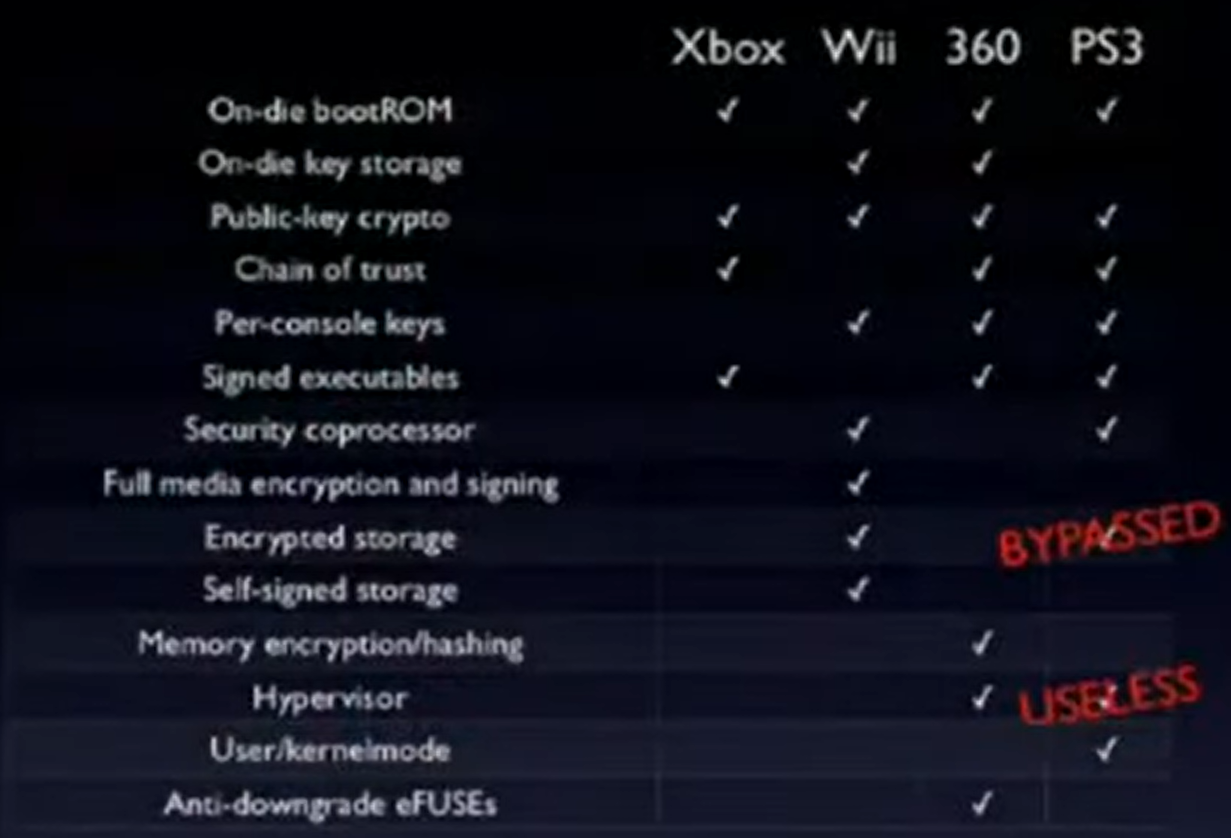
While rival consoles dropped like dominoes to modchips and softmods, the PlayStation 3 stood tall, guarded by a $2 billion silicon leviathan known as the Cell Broadband Engine. Co-developed by Sony, Toshiba, and IBM, the Cell was an asymmetric processing monster. For four years, security researchers, modders, and reverse-engineers threw everything they had at the PS3—glitching chips, sniffing buses, and analyzing memory traces. The fortress held.
Until December 2010, when a rogue collective of coders known as fail0verflow walked up to the gates, used basic high school algebra, and stole the crown jewels.
The Royal Guard: ECDSA and the Master Key
To understand how the vault was breached, you have to understand the royal guard standing at the door: ECDSA (Elliptic Curve Digital Signature Algorithm).
Every time a PS3 booted up, ran a game disc, or installed a system update, the hardware demanded a digital signature. Think of it as a wax seal stamped by Sony’s secret royal ring. If the signature passed the mathematical check, the system trusted the code. If it failed, the gates slammed shut.
Mathematically, generating this signature ($s$) required three ingredients:

Have You Seen Her? Endangered Philadelphia Woman Julianna Mishoe Missing from 22nd District
The Philadelphia Police Department is asking for the public's help in locating…

Massive Free Laptop Upgrade Reveals Genius Ways To Save Serious Tech Cash
Welcome back to the tech desk here at The Philly PI. In…
Home Defense Buckshot Tested: Terminal Ballistics and Gel Penetration Performance Breakdown
Choosing Buckshot for the Home Defense Shotgun: A Definitive Ballistic Breakdown When…

Rep. Meuser FSC Hearing
As Capitol Hill navigates complex economic pressures and regulatory policy debates, key…

The Petrodollar Could Break Soon – And Upend The Global Financial System
Authored by Nick Giambruno via InternationalMan.com, The Iran war could claim a…
Samsung Odyssey Neo G9 Review: Why This Massive Ultrawide Dominates Gaming
When Samsung first introduced the Odyssey series, it disrupted the ultra-wide display…
- $z$ — The cryptographic hash of the game or firmware file.
- $d$ — Sony’s top-secret private root key (the master key hidden deep inside Sony’s private servers).
- $k$ — A variable integer.
The equation governing the seal looked like this:
$$s = k^{-1} (z + r \cdot d) \pmod n$$
There is one sacred, unbreakable rule written into the laws of ECDSA cryptography: the variable $k$ must be cryptographically random and strictly used once.
If $k$ is ever reused, the math unlocks itself.
The Assembly: Enter fail0verflow
Enter fail0verflow—a dream team of legendary security hackers including Sven, Segher, and Hector Martin (known online as marcan), alongside the late, revered hardware hacker Sven Peter and bushing (Andrew Tappenbeck).
While isolated hackers had managed to cause hardware glitches on individual consoles, fail0verflow wanted a true software-level liberation: running homebrew code and Linux on any PS3 without opening the case or soldering a single wire.
They weren’t trying to steal games; they wanted to run their own programs on hardware they owned. But to do that, they needed to defeat Sony’s digital signature check.
Marcan and the team began systematically collecting and analyzing the cryptographic signatures on official PS3 firmware updates and game binaries, dumping signature values into an automated analysis pipeline.
Then, they spotted something that made them double-check their screens.
The Fatal Oversight: The Static $k$
Sony’s security architecture wasn’t broken by a supercomputer brute-forcing elliptic curves. It was broken because Sony’s software engineers made a staggering human error:
They hardcoded $k$ as a static constant.
Instead of rolling a fresh cryptographic die every time they signed a piece of software, Sony used the exact same hardcoded number for $k$ across every single game, app, and firmware update ever released for the console.
When marcan and fail0verflow realized $k$ was static, the multi-billion-dollar fortress dissolved into a simple textbook math puzzle.
Because $k$ never changed, the hackers suddenly had two signed files ($z_1$ and $z_2$), producing two valid signatures ($s_1$ and $s_2$), anchored to the exact same unknown private key ($d$) and the exact same static $k$:
- $s_1 = k^{-1} (z_1 + r \cdot d) \pmod n$
- $s_2 = k^{-1} (z_2 + r \cdot d) \pmod n$
This wasn’t an impenetrable matrix problem anymore. It was two simple linear equations with two unknowns ($k$ and $d$).
The Fall of the Citadel: 27C3
In late December 2010, fail0verflow took the stage at the 27th Chaos Communication Congress (27C3) in Berlin for a now-legendary presentation titled “PS3 Epic Fail.”
Behind a podium in a packed auditorium, marcan, bushing, and segher walked through the mathematics of the breach. They didn’t need custom hardware or expensive logic analyzers. By simply subtracting equation 1 from equation 2, isolating $k$ using basic algebra, and plugging $k$ back in, they solved directly for $d$—Sony’s master private root key.
Shortly after, legendary hacker George Hotz (“geohot”) used the public mathematical framework unveiled by fail0verflow to derive and publish the root key for the PS3’s metldr loader, releasing the first full custom firmware (CFW) for the public.
The Aftermath
Once Sony’s master private key was out in the open, the PlayStation 3’s security model collapsed completely.
Because the key came directly from the bedrock math of Sony’s own verification system, the console could no longer distinguish between an official $70 retail game, a custom Linux environment, or an emulator compiled on a laptop. Any file stamped with that extracted key was accepted by the Cell processor as 100% authentic royalty.
Sony responded with scorched-earth lawsuits, targeting geohot and fail0verflow members in federal court while rushing out software updates. But no software patch or legal decree could un-burn a master cryptographic key hardcoded into the trust chain of millions of consoles already sitting in living rooms worldwide.
The heist of the PS3 security system stands as the ultimate tech parable: you can build a multi-billion-dollar silicon fortress, but if you hardcode a constant where a random variable belongs, four coders with high school math will bring the drawbridge crashing down.