














Almost immediately after the end of World War II, Josip Broz Tito, who became head of the government of the Socialist Federal Republic of Yugoslavia, began pursuing an independent foreign and domestic policy, which displeased the Soviet leadership. Soviet-Yugoslav military-technical cooperation continued for some time, but by 1948, relations between Moscow and Belgrade had deteriorated, with new deliveries of Soviet weapons and military equipment were stopped, and military specialists stationed in Yugoslavia were recalled to the USSR.
Yugoslavia attempted to establish production of its own piston-engine fighters, but these efforts met with limited success, and with the advent of the “jet age,” propeller-driven combat aircraft lost their relevance. Work was also underway to develop jet fighters, but the country, lacking a developed aircraft industry and a design school, was unable to quickly develop a jet fighter without foreign assistance. Left without defense support from the USSR in the 1950s and 1960s, Yugoslavia acquired combat aircraft from the United States.
Fighter aviation of the SFRY in the second half of the 1940s
After the end of World War II, the Yugoslav Air Force was armed with Soviet-made Yak-3 and Yak-9 fighters (about 200 units), as well as British Supermarine Spitfire Mk.V (18 units) and Hawker Hurricane Mk.IV (more than 20 units).
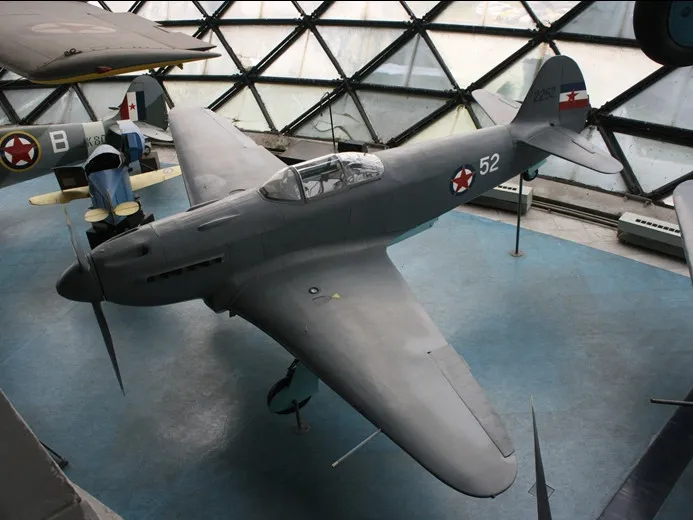
A Yak-3 fighter jet at the Belgrade Aeronautics Museum
Due to the short service life of the airframes and engines of the Yak-3 and Yak-9 fighters, built during the war, they were not used very intensively and were decommissioned in the mid-1950s. Spitfires and Hurricanes were retired almost simultaneously with the Yaks.
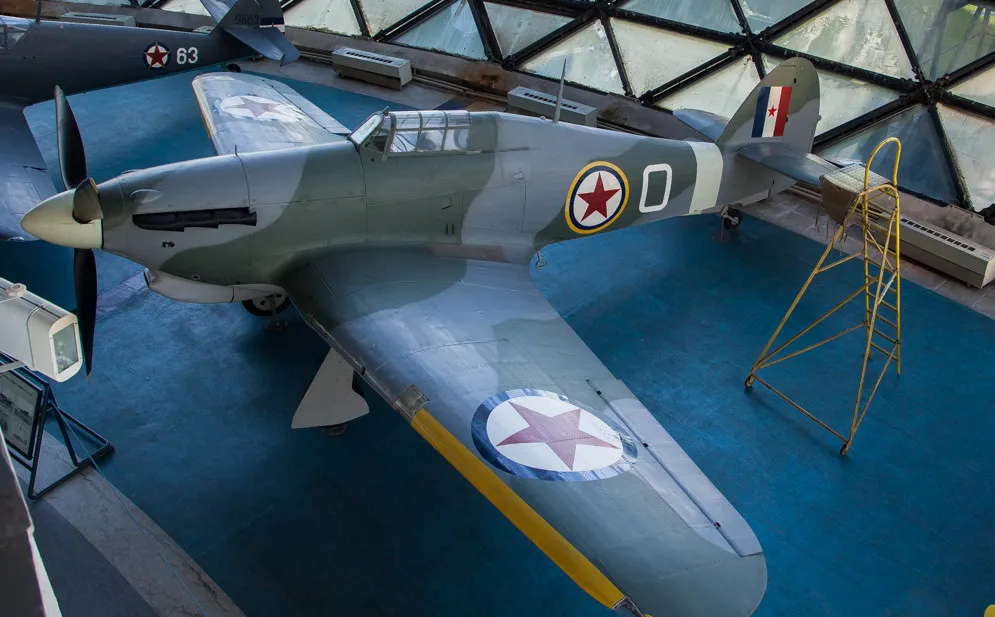
A Hawker Hurricane Mk.IV fighter jet at the Belgrade Aeronautics Museum
In the first post-war years, Yugoslav pilots, in addition to Soviet and British fighters, also flew Messerschmitts.
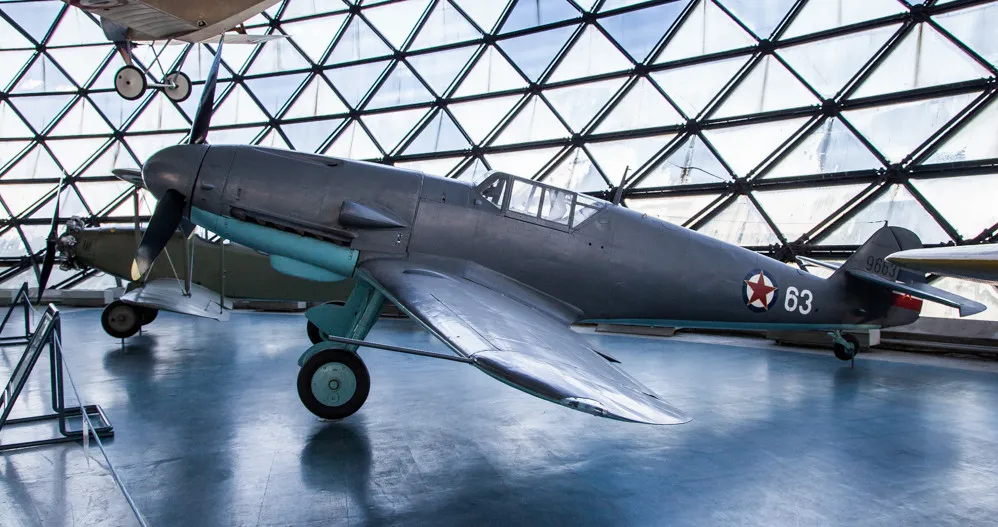
A Messerschmitt Bf-109G-2 fighter jet at the Belgrade Aeronautics Museum.
Yugoslavia received over 70 Bf-109 G-2, G-6, G-10, and G-12 fighters, which served until 1954 and were decommissioned due to a shortage of consumables and spare parts. Czechoslovakia, which had mass-produced such aircraft in the post-war period, could have provided assistance, but by that time Prague was coordinating defense imports with Moscow, and relations between the Soviet and Yugoslav leaderships had soured.
Even before the end of World War II, the Yugoslav and Soviet leaderships concluded an agreement on cooperation and friendship. However, Josip Broz Tito wanted to maintain independence in matters of foreign and domestic policy, and in 1948, relations between the countries deteriorated to such an extent that Soviet military advisers were recalled, and military-technical cooperation between the USSR and Yugoslavia ceased.
Under these circumstances, the creation and production of the Ikarus S-49, a domestic fighter aircraft, became relevant. It was externally similar to the Soviet Yak-9, but structurally had much in common with the Yugoslav Rogožarski IK-3 fighter, which entered service in 1940.
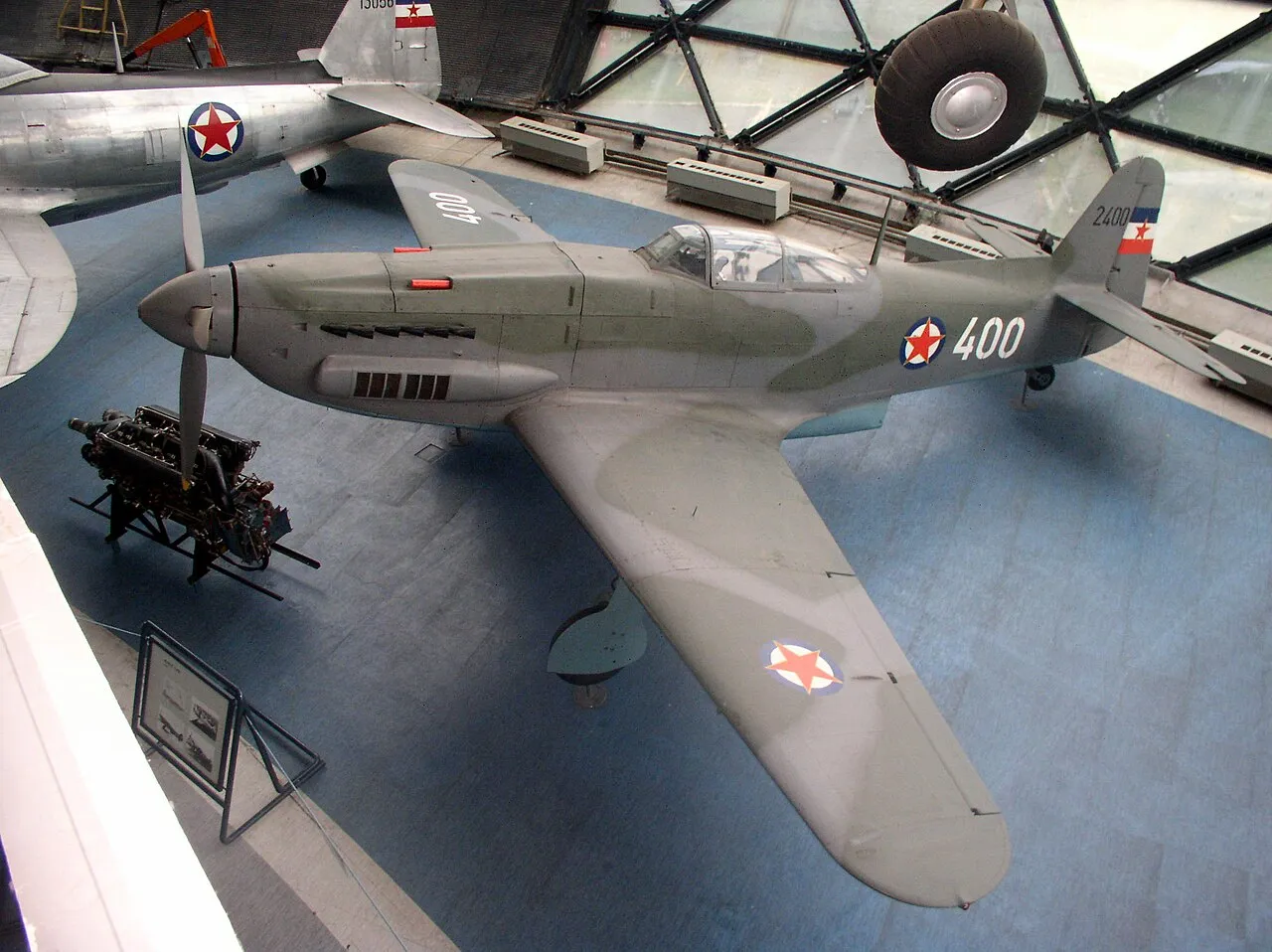
An Ikarus S-49 fighter jet at the Belgrade Aeronautics Museum.
The aircraft was a cantilever low-wing monoplane of mixed construction and featured retractable landing gear with a tailwheel. The prototype first flew in 1948. Assembly of prototypes and production models was carried out at the Soko aircraft factory in Mostar. The S-49A modification was equipped with a Soviet VK-105PF2 aircraft engine producing 1250 hp. Maximum speed was 585 km/h. Normal takeoff weight was 2950 kg. Service range was 690 km. The fighter was armed with a 20 mm ShVAK cannon with 120 rounds of ammunition and two 12,7 mm UBS machine guns with 200 rounds of ammunition.
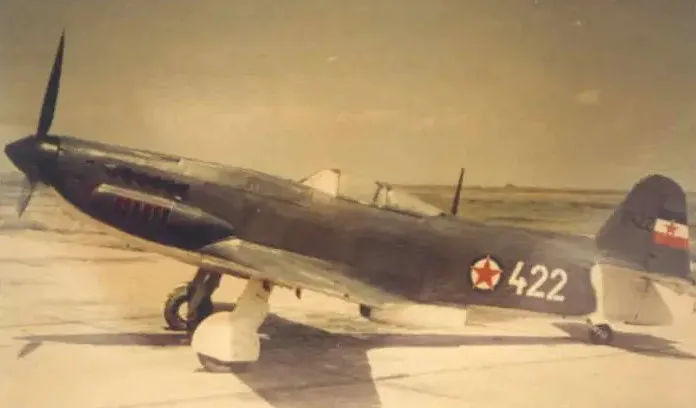
Serial production of the S-49A began in 1950. A total of 45 units were built. In 1952, the S-49C modification, powered by a Hispano-Suiza 12Z-11Y engine producing 1480 hp, entered production. This aircraft was made entirely of metal and armed with a German 20 mm MG.151 cannon with 100 rounds of ammunition and two 12,7 mm Colt Browning M2 machine guns with 140 rounds per gun. Four American 127 mm cannons could also be suspended under the wings. missiles HVAR or 50-kg bombs. Although the aircraft’s empty weight increased slightly, the installation of a more powerful engine and improved aerodynamics improved performance. At 7000 m, the maximum speed in level flight was 628 km/h, and the ceiling reached 10,000 m.
The S-49A fighters, at the end of their careers, used for training flights, were operated until 1957, and the more advanced S-49C were decommissioned in 1961.
Fighter aviation of the SFRY in the 1950s
In the 1950s, the Ikarus aircraft manufacturer near Belgrade built several experimental piston-engine and jet aircraft for the Air Force. The Belgrade Aeronautics Museum displays an Ikarus 451MM “Stršljen.”
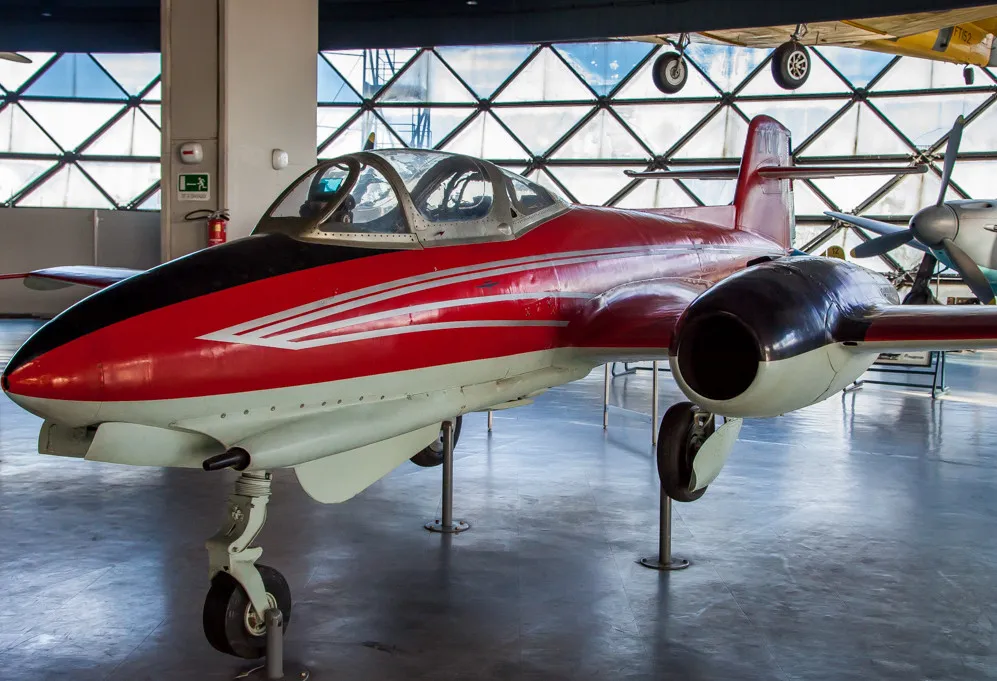
The Ikarus 451MM “Stršljen” jet aircraft at the Aeronautics Museum in Belgrade
This compact aircraft was based on the Ikarus 451M experimental jet aircraft, which in turn was a development of the Ikarus 451, powered by two Walter Minor 6-III piston engines. Structurally, the Ikarus 451M was a twin-engine, single-seat, all-metal, cantilever, low-wing aircraft armed with two 20mm Hispano Suiza 404A cannons with 60 rounds per gun and four to six rockets.
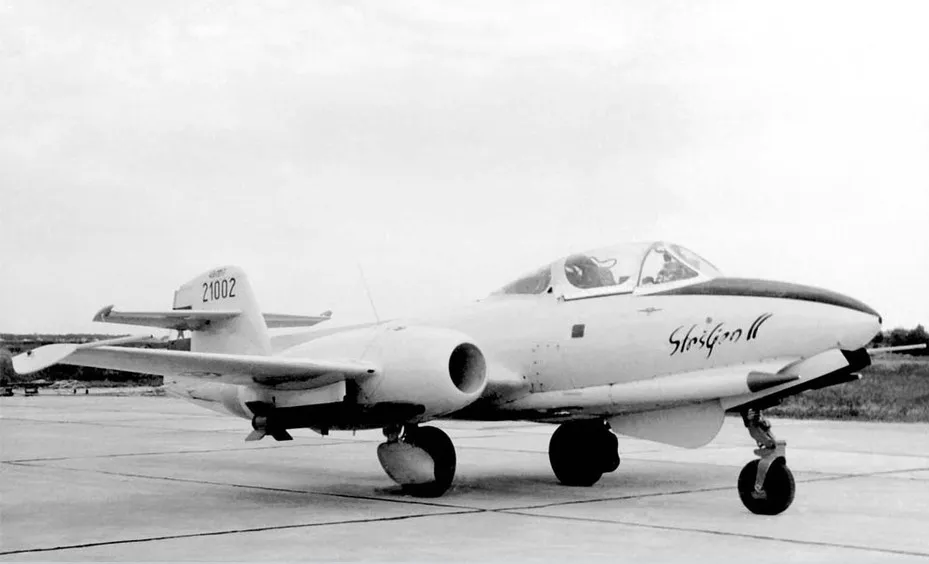
Testing of the Ikarus 451MM began in 1958. Its maximum takeoff weight was only 2936 kg. Two Turbomeca Marboré II turbojets, producing just over 400 kgf of thrust, provided a maximum speed of 730 km/h. Its service ceiling was 11,000 m. Its operational range was 820 km. Compared to previous aircraft in this family, this modification was the most advanced. Its fuel capacity was increased and several new equipment features were added, such as air brakes, an ejection seat, a G-suit, and a gyroscopic sight.
However, by the second half of the 1950s, when supersonic fighters were being mass-produced in other countries, the performance of the Yugoslav Ikarus 451MM was far from optimal. It was not developed further, and the “import substitution” program failed. Nevertheless, after completing its testing, the jet-powered Ikarus was actively used for demonstration flights and, within the country, served as clear proof of the feasibility of developing and building its own combat aircraft. The sole Ikarus 451MM was decommissioned in 1969 and transferred to the Belgrade Air Defense Forces. aviation a museum.
With the decommissioning of Soviet and British fighters produced during the war, the need to replenish the Yugoslav Air Force’s fighter fleet arose in the early 1950s. However, by that time, relations between Belgrade and Moscow had soured, and Soviet arms supplies were out of the question. Consequently, in 1952, Yugoslavia acquired 150 Republic P-47D Thunderbolt fighters. Approximately 120 of these aircraft were intended for use by combat units, while the remainder served as a source of spare parts. Most of the Thunderbolts came from the United States, while 23 were sold to France.
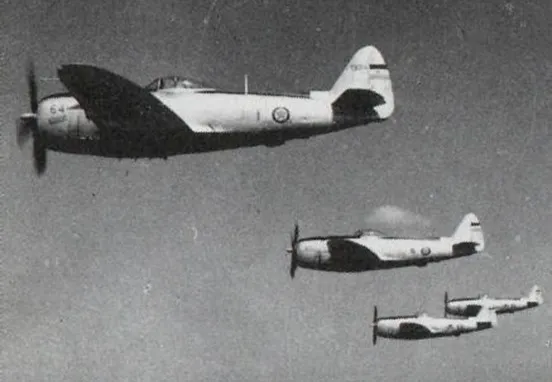
Yugoslav P-47D fighters
At the time of purchase, the P-47D piston fighters were obsolete. By then, jet fighter production was well underway in several countries, and air battles between Soviet MiG-15s and American Sabres were raging in Korea. At the same time, the Thunderbolt, armed with eight 12,7mm machine guns and capable of carrying a payload of up to 1133 kg (2,500 lbs), consisting of bombs, incendiary tanks, or rockets, was highly effective against ground targets. Furthermore, the aircraft, which weighed up to 8 tons fully loaded and was powered by an 18-cylinder air-cooled Pratt & Whitney R-2800 Double Wasp turbocharged engine, producing 2000 hp at takeoff, had good combat survivability.
In the early 1950s, the process of decommissioning the Il-2M attack aircraft, which had reached the end of their service life, began, and the P-47Ds came to replace them as fighter-bombers.
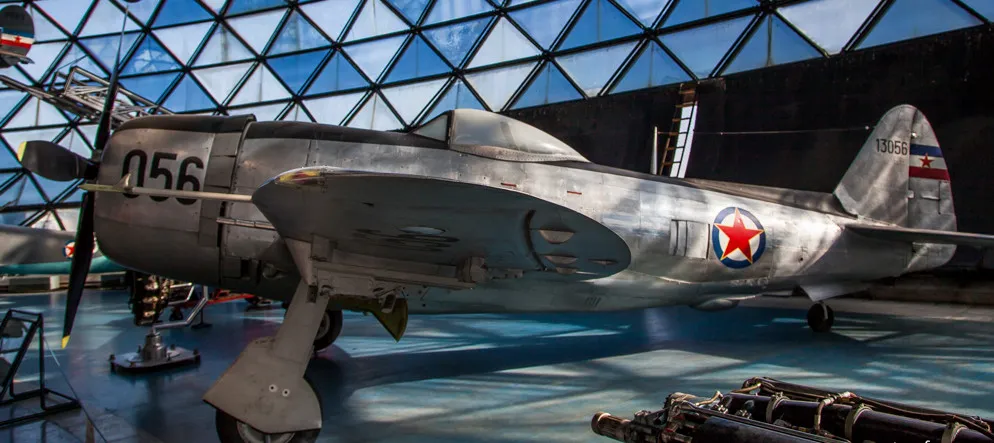
A Republic P-47D-30-RE Thunderbolt fighter jet at the Belgrade Aeronautics Museum.
Considering that without drop tanks the practical flight range of the P-47D exceeded 1520 km, the single-seat fighters, which had a cruising speed of 530 km/h and could accelerate in level flight at high altitude to 690 km/h, became a worthy replacement for the armored two-seat Il-2M.
For more than five years, Thunderbolts formed the backbone of the Yugoslav Air Force’s combat capability. From 1958 onward, the remaining airworthy P-47Ds were used for training purposes. All Yugoslav Thunderbolts were decommissioned in 1961.
Almost simultaneously with the American P-47Ds, Yugoslavia acquired 77 twin-engine British de Havilland DH.98 Mosquito FB.Mk.VI fighter-bombers.
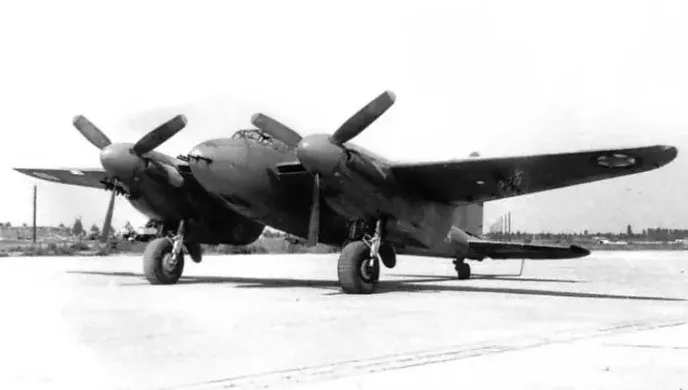
Mosquito FB Mk.VI fighter-bomber of the Yugoslav Air Force
This two-seater aircraft, with a maximum takeoff weight of 10,100 kg, had a practical range of 2985 km and could carry a combat load of up to 1820 kg. Its built-in armament was very powerful: four 20 mm cannons and four 7,7 mm machine guns. Two Rolls-Royce Merlin 25 piston engines, each producing 1800 hp, provided a top speed of 610 km/h. Its cruising speed was 410 km/h. In addition to attacking ground and naval targets, Yugoslav Mosquito crews also practiced intercepting enemy bombers at night. Target acquisition was accomplished using commands from ground-based radar stations.
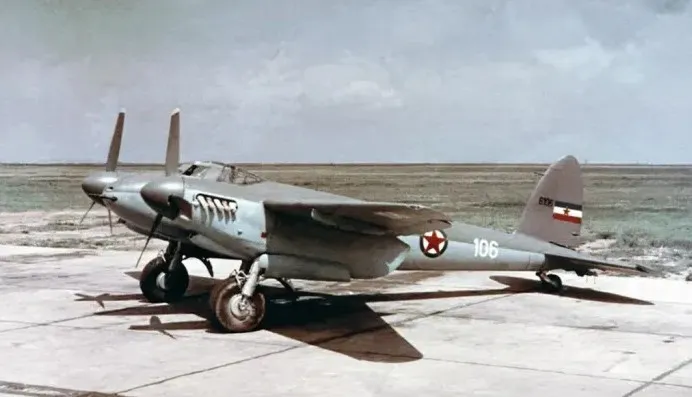
The majority of Yugoslav Mosquitos were withdrawn from service in 1960. However, several aircraft, converted into maritime reconnaissance and target tug aircraft, served until 1964.
In the early 1950s, it became clear that the piston-engine combat aircraft in Yugoslavia’s arsenal were inadequate for modern requirements. Since Soviet MiG jets were unavailable, Yugoslav representatives negotiated the purchase of modern aircraft with the Americans and British.
But due to circumstances, the first jet fighter that the Yugoslavs became familiar with in detail was a Soviet-made Yak-23, owned by Romania and hijacked to Yugoslavia on June 24, 1953.
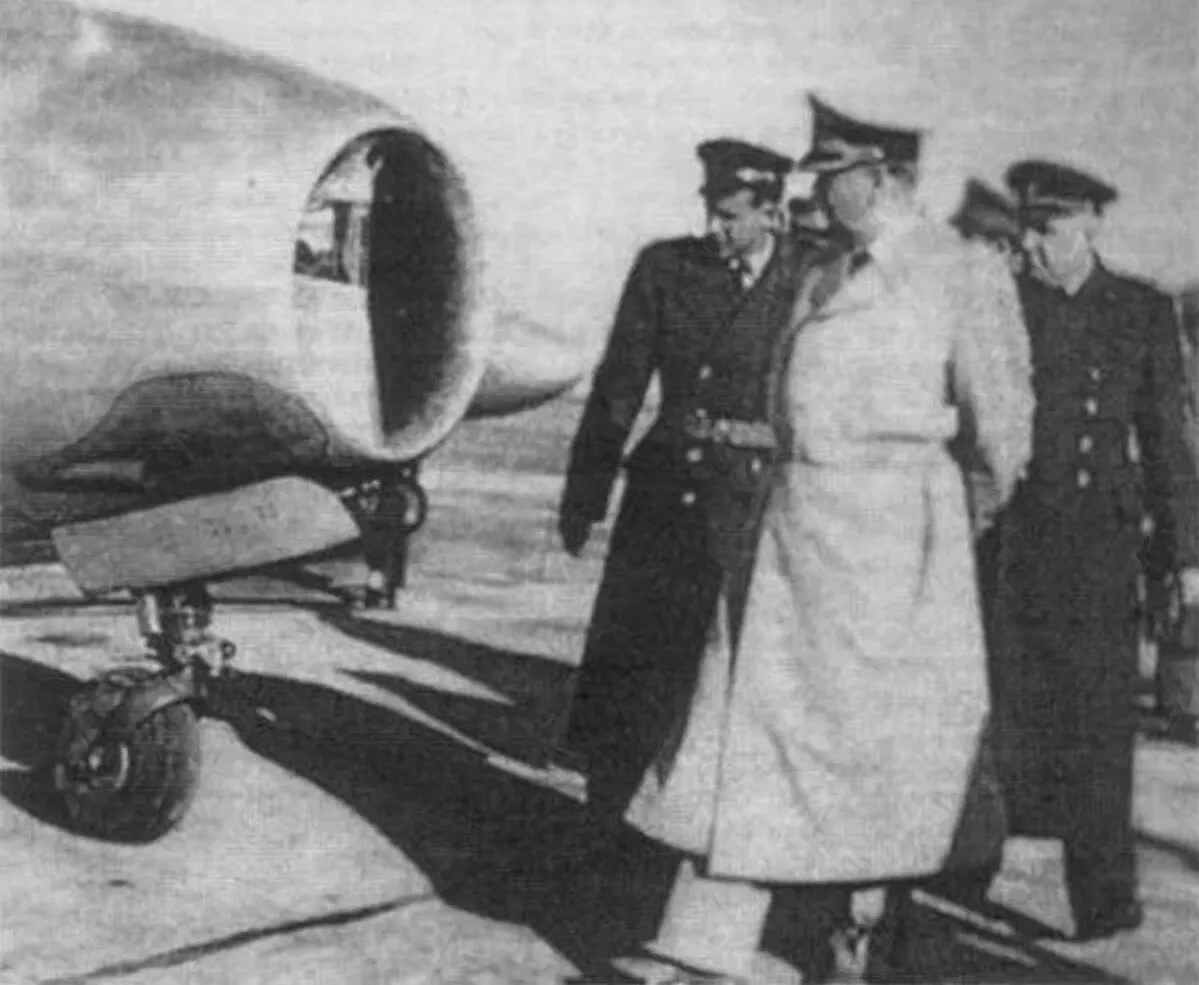
Josip Broz Tito inspects the Yak-23
Romania and the USSR made no comment on the incident and did not demand the return of the Yak-23. Yugoslav specialists thoroughly examined the hijacked jet fighter, and three test pilots flew it on two dozen sorties, logging a total of approximately 10 hours of flight time. At the time, the Yak-23 was not the most advanced achievement of the Soviet aviation industry. It was an aircraft built using an outdated step-down design (the engine nozzle exited under the rear fuselage), and its basic performance characteristics were inferior to the MiG-15.
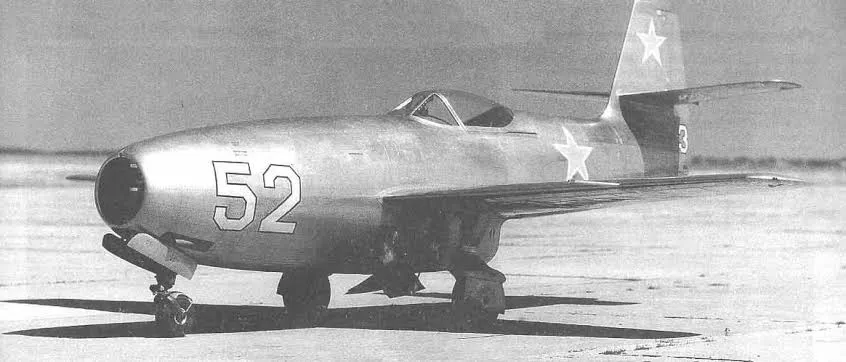
Fighter Yak-23
The Yak-23 fighter, produced serially from 1949 to 1950, had a maximum takeoff weight of 3306 kg. Its RD-500 turbojet engine, producing 1590 kgf of thrust, provided a maximum speed of 925 km/h and a service ceiling of 15,000 m. Its operational range without drop tanks reached 1080 km. Its built-in armament consisted of two 23 mm NR-23 cannons with a total of 150 rounds of ammunition.
The Yak-23 wasn’t widely used in the Soviet Union (only 313 aircraft were built). These fighters armed several air regiments in the North Caucasus and Volga Military Districts. In July 1950, Yak-23s began being exported to the socialist countries of Eastern Europe, and in the USSR, the following year, the Yak-23 began to be replaced in units by the MiG-15. By 1953, no fighters of this type remained in our Air Force; all of them had been decommissioned or transferred to socialist allies, and in some countries they served until 1958.
Left without military support from the USSR, the Yugoslav leadership established defense ties with the United States, and the hijacked Yak-23 came in handy, and it was handed over to the Americans.
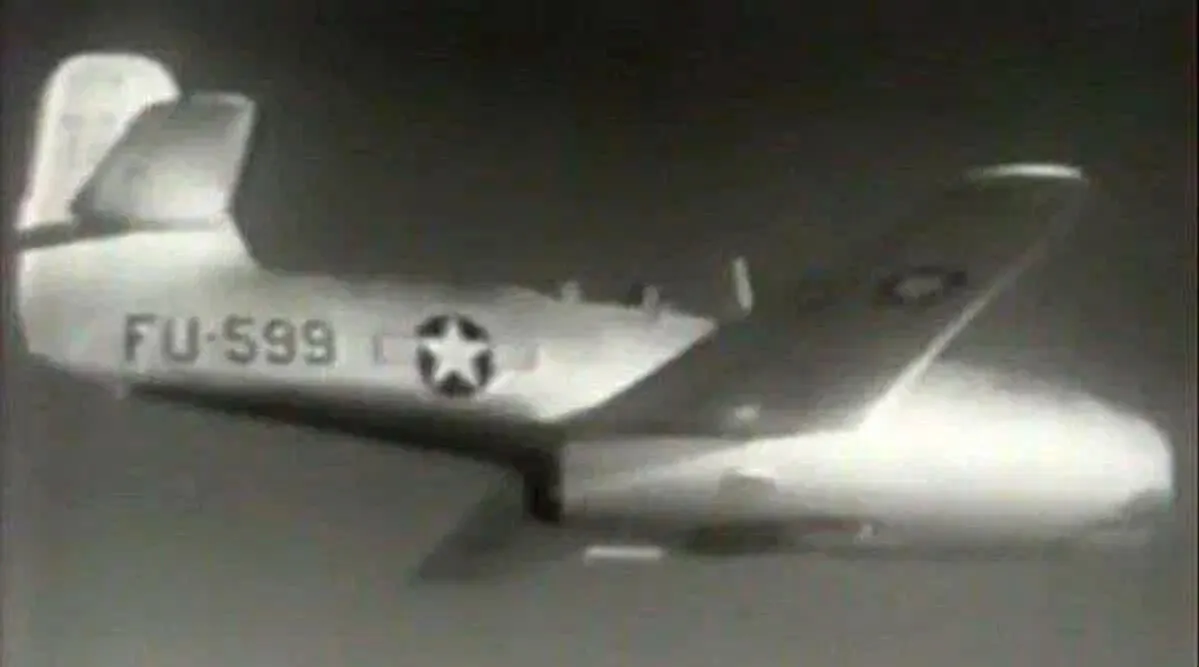
A Yak-23 fighter with American markings
As a result, the Yak-23 was disassembled and on October 10, 1953, it was sent on a heavy military transport aircraft Douglas C-124A Globemaster II to the United States, where it made its first test flight on November 4.
That same year, 1953, the first two-seat American-made Lockheed T-33 Shooting Star trainer/combat aircraft arrived in Yugoslavia, delivered under the MDAP (Mutual Defense Assistance Program). This program provided for the transfer of weapons to countries that took an anti-Soviet stance, and in addition to aircraft, Yugoslavia received Tanks и artilleryIn exchange, the Yugoslav leadership pledged not to use the weapons it received against US allies and also deployed American “observers” and “advisers” on its territory.
The first-generation T-33A jet trainers were considered highly successful, were widely deployed in pro-Western countries, and were often used as fighters. These aircraft ushered in the “jet era” in the Yugoslav Air Force.
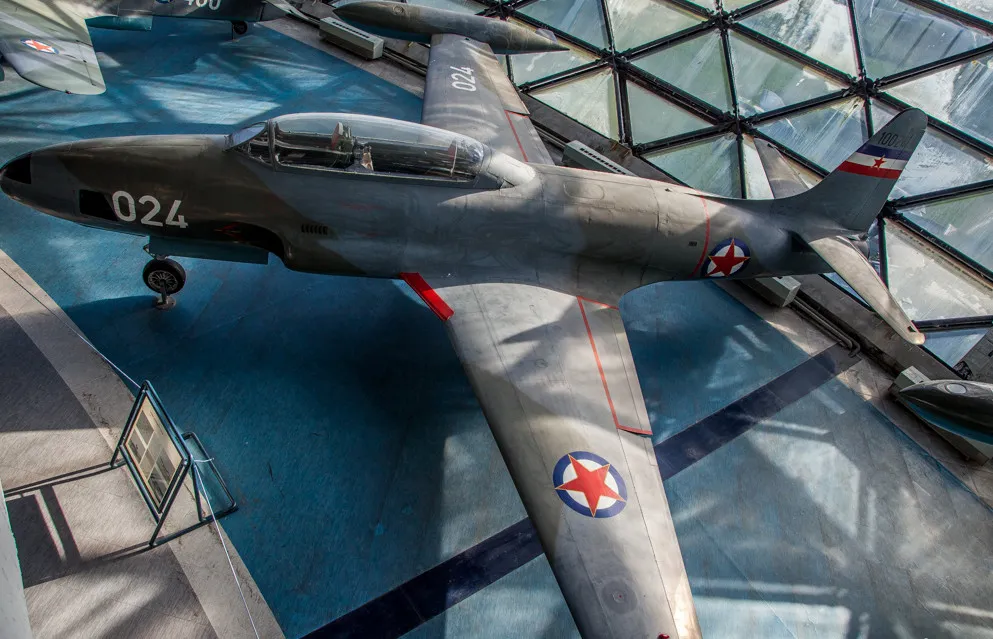
A Lockheed T-33 Shooting Star aircraft at the Belgrade Air Museum.
The T-33A trainer was developed by Lockheed based on the F-80 Shooting Star, the first American combat jet fighter, by lengthening the fuselage to accommodate a second seat. A total of 6557 aircraft were built (including licensed copies in Canada and Japan). Lockheed produced the T-33A until 1959, and these aircraft served in the US Air Force until 1997. According to reference data, Yugoslavia received 95 armed T-33As, 22 RT-33A photoreconnaissance aircraft, and eight TT-33A target tugs.
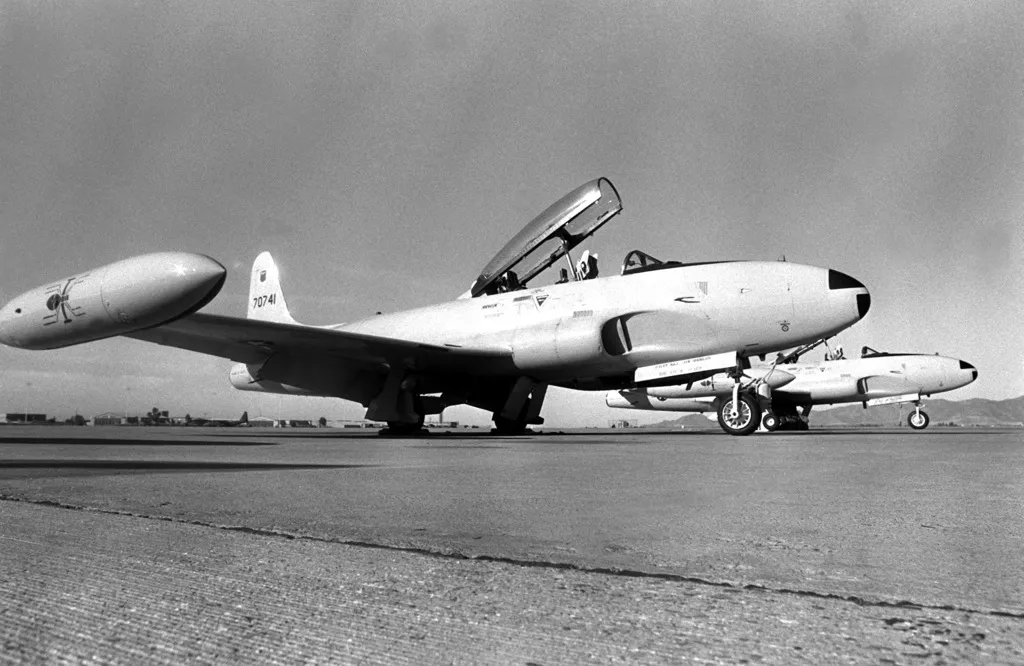
The basic T-33A trainer had a maximum takeoff weight of 6551 kg. The aircraft was equipped with an Allison J33-A-35 turbojet engine producing 24,02 kN of thrust. Maximum speed at high altitude was up to 880 km/h. Cruising speed was 720 km/h. Service ceiling was 14,000 m. Range was 620 km. The aircraft’s internal armament consisted of two 12,7 mm machine guns with 300 rounds of ammunition each. External hardpoints could accommodate a combat load of up to 907 kg.
The two-seat jet trainers were not only used for training flights but, if necessary, could also intercept relatively slow-moving aerial targets and engage in defensive, maneuverable air combat with faster jet fighters. On several occasions, Yugoslav “Shooting Stars” scrambled to intercept foreign aircraft intruding into the country’s airspace. The last remaining Yugoslav T-33As were decommissioned in 1984.
On June 9, 1953, the first American Republic F-84G Thunderjet fighter-bomber arrived in Yugoslavia. Various sources estimate the number of Thunderjets transferred to the SFRY, ranging from 219 to 231 units. The first main batch of aircraft, received in 1953-1954, came directly from the United States, and a second batch of used aircraft was donated by Greece in 1957.
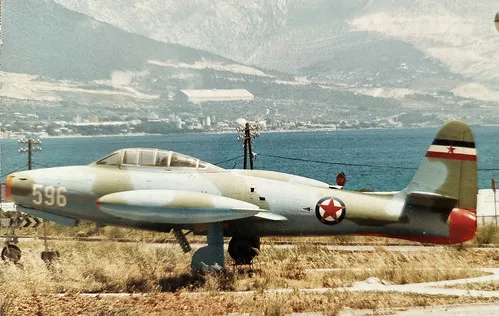
Yugoslav Republic F-84G Thunderjet fighter-bomber
During the initial training phase of the F-84G, Yugoslav pilots envisioned aircraft of this type, in addition to striking enemy targets and providing close air support to ground forces, also intercepting aerial targets. However, the lack of onboard radar and inferior maneuverability compared to the T-33A, F-86E, and F-86D hindered this. Ultimately, the Thunderjets became the primary strike aircraft of the Yugoslav Air Force for approximately 15 years, but their pilots only practiced defensive aerial combat.
The Thunderjet, a typical first-generation jet fighter, was generally a capable aircraft and fully suited its intended purpose. For the first half of the 1950s, it was a fairly modern aircraft, entering service with the US Air Force in August 1951. In 1954, using in-flight refueling, the F-84G made a record-breaking nonstop transatlantic flight for a single-seat jet fighter. With internal fuel tanks holding 1700 liters, the operational range reached 1490 km. With external fuel tanks, the ferry range was 3200 km. The combat radius was up to 1100 km. The maximum takeoff weight was 10,670 kg. The Allison J35-A-29 turbojet engine produced up to 2540 kgf of thrust. The maximum speed was 1110 km/h. Cruising speed: 775 km/h. Service ceiling: 12,300 m.
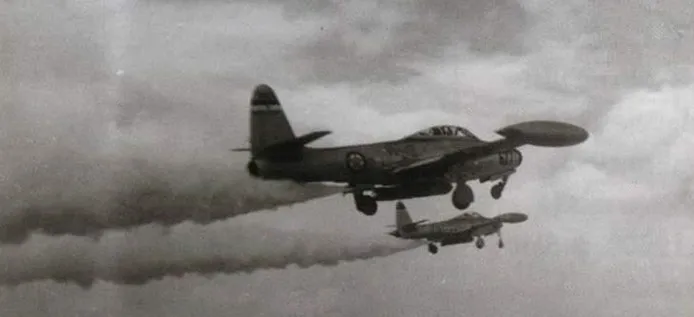
Yugoslav F-84G fighter jets take off with external solid-fuel boosters.
An aircraft with a normal takeoff weight of 8200 kg required a runway at least 2150 m long. The F-84G also could not operate from unpaved runways, which limited the fighter-bomber’s wartime capabilities. To reduce takeoff takeoff length, the aircraft were equipped with external solid-fuel boosters.
By the standards of the time, the aircraft could carry a very substantial combat load of up to 1814 kg (including 907 kg of aerial bombs) on four external pylons. Its internal armament was typical of American fighters of the late 1940s and early 1950s: six 12,7 mm machine guns with 300 rounds per gun.
A total of 3025 F-84G aircraft were built, of which 789 were delivered to allies under the MDAP program, and until the early 1960s, the Thunderjets formed the backbone of NATO strike aviation in Western Europe.
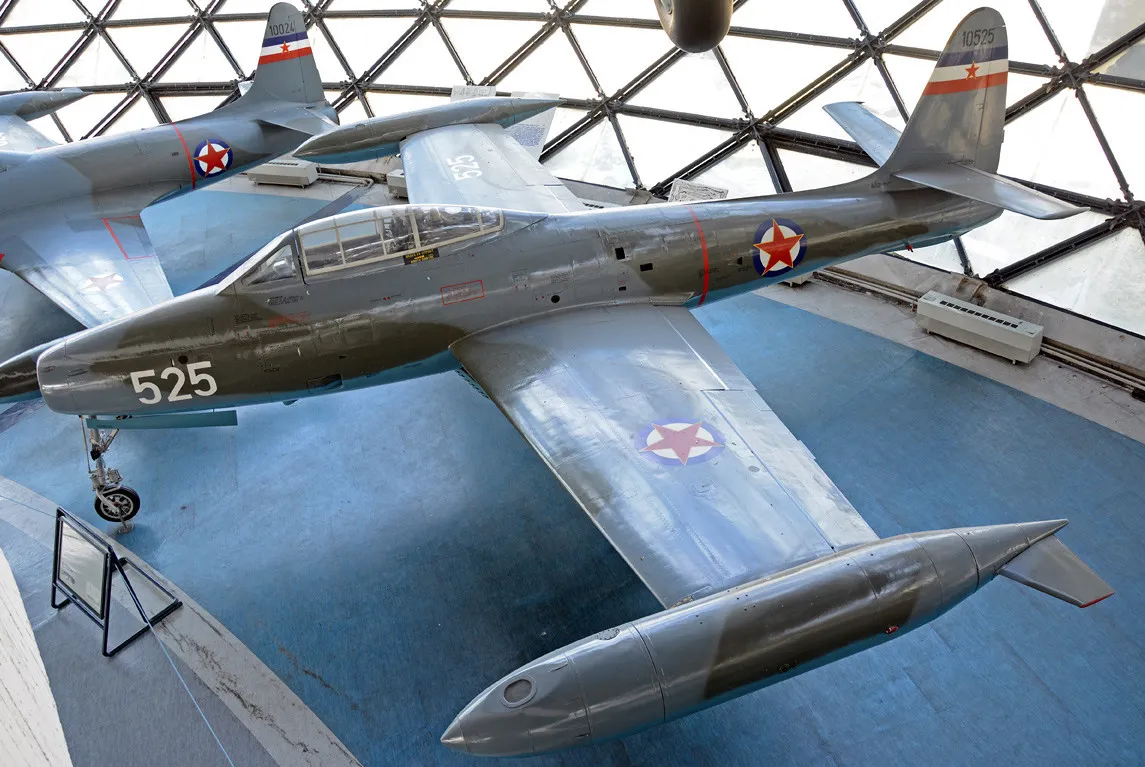
A Republic F-84G Thunderjet at the Belgrade Aeronautics Museum
The F-84G continued to be used in Yugoslavia until 1974, with some aircraft being converted into photo reconnaissance aircraft.
The first jet fighter designed to gain air superiority and intercept enemy bombers in the Yugoslav Air Force was the North American F-86E Sabre.
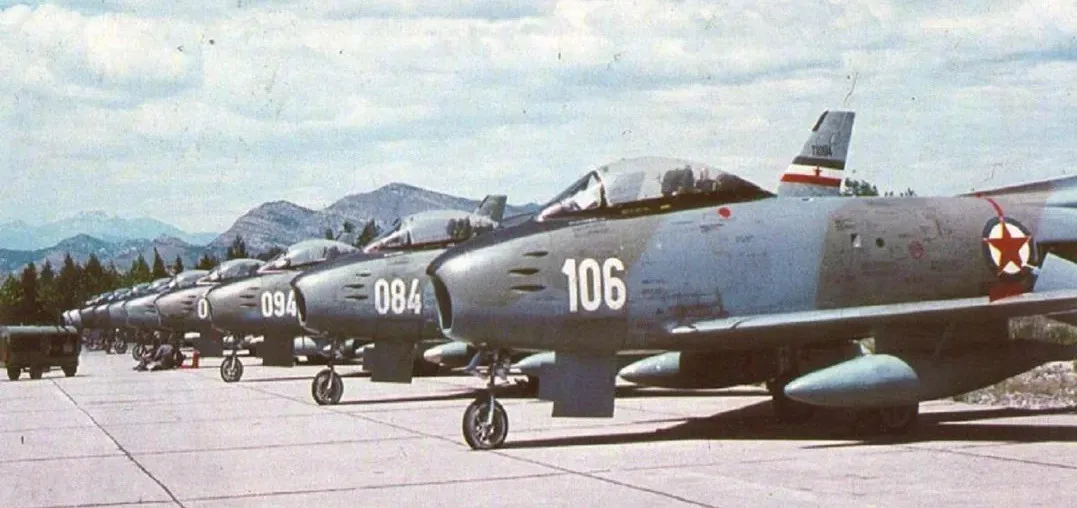
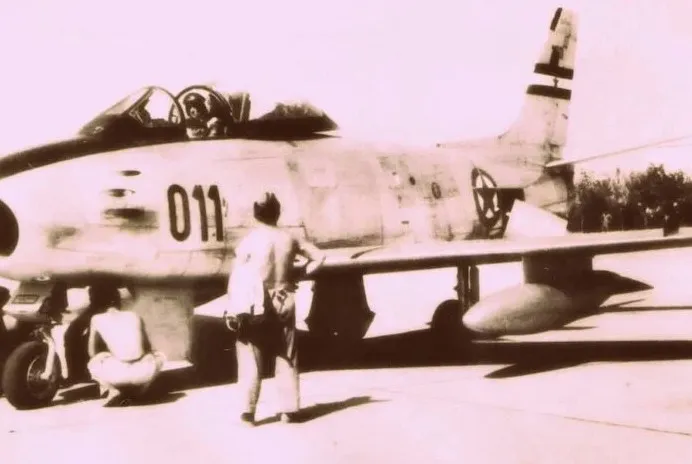
North American F-86E Sabre fighters of the Yugoslav Air Force
From 1956 to 1959, under the MDAP program, the Yugoslav Air Force received 122 North American F-86E Sabres and their Canadian clones, designated Canadair Sabre Mk. 4. Of these, 78 were the original American-built aircraft, while 44 were Canadian license-built versions, designated F-86E(M) in Yugoslavia. Before delivery to Yugoslavia, the Sabres were overhauled and equipped with new engines. An additional ten aircraft were received for use as spare parts donors.
In 1950-1951, a total of 456 Sabres of this modification were built; they took an active part in air battles over the Korean Peninsula and were supplied to US allies.
The fighter, with a maximum takeoff weight of 8077 kg, was equipped with a General Electric J47-GE-13 turbojet engine producing 2359 kgf of thrust, providing a maximum speed in level flight at high altitude of 1105 km. Its service ceiling was 14,300 m. Its ferry range was 1645 km. Its combat radius was 510 km. The fighter was armed with six 12,7 mm machine guns with 267 rounds per gun. A total of 900 kg of ordnance (bombs, rockets, napalm tanks) or external fuel tanks could be carried on external pylons.
The first two F-86E Sabres landed in Yugoslavia on May 21, 1956, with four more arriving the following month. Prior to this, pilot and maintenance personnel were retrained. American instructors conducted a three-month course. At the same time, several Yugoslav pilots were sent to an American base in West Germany for retraining. During the initial phase of their service, the Yugoslav F-86Es flew extensively.
To maintain the Sabres in flight condition, the Zmaj aircraft repair plant near Zagreb and the Jastreb aircraft factory in Novi Sad were involved. Engine refurbishment was handled by the Orao company in Rajlovac. Due to the gradual cooling of relations with the United States in the late 1950s and Yugoslavia’s subsequent transition to Soviet MiG-21s, the supply of original spare parts for the Sabres became more difficult. Yugoslav industry partially transitioned to the production of consumables, airframe components, rubber products, and wiring.
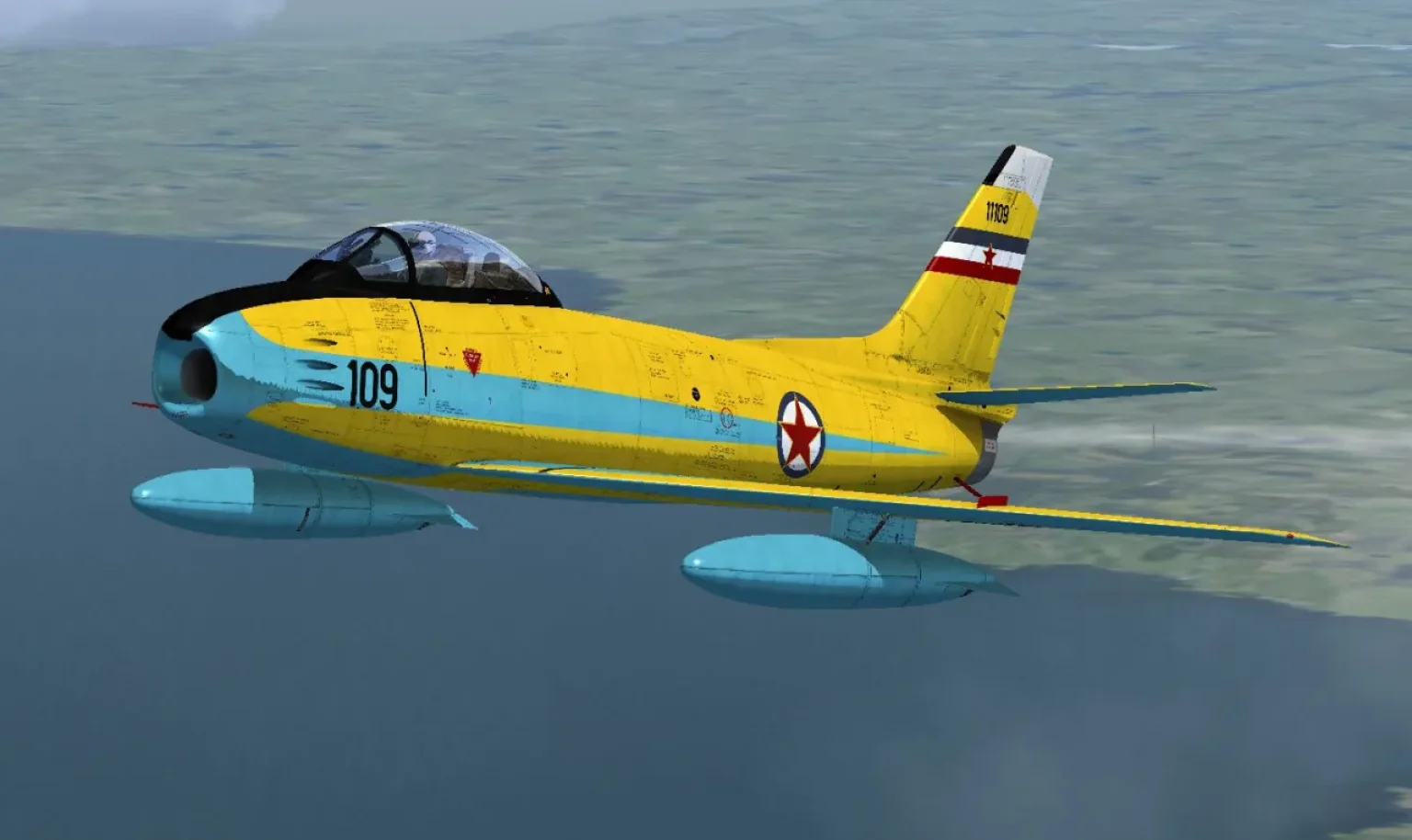
In late 1959, an aerobatic flight team was formed, assigned five specially modified F-86Es painted yellow with blue stripes. The team’s pilots made their first public appearance in these aircraft in July 1960 at a major air show held in honor of the then-President of Sudan’s visit to Yugoslavia. More than 200,000 spectators watched the demonstration flights.
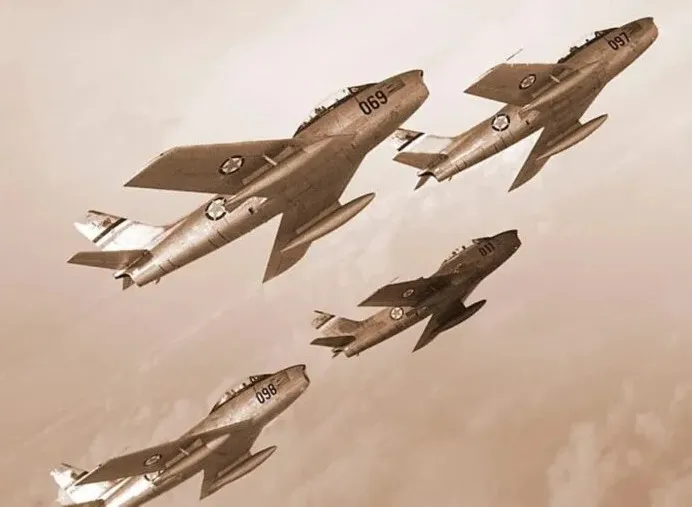
In the 1950s, Yugoslav F-86Es actively patrolled the borders with Warsaw Pact countries. During one border incident, a Yugoslav Sabre intercepted and shot down a Hungarian MiG-15 fighter that had violated Yugoslav airspace.
After the supersonic MiG-21s entered service with the Yugoslav Air Force in the 1960s, the F-86E fighters were repurposed for strike missions. The Canadian-built fighters continued to serve until 1971, while the American-built Sabres were decommissioned in 1974. Honduras acquired some of the airworthy F-86Es in 1976.
American fighters delivered to Yugoslavia in the 1950s were primarily designed for daylight operations, and their ability to intercept enemy aircraft without ground guidance was very limited. To expand the country’s ability to protect strategically important targets, 130 retired North American F-86D Sabre interceptors, also known as “Sabre Dogs,” were delivered to the United States Air Force in 1961. Some of the delivered aircraft were initially intended for cannibalization for spare parts.
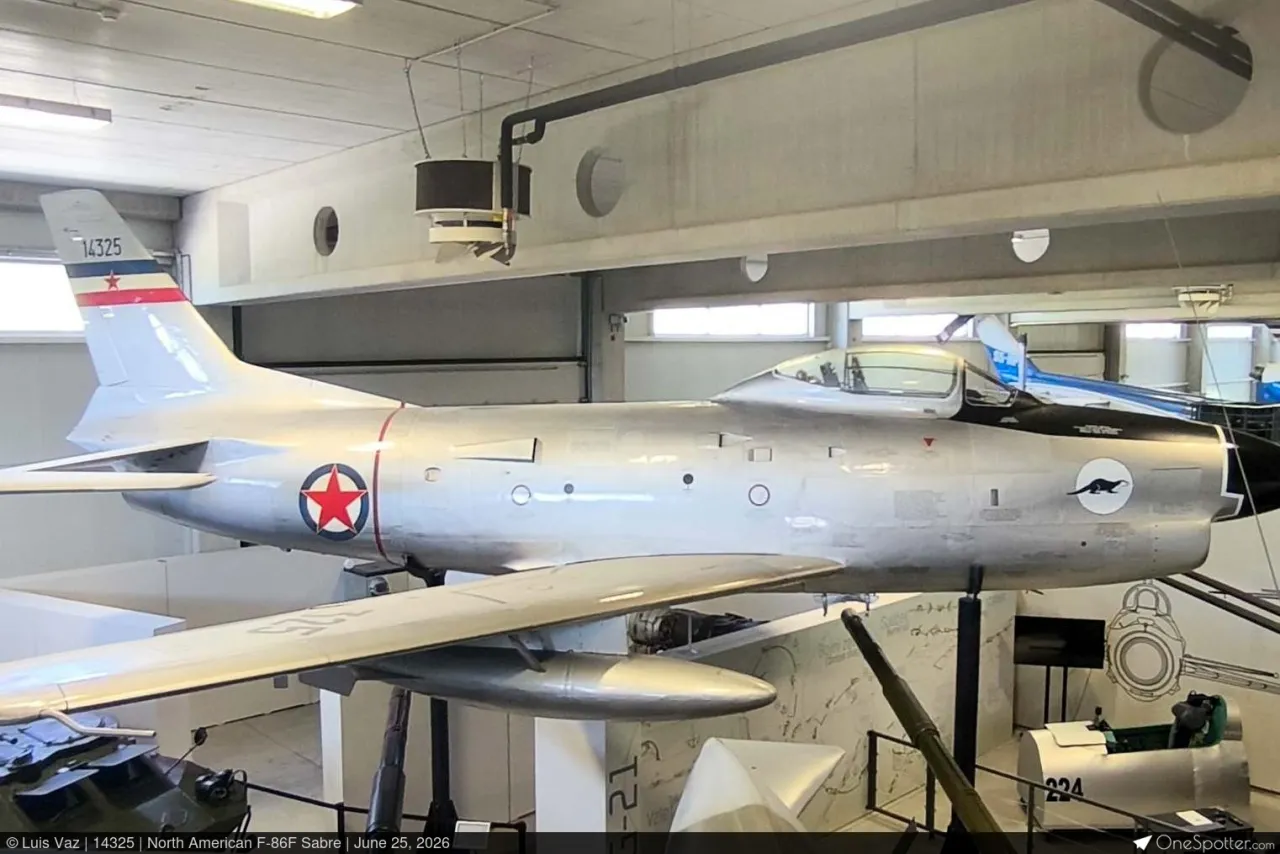
A Yugoslav North American F-86D Sabre fighter jet on display at a museum.
The F-86D interceptor entered production in 1951, with 2504 units built. Sabres of this modification were delivered to Denmark (50 aircraft in 1958), Greece (50 aircraft in 1958), Japan (50 aircraft in 1959), Yugoslavia (130 aircraft in 1961), South Korea (40 aircraft), Turkey (50 aircraft in 1959), the Philippines (20 aircraft in 1958), and Taiwan (18 aircraft in 1960). F-86D interceptors were considered a valuable asset to the North American Aerospace Defense Command (NORAD), and their transfer to allies began after more advanced all-weather, all-day interceptors entered service.
The F-86D was the first Yugoslav fighter equipped with a radar and an afterburning turbojet engine. The General Electric J47-GE-17 turbofan engine produced 2461 kgf of thrust in takeoff mode and 3402 kgf with afterburner. Maximum speed in level flight was 1115 km/h. Service ceiling was 15,000 m. With a maximum takeoff weight of 9060 kg, the aircraft had a service range of 890 km. Ferry range was 1238 km.
The F-86D interceptor had an atypical armament. While other Sabres were armed with six 12,7mm machine guns or four 20mm cannons, the long-nosed Sabre carried a retractable launcher with 24 70mm Mighty Mouse unguided rockets. All rockets could be launched in approximately 0,5 seconds.
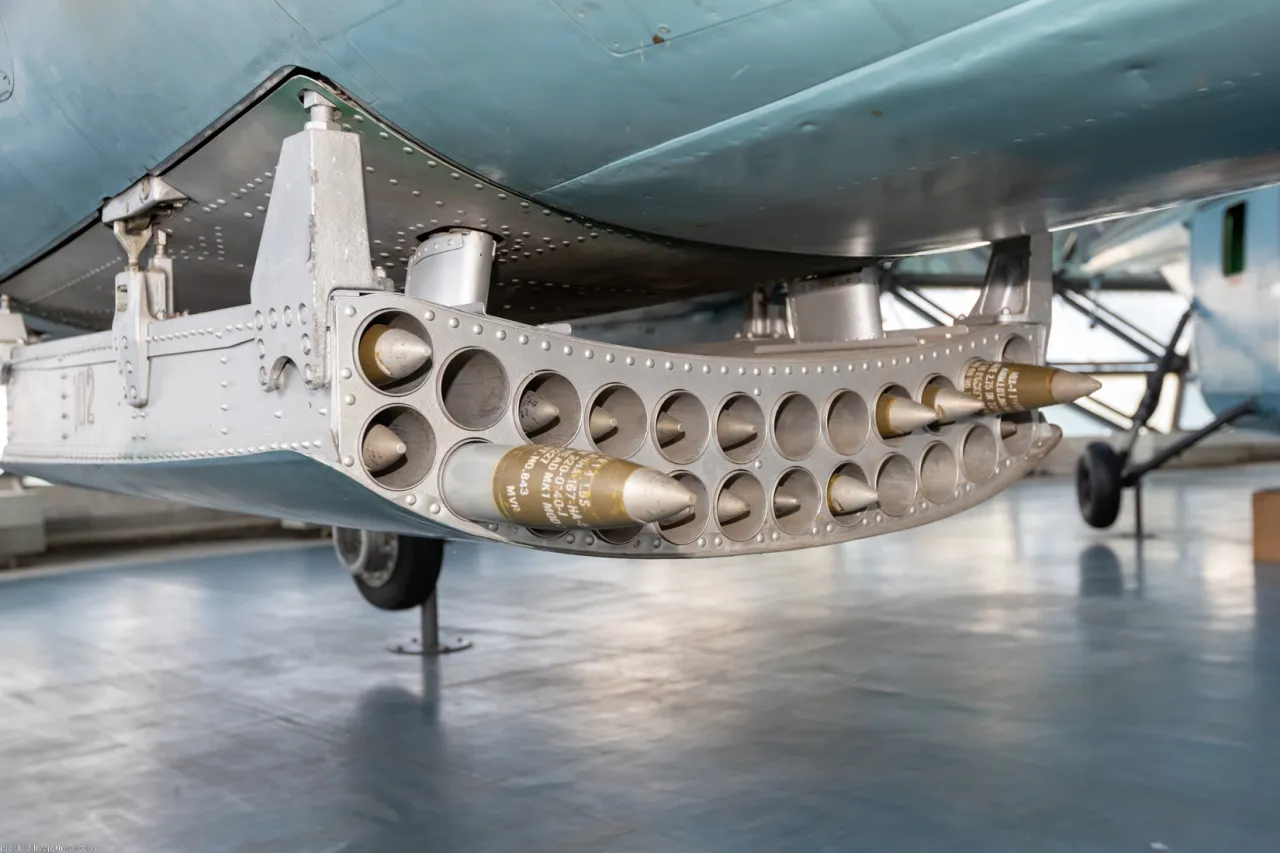
The weapons control system, coupled with the AN/APG-36 radar and autopilot, ensured the successful employment of the weapons. By the standards of the early 1950s, American engineers had created a highly sophisticated automated fire control system. The AN/APG-36 radar could detect a target such as a Boeing B-29 Superfortress at a range of over 45 km. The pilot would steer the aircraft onto a course and set the target parameters, as well as the number of missiles in a salvo (2, 4, 12, or 24), after which the autopilot maintained the aircraft on a collision course. Upon reaching the calculated attack range, the automatic system would automatically fire the salvo and signal the pilot to initiate evasive maneuvers.
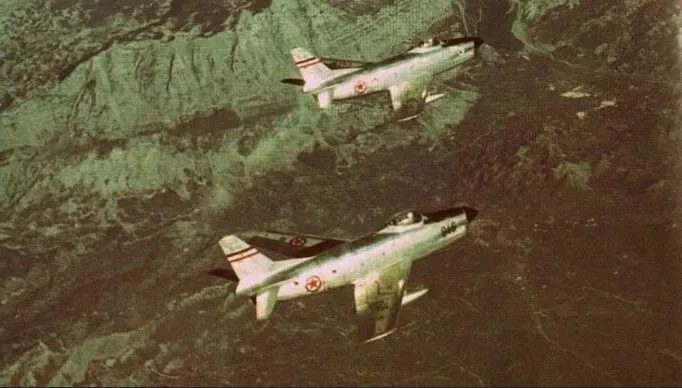
F-86D interceptors were operated by personnel of the 83rd Fighter Aviation Regiment, stationed in Skopje, and the 117th Fighter Aviation Regiment, based near Zagreb. In the mid-1960s, more than two dozen long-nosed Sabres were converted into reconnaissance aircraft, with three cameras installed in place of the AN/APG-36 radar.
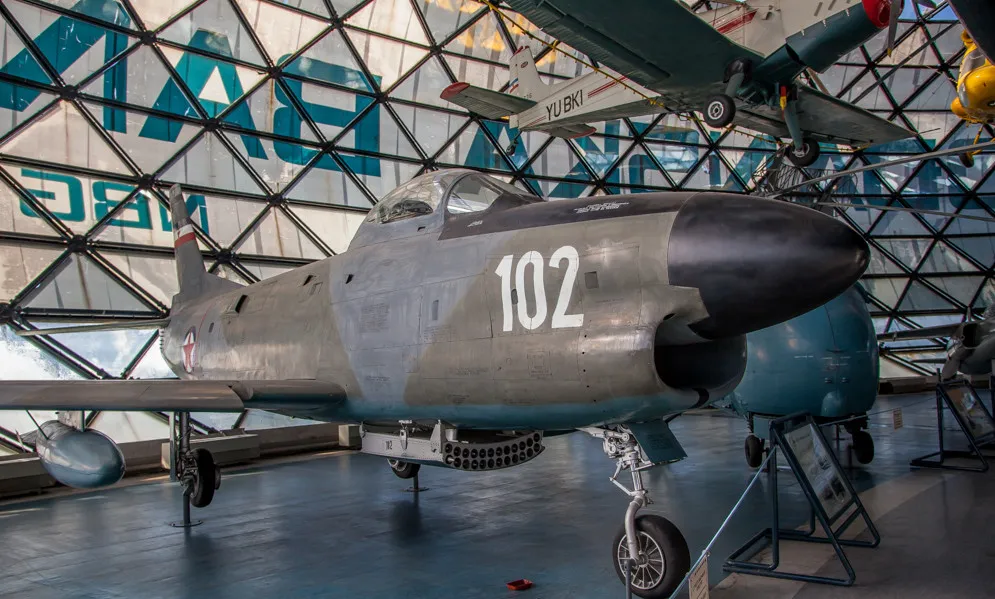
A Yugoslav North American F-86D Sabre fighter jet at the Belgrade Aeronautics Museum.
In the late 1960s, as MiG-21 fighters began arriving, the F-86D began to be phased out of service. Despite its considerable service life (the F-86D on display at the Belgrade Air Museum was manufactured in September 1954), these aircraft still had a significant lifespan. The difficulty lay in the fact that, some time after Stalin’s death, relations between Belgrade and Moscow warmed, and the Americans stopped supplying spare parts for the aircraft, which hampered operations and forced the cannibalization of some of the most worn-out aircraft, which were no longer in flying condition.
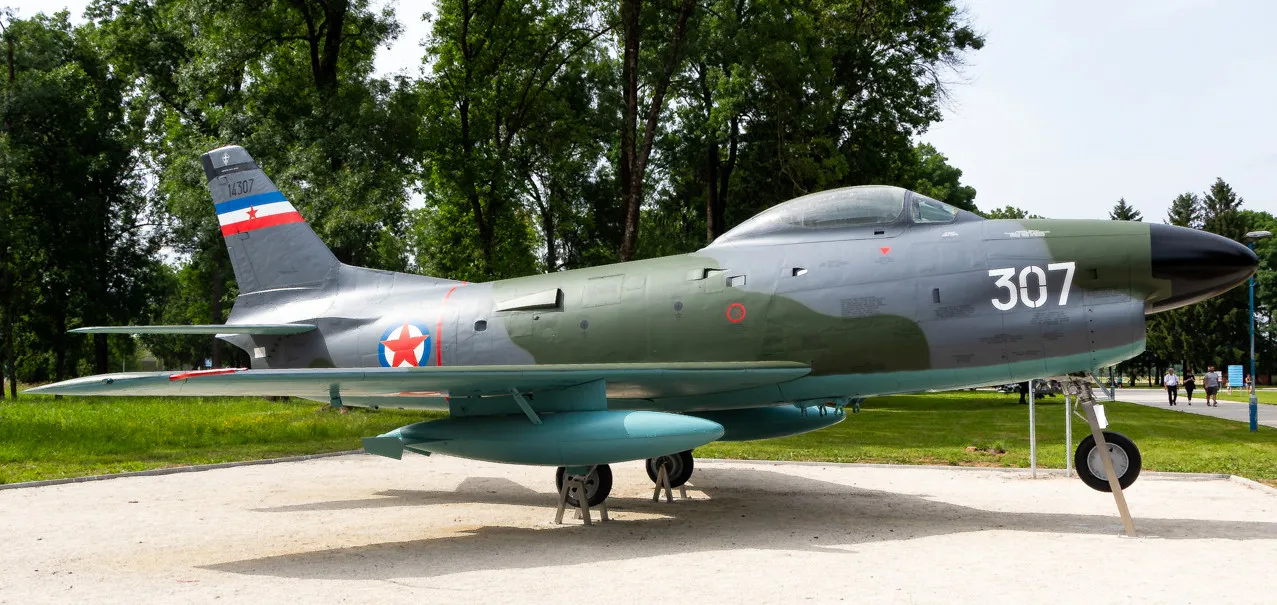
Due to faulty avionics and the impossibility of using them for their intended purpose, some Sabres in Yugoslavia were converted into radio-controlled target aircraft. The Yugoslav F-86Ds were finally decommissioned in 1974, after which, for a long period, the SFRY and Serbia operated Soviet (Russian) and domestically produced combat aircraft.
To be continued …