










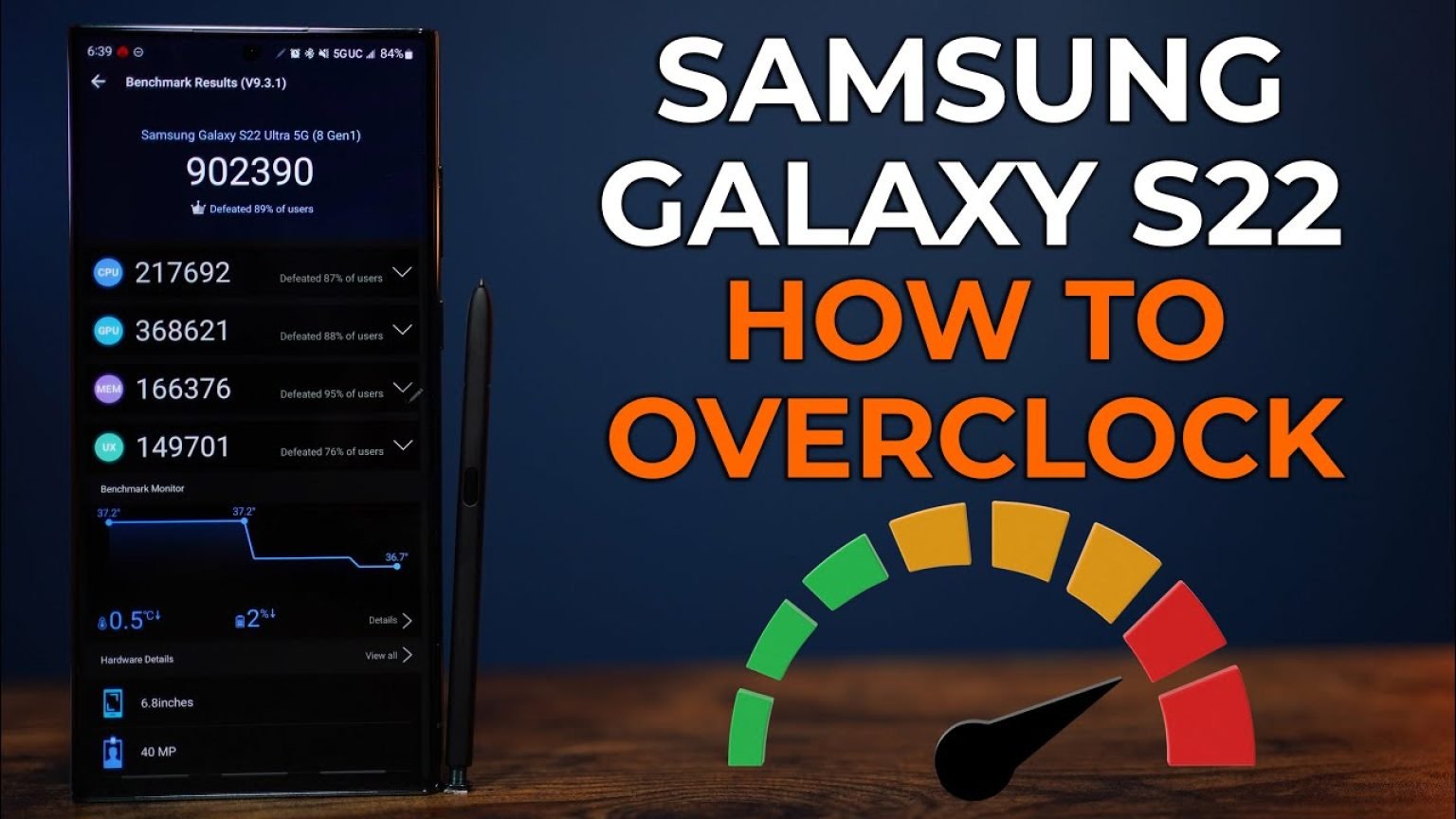
In the fast-paced ecosystem of mobile computing, squeezing every ounce of performance out of flagship hardware is a perennial pursuit for tech enthusiasts. While traditional mobile platforms maintain rigid voltage and clock speed boundaries to preserve battery longevity, advanced users constantly seek methods to elevate their device capabilities. Today, we examine the practical boundaries of mobile processing optimization on Samsung’s globally recognized flagship hardware, analyzing the delicate balance between thermal throttling, clock frequencies, and sustained performance execution under load.
Editorial Note: Draft generated for technical review. Verify live vendor pricing and compatibility before publishing.
Under the Hood: Architecture and Processing Capabilities
Modern flagship smartphones rely heavily on heterogeneous system-on-chip (SoC) architectures designed to handle intensive computational workloads alongside everyday tasks. Whether powered by Qualcomm’s Snapdragon platform or Samsung’s proprietary Exynos silicon, these processors leverage multi-core clusters comprising high-performance prime cores, balanced efficiency cores, and advanced neural processing units. To understand how these systems respond to performance tuning, we must examine their underlying specifications.
| Component Name | Architecture/Platform | Memory Speed/Capacity | Thermal Output | Targeted Use Case |
|---|---|---|---|---|
| Samsung Galaxy S22 | Snapdragon 8 Gen 1 / Exynos 2200 (4nm) | 8GB LPDDR5 (up to 6400 MT/s) | Vapor Chamber Cooling / Passive | Flagship Mobile Computing & Gaming |
For official technical documentation on underlying mobile silicon architectures, consult resources provided by Qualcomm or review architectural whitepapers directly from Samsung Semiconductor.
Performance Tuning and Thermal Realities in Mobile Hardware
Unlike desktop computing components equipped with massive cooling towers or liquid loops, mobile devices operate within severely constrained thermal envelopes. When enthusiasts attempt to push mobile processors beyond factory-specified parameters, the primary bottleneck is rarely the silicon’s ceiling itself, but rather the device’s passive thermal dissipation capacity.
Managing Sustained Workloads
Enabling aggressive performance modes or utilizing third-party utility applications can alter scheduling priorities, forcing the CPU and GPU to sustain higher clock frequencies for extended durations. However, this approach rapidly accelerates thermal saturation. As junction temperatures rise, the system initiates thermal throttling—automatically reducing clock frequencies to protect the hardware from permanent degradation. Consequently, raw benchmark gains achieved in short bursts often give way to performance regression during prolonged gaming or heavy rendering tasks.
Optimizing the User Experience Without Hardware Risk
For users seeking a speed boost without risking system stability or voiding warranties, software-level optimizations often yield the most practical results. Reducing system animation scales, managing background app activity, and prioritizing game-specific optimization suites like Samsung’s Game Booster can significantly enhance perceived fluidity. These methods circumvent the high power draw and heat generation associated with aggressive clock manipulation while maintaining responsive everyday operation.

U.S. Expands F-35 Fighter Jet Support Network With $871 Million for Dispersed Combat Operations
The United States is expanding the sustainment network supporting its F-35 Lightning…

Mpox Keeps Coming Back and Scientists Are Starting to Understand Why
Mpox is back in the headlines, again. Ten confirmed cases in Guinea-Bissau…

CLOWN CAR DORM ROOM: UW-Madison Students Caught Blinding Police Officer with Blue Laser
MADISON, WI — What started as a late-night dormitory hangout spiraled into…

Canada MAID Program: Truth About the 16,000 Assisted Deaths
A striking narrative has taken center stage in global health and policy…

RADAR LOCK: The Ultimate Guide to Ace Combat’s Wildest Original Aircraft!
(Notice: Put on your flight helmet, grab your mad-catz controller, and blast…

Mayor of New York: Netanyahu is the architect of genocide
New York Mayor Zohran Mamdani said that Israeli Prime Minister Benjamin Netanyahu's…
Editor’s Takeaway: Who Should Push the Limits?
Pushing flagship mobile hardware beyond standard parameters remains a niche pursuit best left to enthusiasts who understand the inherent trade-offs in thermal output and battery degradation. For the average consumer, factory optimizations and standard software updates provide a more than adequate balance of speed, efficiency, and longevity.
- Pros: Potential for higher short-term benchmark scores; enhanced responsiveness in specific lightweight tasks.
- Cons: Accelerated battery drain; increased risk of thermal throttling during extended sessions; potential long-term hardware wear.
- Who Benefits Most: Mobile hardware enthusiasts, benchmark hobbyists, and power users experimenting with custom software environments.