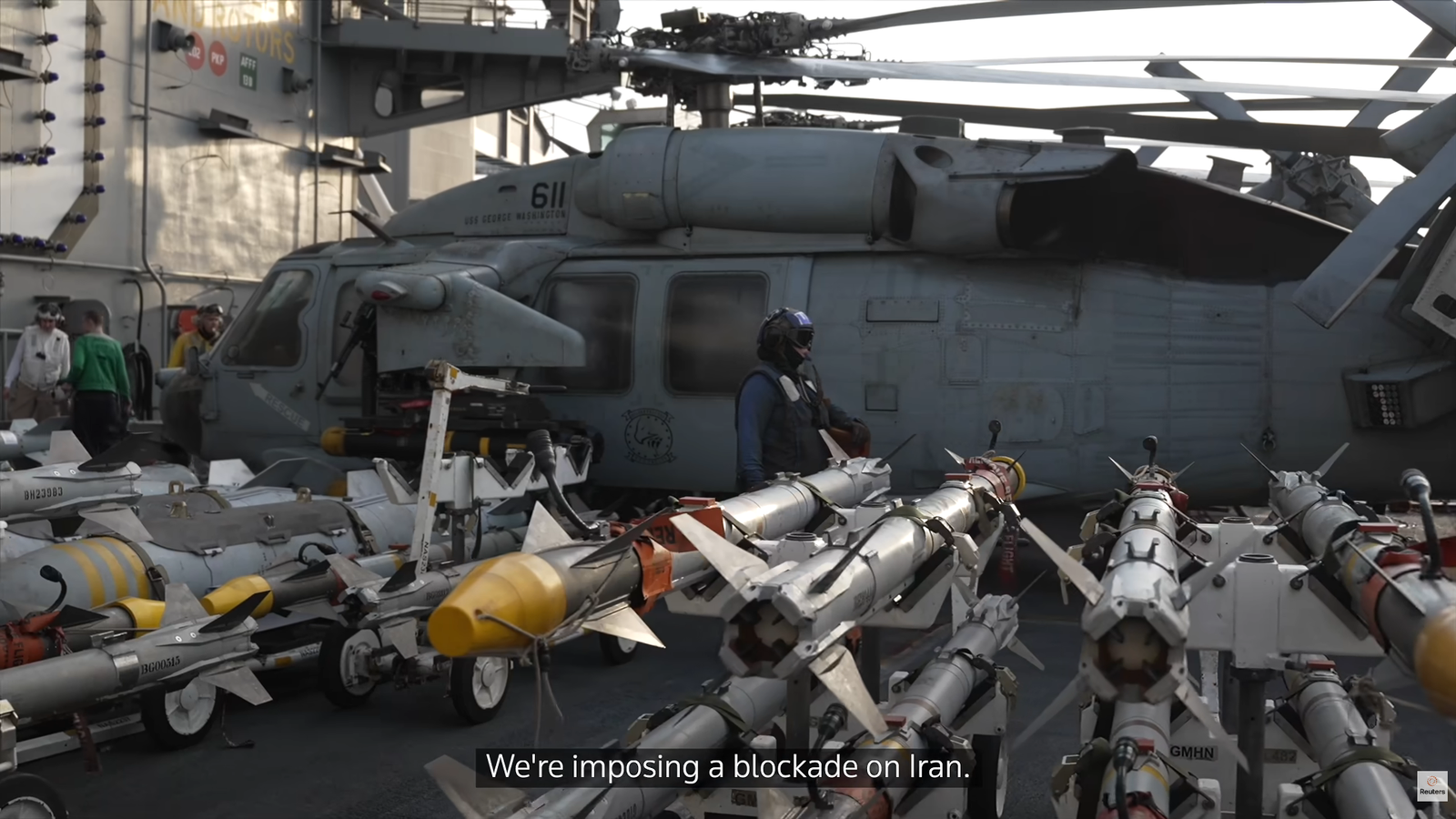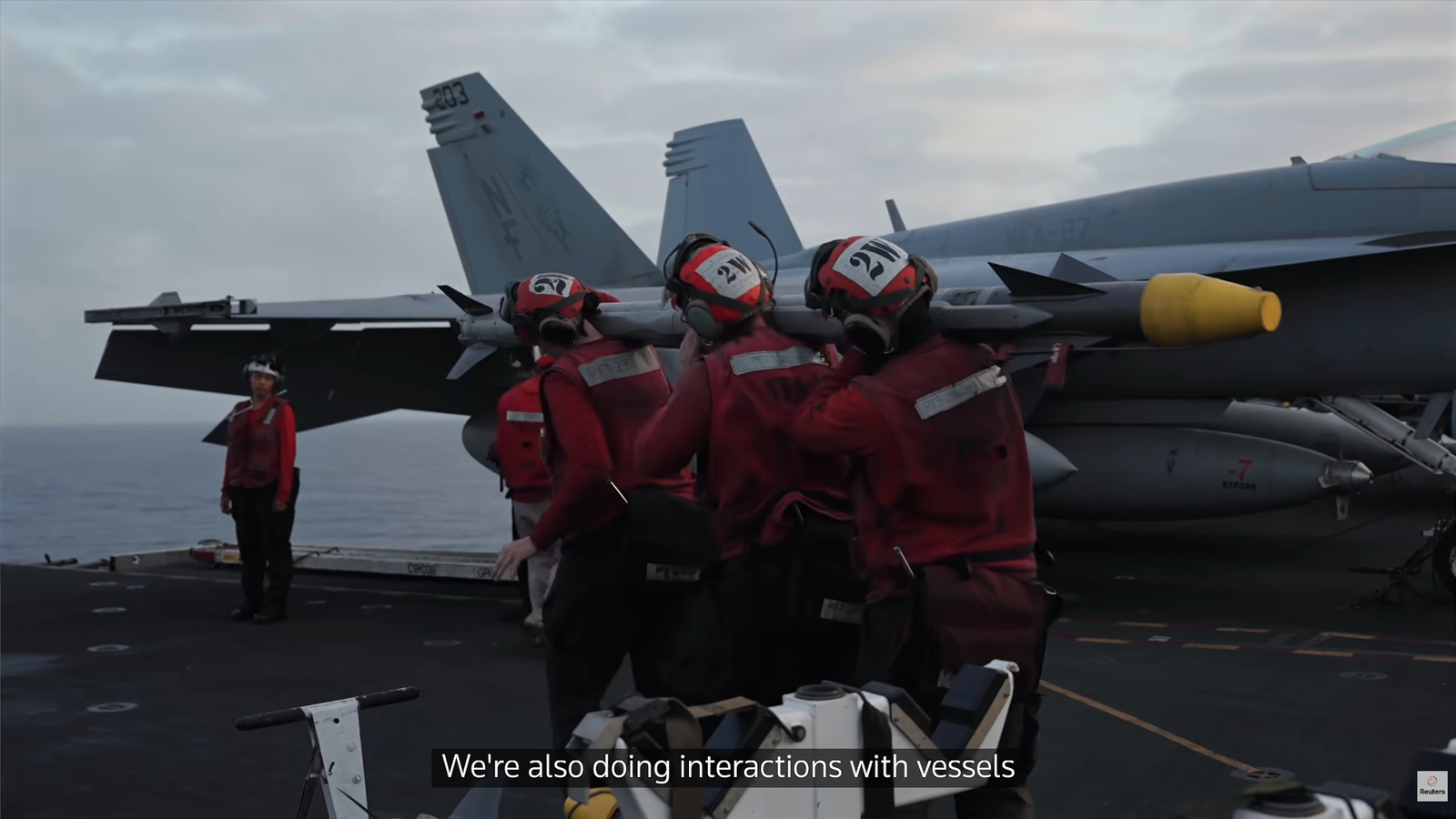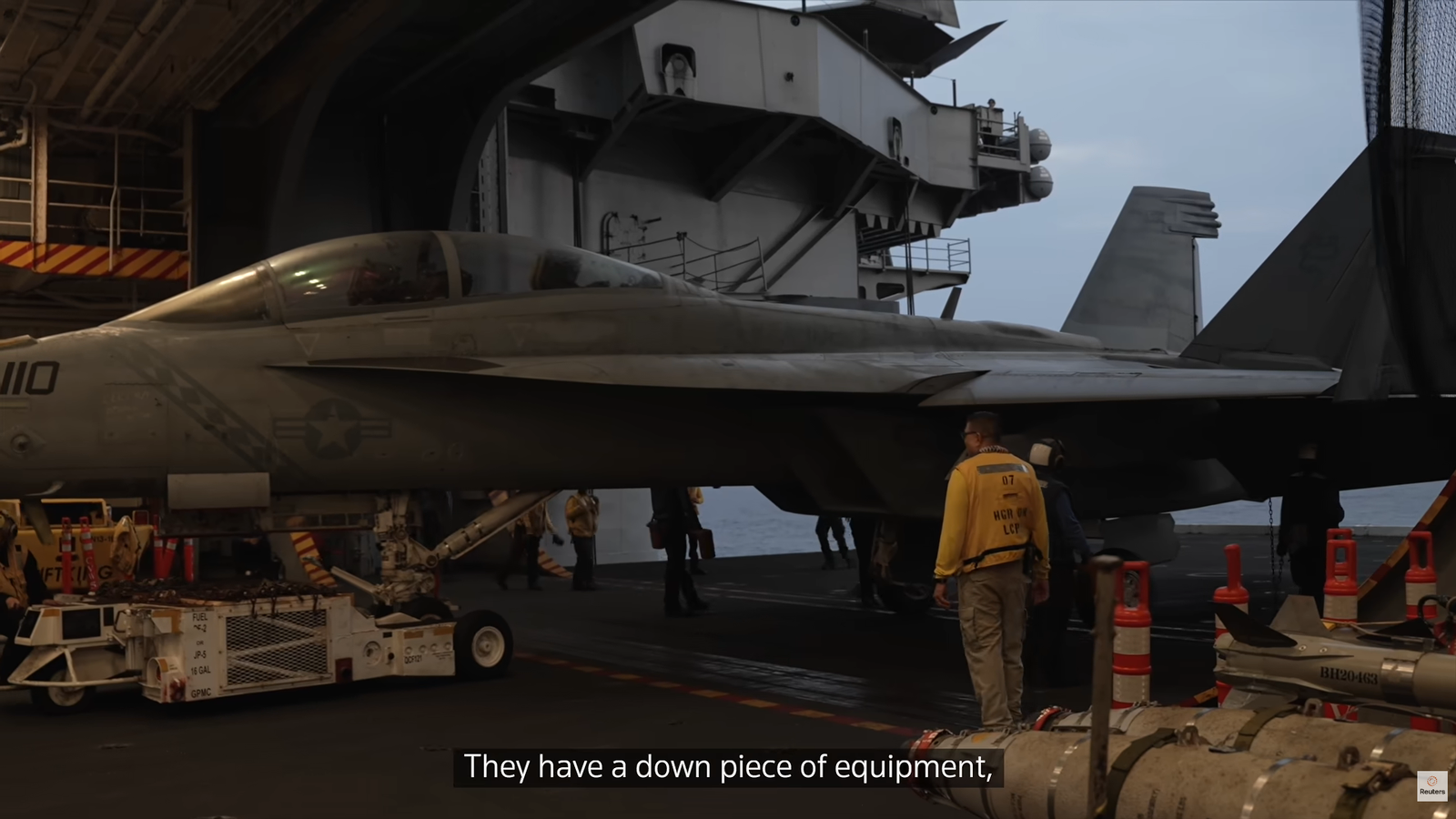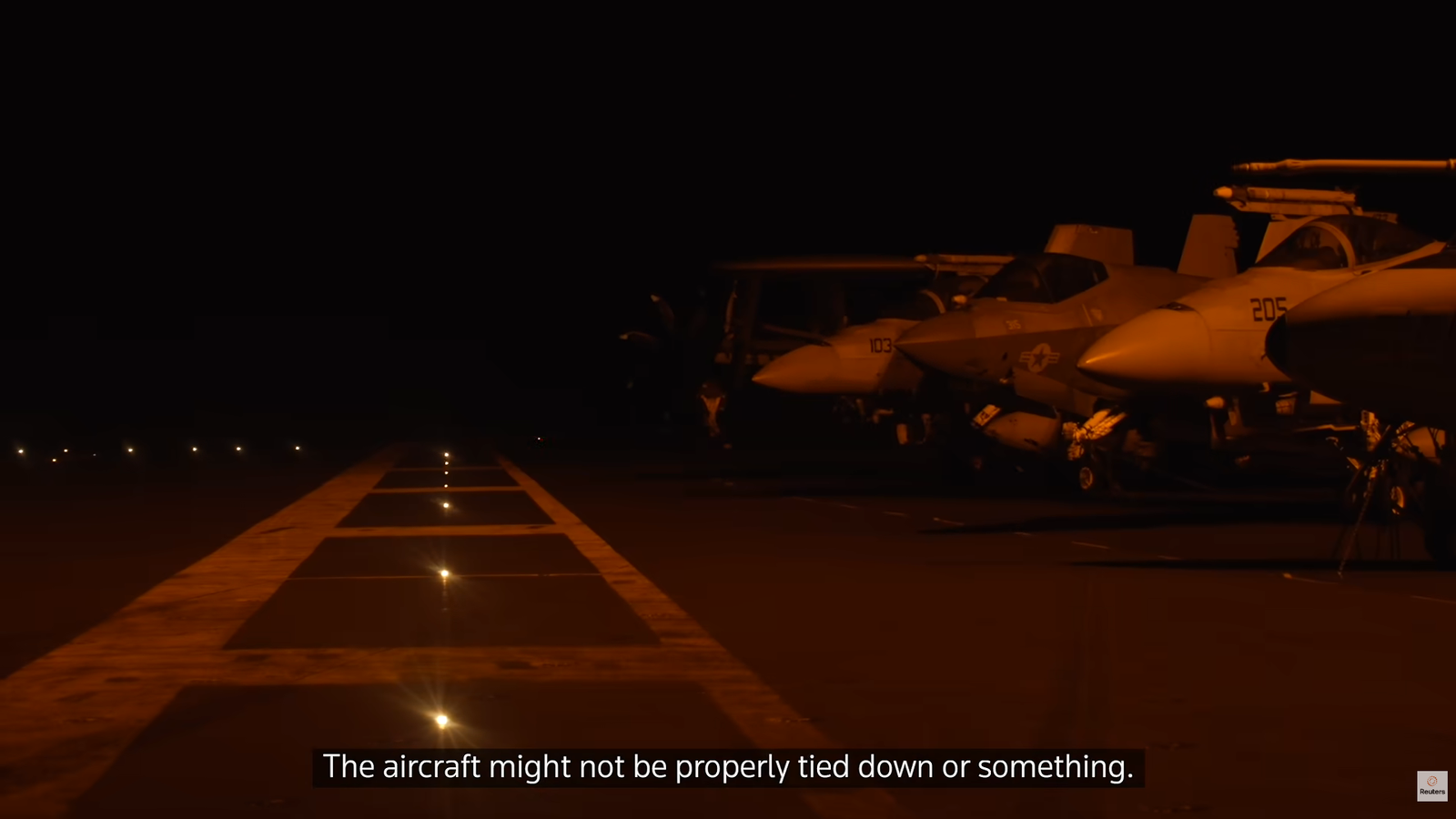













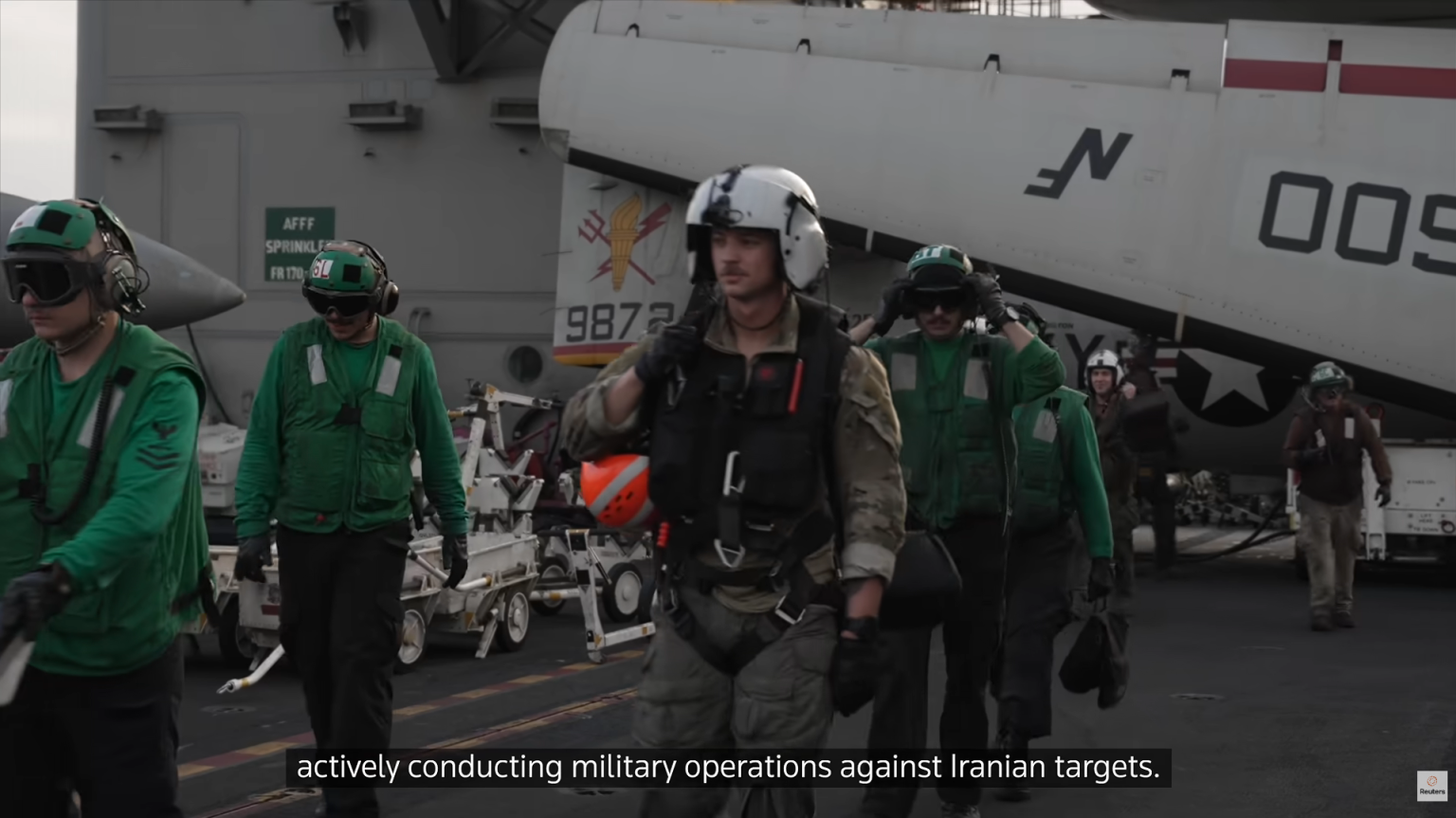
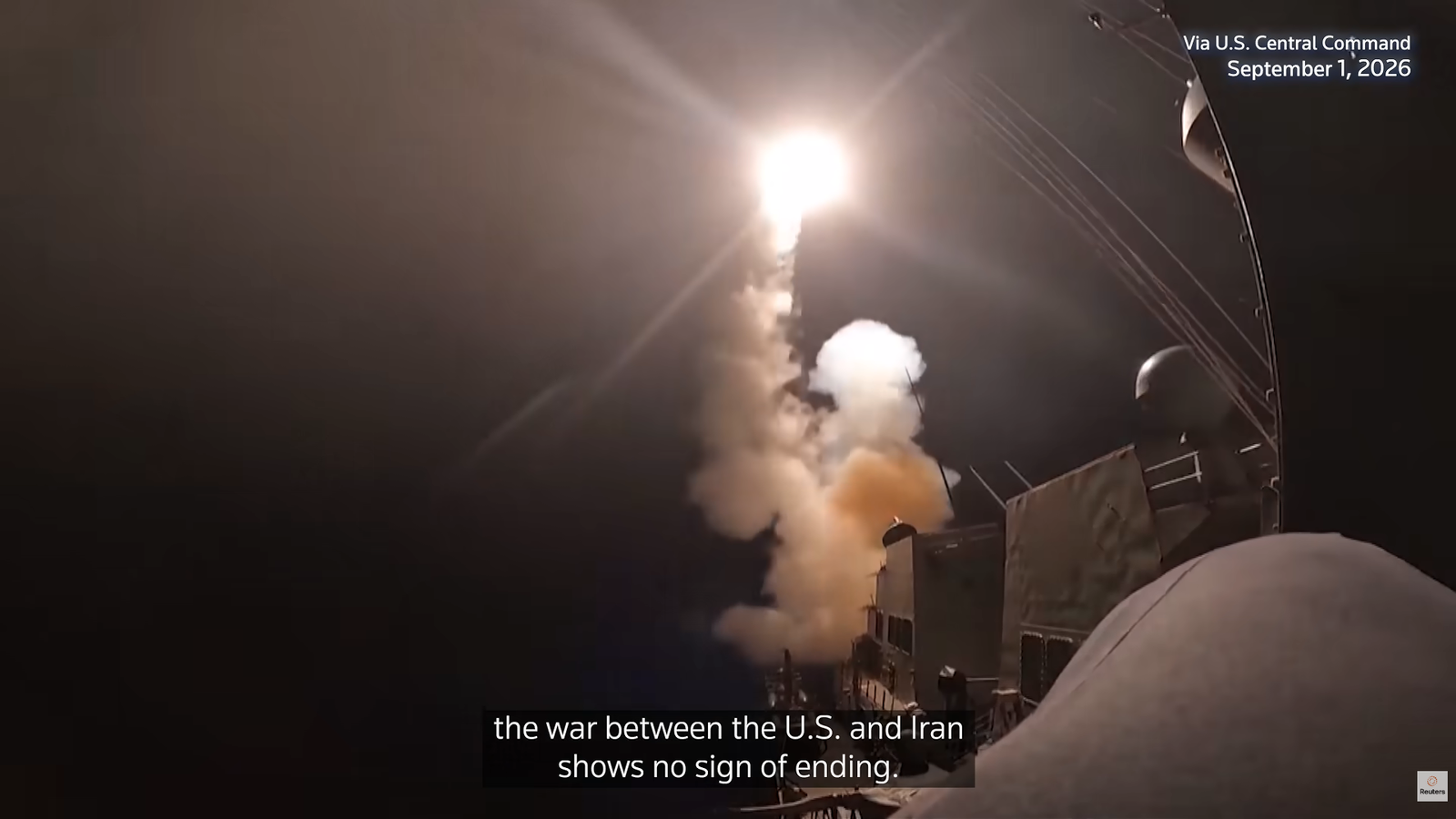
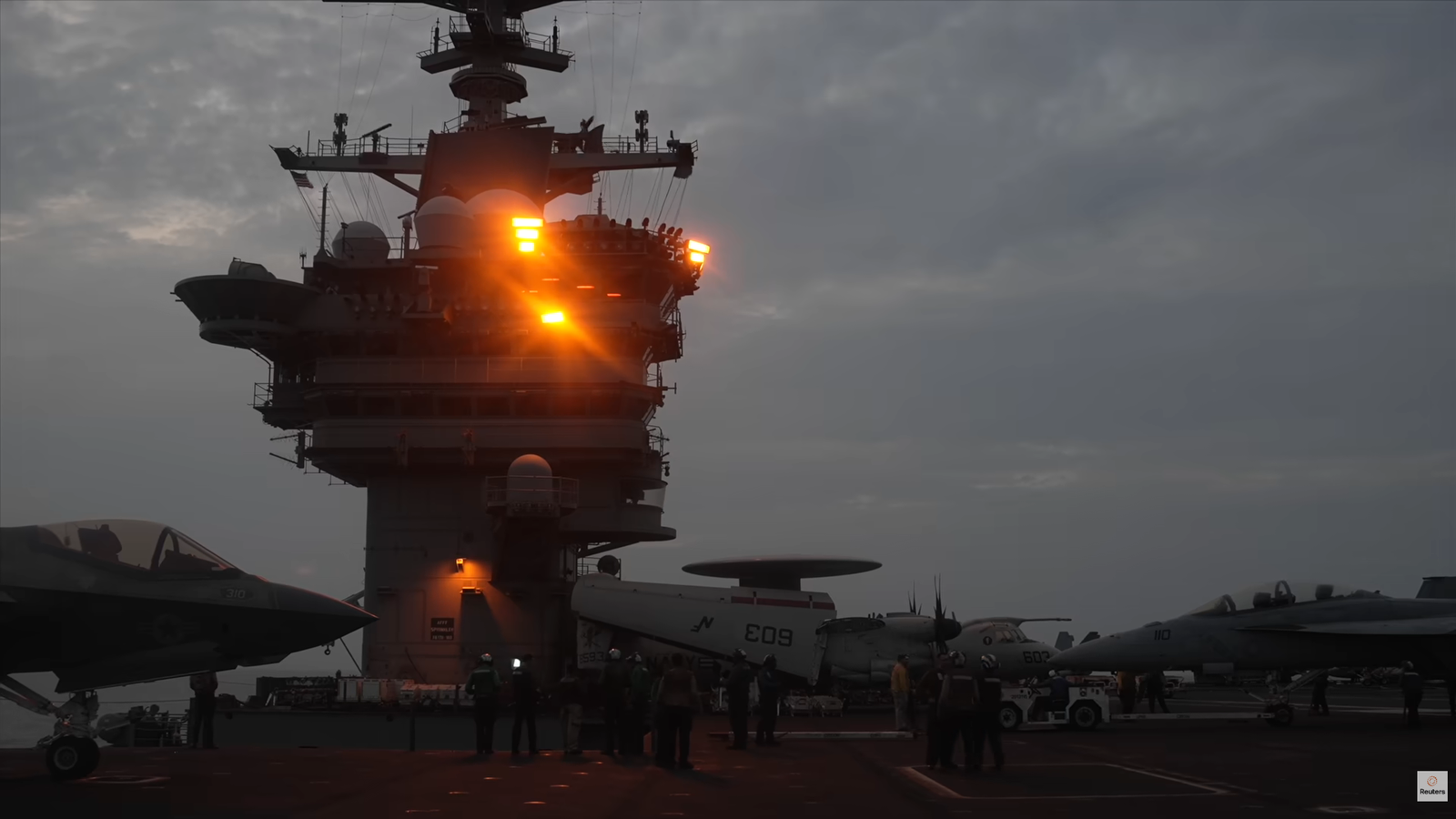
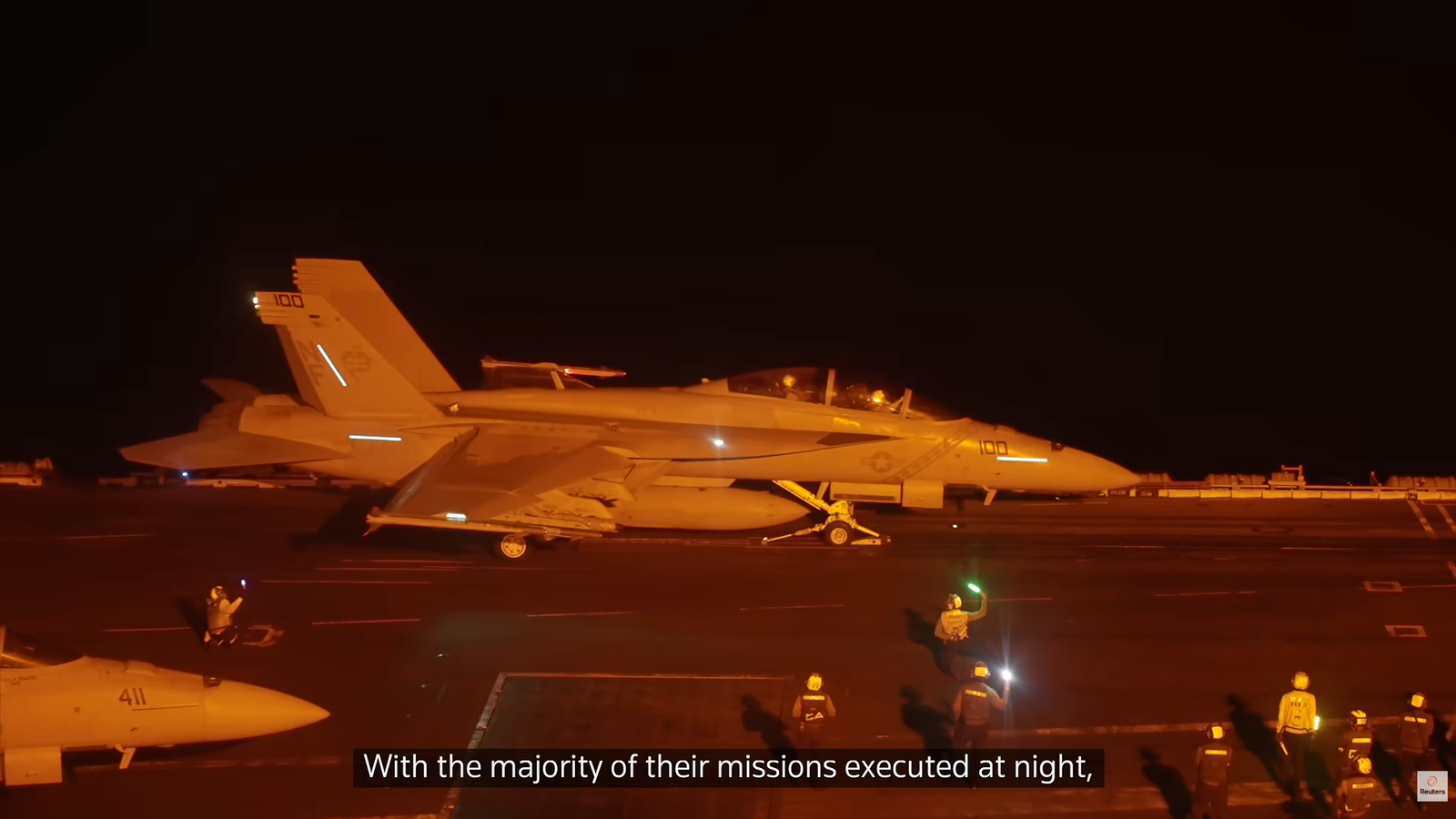
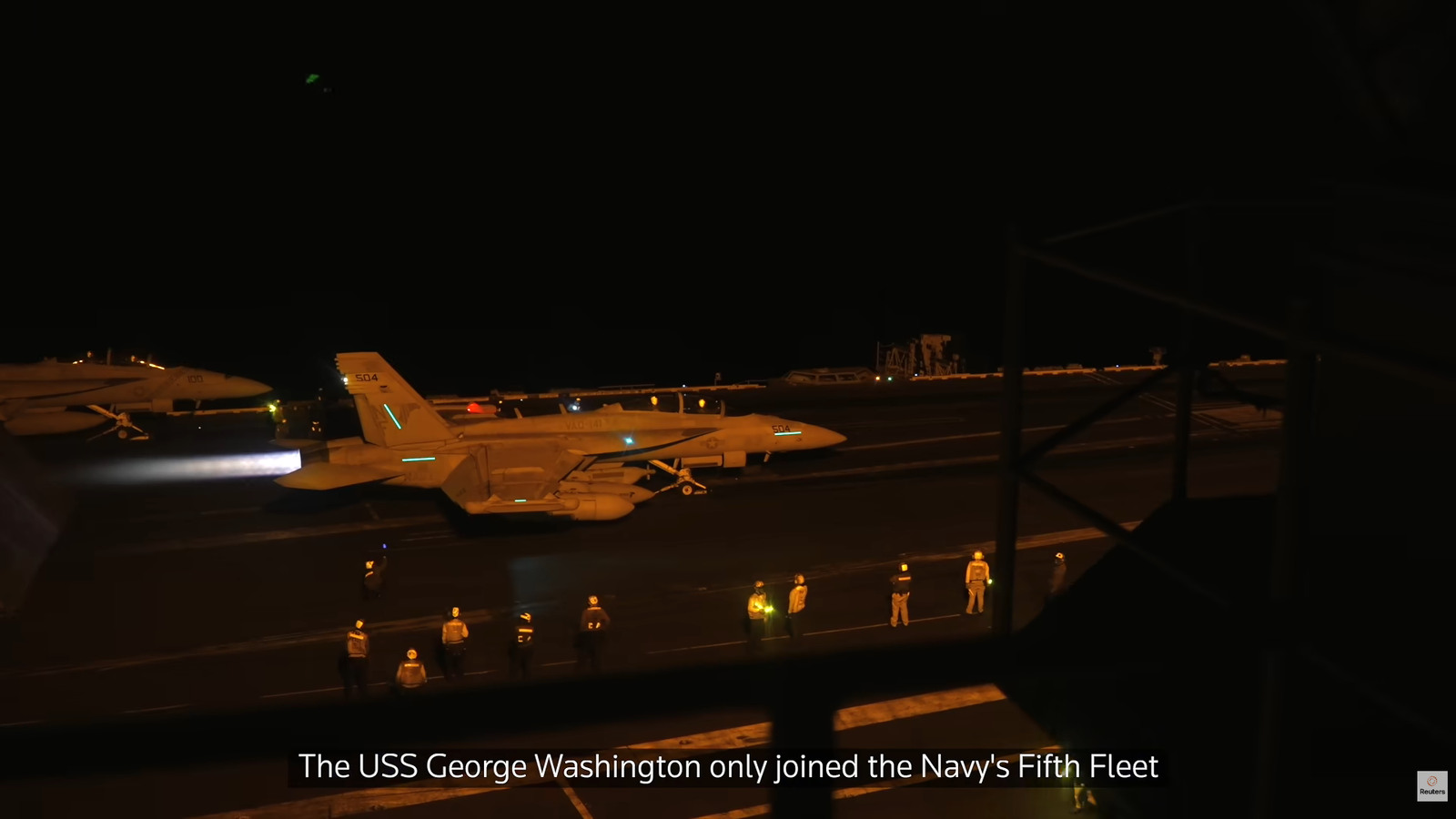
STRAIT OF HORMUZ — Stationed at the mouth of the Strait of Hormuz, the Nimitz-class aircraft carrier USS George Washington maintains an unrelenting operational cadence. Aircraft launch from the flight deck nearly every hour and a half, day and night, as part of the ongoing U.S. naval blockade intended to regulate the flow of maritime traffic to and from Iranian ports.
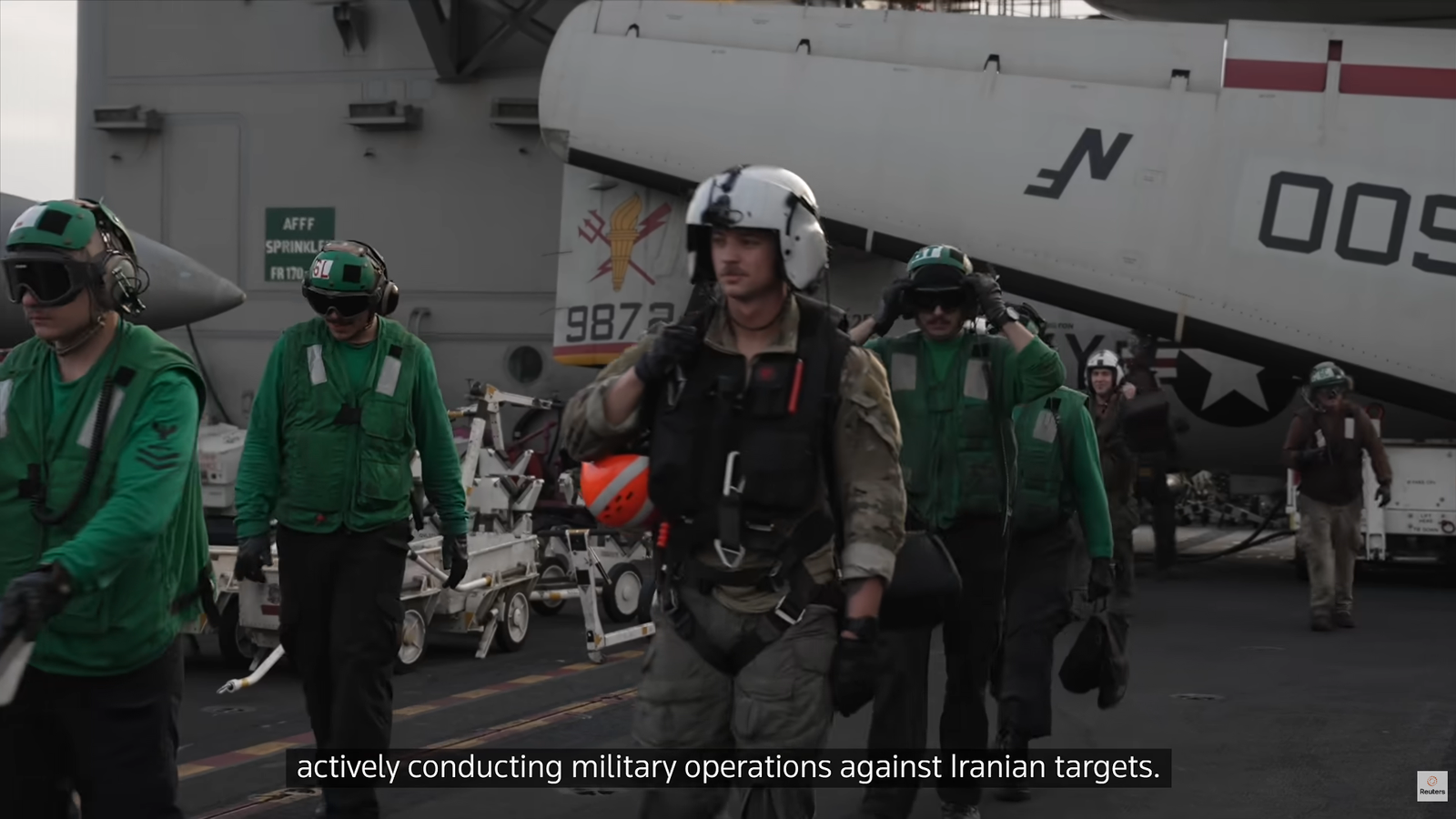
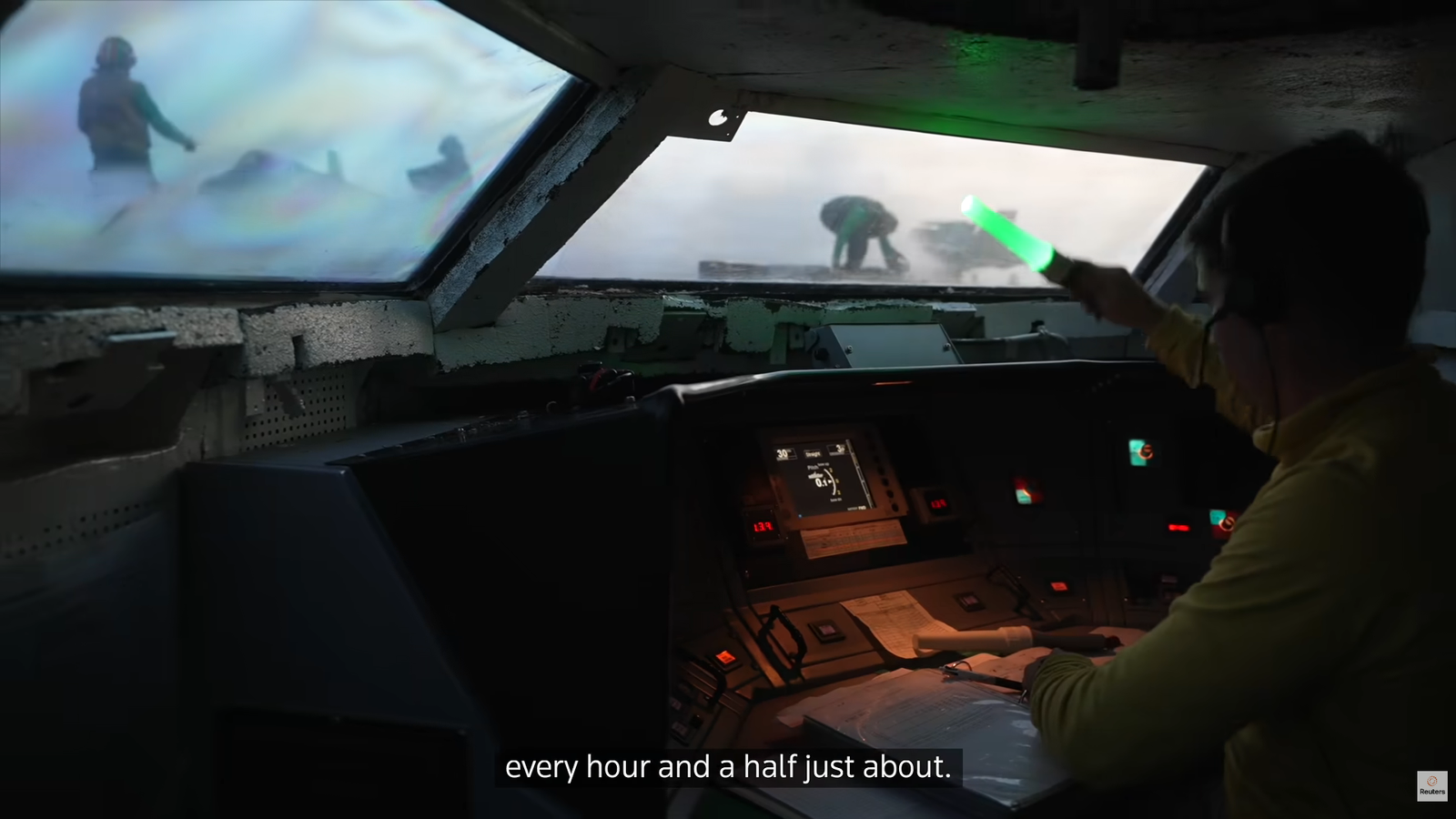
Operations intensified following recent U.S. Central Command strikes against Iranian oil tankers and subsequent exchanges targeting vessels in the region. Inside the warship, a crew of approximately 5,000 sailors works continuously to sustain combat readiness, managing flight ops, maritime surveillance, and supply replenishments in a complex, high-stakes environment.
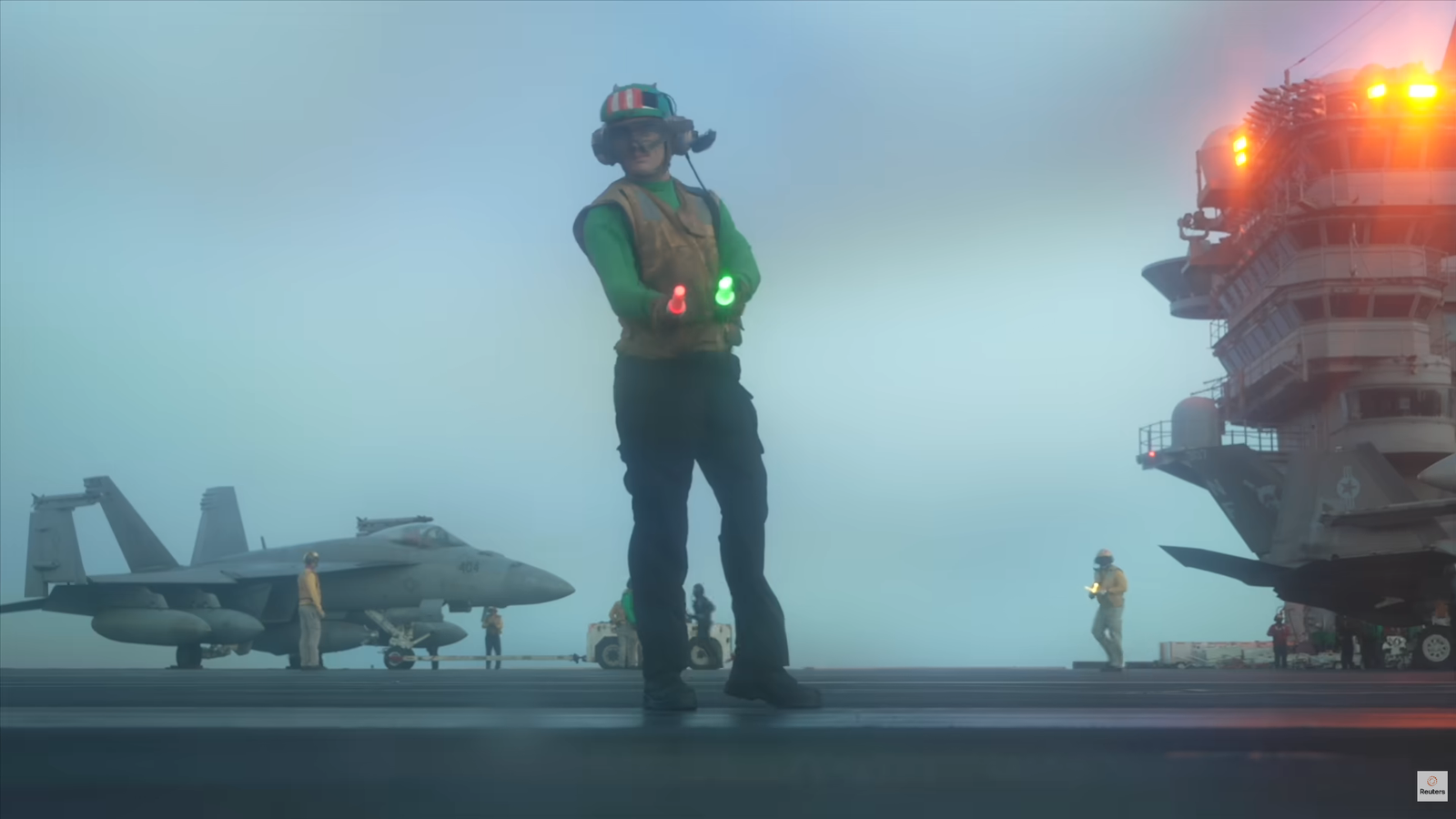
Precision Execution Amid “Controlled Chaos”
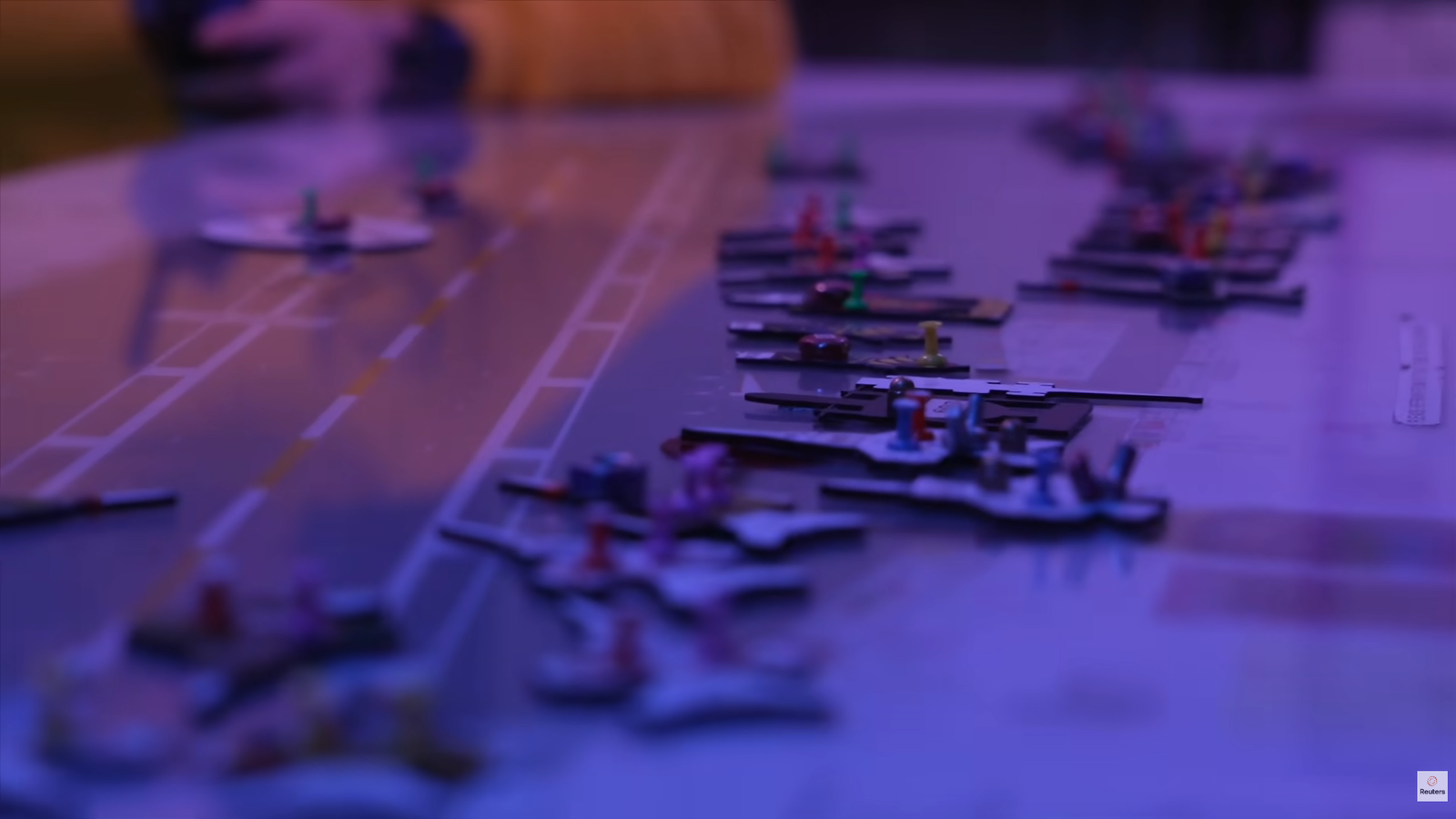
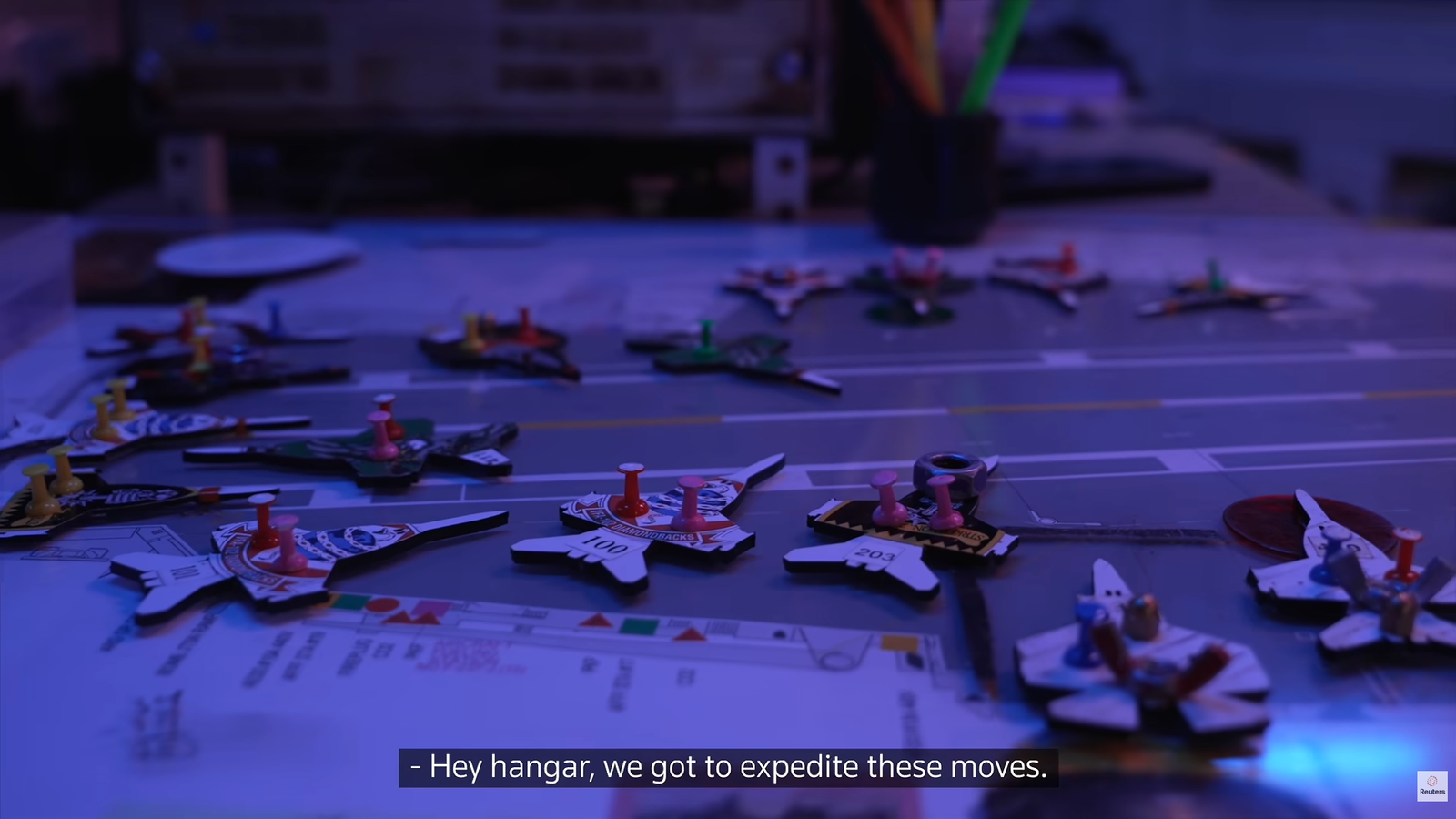
Executing dozens of launches daily requires seamless coordination across multiple ship departments. On the flight deck, catapult operators—known as “shooters”—rely on precise mathematical calculations based on aircraft weight, atmospheric conditions, and engine output to calibrate launch systems.
====================================================================
              USS GEORGE WASHINGTON: DAILY FLIGHT & SHIP OPS
====================================================================
  • Primary Objective  | Air support, interception, & blockade enforcement
  • Launch Cadence     | Flights launched roughly every 90 minutes
  • High-Tempo Events  | Upward of 30 launches per major strike event
  • Operational Cost   | ~$80,000 per day to feed the ~5,000 crew members
  • Shift Structure    | 24/7 continuous air, surface, and subsurface monitoring
====================================================================
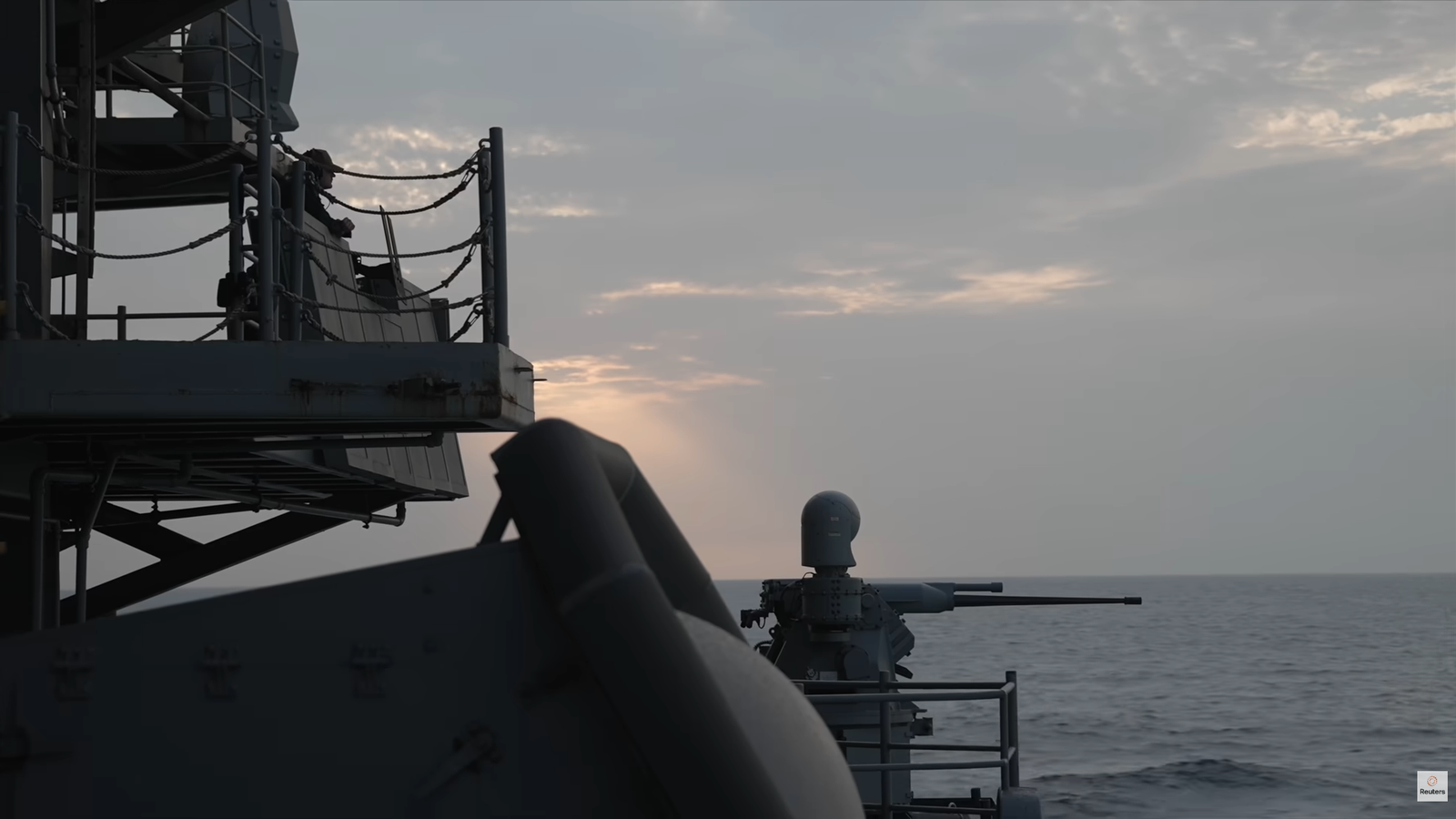
In the combat direction center, tactical teams monitor air, surface, and subsurface contacts 360 degrees around the carrier strike group. Because high-speed evasive maneuvers or sudden evasive turns remain a possibility during potential incoming threats, personnel on deck must maintain constant vigilance to secure aircraft and gear.
Floating City: The Logistics of Sustained Deployment
Sustaining a carrier at sea requires massive logistical support. The ship functions as a self-contained city, holding between $4.5 million and $6 million in food inventory at any given time to serve four meals daily.
Logistics teams routinely conduct connected replenishments at sea, transferring hundreds of pallets containing food, spare parts, and mail from supply ships via high-line cables while underway.

Dimethyl Sulfoxide (DMSO): The Science, Potential, and Regulatory Limits of a Powerful Solvent
Executive Summary Dimethyl sulfoxide (DMSO), an organosulfur compound with the chemical formula…
US Army orders 16 new UH-60M Black Hawk helicopters from Sikorsky in $234 million deal
The U.S. Army awarded Lockheed Martin subsidiary Sikorsky a $234.46 million contract…
U.S. Expands F-35 Fighter Jet Support Network With $871 Million for Dispersed Combat Operations
The United States is expanding the sustainment network supporting its F-35 Lightning…

The Ultimate Setup Guide: How to Play Tales of Eternia Remastered on Mobile
Welcome, heroes of Inferia and Celestia! If you are tracking down the…

Critical Debate Exposes Major Shapiro and Garrity Clashes Over Trump Policies
PHILADELPHIA — Pennsylvania political leaders recently took center stage as high-stakes policy…

U.S. CISA adds a flaw in Ivanti EPMM to its Known Exploited Vulnerabilities catalog
The U.S. Cybersecurity and Infrastructure Security Agency (CISA) adds a flaw in…
+-------------------------------------------------------------------+
|                  CARRIER REPLENISHMENT BY THE NUMBERS             |
+-------------------------------------------------------------------+
|  • Ship Population  | ~5,000 sailors & aircrew                        |
|  • Daily Food Budget | Approx. $80,000 per day                        |
|  • Supply Inventory | $4.5M – $6.0M on-board capacity                 |
|  • Replenishment    | ~320+ pallets of food, mail, and parts per run |
+-------------------------------------------------------------------+
Down in the machine shops, technicians manufacture replacement parts on demand—sometimes assisting allied ships with equipment repairs to keep naval units fully operational without returning to port.
The Human Element: Life on the Front Line
A significant demographic of the carrier’s crew consists of young sailors between the ages of 19 and 24. For many, adapting to live military operations after months of training represents a profound shift.
- Operational Adaptation: Crew members describe the routine as a mix of high adrenaline and methodical focus, balancing intense duty shifts with workouts in the hangar bay to manage stress.
- Maintaining Connections: Reliable satellite communication and mail delivery remain vital to crew morale, allowing sailors to stay in touch with families back home during extended periods at sea.
- Support Systems: Chaplains and shipboard counselors provide guidance as young service members navigate the pressures of wartime deployment and life away from home.
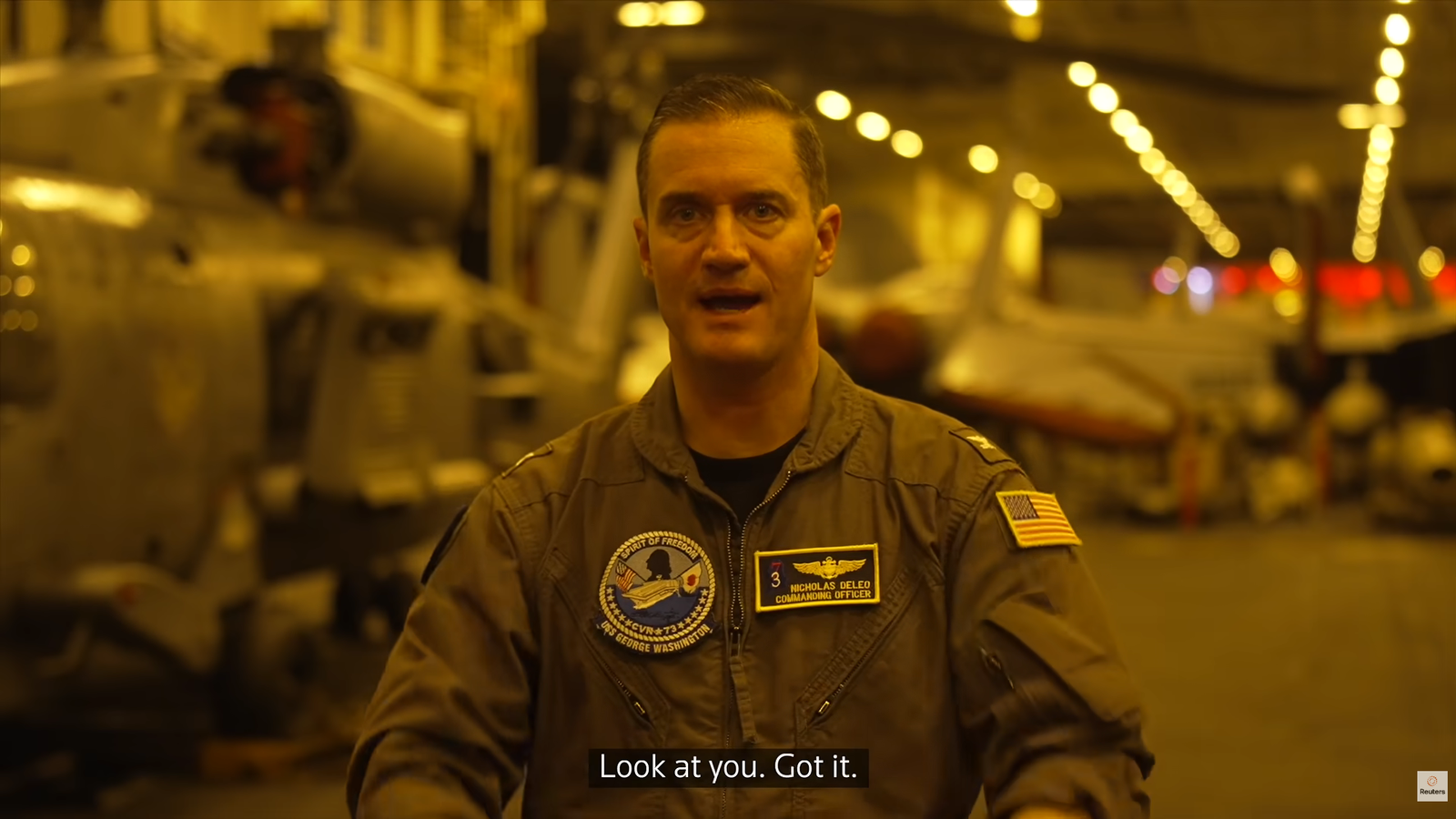
Replacing the USS Abraham Lincoln after its extended deployment in the region, the crew of the USS George Washington remains focused on executing its assigned mission in the Persian Gulf for as long as directed by military leadership.