







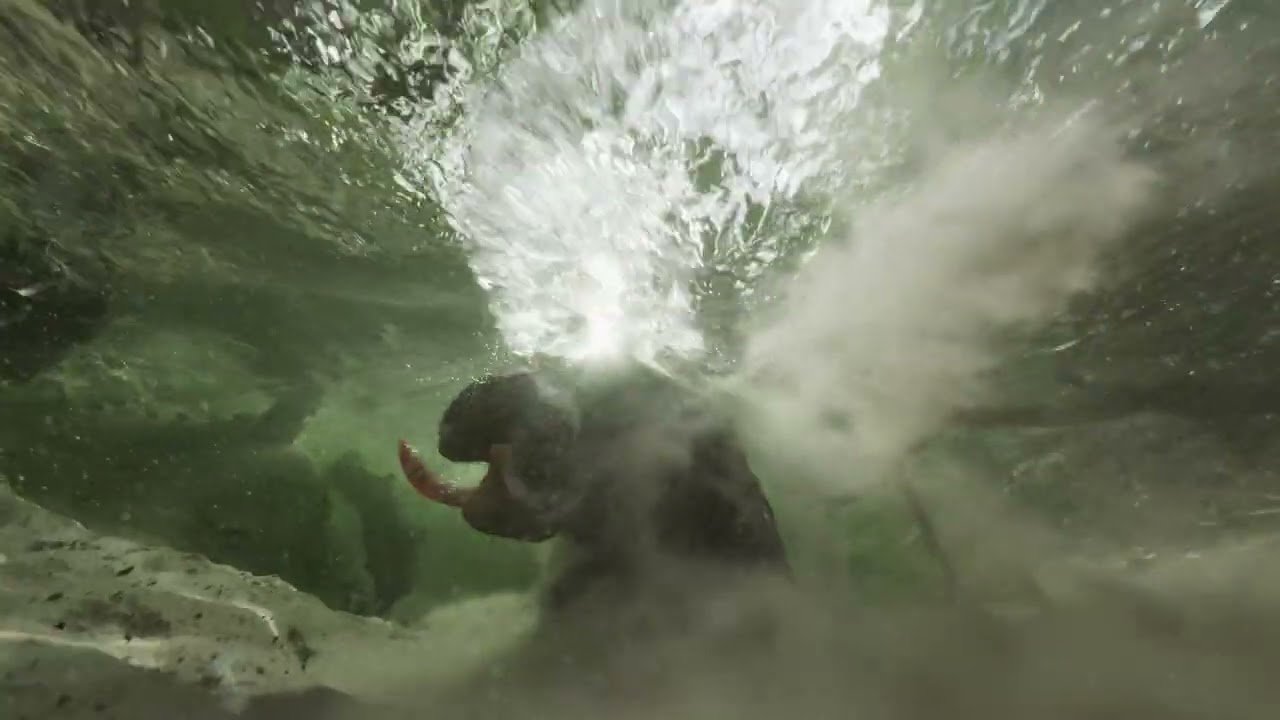
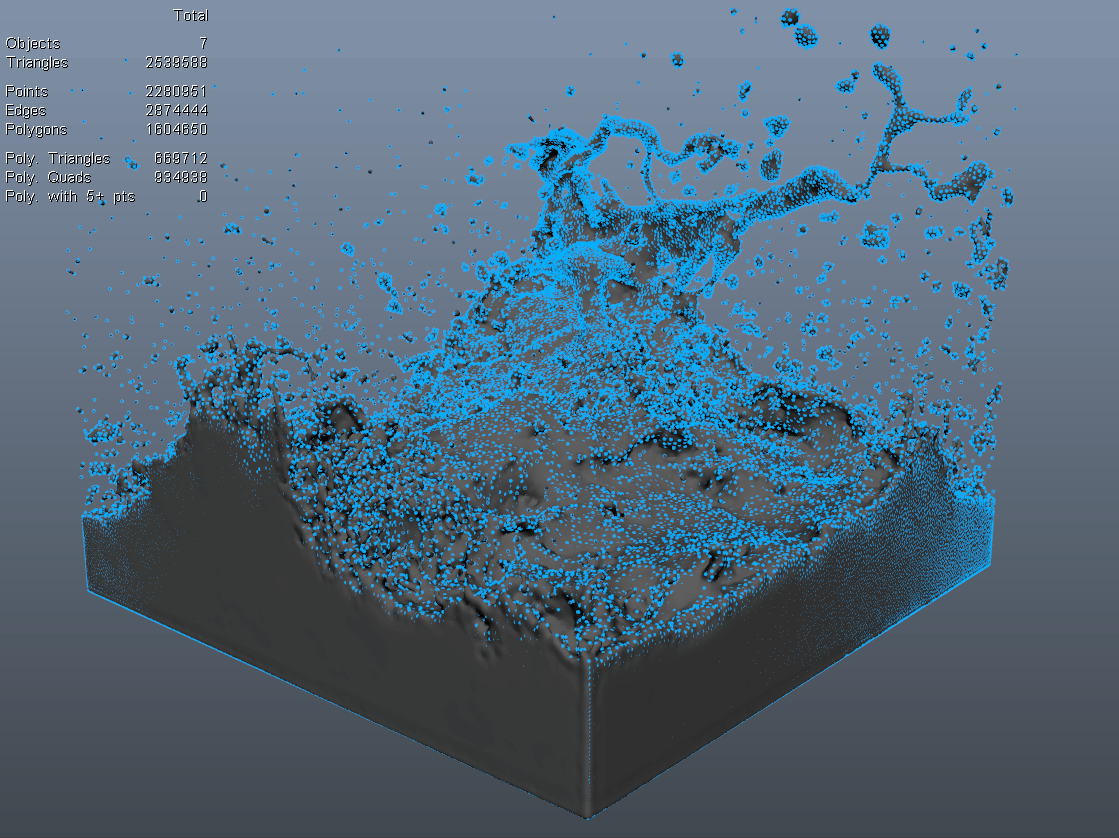
March 31, 2026 — The world of high-end visual effects just hit a massive milestone. In a stunning new demonstration of what modern hardware can do, a complex “Hippo Fluid Scene” has successfully pushed the boundaries of digital water by simulating a staggering 100 million particles in real-time.
For those who aren’t deep into the world of 3D modeling, simulating water is one of the hardest things for a computer to do. Usually, you have to choose between speed and detail. But with the new HydroFX system, that choice is becoming a thing of the past.
The “Cohesive” Splash
The demonstration showcased a massive hippo thrashing through a river, but it wasn’t just simple water. The HydroFX system managed to simulate foam, bubbles, and spray all together in a single, cohesive system.
Usually, these effects are done separately and layered on top of each other, which can look “fake.” By doing them all at once, the interaction between the bubbles and the foam looks exactly like it would in a real nature documentary.

China-linked APT weaponized Dell RecoverPoint zero-day since 2024
A suspected Chinese state-linked group exploited a critical Dell RecoverPoint flaw (CVE-2026-22769)…

Poland, US Discuss Establishing Permanent American Military Bases
Authored by Jill McLaughlin via The Epoch Times, Poland and Pentagon officials…
![Wanted: Suspect for Assault in the 16th District [VIDEO]](https://thephillypi.com/wp-content/uploads/2026/08/Wanted-Suspect-for-Assault-in-the-16th-District-VIDEO-768x398.jpg)
Wanted: Suspect for Assault in the 16th District [VIDEO]
The Philadelphia Police Department needs your help: The police are investigating an…

SmartLoader hackers clone Oura MCP project to spread StealC malware
Hackers used a fake Oura MCP server to trick users into downloading…

AI data centers creating ‘heat islands’ that warm land up to 16 degrees F
Recent studies highlight an alarming fact about the artificial intelligence (AI) data…
![Wanted: Suspects for Shooting Incident in the 3rd District [VIDEO]](https://thephillypi.com/wp-content/uploads/2026/08/Wanted-Suspects-for-Shooting-Incident-in-the-3rd-District-VIDEO-768x512.jpg)
Wanted: Suspects for Shooting Incident in the 3rd District [VIDEO]
On April 1, 2026 at approximately 12:25 AM, the suspects were captured…
Powered by GPU Acceleration
The secret sauce behind this massive 100M particle count is full GPU acceleration. Instead of relying on the computer’s main brain (the CPU), the simulation offloads the heavy math to the graphics card.
The workflow behind the scene was a “best of” for digital artists:
- Houdini: Used for the initial meshing and the complex interaction between the water and the sand on the riverbed.
- Blender: Used for the final “lookdev” and rendering, proving once again that open-source software can compete with the most expensive tools in Hollywood.
What This Means for Gaming and Film
For indie developers and digital news publishers, this tech is a glimpse into the near future. As these tools become more accessible, we’ll start seeing this level of “AAA” realism in smaller projects and interactive media.
If you’re working in Unity or Godot, seeing 100 million particles on a standard GPU is a sign that the “performance ceiling” is about to be shattered. The “AI bubble” might be on everyone’s mind, but in the world of pure physics simulation, the progress is undeniable.