





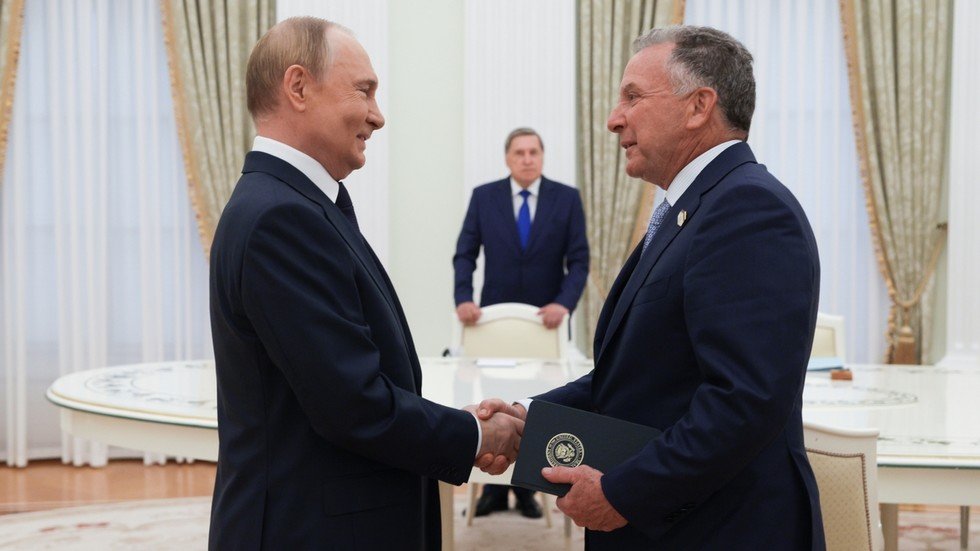
United States President Donald Trump’s special envoy, Steve Witkoff, and his son-in-law, Jared Kushner, recently concluded a high-stakes, five-hour meeting with Russian President Vladimir Putin at the Kremlin.
The primary focus? A revised 19-point peace proposal aimed at ending the nearly four-year conflict in Ukraine.
The Moscow Meeting: Key Developments
This session marked Witkoff’s sixth meeting with Putin in 2025, but it was notably Kushner’s first in-person involvement. The delegation arrived in Moscow following a series of diplomatic sprints in Miami and Paris, where the original 28-point plan was streamlined.
The Core Agenda
According to media reports, the updated US peace framework emphasizes three critical pillars:
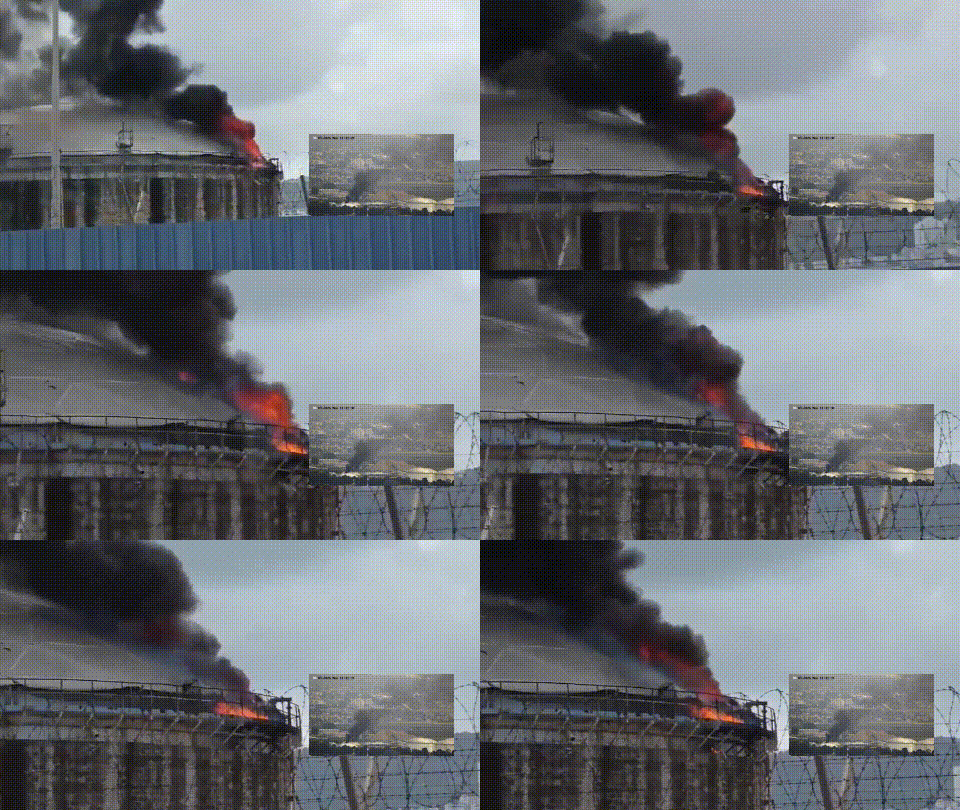
Haifa in the Crosshairs: Iranian Submunitions Strike Israel’s Critical Energy Hub
March 30, 2026 — Dense black smoke is once again clouding the…
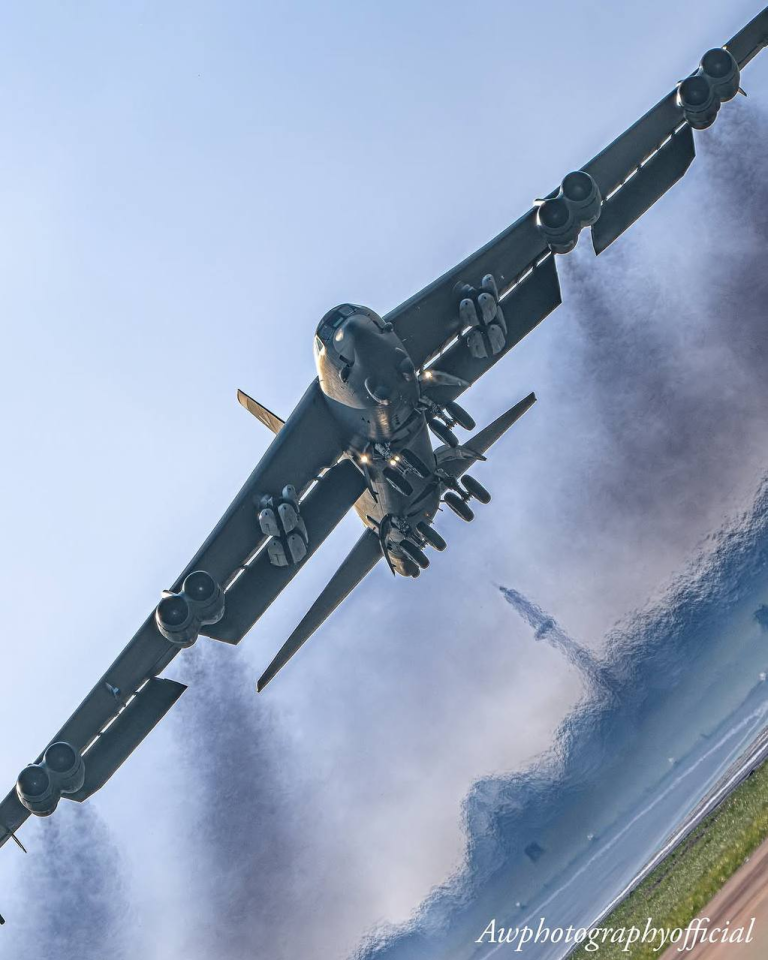
Power Projection: B-52H Deploys with Massive JASSM-ER Loadout from RAF Fairford
The U.S. Air Force has signaled a massive escalation in its European-based…
Chuck Norris, Action Star of ‘Walker Texas Ranger’ and Early Internet Culture Dead at 86
Chuck Norris in a 1993 interview - Entertainment Tonight, YouTube Legendary actor…

Project S.A.R.A.H.: Addressing Domestic Violence in New Jersey’s Jewish Community Since 1994
Domestic violence affects families in Jewish communities in the United States. In…
The “Madman” and the Resignation: General Randy George’s Abrupt Exit from the Pentagon
The Pentagon is currently a house of cards in a windstorm. In…
China now leads by a generation in hypersonic & anti-ship ballistic missiles
These 4 Chinese Dongfeng missiles from the 2025 V-Day parade: 2. DF-26D:…
-
Border Recognition: A potential ceasefire involving de facto recognition of borders, likely requiring Ukrainian concessions in the Donbass region.
-
Security Guarantees: New protections for Ukraine, coordinated alongside European allies like France.
-
Military Restrictions: Implementation steps involving front-line adjustments and limits on Ukraine’s future military capabilities.
The Standoff
While the session was described as “useful” and “productive,” a significant gap remains. Putin continues to hold firm on:
-
Full control over newly claimed territories.
-
Strict limits on NATO expansion.
“No compromise plan has been found yet… a lot of work remains.” — Yury Ushakov, Kremlin Aide
Channels of Diplomacy: Lavrov’s Role
A telling detail of this meeting was the absence of Russian Foreign Minister Sergey Lavrov, who was instead holding bilateral talks with China’s Wang Yi.
In a recent press conference in Kyrgyzstan, Putin clarified that Lavrov remains the primary lead for professional negotiation channels. By meeting with Witkoff and Kushner without Lavrov present, Putin sent a clear signal: The foundation for formal negotiations is not yet fully laid.
Putin’s objective was to reiterate Russia’s fundamental positions—likely the same points he established in June 2024—polishing the “firm but polite” boundary for any future deal.
Analysis: The End of the Beginning
The immediate aftermath of the Moscow trip saw a scheduled meeting with President Zelensky in Ireland cancelled. Instead, the US team returned directly to Washington to brief President Trump.
Why This Silence Matters
The lack of media leaks following the Kremlin meeting is a rare and significant sign. It suggests that the Trump administration is treating these preliminary talks with extreme seriousness, attempting to get negotiations on track without the interference of public speculation.
The Next Step
This meeting doesn’t signal the end of the war; rather, it marks the end of the beginning.
The ball is now firmly in President Trump’s court. To move forward, he must decide whether to meet Russia’s established conditions and officially dispatch Secretary of State Marco Rubio to finalize a deal with Sergey Lavrov.