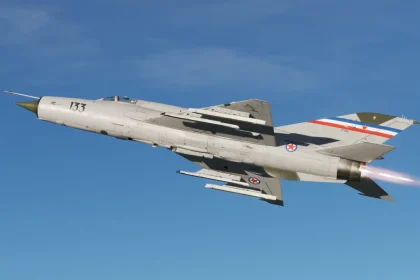














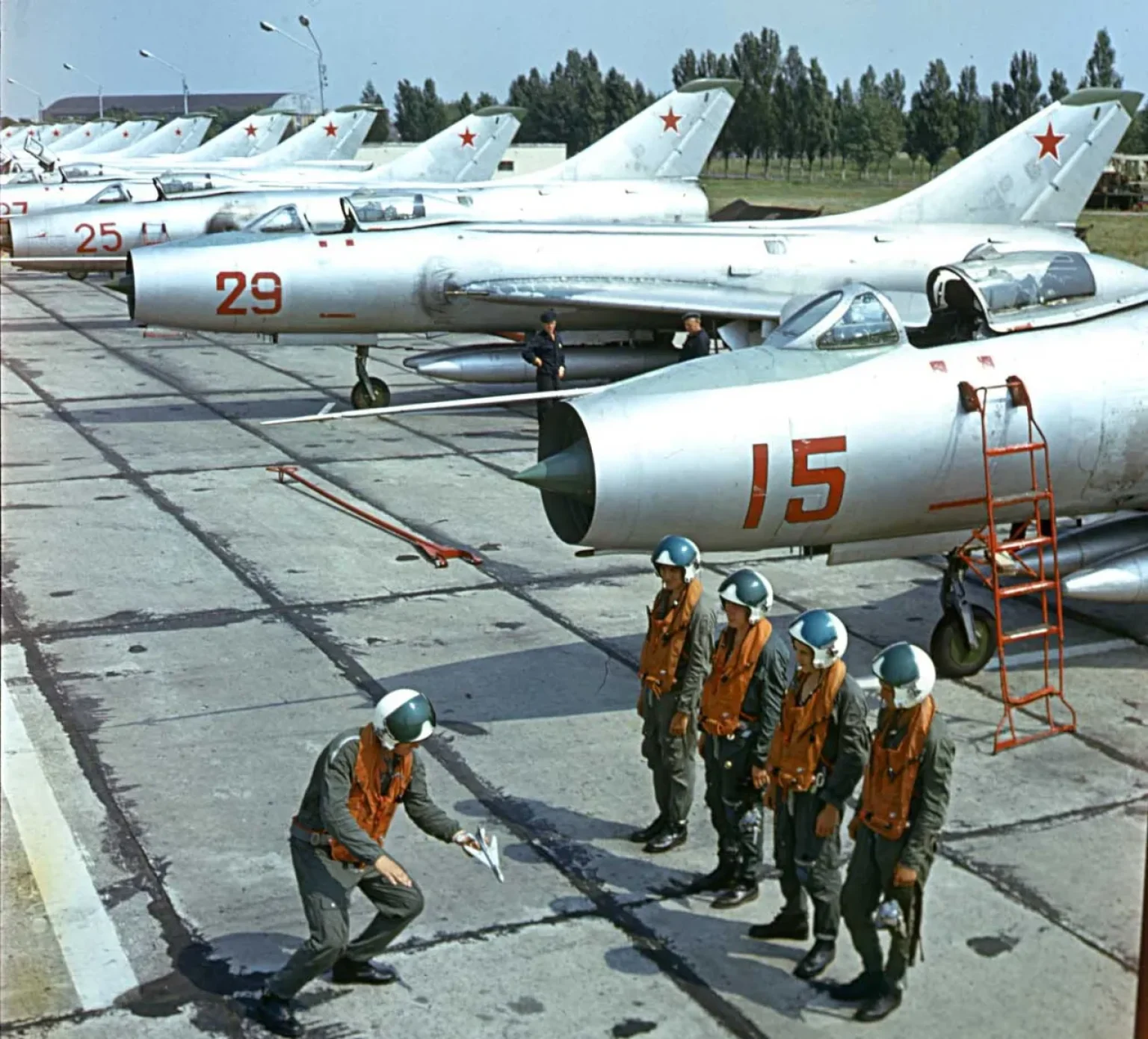
Soviet Su-7BM fighter-bombers parked at an airfield, while pilots practice the “foot-to-fly” maneuver.
Test pilot Sergei Ilyushin took to the skies a machine that would usher in the Soviet era of variable-sweep wings. The S-22I, or Su-7IG, looked almost like the familiar Su-7B frontline fighter-bomber, but its wing could do something no other Soviet combat aircraft had ever done: change its sweep in flight. A fixed, highly swept wing offered advantages at high speeds, but compromised takeoff, landing, and maneuverability at low speeds. A rotating wing allowed for fast flight and short landings—if it could be made light and reliable enough.
The Bell X-5 and the American School: Why the Wing Can’t Move Forward and Backward
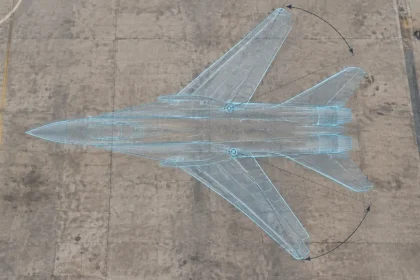
The American experimental Bell X-5 was the first to demonstrate the possibility of changing sweep in flight. In the early 1950s, it varied the wing angle between 20 and 60 degrees—while also moving it along the fuselage. NASA notes that changing the sweep shifted the center of pressure and center of gravity, so the entire wing assembly simultaneously moved forward along its guides to maintain stability.
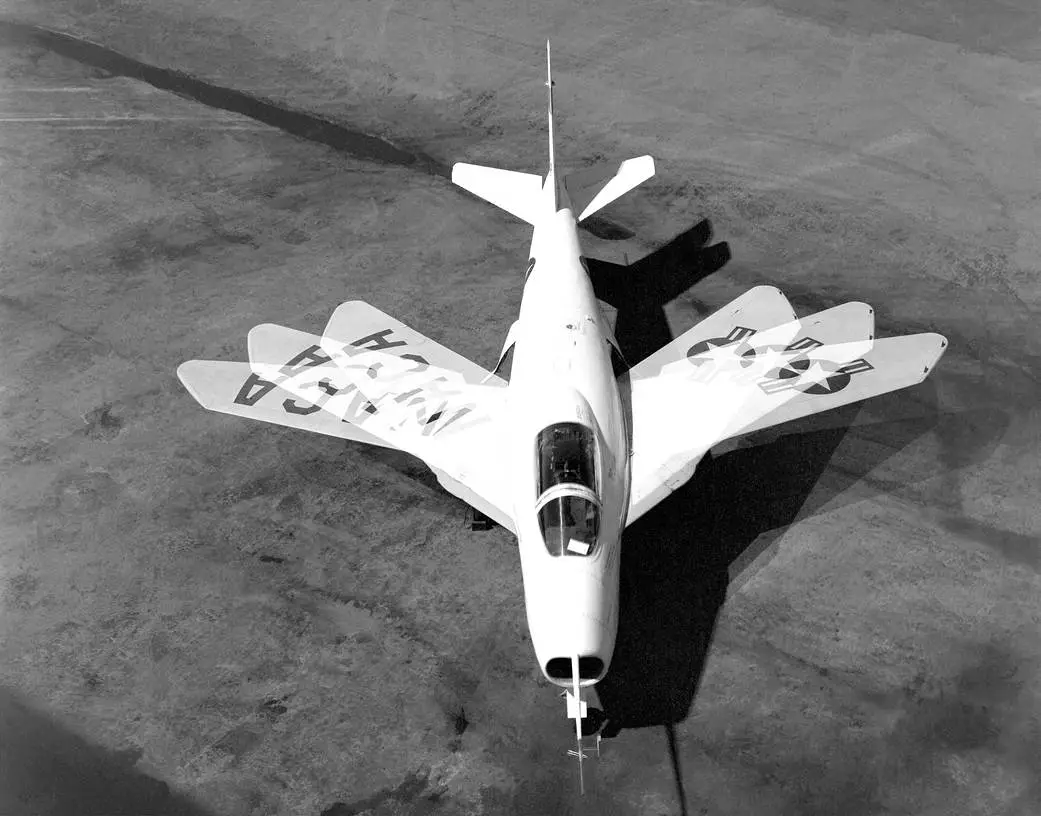
A multiple display of the American experimental aircraft Bell X-5, illustrating its ability to change wing sweep in flight.
The X-5 mechanism confirmed that the aircraft’s performance did indeed change—drag was reduced, and handling improved in various flight modes. However, the design itself proved impractical: moving the entire wing forward and backward was technically difficult, heavy, and unreliable. NASA also recorded that the aircraft could not land safely at sweep angles exceeding 40 degrees.
The solution came from research NACABy moving the hinges outward from the fuselage, the wing doesn’t need to move longitudinally—only the outer panels rotate, while the central section remains stationary. This became the basis for many subsequent practical variable-sweep aircraft, including Soviet ones.
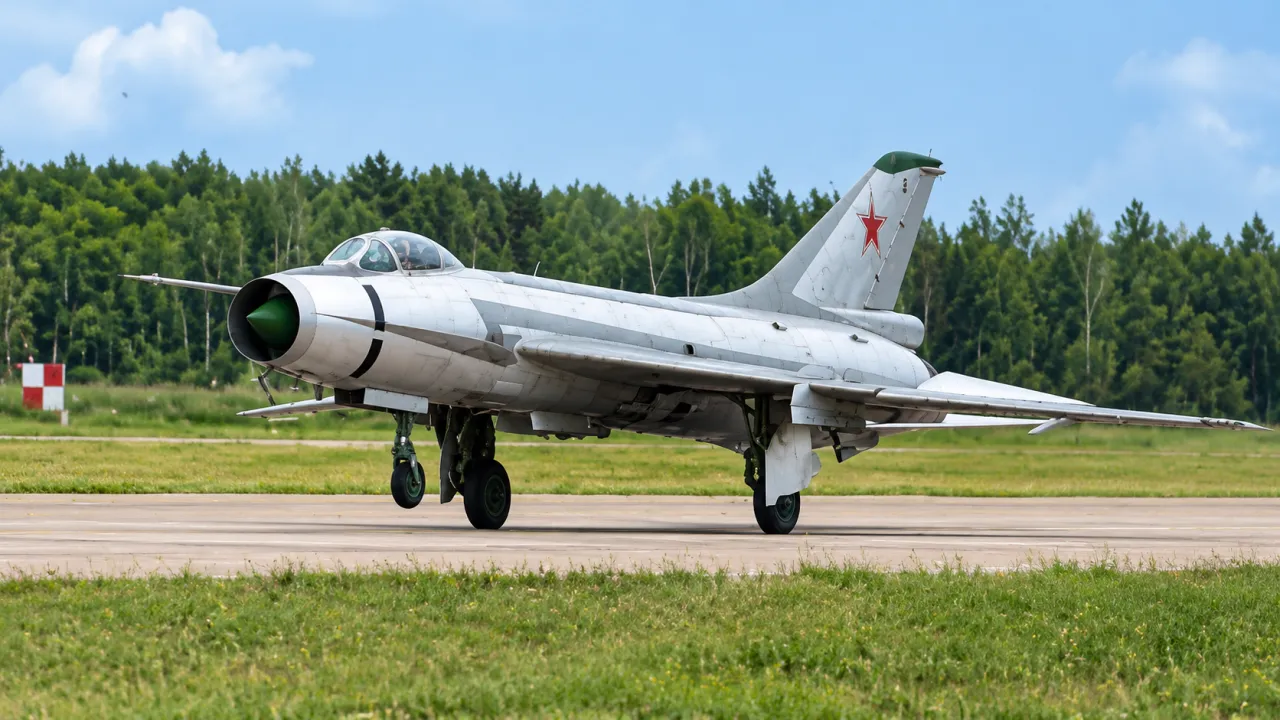
Soviet experimental aircraft S-22I
The Su-7B’s problem and the Sukhoi Design Bureau’s solution: rotating part of the wing
By the mid-1960s, the Su-7B frontline fighter-bomber was in service, but its highly swept wing created an unsatisfactory balance. While it achieved high-speed flight, its takeoff run was long, landing speed high, and range and payload limited. Building a new aircraft would be time-consuming and risky. Pavel Sukhoi’s design bureau chose a different approach: retaining the basic aircraft and making only the outer wing sections pivotable.
Thus, the S-22I, or Su-7IG, was born. The “I” stood for “variable geometry.” Nikolai Zyrin led the development; the work was carried out jointly with TsAGI. From the basic Su-7B, the new aircraft inherited the fuselage, powerplant, a significant number of systems, fixed wing roots, and the layout of the main landing gear. New features included the external rotating consoles, hinges and power units, the synchronizing shaft, and modified mechanization.
Approximately two-thirds of the wingspan—the portions located behind the main landing gear—rotated. The range was from 30 to 63 degrees along the leading edge. Why not the entire wing? The main landing gear was attached to a fixed root section; if the entire wing had rotated, the landing gear would have had to be relocated, which would have meant a complete redesign of the fuselage structure. Partial rotation reduced the movement of the aerodynamic center and allowed the proven design of the donor aircraft to be preserved.
On August 2, 1966, test pilot Sergei Ilyushin, the son of the famous aviation The designer lifted the S-22I into the air. The aircraft became the first Soviet aircraft with a variable wing sweep in flight. In November 1967, the decision was made to develop a production version, designated the Su-17.
Su-17: Serial development of modernization logic
The experimental S-32-1 first flew on July 1, 1969. Serial production began in 1970 at the Komsomolsk-on-Amur plant and continued until 1990. The Su-17 retained a sweep range of 30–63 degrees, a partially pivoting wing design, and production continuity with the Su-7B.
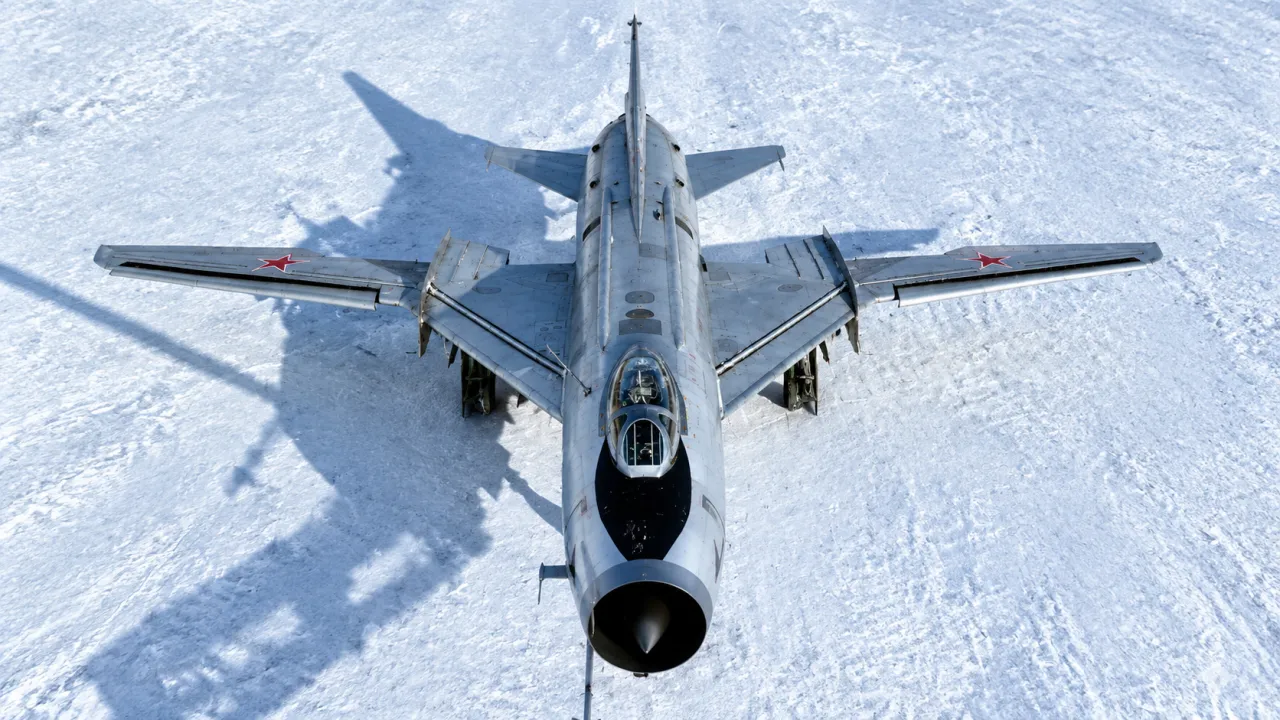
Soviet fighter-bomber Su-17
Sources cite production figures ranging from 1200 (the museum’s data on the basic Su-17) to 2867 aircraft (the entire family, including the export Su-20 and Su-22); there are no publicly available factory statistics. The series evolved sequentially—Su-17M, M2, M3, M4—with changes to the engine, avionics, nose, and armament, but retaining the basic wing configuration.
The partially pivoting wing proved to be a production-friendly solution, but an aerodynamic compromise. The fixed root restricted flow, a stepped geometry emerged, and the potential for further increases in payload and volume was limited by the original Su-7 fuselage. But it was the S-22I that paved the way, proving that Soviet industry could create a wing that could adapt to the task at hand while in the air.
Serial production ended in 1990. Russia decommissioned the type; Poland conducted a farewell flight in September 2025—one of the last in Europe. The partially tilting wing survived for two decades—not because it was perfect, but because the design proved viable.
By the late 1960s, the Mikoyan Design Bureau was already building aircraft with fully articulated wings. On June 10, 1967—ten months after the S-22I—the experimental MiG-23 “23-11” took to the air. Unlike the Su-17, its wing articulated entirely, and the aircraft itself was created not as a modernization, but as a response to a different requirement—a multi-mode frontline fighter with radar and rockets air-to-air class. More on that in part two: How Mikoyan and Sukhoi Design Bureaus Achieved Variable-Sweep Wings.