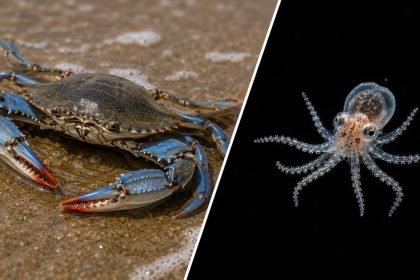















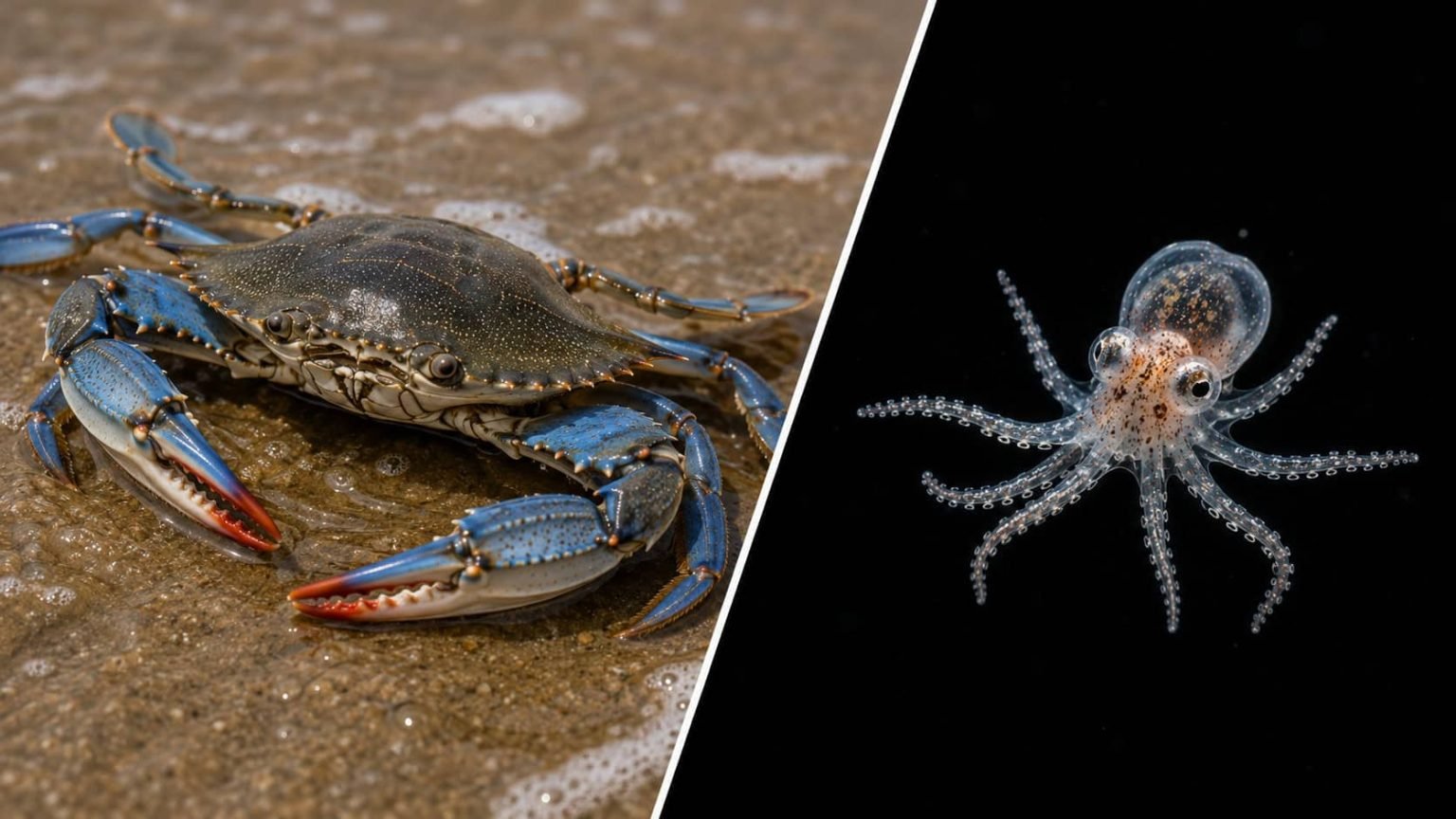
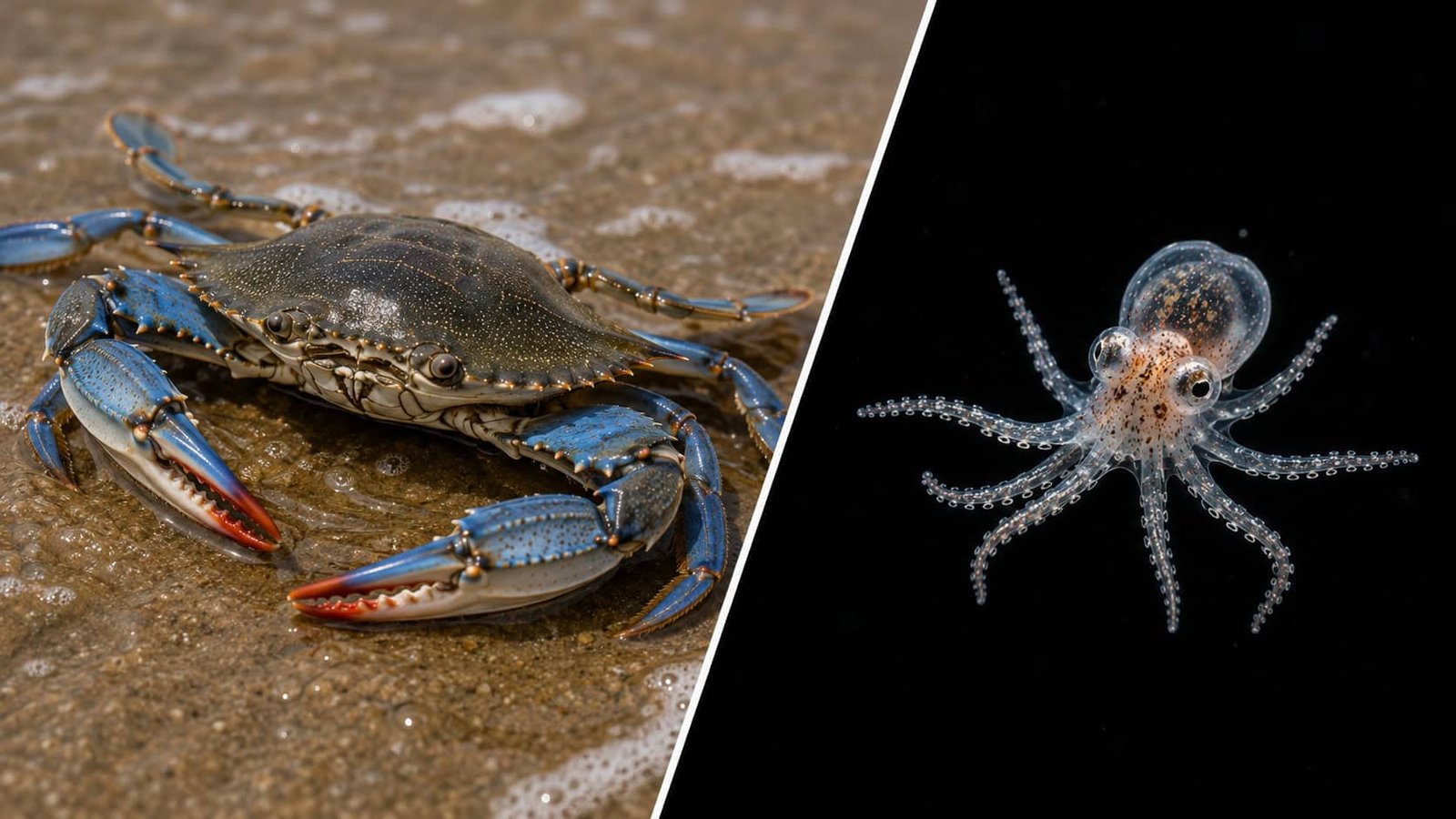
Italy is fighting an invasive crab species with a weapon that sounds almost too strange to be true. The country has released 130,000 baby octopuses in the Adriatic under a project named Octo-Blu.
The Italian researchers are testing whether boosting a native predator can restore some natural pressure on blue crabs, whose population explosion has battered clam and mussel fisheries along Italy’s Adriatic coast.
“The idea is to establish a small community close to shore so that it can better combat the spread of the blue crab,” Antonio Casalini, one of the researchers, said.
The experiment is a bit of a gamble. While the octopus may be a formidable crab hunter, it does not naturally thrive in some of the same shallow, sandy habitats where the invader is causing the most damage.
Building a predator army from scratch

Octo-Blu is being run by researchers at the University of Bologna with support from the regional Emilia-Romagna government. It began in 2024, when scientists started working out how to raise common octopuses in the laboratory and investigating the biology of the invasive blue crab.
This work is of great significance because the crab is an invasive species that does a lot of economic damage. Originally native to the Atlantic coast of North America, the blue crab (Callinectes sapidus) reached the Mediterranean decades ago, probably after being carried between ports in ships’ ballast water.
However, in recent years, its numbers have surged at a fast pace, helped by increasingly warm waters.
The crab is particularly troublesome for shellfish producers. It can tear fishing nets, break open shells and eat young clams and mussels on the seafloor. In some affected areas, the regional government says commercial clam production has fallen by more than 70 percent.
Authorities estimate that the invasion has caused almost €17 million ($20 million) in damage in the region since 2022. Coldiretti, an Italian farming and fishing organization, has estimated losses across the country at roughly €200 million.
“The blue crab is not just an invasive species, it represents one of the most serious crises to have hit our waters,” Alessio Mammi, an Emilia-Romagna official, told GB News.
The pressure on shellfish comes as ocean acidification can already threaten shell-building animals, adding another challenge for species such as clams and mussels.
A May 2026 study by the Bologna team helps explain why the invasion is so difficult to contain. Researchers found that blue crabs readily consumed commercially important Manila clams and Mediterranean mussels.
Female crabs were also highly productive, carrying an average of about 1.63 million eggs, with individual estimates ranging from roughly one million to 2.7 million. This makes the researchers’ choice of predator particularly interesting.
“We chose the octopus because, in the wild, it is a formidable predator of crustaceans,” Casalini said.
Plus, the common octopus is not a foreign species. It has been a part of the Adriatic ecosystem.
“We are not introducing a new species but working on strengthening the population of a native species already naturally present in the Adriatic,” Casalini added.
From white tanks to open water
The difficult part was producing enough octopuses to make the experiment meaningful. At the university’s aquaculture facilities, researchers breed the animals and raise their offspring through their earliest life stage.
Newly hatched octopuses are known as paralarvae. They are only a few millimeters long and are far more vulnerable than the familiar adults seen crawling across the seafloor. Octopuses themselves are surprisingly adaptable animals, with some species living thousands of meters below the ocean surface.
The team then transports batches of the tiny animals to the coast and releases them into the Adriatic near Cesenatico and Riccione, areas affected by blue crabs. In August, the project released roughly 130,000 paralarvae.
Scientists have also installed artificial underwater dens and shelters near the release sites. These provide hiding places for the young octopuses as they develop, giving them a better chance of surviving long enough to become predators.
But most of the octopuses are likely to die
Marine ecologists estimate that octopus paralarvae can experience mortality of around 99.9 percent. In other words, even from 130,000 hatchlings, only a small fraction might survive to adulthood. This sounds like a fatal flaw, but the researchers see it differently.
“Blue crabs have an incredible reproductive potential and fertility rate,” Pietro Emmanuele, one of the researchers and a marine biologist at the University of Bologna, said.
So even a relatively small number of surviving octopuses could do the job. For instance, a mature octopus weighing around one kilogram can consume as many as four medium-sized crabs per day under favorable conditions.
An octopus does not necessarily need to eat millions of crabs to affect the next generation. If it catches a reproductive female carrying more than a million eggs, it could remove a potentially enormous source of new crabs—although those eggs would not all have survived to adulthood anyway.
The octopus has another problem of its own
This is where Octo-Blu becomes more than an unusual animal-release story. The researchers are effectively asking whether restoring predation can help rebalance an ecosystem after an invasive species has exploded.
However, they are attempting this in a place where the predator and prey do not always occupy the same habitat. Understanding how ecosystems depend on interactions between species is therefore central to understanding what this experiment might achieve.
Common octopuses generally do not favor the warm, sandy lagoon-like environments where blue crabs have caused some of their greatest damage. This means even if thousands of released octopuses survive, they may not spend enough time in the right places to make a major dent in crab numbers.
Some critics have therefore warned that the project’s eventual impact could be negligible.
The researchers themselves are not presenting octopuses as a magic fix. Instead, they see them as one part of a broader control strategy that includes fishing and other measures. They are also investigating other native predators, including sea bass and eels, which can feed on crabs or their eggs.
A test that could reshape the strategy
The next step is to find out what happens after the releases. Researchers plan to continue breeding and releasing paralarvae while monitoring the animals and the release areas to determine whether they survive, establish themselves, and ultimately interact with the blue crab population.
If the experiment works, it could offer Italy something more valuable than a clever way to catch crabs—a biological-control strategy that works with an existing food web rather than against it.
However, for now, the 130,000 tiny octopuses are not an army that has won a battle. They are the subjects of a large-scale ecological experiment—and the Adriatic will determine whether enough of them survive to make their appetite count.
As ocean warming reshapes marine environments, experiments like this could become increasingly important for understanding how native predators and invasive species interact in changing seas.