




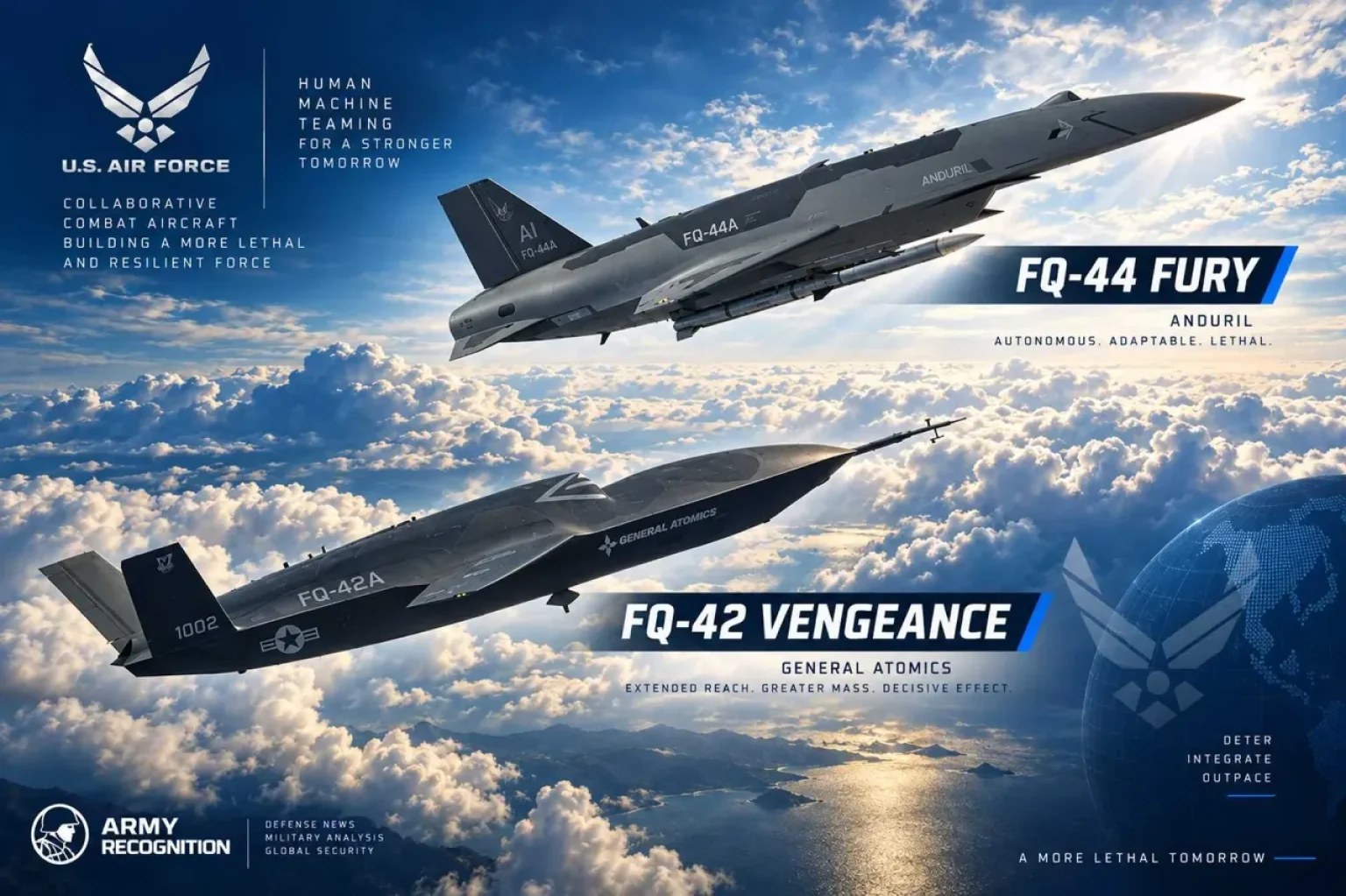
The U.S. Air Force has officially approved the General Atomics FQ-42 Vengeance and Anduril Industries FQ-44 Fury as its first Collaborative Combat Aircraft (CCA). This is undoubtedly a landmark decision, but the road to its completion promises to be anything but easy.
On September 14, 2026, U.S. Air Force Secretary Troy Meinck confirmed plans to deliver 500 CCAs by 2032 as part of a long-term goal of producing approximately 1000 combat-ready semi-autonomous unmanned aerial vehicles. This move paves the way for the deployment of large numbers of unmanned aerial vehicles alongside the F-35 and future F-47, increasing the combat power and reducing the vulnerability of manned fighters in high-threat environments.
It’s impossible to disagree with the second part of the plan; it’s all true. But there are some doubts about the first. It wouldn’t be a good idea to make any statements about the F-47, at least not until it’s flown. And even a maiden flight, as everyone knows, guarantees absolutely nothing.
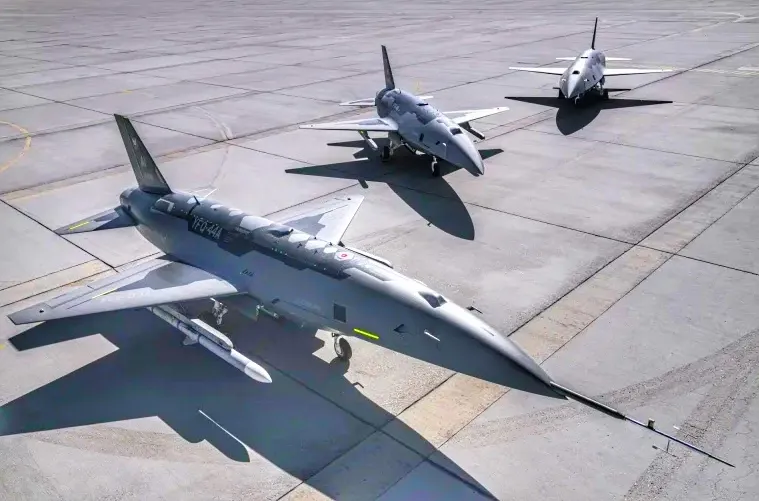
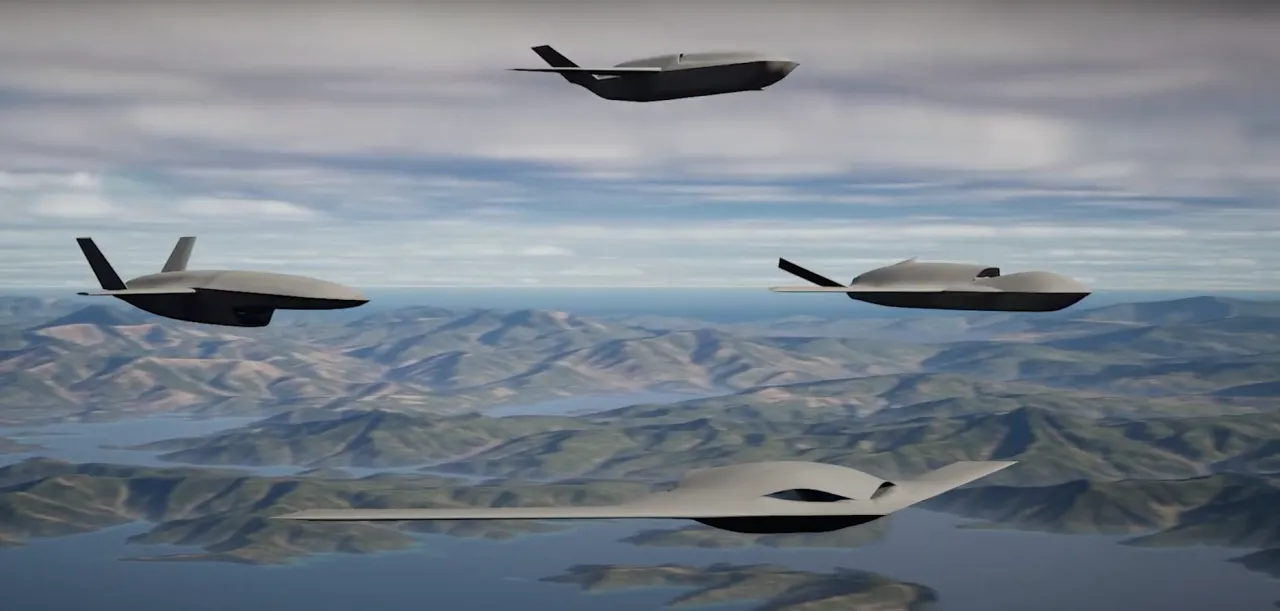
The FQ-42 and FQ-44 are designed to perform detection, weapons, electronic warfare, and mission support missions without pilot involvement. Their introduction marks a significant shift toward human-machine collaboration, with scalable unmanned systems capable of increasing survivability, firepower, and operational flexibility in air-to-air combat.
The FQ-44 Fury and FQ-42 Vengeance unmanned aerial vehicles, developed for the US Air Force, demonstrate the agency’s commitment to creating a semi-autonomous unmanned combat vehicle. aviation, which will operate in conjunction with fighter jets, expanding the range of sensors, weapons capabilities and increasing survivability in air combat conditions.
The September 14, 2026, announcement significantly expands the scope of the Collaborative Combat Aircraft (CCA) program. On June 17, 2026, the U.S. Air Force awarded design, production, development, and production contracts to General Atomics for the FQ-42 and Anduril for the FQ-44. By the end of the decade, more than 150 combat-ready CCAs are planned. Maink’s confirmation that the U.S. Air Force intends to field 500 unmanned aerial vehicles by 2032 means that after the initial tranche, production will rapidly expand, and human-machine interaction will move from the developmental testing stage to a force structure comprising hundreds of combat-ready unmanned aerial vehicles.
Collaborative Combat Aircraft (CCA) are semi-autonomous unmanned combat aircraft designed to operate alongside, rather than replace, manned fighter aircraft. AI-powered and autonomously controlled unmanned aircraft, such as the FQ-42 Vengeance and FQ-44 Fury, are designed to perform assigned missions with minimal direct pilot/operator input. They can be equipped with air-to-air sensors and weapons, enhancing reconnaissance and targeting capabilities and enabling operations in deeper airspace.
By distributing these capabilities across a large number of low-cost unmanned aerial vehicles, the U.S. Air Force aims to increase the combat power, range, and survivability of manned fighters, and make it more difficult for adversaries to detect, prioritize, and engage American forces.
General Atomics developed the FQ-42 based on technology from its XQ-67A prototype UAV and broader autonomous aviation work, while Anduril developed the FQ-44 from its Fury project as a dedicated unmanned combat aircraft.
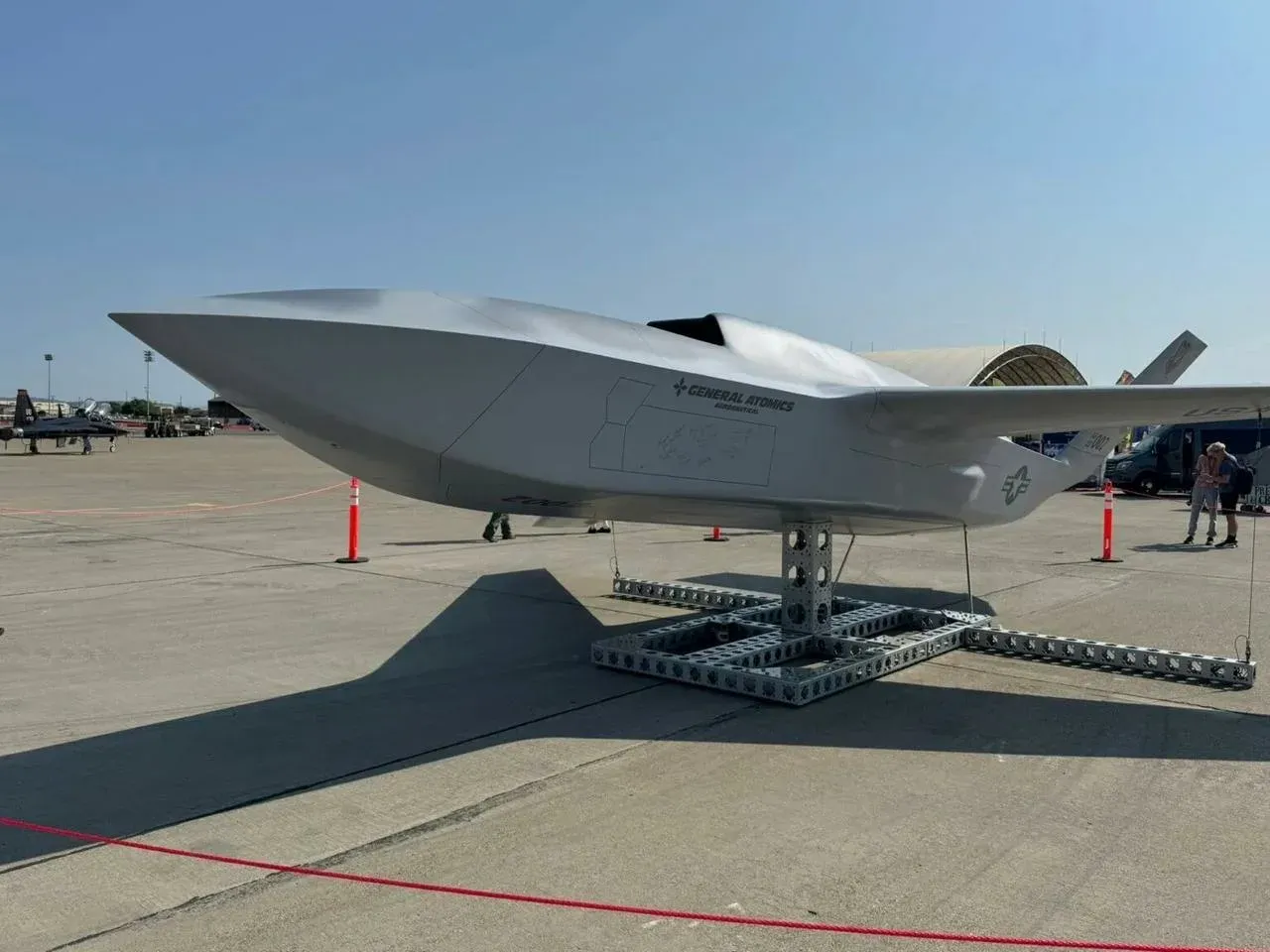
During the prototype phase, these two projects were previously designated YFQ-42A and YFQ-44A, with the transition to FQ designations reflecting their entry into production. General Atomics described the FQ-42 as a specialized unmanned fighter designed for next-generation semi-autonomous combat operations.
The FQ-42 Vengeance and FQ-44 Fury are designed to provide much more than just increased numbers. The U.S. Air Force developed the Collaborative Combat Aircraft (CCA) concept to expand the range, situational awareness, firepower, and survivability of manned fighters in combat environments by distributing sensors. weapons and tactical functions between unmanned aerial vehicles.
Instead of requiring a pilot to remotely control each CCA throughout the mission, operators are expected to set goals and define constraints, and the onboard autonomous system will manage functions such as navigation, formation formation, sensor use, and execution of individual tactical tasks.
A very logical scheme, since the pilot of a single-seat fighter has other things to do in combat besides flying a UAV. And if UAV there will be more than one…
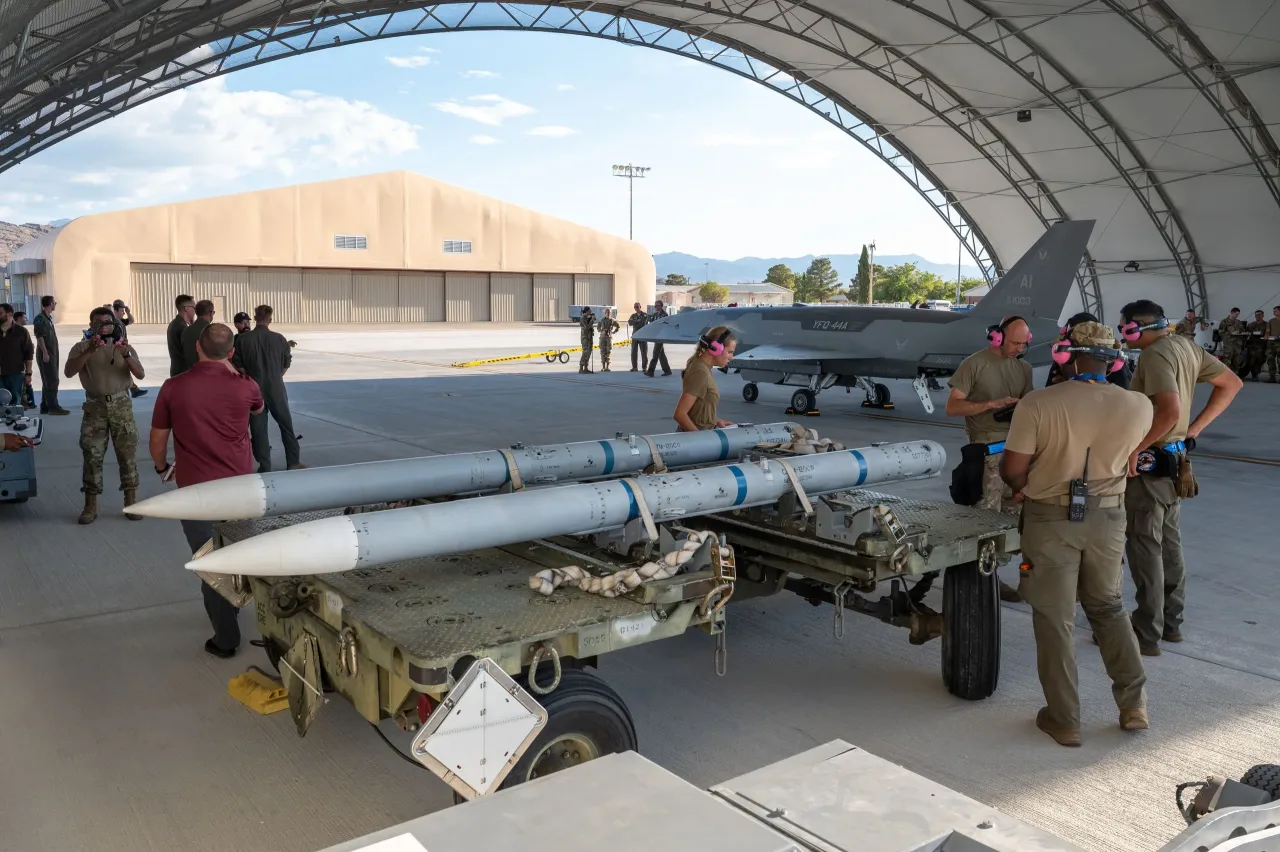
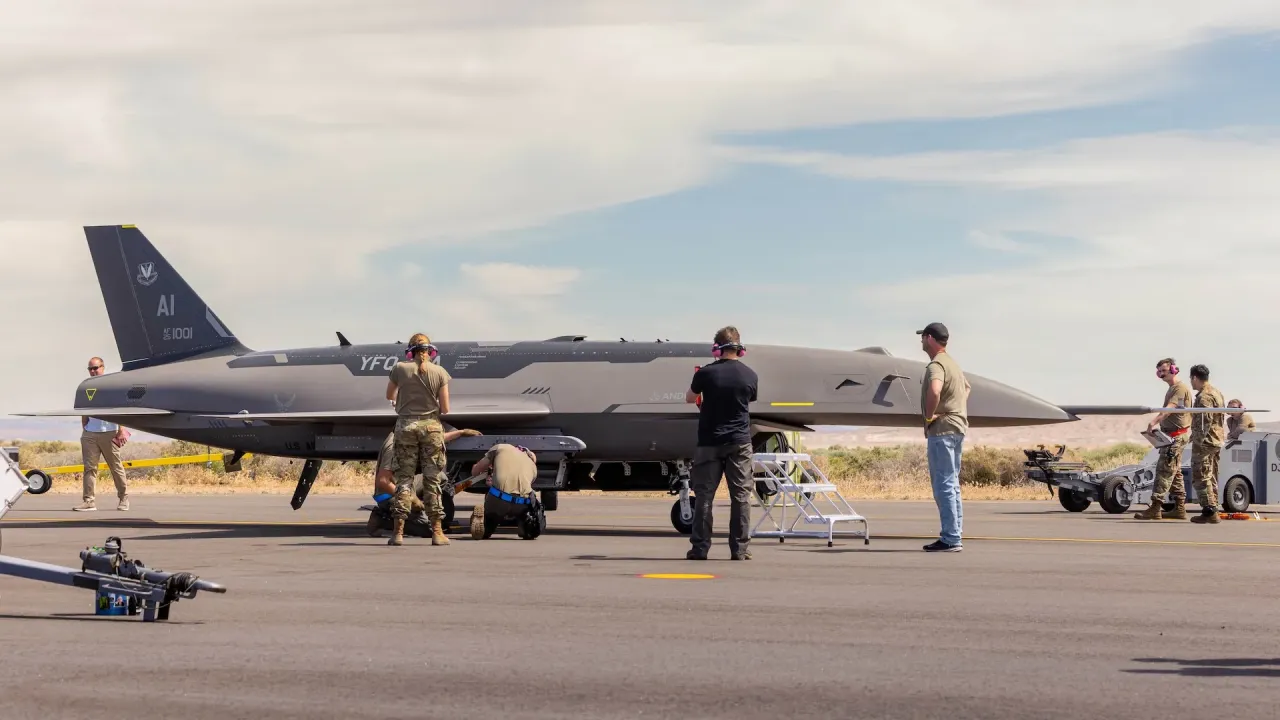
The operational concept has already moved beyond laboratory development. During a combat employment exercise in July 2026 at Creech Air Force Base, Nevada, the U.S. Air Force’s Joint Combat Aircraft Experimental Operations Detachment operated YFQ-42A and YFQ-44A unmanned aerial vehicles (UAVs) in realistic operational conditions, conducted several combat sorties, integrated them with manned aircraft in local airspace, and assessed their ability to operate from dispersed locations.
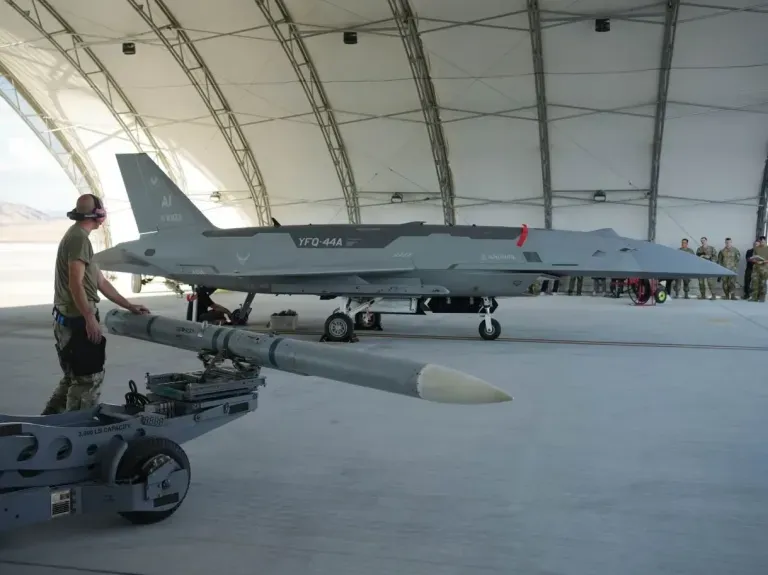
USAF personnel also practiced refueling, servicing, and rearming the YFQ-44A while loading training aircraft. missiles AIM-120 air-to-air missiles, providing data on the reduction in logistics required to support unmanned airborne operations to forward operating centers.
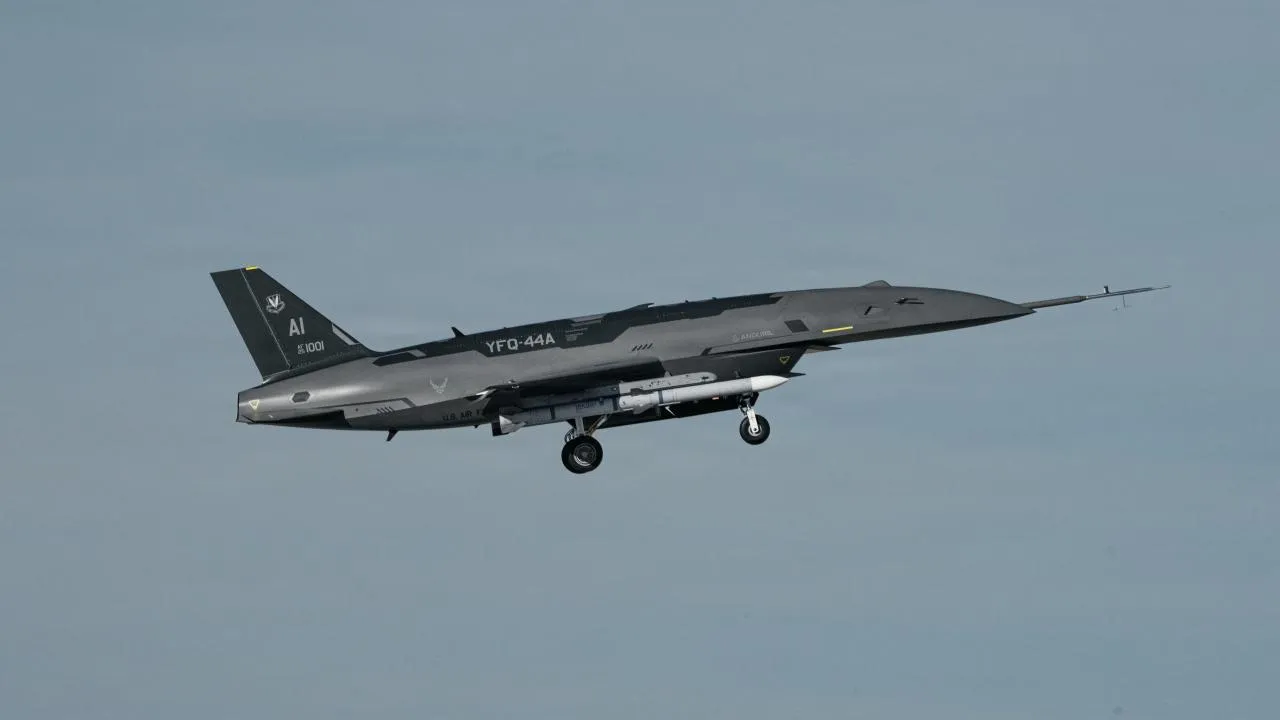
The integration of weapons occurred in parallel. In July 2026, the US Air Force conducted a test in which a YFQ-44A launched an AIM-120 air-to-air missile at a digital target (not a physical one, but one loaded into the drone’s operating system), demonstrating progress in integrating unmanned combat aircraft directly into fighter jet weapons engagement while maintaining human control over decision-making.
This phase is important because the CCA concept requires much more than just autonomous flight: the FQ-42 and FQ-44 must communicate with manned fighters, process mission data, carry sensors or weapons, and respond to changing tactical conditions without constant remote piloting.
Furthermore, the US Air Force is intentionally separating autonomous mission software from the UAVs themselves. This approach allows autonomous systems packages from different vendors to compete and evolve without requiring a complete redesign of the UAV, reducing dependence on a single software provider and enabling the implementation of new algorithms and mission scenarios faster than traditional fighter jet upgrade cycles.
The operators are expected to set mission objectives, define tactical constraints and priorities, while the onboard autonomous system will perform lower-level tasks.
This architecture is particularly important for future operations involving the F-35 and F-47. The FQ-42 and FQ-44 are not intended to replace current manned fighters, but to augment their available sensors, missiles, and tactical capabilities. An unmanned aerial vehicle could operate ahead of an F-35 or F-47, detecting threats, carrying additional air-to-air weapons, relaying targeting information, supporting electronic warfare, or forcing enemy fighters and air defense systems to respond to multiple airborne targets simultaneously. It could also act as a decoy for Defense enemy, reducing the level of threat to the pilot of a manned aircraft.
This would change the combat balance for the US Air Force’s fighter formations. A relatively small number of F-35s or future F-47s could operate alongside several semi-autonomous combat drones located further from the front lines or dispersed over a wider area, increasing combat power without the need for more pilots or expensive crewed fighters.
The FQ-42 and FQ-44 can also assume a level of operational risk that commanders may be reluctant to assign to manned fighters. This will allow unmanned aircraft to penetrate deeper into defended airspace, while pilots can stay away from the most dangerous areas.
A 500-strong force of unmanned attack aircraft systems would give this concept operational weight. Instead of concentrating the bulk of combat capabilities in a relatively small number of expensive manned fighters, the US Air Force could distribute reconnaissance, weapons, and other missions among hundreds of semi-autonomous unmanned aircraft. The goal is not simply to acquire cheaper systems, but to create an affordable combat force, increase the number of simultaneous threats to the adversary, and expand geographic reach, all while reducing risks to crews.
The 500-aircraft production target also poses significant production challenges for General Atomics and Anduril. Going from the planned 150-plus unmanned attack aircraft by the end of the decade to 500 by 2032 will require sustained production growth, reliable engine and electronics supply chains, faster weapon integration, and manufacturing processes that allow for software and hardware improvements without reducing production volumes. Even today, the US labor shortage isn’t exactly sky-high, but the industry’s stomach is being torn apart by the labor shortage.
The aviation industry is suffering somewhat less than the naval industry, that’s a fact. But there’s another unfortunate aspect: General Atomics and Anduril are pursuing completely different industrial models. General Atomics has decades of experience designing and manufacturing military unmanned aerial vehicles, including the MQ-9 Reaper, MQ-1C Gray Eagle, and MQ-20 Avenger, and the technologies developed for the XQ-67A formed the basis for the FQ-42. Anduril represents a new defense industry model, focused on autonomy, software development, and highly automated manufacturing.
Thus, maintaining production of both the FQ-42 and FQ-44 gives the US Air Force two industrial options for scaling up unmanned combat aircraft, maintaining competition and reducing dependence on a single manufacturer. However, this does come at the cost of personnel shortages. However, manufacturers are very cheerful and optimistic about receiving orders. Time will tell how things play out in practice.
The US Air Force has also structured CCA development in sequential phases, rather than a single unmanned aerial vehicle project expected to remain unchanged for decades. This procurement strategy allows for new propulsion systems, sensors, payloads, autonomous control systems, and potentially other manufacturers to participate in tenders as operational requirements change. Future phases may emphasize different combinations of range, survivability, firepower, electronic warfare, or reconnaissance capabilities, depending on the results of operational testing and initial deployment.
However, for the US Air Force, achieving the 500-unmanned aerial vehicle (UAV) target by 2032 will depend on more than just airframe production. The Air Force must simultaneously improve autonomous mission software, command and control networks, weapons integration, maintenance concepts, expeditionary basing, and procedures governing human control over weapon use by autonomous or semi-autonomous systems.
Autonomous control systems are designed to reduce pilot workload, rather than requiring a single remote operator for each UAV. This means they must maintain an acceptable level of autonomy even when data links are degraded, communications are interrupted, or connectivity is limited due to electronic warfare.
The logistics model must also support dispersed combat operations. Future US air campaigns are expected to increasingly rely on operations conducted from multiple forward locations rather than a small number of large air bases. This will require FQ-42 and FQ-44 unmanned aerial vehicles to be able to operate with relatively small maintenance teams and limited infrastructure. Therefore, Exercise Creech, held in July 2026, was of significant operational significance, as it tested takeoffs, maintenance, refueling, weapons loading, and rapid deployment, not just flight performance.
These characteristics are particularly relevant in the Indo-Pacific region, where long distances, limited basing options, and China’s powerful air and missile forces could put constant pressure on US tactical airpower. In such circumstances, semi-autonomous unmanned combat aircraft could distribute sensors and weapons over a wider geographic area, allowing F-35 and F-47 crews to remain further away from high-risk areas.
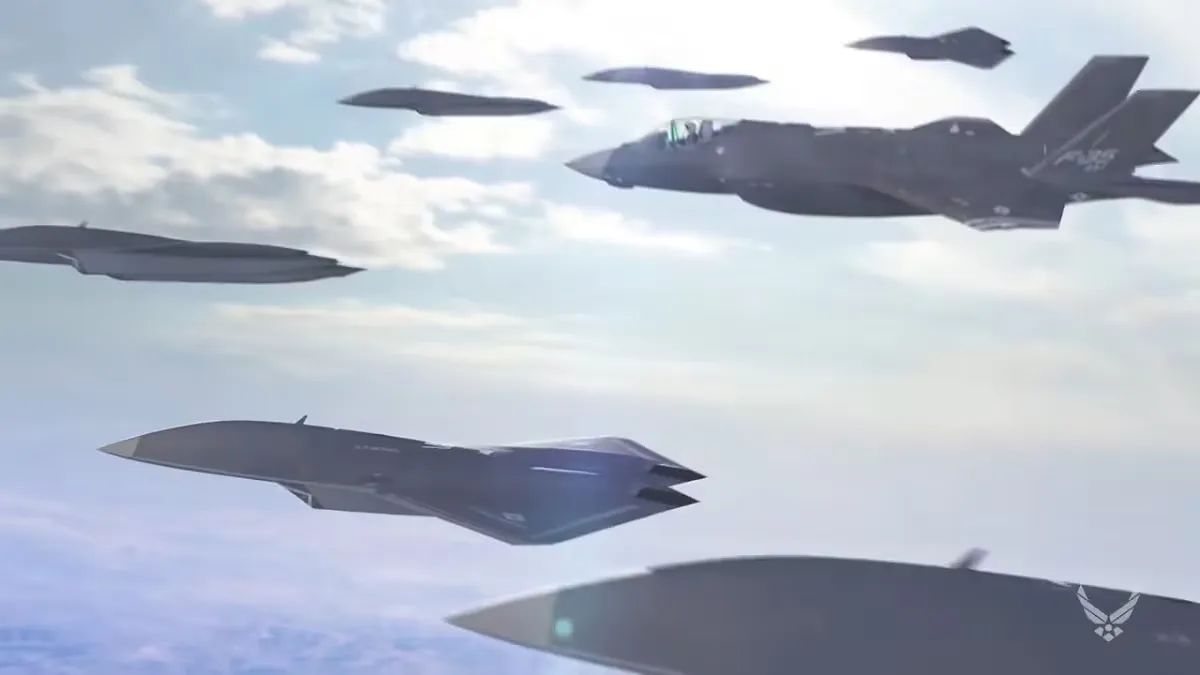
Against a technologically advanced adversary like China, the value of the FQ-42 and FQ-44 will be determined less by their performance than by their numbers and distribution.
Hundreds of unmanned combat aircraft could complicate targeting, force enemy fighters and air defense systems to focus on more targets, and allow American commanders to increase their combat power without putting hundreds of additional pilots at risk.
This, however, is a somewhat one-sided judgment. Simply because no one in the world can stop China from advancing its unmanned aerial vehicles, in which China has achieved its level of perfection, for the same purpose of surveillance, detection, and countering enemy UAVs.
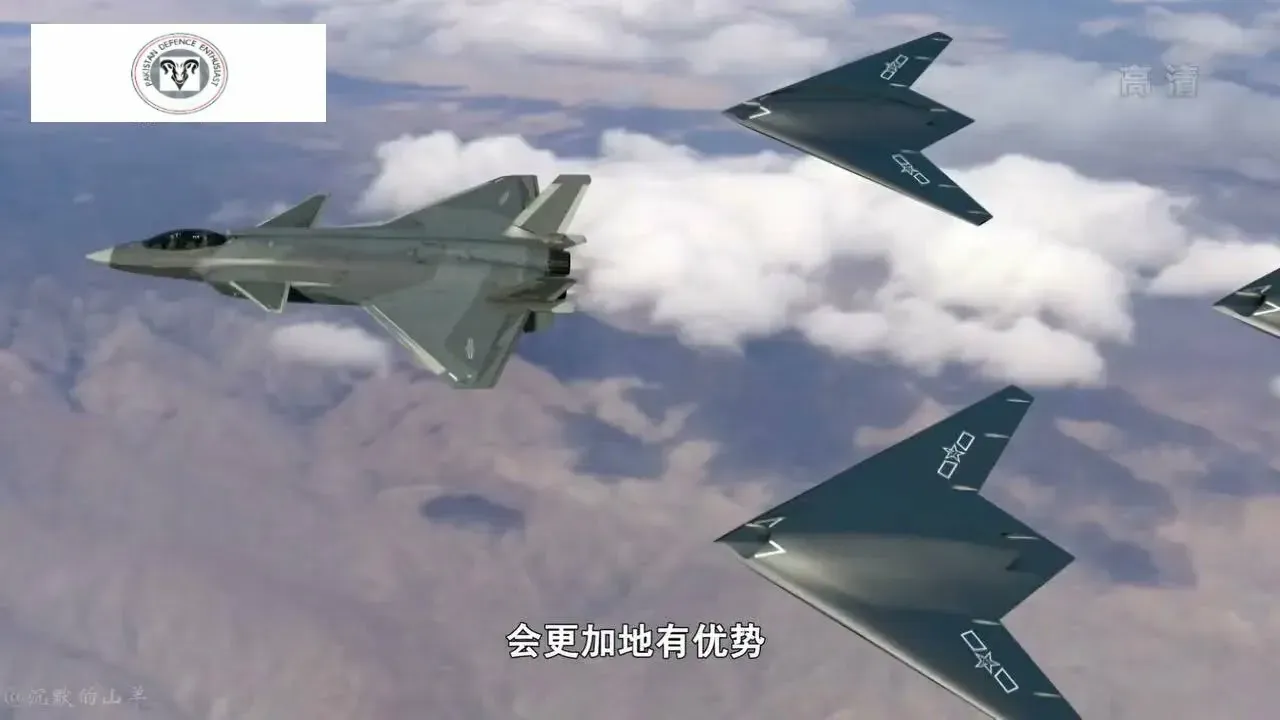
However, China remains more of a strategic context than the main focus of Meinck’s statement of September 14, 2026. Let’s say it’s a long-term, secondary issue. In general, the United States must do a great deal over the next 10 years to gain a nominal advantage over China.
So the most important confirmed fact is the US Secretary of Defense’s statement that the US Air Force intends to field 500 combat aircraft with artificial intelligence by 2032, and about 1000 semi-autonomous unmanned aerial vehicles in the long term.
The 1000 aircraft goal has been around for several years, while the 500 aircraft by 2032 milestone provides a clearer picture of how quickly the Air Force believes unmanned combat aircraft will evolve.
If General Atomics and Anduril can achieve the required production rates, and the U.S. Air Force can prove the reliability of autonomy, weapons integration, and human-machine interaction, the FQ-42 Vengeance and FQ-44 Fury could significantly change the makeup of American combat aviation.
Hundreds of semi-autonomous unmanned combat aircraft operating alongside the F-35 and F-47 will enhance the capabilities of sensors, weapons, and tactical aircraft, and distribute operational risks across a much larger force.
Thus, the announcement of September 14, 2026 is not simply the appearance of two new names.
By teaming up with General Atomics and Anduril to produce 500 FQ-42 Vengeance and FQ-44 Fury aircraft by 2032, the U.S. Air Force has charted a clear path to commercial-scale unmanned combat aircraft, and General Atomics and Anduril are at the forefront of a broader shift toward human-machine collaboration in future U.S. air superiority operations.
However, it’s worth repeating that not all plans are likely to come to fruition, if only because a potential adversary won’t sit idly by until 2032 and watch the US build 500 drones and train them to interact with pilots. And the pilots, accordingly, will be trained to control “loyal wingmen.” That’s what an adversary is, you know. And there’s a very high probability that while Chinese pilots and anti-aircraft gunners will be distracted by UAVs controlled from American aircraft, no one can guarantee in three years that the Americans won’t be distracted by an equal or greater number of Chinese drones. With sensors, systems, EW and air-to-air missiles.
That’s the thing: in this world, every action can lead to a reaction. But for now, we’ll just have to watch the Americans build 500 drones. Without “slipping” the deadline or doubling the cost. It will truly be a fascinating process.