






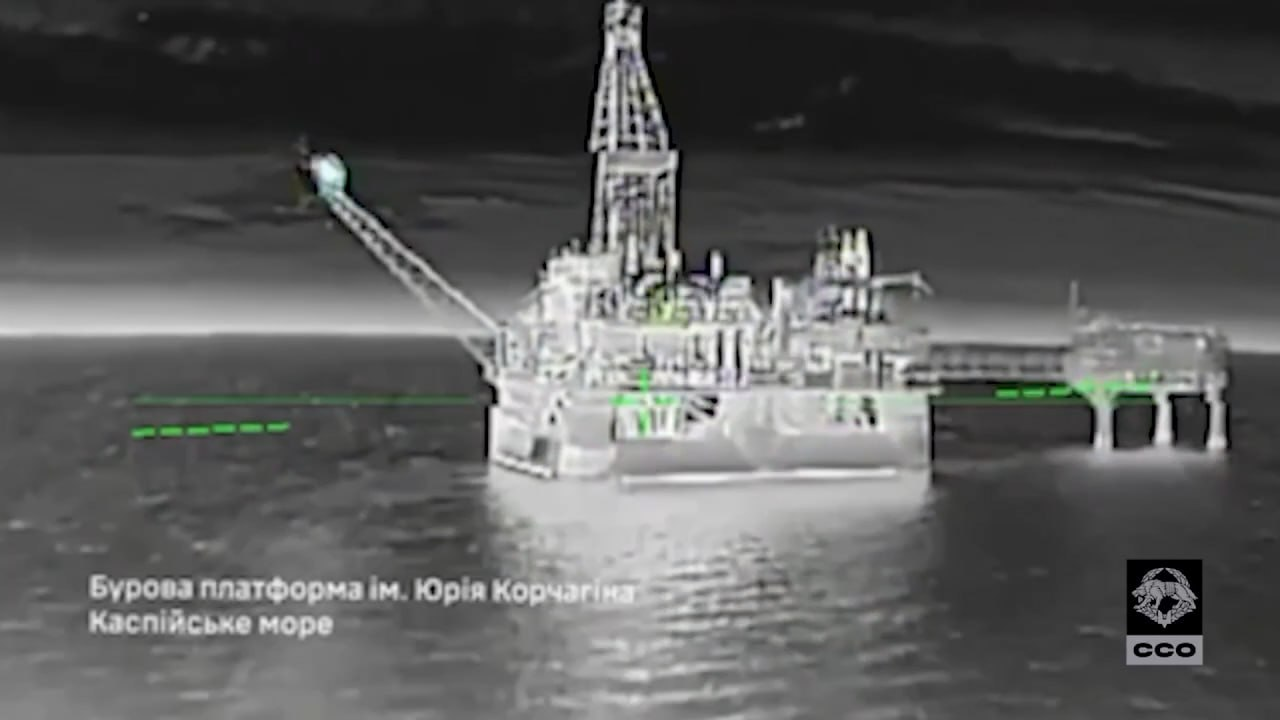
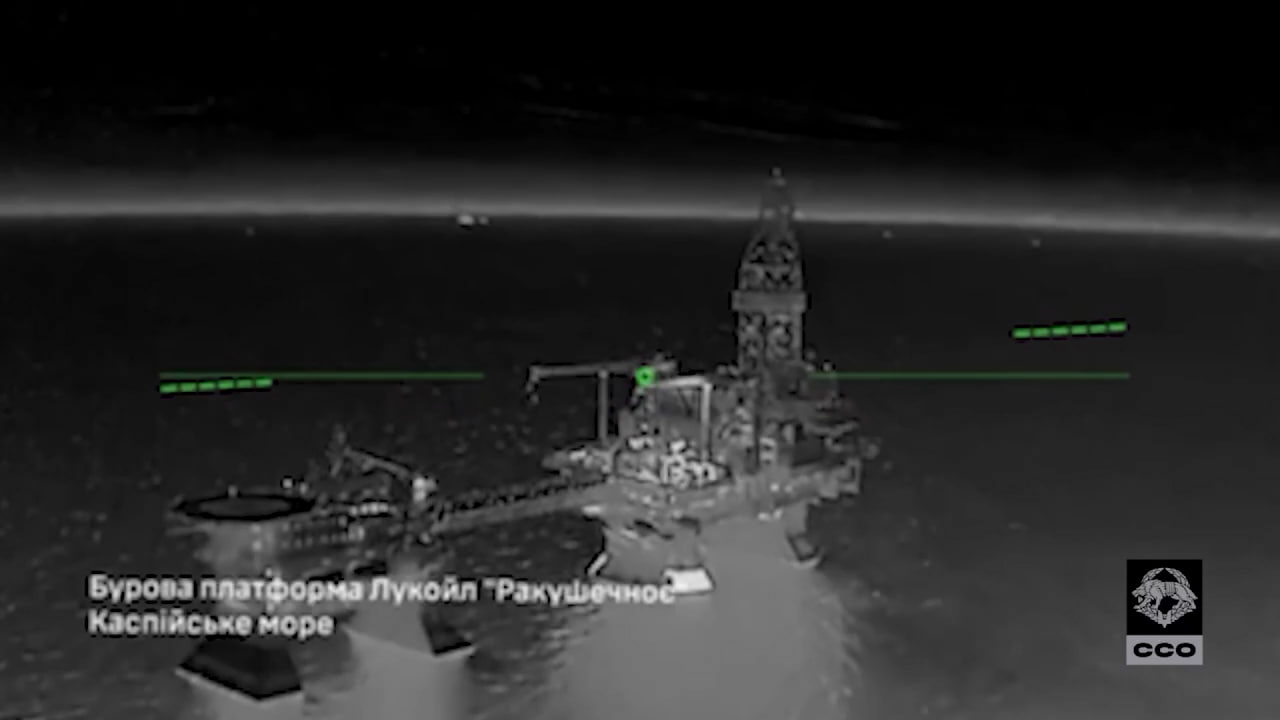
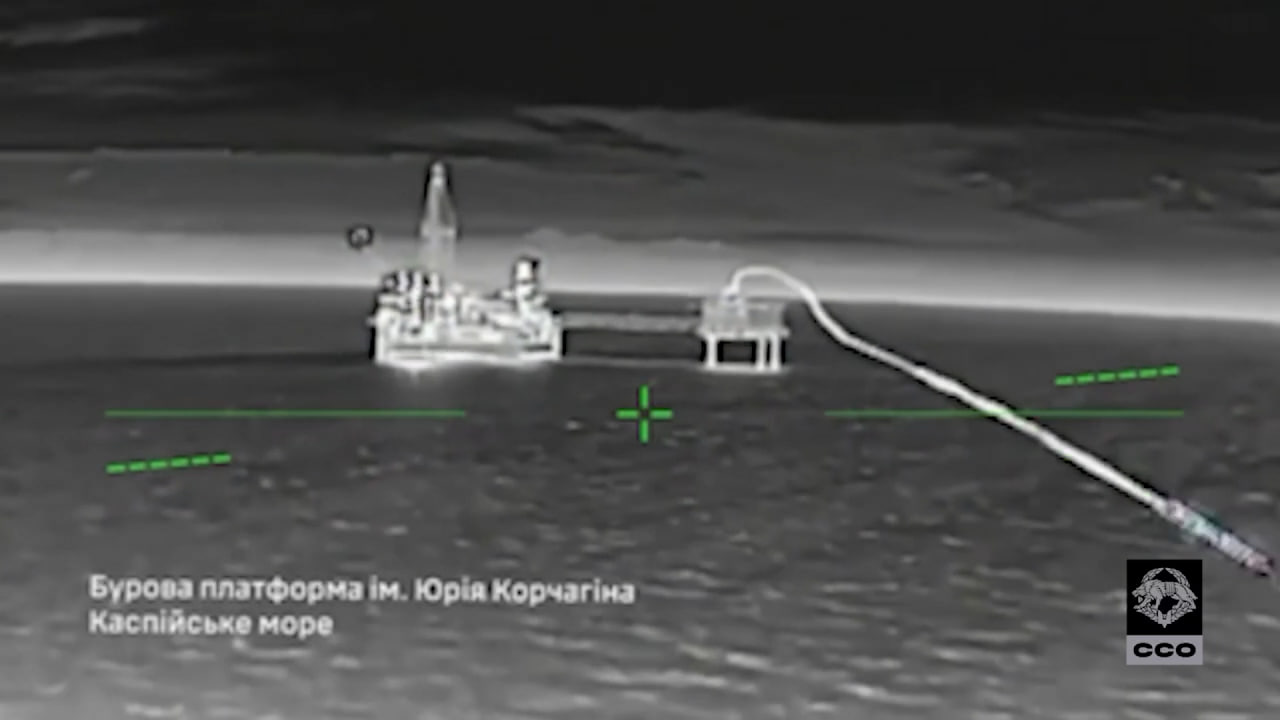
The reach of the Ukrainian “Long-Arm” drone program has expanded into the heart of the Caspian Sea. In a sophisticated operation carried out late last night, guided kamikaze drones successfully struck the Rakushechnoye and Yuri Korchagin drilling platforms—critical nodes in Russia’s offshore energy infrastructure.
The attack is a logistical milestone, occurring over 1,000 kilometers from the contact line, proving that no Russian energy asset is safe from high-precision, low-cost aerial threats.
The Anatomy of a Long-Range Strike
According to local reports and internal Russian defense assessments, the drones utilized a combination of low-altitude flight paths to evade traditional early-warning radars.
- The Command Link: Preliminary evidence suggests the drones were controlled using Starlink integration. This provided the operators with a high-bandwidth, low-latency video feed for terminal guidance, allowing them to pinpoint the most vulnerable sections of the platforms in real-time.
- The Target: The Rakushechnoye and Yuri Korchagin fields are significant contributors to Russia’s Caspian oil production. Strikes on these platforms directly threaten the export capacity that fuels the Kremlin’s wartime economy.
Failed Air Defenses: The Limit of MANPADS
In an attempt to harden these high-value civilian targets, the Russian Ministry of Defense had previously deployed light air defense systems and teams armed with MANPADS (Man-Portable Air-Defense Systems) directly onto the platforms.

First Secondary Sanctions Applied: US Blocks Egyptian Bank From Accessing Dollars Over 'Iran Ties'
The US Treasury Department on Friday unveiled its first 'secondary' Iran sanctions…

Italian university La Sapienza still offline to mitigate recent cyber attack
Rome’s La Sapienza University was hit by a cyberattack that disrupted IT…
![Wanted: Suspect for Shooting Incident in the 15th District [VIDEO]](https://thephillypi.com/wp-content/uploads/2026/10/Wanted-Suspect-for-Shooting-Incident-in-the-15th-District-VIDEO-768x512.jpg)
Wanted: Suspect for Shooting Incident in the 15th District [VIDEO]
Wanted: Suspect for Shooting Incident in the 15th District
U.S. Pushes 70-Year-Old B-52 Bomber Into 2050s With F130 Engines – AESA Radar and Strike Upgrades
The U.S. Air Force is pushing ahead with one of the most…

Hermit crabs and cockroaches are acting as gardeners for a parasitic plant
Hermit crab. Image via Wiki Commons. In the humid, coastal forests of…

Battle of Trafalgar: Strategic Necessity or Aggressive Overreach?
CAPE TRAFALGAR — On October 21, 1805, 27 British warships engaged a…
Despite these measures, the defense failed to repel the swarm:
- The Overwhelm: Witnesses reported hearing small-arms fire and seeing shoulder-fired missiles launched as the drones approached.
- The Result: The drones managed to bypass the defensive perimeter, with at least two direct hits reported on the Yuri Korchagin facility, resulting in secondary fires and a total halt of operations.
Philly PI Analysis: The “Caspian Breach”
From our perspective at The Philly PI, this strike highlights a massive “Hollowed Out” gap in Russian security. For years, the Caspian Sea was considered a “safe” rear-area sanctuary. Ukraine has now turned that logic on its head.
By using “sim-lite” hardware—commercial satellite links paired with long-range drone chassis—Ukraine is effectively de-ranking Russia’s massive naval presence in the Caspian. If light air defenses on the platforms cannot stop a handful of suicide drones, it calls into question the survivability of the entire Caspian Flotilla against future, more coordinated “signal-static” swarms.