







,c=l.value}catch(e){return void n(e)}l.done?t(c):Promise.resolve(c).then(r,o)}function m(e){return function(){var t=this,n=arguments;return new Promise((function(r,o){var a=e.apply(t,n);function i(e){v(a,r,o,i,l,"next",e)}function l(e){v(a,r,o,i,l,"throw",e)}i(void 0)}))}}var p=n(757),h=n.n(p);const y=function(e,t){setTimeout((function(){window.freyr.cmd.push((function(){window.freyr.pushAndUpdate(e,t)}))}),0)},w=function(e){if(!e)return null;var t=e.title,n=e.body,r=e.buttonText,o=document.querySelector(".kiosq-description"),a=document.querySelector(".kiosq-conditions");return o&&o.insertAdjacentHTML("afterend",".kiosq-description {display:none;}"),a&&a.insertAdjacentHTML("afterend",".kiosq-conditions {display:none;}"),i().createElement("div",{"data-hydrate":!0,className:"newsletter-form__message--kiosq"},i().createElement("p",{className:"newsletter-form__message--kiosq-title"},t),i().createElement("p",{className:"newsletter-form__message--kiosq-text"},n),i().createElement("button",{className:"newsletter-form__message--kiosq-button",onClick:function(){document.dispatchEvent(new CustomEvent("kiosqRegwall",{detail:{message:"email sent"}})),localStorage.setItem("kiosqRegwall","Email already sent")}},r))};function E(e,t){var n=Object.keys(e);if(Object.getOwnPropertySymbols){var r=Object.getOwnPropertySymbols(e);t&&(r=r.filter((function(t){return Object.getOwnPropertyDescriptor(e,t).enumerable}))),n.push.apply(n,r)}return n}function g(e){for(var t=1;t{"undefined"!=typeof Symbol&&Symbol.toStringTag&&Object.defineProperty(e,Symbol.toStringTag,{value:"Module"}),Object.defineProperty(e,"__esModule",{value:!0})};var r={};(()=>{"use strict";n.d(r,{default:()=>e});const e={hydrate:function(e,t){var r=n(651),o=n(745),a=n(363).default;o.hydrateRoot(t,r.createElement(a,e))}}})(),newsletterForm=r.default})();
//# sourceMappingURL=newsletterForm.js.map
window.sliceComponents.newsletterForm = newsletterForm;
var triggerHydrate = function() {
window.sliceComponents.newsletterForm.hydrate(data, componentContainer);
}
if (window.lazyObserveElement) {
window.lazyObserveElement(componentContainer, triggerHydrate);
} else {
triggerHydrate();
}
}
}).catch(err => console.error('%c FTE ','background: #9306F9; color: #ffffff','Hydration Script has failed for newsletterForm-articleInbodyContent-TGuNAwEQgRAJ6QKYvDN6mD Slice', err));
}).catch(err => console.error('%c FTE ','background: #9306F9; color: #ffffff','Externals script failed to load', err));
Stay On the Cutting Edge: Get the Tom's Hardware NewsletterGet Tom's Hardware's best news and in-depth reviews, straight to your inbox.Contact me with news and offers from other Future brandsReceive email from us on behalf of our trusted partners or sponsorsBy submitting your information you agree to the Terms & Conditions and Privacy Policy and are aged 16 or over.
TOPICS
Gaming
Prime Day
See all comments (0)
Joe Shields
Staff Writer, Components
Joe Shields is a staff writer at Tom’s Hardware. He reviews motherboards and PC components.
Back To Top
Read more
Gift Guides and Seasonal Sales
Best Amazon Prime Day RAM deals 2026
Gaming PCs
Grab 32GB of Corsair DDR5 for an effective $230 right now in this 9950X3D combo deal
PC Components
Grab 32GB of Corsair Vengeance DDR5 for just $236, $150 cheaper than the best standalone price
Gaming PCs
Best Gaming PC Deals 2026
PC Components
Score 16GB of DDR5 RAM for just $61.99 in this Newegg parts bundle with the 7800X3D
PC Components
Save $240 on a four-item gaming build combo from Newegg
PC Components
Save $149 on this 3-item gaming combo from Newegg
DDR5
Get 32GB of RAM for only $241 in this 3-item gaming combo from Newegg
PC Components
Get into a 32GB DDR5 memory kit for less this Big Deals Day with these picks
Gaming Laptops
Best Amazon Prime Day gaming laptop PC deals 2026
DDR5
This $389 32GB DDR5 RAM kit is the cheapest on sale right now for a gaming PC upgrade
RAM
RAM price tracking 2026
Latest in Gaming PCs
Gaming PCs
Get 22% off this sweet Ryzen 7 7800X3D and RTX 5070-powered gaming PC at just $1799
Gaming PCs
HP takes $2200 off a Ryzen 7 9800X3D and RTX 5080 prebuilt at $2,799
Gaming PCs
Nvidia RTX 5070 prebuilt with Ryzen 7 7800X3D and 32GB RAM drops to $1,799 — save $500 before the price bounces back
Gaming PCs
German utility provider introduces 'gaming electricity' plan targeting high-consumption households, like those running multiple high-end gaming PCs
Gaming PCs
$5,245 prebuilt RTX 5090 PC's connectors melt after sitting boxed for a year
Gaming PCs
Maingear’s new program offers instant trade-ins for gaming PC buyers
Gaming PCs
Save $300 on this 1440p-ready gaming PC with an RTX 5060 Ti 16GB, now $1,399.99
Gaming PCs
PS5 emulator successfully runs six titles at a playable 60 FPS
Gaming PCs
iBuyPower Slate Gaming Desktop review: Strong gaming value and extras
Gaming PCs
Grab this 4K-ready RTX 5070 Ti gaming PC from HP for under $1,900 right now
Gaming PCs
The three-pronged future of custom PC building — from repurposing forgotten parts to ultra-premium works of gaming art
Gaming PCs
Gaming PC with RTX 5060, 32GB of RAM, and 1TB of storage gets $500 discount
Latest in Deals
PC Components
Samsung 9100 Pro SSD gets another price cut, up to 51% off
DDR5
Corsair has slashed $103 off this 32GB Vengeance RAM — the cheapest kit on the market at this speed
Gaming PCs
Get 22% off this sweet Ryzen 7 7800X3D and RTX 5070-powered gaming PC at just $1799
Gaming Monitors
Get a 1440p QD-OLED monitor for just $280 — entry-level AOC display comes with 144Hz refresh rate and 0.03ms response time
3D Printing
Award-winning Anycubic 3D Printers on sale with up to 47% off
Peripherals
Save up to 43% on these handy Hoto tools for PC builders and hobbyists, starting from $14
Storage
The Swiss army knife of USB DVD drives is on sale, also features a built-in M.2 SSD slot, USB hub, and SATA hard drive dock
PC Components
Buy an Nvidia RTX 5070 Ti 16GB for only $1099
GPUs
AMD's Radeon RX 9070 GRE graphics card crashes to $529, below original MSRP
CPUs
Intel's Core Ultra 5 250K Plus is down to its lowest price ever at $145
PC Components
This brilliant $11 power button gadget lets you switch your PC on from your desk with ease
Controllers and Gamepads
Grab this epic Razer Wolverine V3 controller for a great 53% off
No comments yet
Comment from the forums](https://thephillypi.com/wp-content/uploads/2026/10/Desktops-Gaming-PCs-Best-Amazon-Prime-Day-RAM-Bundle-Deals-330x220.png)









U.S. Cybersecurity and Infrastructure Security Agency (CISA) adds Prettier eslint-config-prettier, Vite Vitejs, Versa Concerto SD-WAN orchestration platform, and Synacor Zimbra Collaboration Suite flaws to its Known Exploited Vulnerabilities catalog.
The U.S. Cybersecurity and Infrastructure Security Agency (CISA) added Prettier eslint-config-prettier, Vite Vitejs, Versa Concerto SD-WAN orchestration platform and Synacor Zimbra Collaboration Suite flaws to its Known Exploited Vulnerabilities (KEV) catalog.

Below are the flaws added to the catalog:
- CVE-2025-31125 (CVSS score of 5.3) Vite Vitejs Improper Access Control Vulnerability
- CVE-2025-34026 (CVSS score of 9.2) Versa Concerto Improper Authentication Vulnerability
- CVE-2025-54313 (CVSS score of 7.5) Prettier eslint-config-prettier Embedded Malicious Code Vulnerability
- CVE-2025-68645 (CVSS score of 8.8) Synacor Zimbra Collaboration Suite (ZCS) PHP Remote File Inclusion Vulnerability
The vulnerability CVE-2025-31125 in the JavaScript frontend framework Vite can expose the contents of non-allowed files via the ?inline&import or ?raw?import parameters. It affects applications that expose the Vite dev server to the network using --host or server.host. The issue is patched in versions 6.2.4, 6.1.3, 6.0.13, 5.4.16, and 4.5.11.
The vulnerability CVE-2025-34026 is an authentication bypass in Versa Concerto SD-WAN caused by a Traefik reverse proxy misconfiguration, letting attackers access admin endpoints, heap dumps, and trace logs in versions 12.1.2–12.2.0.
The vulnerability CVE-2025-54313 is a supply-chain compromise affecting eslint-config-prettier versions 8.10.1, 9.1.1, 10.1.6, and 10.1.7. The packages contain embedded malicious code that runs during installation, executing an install.js script that launches the node-gyp.dll malware on Windows systems, potentially allowing arbitrary code execution.
The vulnerability CVE-2025-68645 is a Local File Inclusion (LFI) vulnerability in the Webmail Classic UI of Zimbra Collaboration (ZCS) versions 10.0 and 10.1. Due to improper validation of user-supplied parameters in the RestFilter servlet, an unauthenticated remote attacker can send crafted requests to the /h/rest endpoint to manipulate internal request dispatching and include arbitrary files from the WebRoot directory, potentially exposing sensitive information.

How Old Can a Freshwater Fish Get? This One Was Swimming in the Victorian Era
A bigmouth buffalo reached an estimated 148 years old. New evidence suggests…

Hackers exploit unsecured MongoDB instances to wipe data and demand ransom
Over 1,400 exposed MongoDB servers have been hijacked and wiped by hackers,…

Stacy Garrity Vows to Protect PA Farmland From Invasive Data Center Development
HARRISBURG, Pa. — As Pennsylvania’s 2026 gubernatorial landscape begins to take shape,…
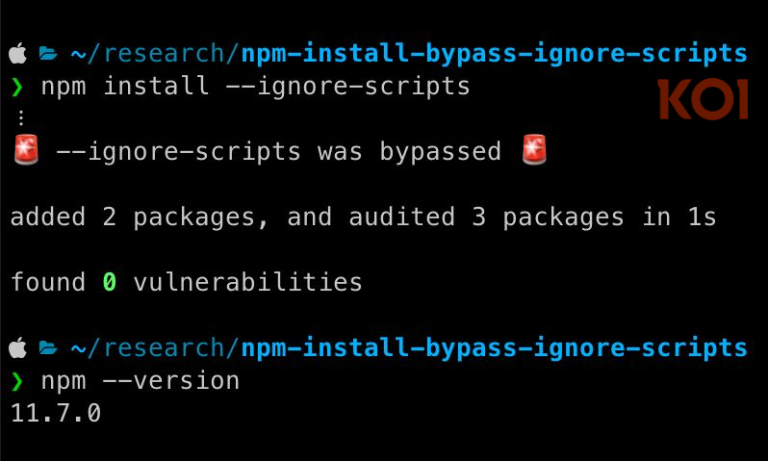
PackageGate bugs let attackers bypass protections in NPM, PNPM, VLT, and Bun
Koi researchers found “PackageGate” flaws in NPM, PNPM, VLT, and Bun that…

Dr. Joyce Slams Critics and Unveils Major Pennsylvania Voter Hall of Fame Tribute
WASHINGTON — In a special congressional tribute highlighting civic dedication at the…

IMPENETRABLE MONSTER: Inside the Colombian Fortress That Obliterated Britain’s Greatest Fleet
CARTAGENA, COLOMBIA — Towering over San Lázaro Hill in Cartagena stands the…
According to Binding Operational Directive (BOD) 22-01: Reducing the Significant Risk of Known Exploited Vulnerabilities, FCEB agencies have to address the identified vulnerabilities by the due date to protect their networks against attacks exploiting the flaws in the catalog.
Experts also recommend that private organizations review the Catalog and address the vulnerabilities in their infrastructure.
CISA orders federal agencies to fix the vulnerabilities by February 12, 2026.