





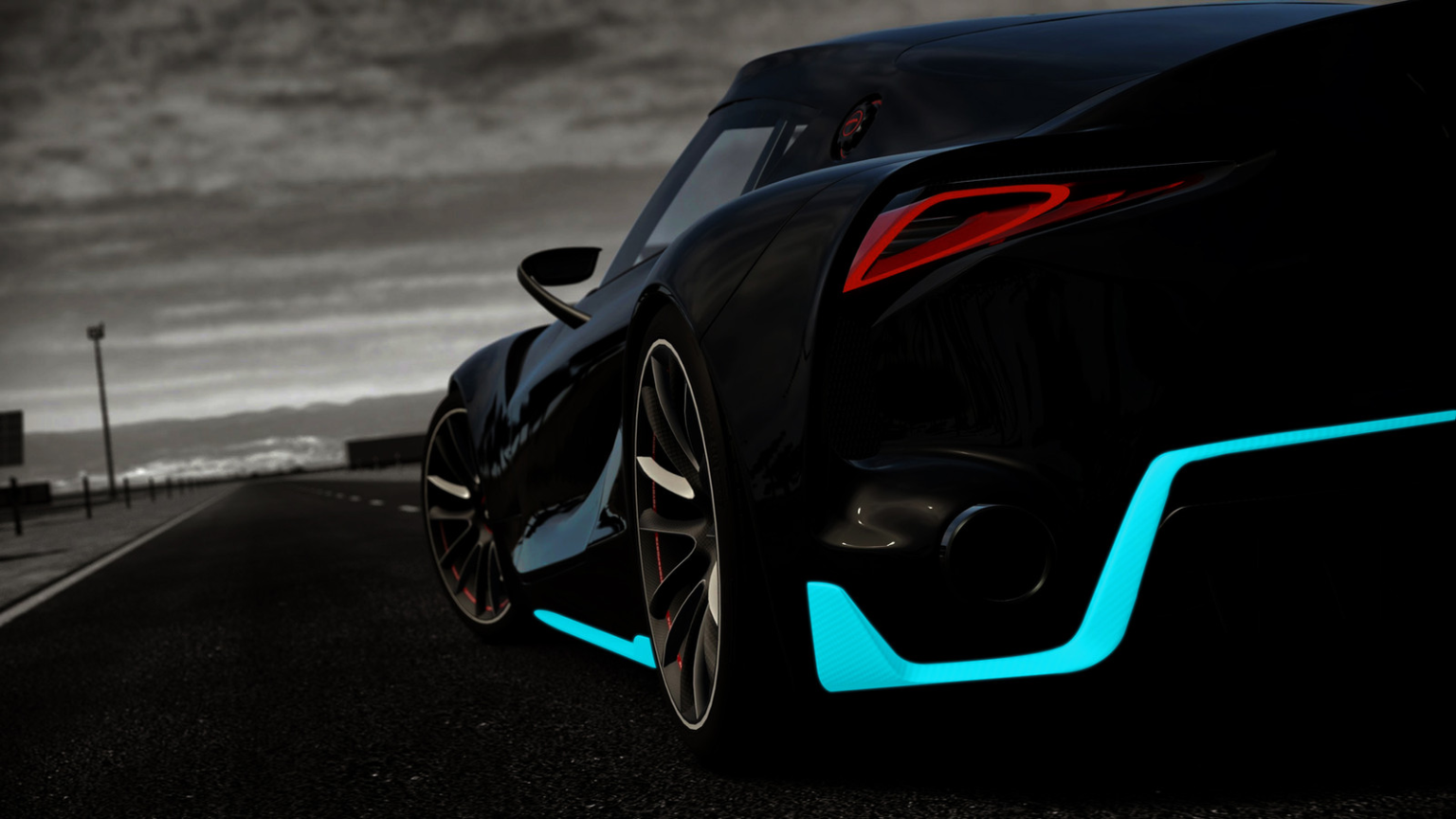
Forget the “glow-in-the-dark” novelty. This is Solid-State Luminescence—a functional application of electroluminescence that transforms a physical surface into a cold-light capacitor. For those interested in the crossover between high-end coatings and electrical engineering, Electroluminescent (EL) paint is essentially a sprayable electronic component.
By layering conductive and phosphorescent materials, you can turn a 3D substrate—whether it’s a vehicle chassis, an aerospace component, or a carbon-fiber housing—into a light-emitting device.
The Architecture of the Stack
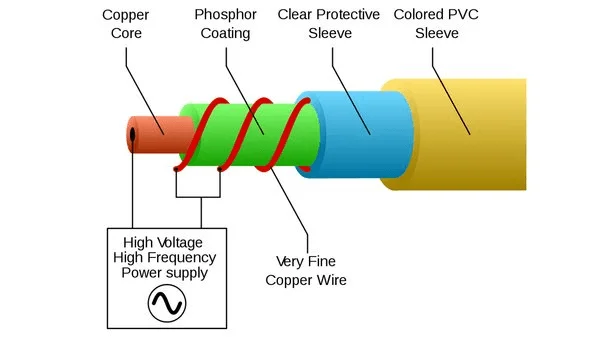
This isn’t a single-stage process. It is a multi-layered electronic “sandwich” where each layer serves a specific electrical function. To make a surface glow, you are essentially building a parallel-plate capacitor:
- Conductive Base (The Bus): A highly conductive primer that serves as the negative electrode.
- Dielectric Layer: A high-performance insulator that prevents an electrical short between the electrodes.
- Phosphor Engine: Micro-encapsulated crystals that emit photons when subjected to an alternating electric field.
- Transparent Conductive Topcoat: A clear, conductive layer (often using Indium Tin Oxide or silver nanowires) that completes the circuit while allowing light to pass through.
Driving the Field
EL paint doesn’t run on standard DC. To excite the phosphors, you need an Inverter to provide high-frequency Alternating Current (AC)—typically between $400\text{Hz}$ and $2\text{kHz}$.

A new fuselage on someone else's wings: at what engineering cost did the Tu-104 usher in the jet age?
Seventy years since the first scheduled flight - September 15, 1956What does…

US Army orders 16 new UH-60M Black Hawk helicopters from Sikorsky in $234 million deal
The U.S. Army awarded Lockheed Martin subsidiary Sikorsky a $234.46 million contract…

One Male Bird Is Almost Single-Handedly Keeping His Species Alive in Britain
Take six chicks, two different nests, and two females, and add one…

BREAKING: Lindsay Clancy mistrial threatened as male juror holds out
The Lindsay Clancy murder trial is expected to end with a hung…
North Korea tests new weapon system (PHOTOS)
DPRK media released photos showing the launch of a road-mobile missile tipped…
By manipulating the frequency and voltage of the inverter, you can fine-tune the output:
- Color Shifting: Higher frequencies can shift the output of certain copper-doped zinc sulfide phosphors from a deep aqua to a brighter green.
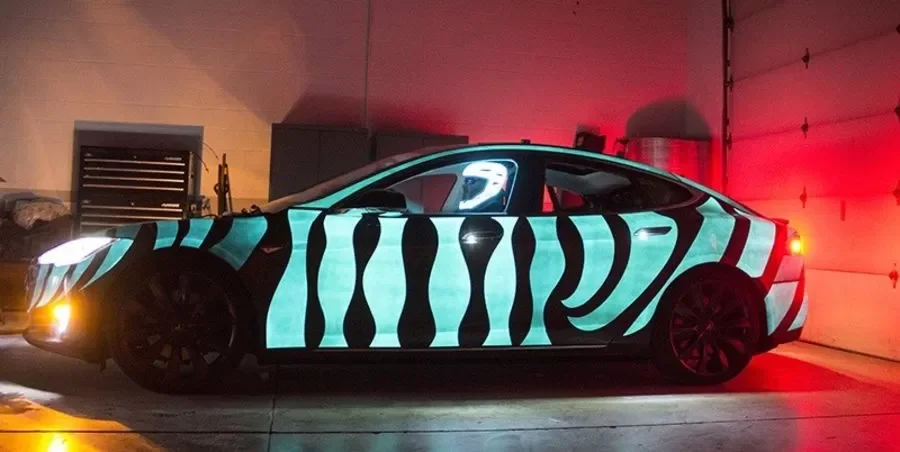
- Pulse Synchronization: Because there is no filament or gas to heat up, the response time is near-instant. You can sync the “zebra” patterns or geometric masks on a car like the Tesla shown above to strobe with sensor data or telemetry.
The Engineering Edge
Why use this over LEDs?
- Conformal Geometry: Unlike LED strips, EL paint has zero profile. It follows the exact aerodynamic lines of your build.
- Uniformity: It provides a perfectly even, “lambertian” light source with no hotspots or glare.
- Thermal Management: It is a “cold” light source. It generates negligible heat, making it safe for application on heat-sensitive composites or near volatile electronics.
This is a high-voltage, low-current system. The result is a surface that looks like it has been structurally integrated with light rather than just illuminated by it. It’s the difference between a flashlight and a glowing skin.