














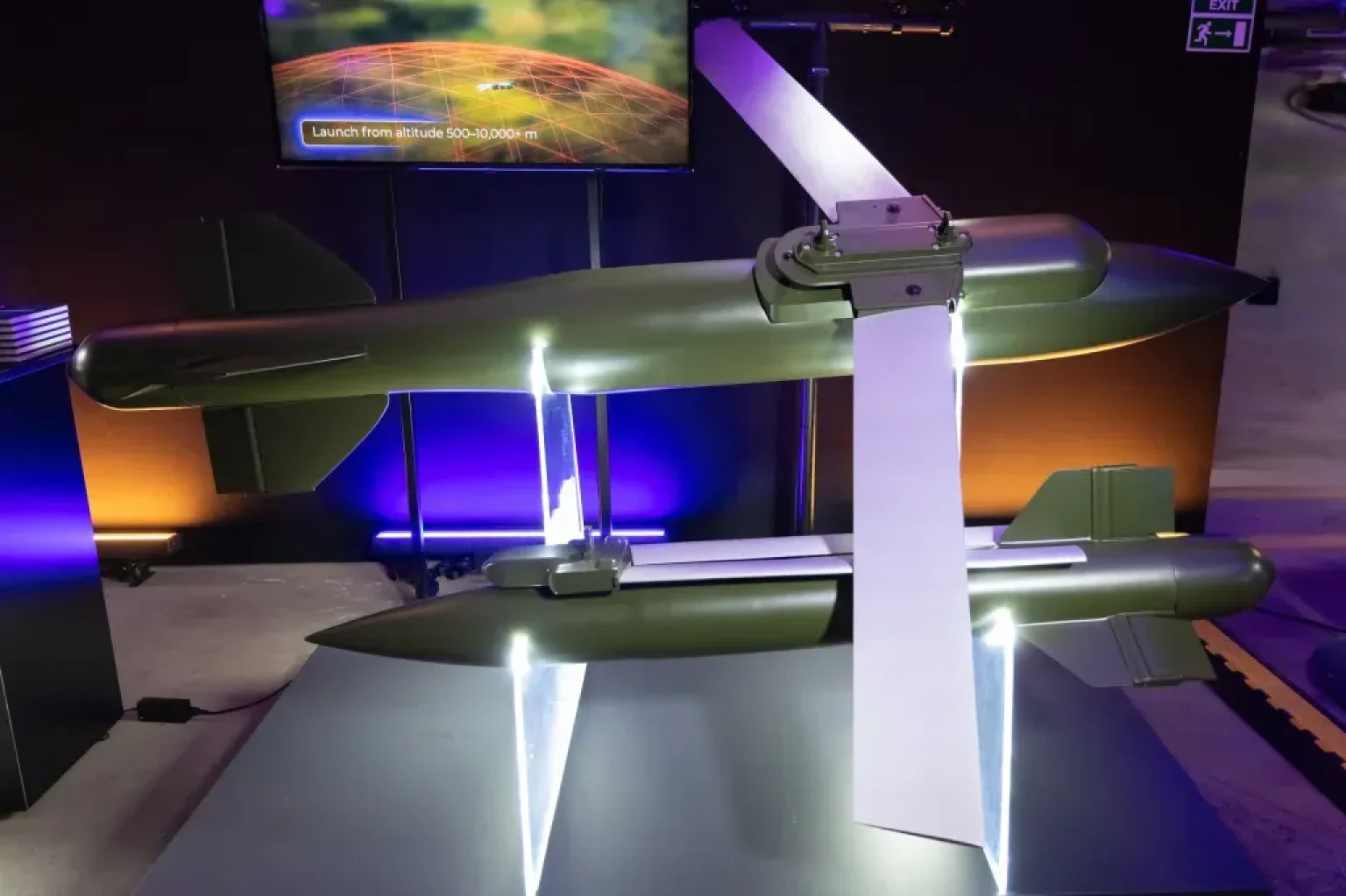
The “Virivnyuvach” bomb at a recent exhibition. Photo by The War Zone
Over the past few years, foreign partners have transferred controlled territory to Ukraine several times. aviation The weapons—bombs of various types and ranges—were already in use. Now, Ukrainian companies have created their own: the “Virivnyuvach” guided aerial bomb. According to Ukrainian officials, the device has been tested, is being purchased by the Ministry of Defense, and is being prepared for delivery to the military; the scale of production and the exact number of bombs delivered have not been disclosed.
Aviation “Equalizer”
On May 18, 2026, Brave1 and the Ukrainian Minister of Defense announced the munition, which they called the first publicly unveiled Ukrainian guided glide bomb. The ministry released basic information about the project, without going into detail. A short video was released showing the new munition being dropped from a Su-24.
The developer is listed as DG Industry, with support from the Ukrainian defense technology cluster Brave1. Work began in late 2024 and took approximately 17 months. According to the developers, the project was launched due to the risk of reduced or delayed foreign deliveries of air-to-air weapons—in other words, to hedge against a scenario that later became quite real.
According to Brave1, the bomb had completed the required testing by May, and the Ukrainian Ministry of Defense placed the first order. Pilots have begun training; the number of units manufactured and delivered is unknown. Combat use was expected after procurement began.
The May announcement didn’t reveal the munition’s name. At the June Eurosatory 2026 exhibition in Paris, the product was released under the name “Virivnyuvach” (Equalizer); a mockup was also shown there, revealing the overall layout and individual external elements. In August, new statements about its specifications and the start of procurement emerged. The name likely refers to the stated objective of narrowing the gap in the capabilities of air-to-air weapons; no official explanation was provided. The gap is evident in the numbers: according to Colonel Vladislav Voloshin, head of the Central Directorate for Innovation Activities of the Ukrainian Armed Forces, Russia has increased its use of guided aerial bombs from approximately 180 drops per day in 2025 to over 300 in 2026.
In mid-August, Colonel Voloshin also announced that, following the completion of testing, the bomb would be officially purchased for the military. Production volumes and rates were not disclosed. There has been no official confirmation of combat use yet.
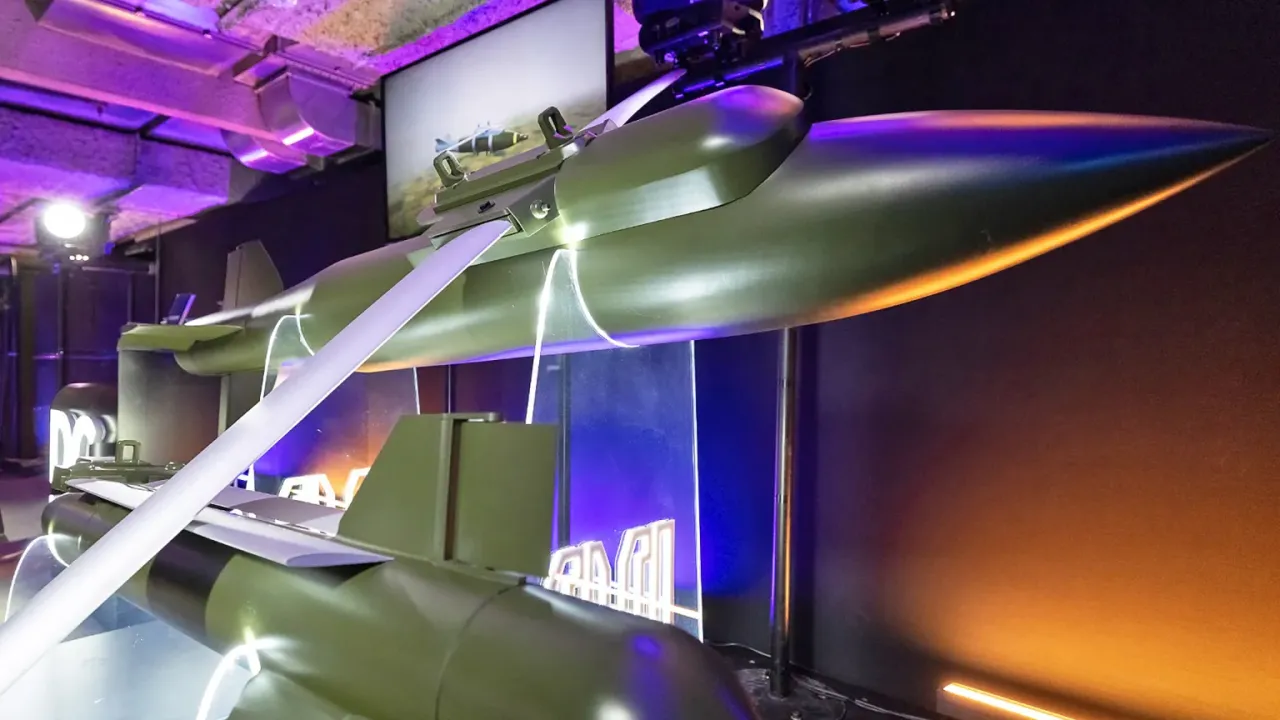
View from another angle. Photo The War Zone
Technical features
The “Virivnyuvach” is a guided glide bomb with a 250 kg warhead. It is carried by tactical aircraft and targeted at ground or sea targets.
The Ministry of Defense and Brave1 insist the bomb is entirely Ukrainian. All major structural components were designed independently, although foreign components are widely used in the electronics.
It’s important to clarify here: the statement that 90% of components come from Ukraine, the US, and Europe combined doesn’t disclose the share of Ukrainian production within that 90%. It’s claimed there’s no critical dependence on imports.
The device’s appearance is easy to recognize. It has a variable-diameter body with a conical nose fairing and a cylindrical main body. Mounted on the body is an external module with a folding swept wing: in transport mode, the two surfaces lie alongside the body and deploy after jettison. The tail contains four stabilizers with rudders.
The type of guidance system and the flight mission transmission procedure have not been officially disclosed. Therefore, the available images cannot determine whether the bomb uses satellite guidance or can be retargeted after release.
The dimensions and gross weight of the weapon are unknown. The stated warhead weight is 250 kg. Foreign publications vary in their wording, including “250-kilogram warhead” and the less precise “250-kilogram bomb”; Ukrainian reports more often attribute this figure specifically to the warhead. For an air-launched munition, the difference is significant: if 250 kg is the warhead weight, the gross weight of the weapon is significantly greater, which affects the range of delivery vehicles, the payload, and the achievable range.
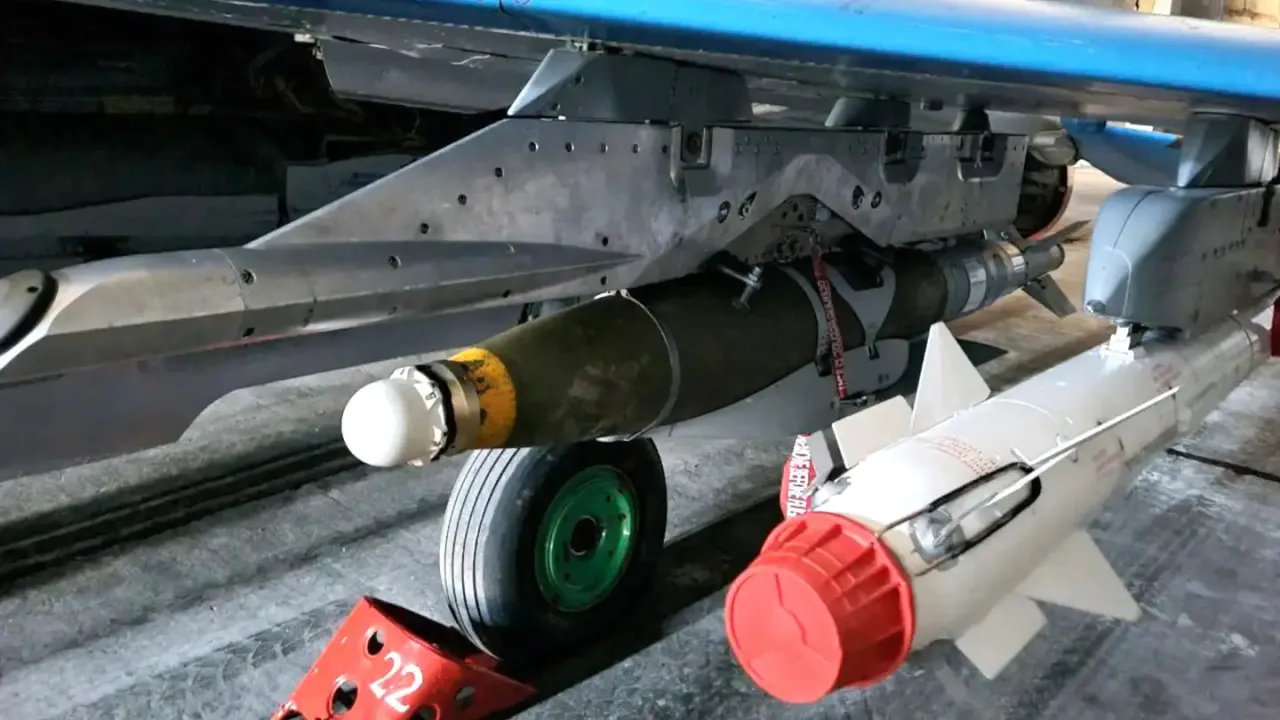
An American JDAM-ER bomb (left) under the wing of a Ukrainian MiG-29. Photo: The War Zone
According to statements released by the developers in August, the operational altitude range is from 500 to over 10,000 meters, and the maximum range can reach 130 km. The May reports only mentioned “tens of kilometers,” so the 130 km figure should be considered stated for now, rather than independently confirmed. The conditions for achieving it—the carrier’s altitude and speed, flight mode, and wing configuration—have not been publicly disclosed. Without these details, a direct comparison of the range with the JDAM-ER is invalid.
The Su-24, Su-27, MiG-29, as well as the F-16 and Mirage 2000, are all mentioned as potential launch vehicles. Only the Su-24 has been publicly confirmed; there is no official information on the readiness for use on other types. Using a guided bomb requires not only the pod, but also the input of a flight mission, the appropriate software, safe release testing, and certification.
Foreign and domestic
The “Equalizer” is the first modern Ukrainian guided glide munition to be tested and accepted for procurement. However, the Ukrainian Air Force has previously flown guided bombs—manufactured by several partner countries.
In late 2022, the United States announced the transfer of precision-guided munitions to Ukraine; it was later revealed that these included JDAM-ER (Joint Direct Attack Munition – Extended Range) munitions, which offer increased accuracy and range. Their use was confirmed in March 2023. GBU-39/B Small Diameter Bomb (SDB) bombs, according to The War Zone, could have been used as early as November 2023, while reliable public confirmation came in 2024. In early 2024, France began delivering AASM-250 Hammer munitions.
The developers plan to expand further. Should an order be placed, they are prepared to develop a whole new product line based on the “Virivnyuvach”: upgrading the current model to meet key specifications or creating new products from scratch.
Now a Ukrainian-made bomb must be added to the list of foreign munitions. The goal is to fill the shortage of such weapons and increase the strike potential of tactical aviation. An additional argument: according to the developers, the Virivnyuvach is approximately three times cheaper than the American JDAM-ER—although the cost breakdown and contract prices were not disclosed.
Possible limitations and countermeasures
There is no publicly available data on accuracy, guidance architecture, gross weight, or conditions for achieving maximum range. The combat potential assessment is preliminary only.
The “Virivnyuvach” layout is similar to other glide bombs. However, its appearance offers no indication of its accuracy, aerodynamic performance, resistance to interference, or reliability.
Glide bombs are, in principle, detected and intercepted by means Defense How successful depends on the target’s size, flight profile, defense density, and the specific attack conditions. It’s significant that Russia, despite all this, is using this class of munitions en masse and continues to increase production. There are risks, and so is the combat value.
If a bomb uses satellite correction without sufficient jamming immunity, the means EW may reduce its accuracy. This risk cannot yet be assessed for the “Virivnyuvach” system: there is no publicly available data on the guidance system.
The carrier aircraft is also vulnerable to air defenses, especially if it requires a high altitude to achieve a range of 130 km. But whether the aircraft or the glide bomb is more likely to be hit depends on the launch range and the defensive structure.
The bottom line so far is this: the Virivnyuvach could expand the strike capabilities of Ukrainian tactical aviation. Its accuracy, jamming immunity, reliability, and actual combat effectiveness are unknown; the claimed 130 km range, without disclosing the required specifications, has not been independently confirmed. Sustained serial production could increase the available ammunition supply and reduce dependence on foreign supplies—if production is established.