












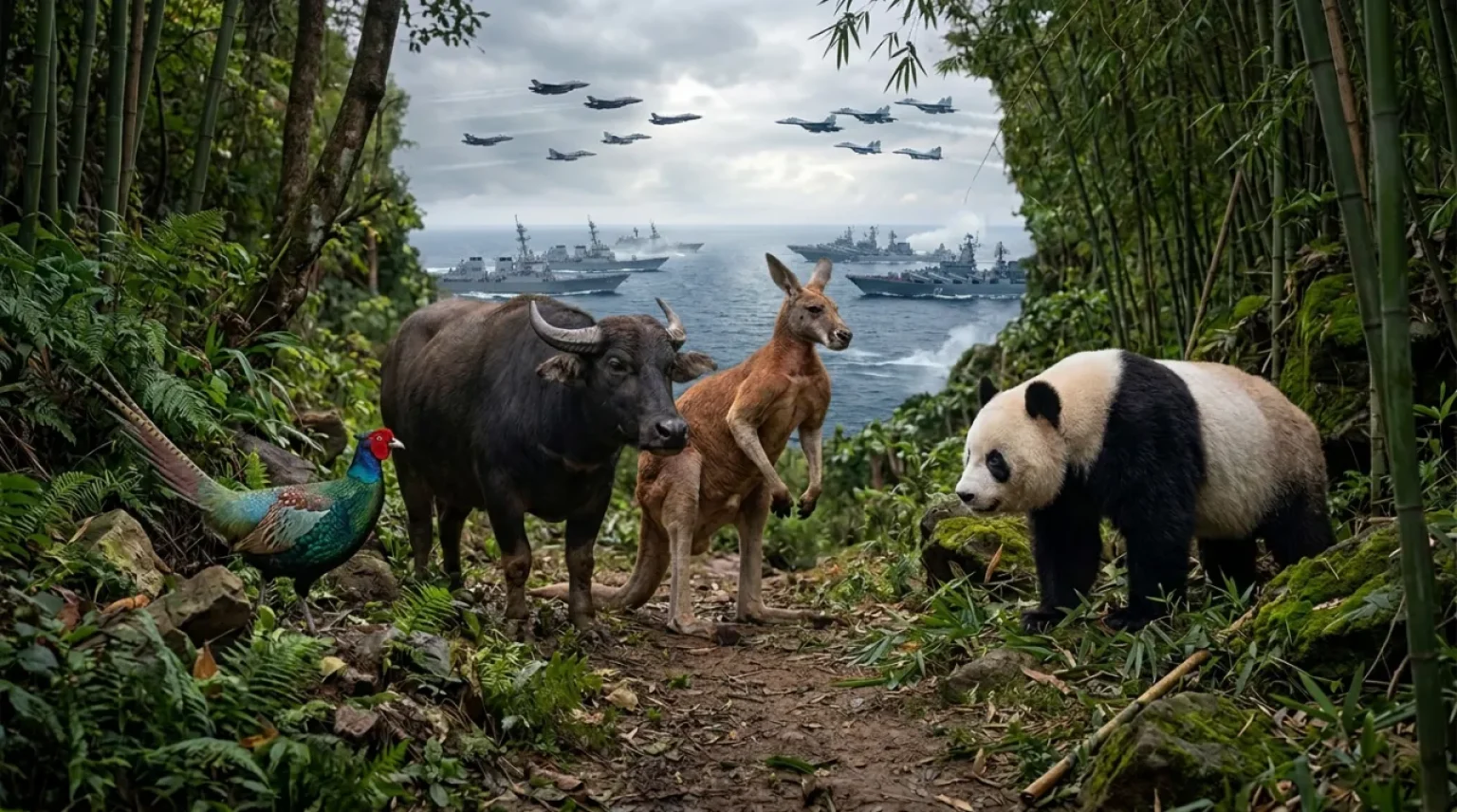
Anyone who thinks this is all the result of agreements and decisions by the three countries whose (unofficial) symbols appear in the title is gravely mistaken. Japan, Australia, and the Philippines are by no means independent countries today, capable of determining their own policies, including military ones.
These three weren’t exactly colonies, but they had been dependent on their mother countries for a long time. It’s just that Japan and Australia traded Britain for the United States, and the Philippines were sold by Spain to the United States along with Cuba, Guam, and Puerto Rico for a whopping $20 million in accordance with the Paris Peace Treaty of 1898. And if we apply some form of analysis to 1946, historical parallel, then, in fact, from that moment on, these three countries were directly subordinate to the United States.
And so, all military bloc memberships, joint exercises, and new weapons purchases are strictly on command from Washington. It’s enough to recall how the Philippines turned down a $228 million deal to purchase Russian Mi-17 helicopters, only to have the US immediately offer them its own. And what the US did to its French allies, snatching away a $66 billion contract to supply nuclear submarines to Australia, can only be described as “mistrailing.”
Manila, Tokyo, Canberra can say whatever they want, but the issues are decided in Washington.
So, when we hear about yet another military bloc or joint exercises in the Asia-Pacific region, it’s all on orders from across the Pacific. But, as we can see, it’s all working. And it’s clear against whom: China.
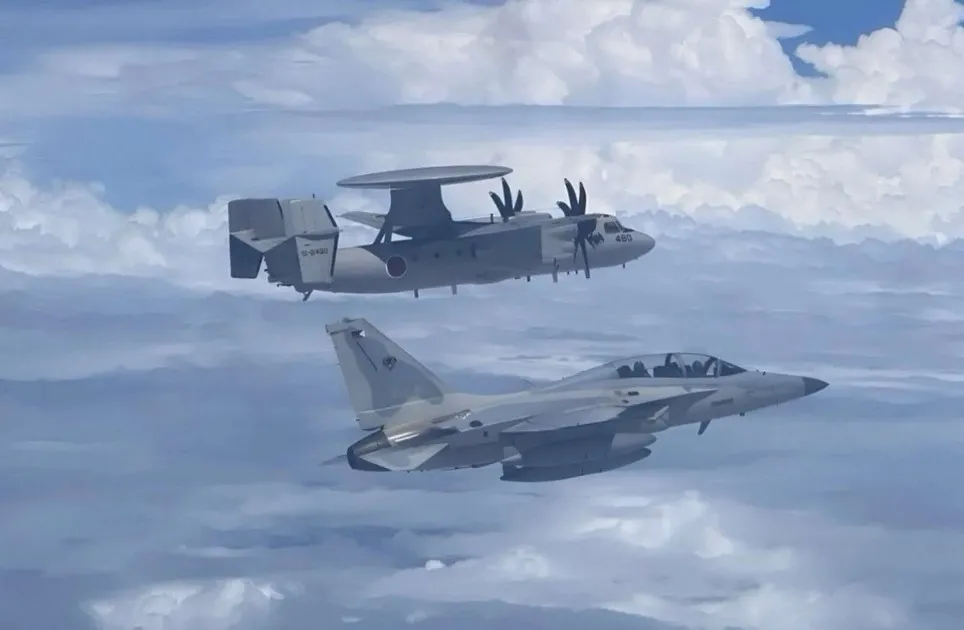
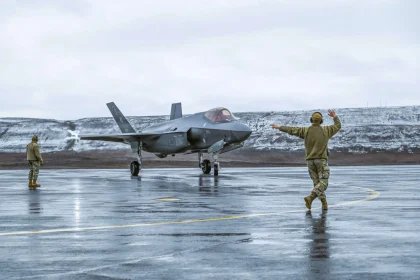
On August 12, 2026, the Japan Air Self-Defense Force announced that Japan’s E-2D Advanced Hawkeye is cooperating with Philippine FA-50 fighters in joint air operations around the Philippines. This mission strengthens regional air cooperation by combining Japan’s air surveillance and early warning capabilities with Philippine combat aircraft in the strategically important Indo-Pacific corridor.
We will modestly set aside the question of what the Japanese are planning to observe and warn about almost three thousand kilometers from their waters around the Philippines.
But this flight demonstrates how the E-2D can support fighter operations. aviation, providing detection, tracking, and situational awareness over a wider area than fighter aircraft sensors can cover. Following exercises in Australia and an earlier stop in the Philippines, this mission highlights the growing cooperation between regional air forces aimed at surveillance, interoperability, and deterrence within the framework of a “free and open Indo-Pacific.”
So it’s not surprising that an E-2D Advanced Hawkeye airborne early warning and control aircraft, returning from exercises in Australia, flew to the Philippines and conducted joint flight operations with Philippine Air Force aircraft, including FA-50 fighters, in the airspace around the islands.
The mission transformed what could have been a routine return to base into a strategically important air cooperation event, combining Japan’s early warning capabilities with the Philippines’ fighter force.
The new flight, which follows the E-2D’s maiden visit to the Philippines en route to exercises in Australia (a minimum of 6 kilometers), demonstrates the increasingly visible operational arc linking Japan, the Philippines, and northern Australia.
In its official statement, the Japan Air Self-Defense Force explicitly described this activity as another step towards deepening defense cooperation between Japan and the Philippines and realizing the concept of a “free and open Indo-Pacific.”
It’s becoming clear that only the combined military forces of various countries, running north to south, can make the Indo-Pacific region “free and open.” A “Tokyo-Manila-Canberra” axis, or something like that.
E-2D and FA-50: Laying the Foundation for Networked Airpower
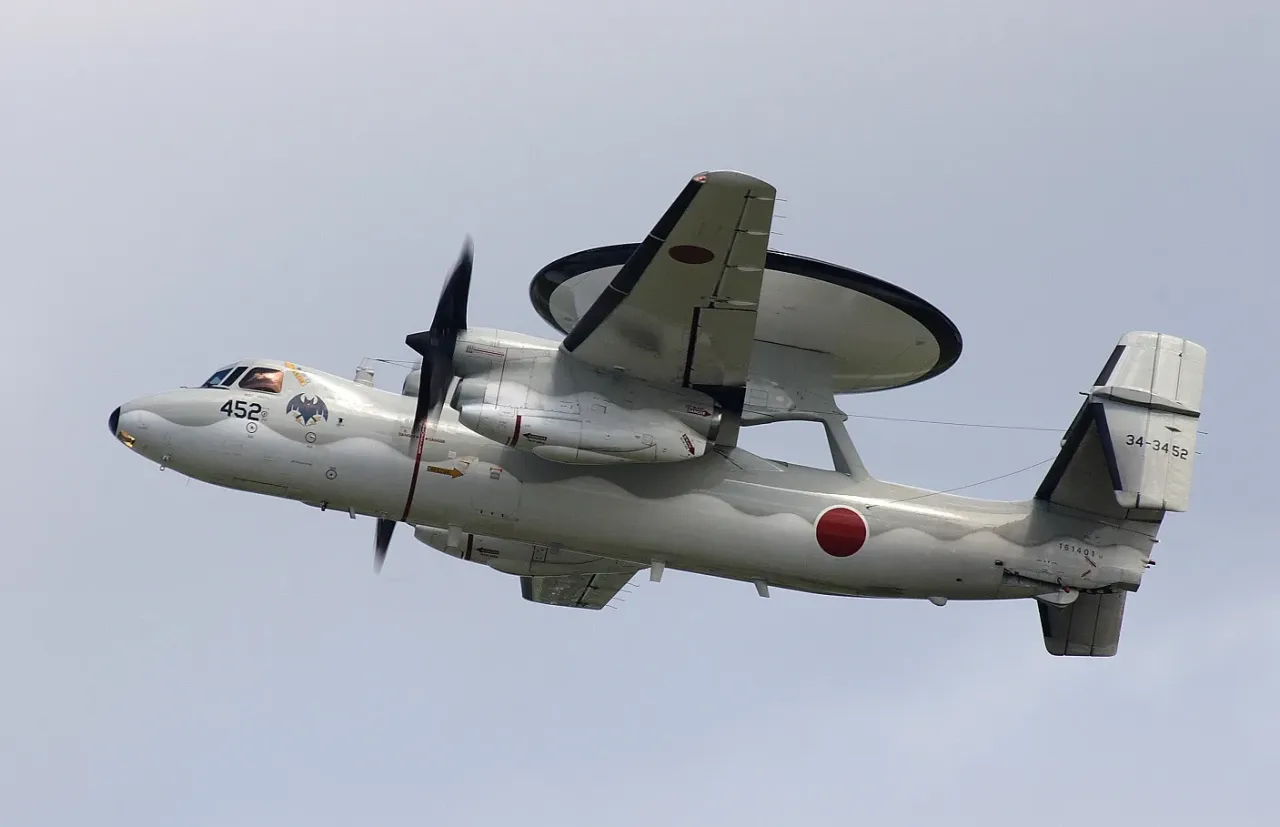
The JASDF E-2D Advanced Hawkeye aircraft is becoming increasingly important to Japan’s evolving air defense system, as its capabilities extend far beyond simple airborne radar surveillance. Equipped with a powerful radar, onboard tactical data processing systems, and multiple communication channels, the E-2D is designed to provide a tactical picture over a wide area and provide command and control of geographically dispersed forces.
US Navy documentation states that the aircraft is capable of wide-area surveillance, combat management, and mission coordination, while the Japan Self-Defense Forces believe that adding Cooperative Engagement Capability (CEC) to the E-2D is part of Japan’s future integrated air and missile defense system.
Joint flights of such an aircraft with Philippine FA-50 fighters represent more than just a formation of different aircraft. In essence, it lays the foundation for cooperation between reconnaissance and strike forces, in which a long-range airborne surveillance platform can provide tactical fighters with a more complete picture of the battlespace than their own airborne radars.
However, publicly available information does not confirm that the August flight included real-time tactical data exchange, connection to the air traffic control system, target designation for weapons or integrated operational procedures between Japanese and Philippine aircraft. This distinction is important: the sortie demonstrates operational coherence and growing cooperation, but does not yet confirm the existence of an integrated air defense network.
However, who said that the participating parties are obliged to disclose absolutely all the details in the final communiqués?
From Australia to the Philippines: An Emerging Air Corridor for Joint Operations between the US and Japanese Armed Forces
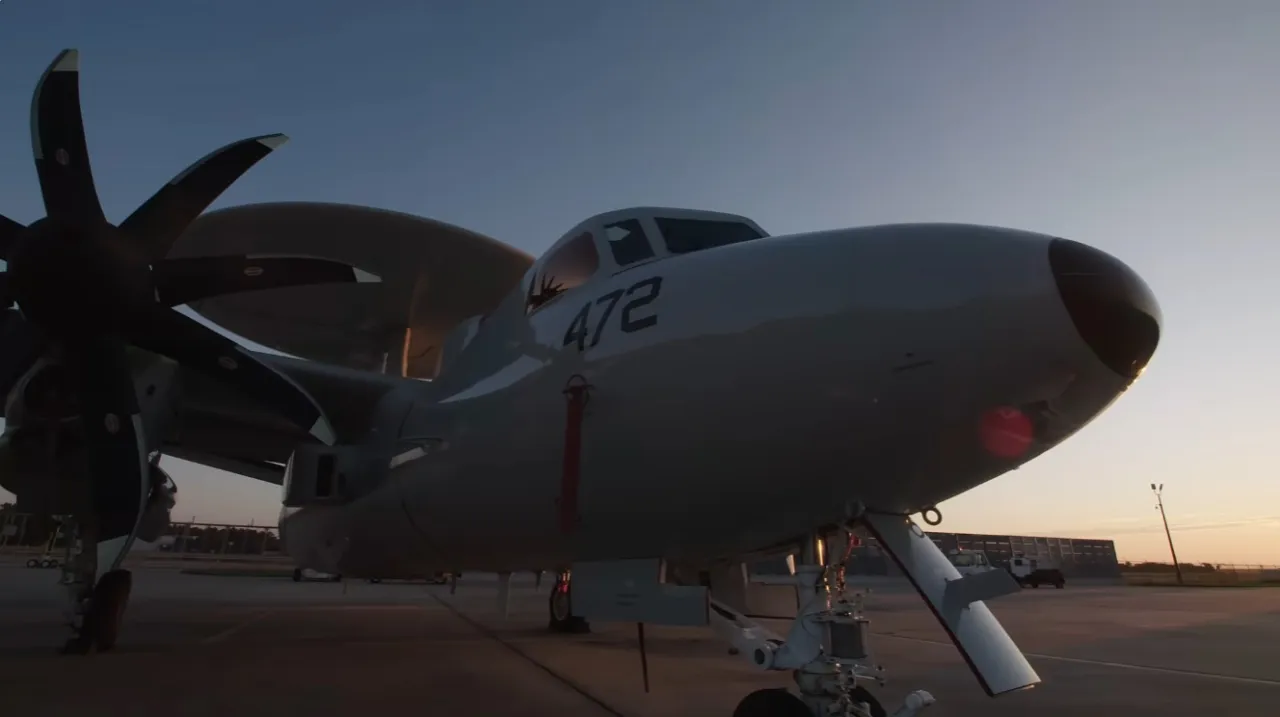
The Philippine operation should also be viewed as the final stage of a larger deployment, rather than a routine bilateral event. On July 2, the Japan Air Self-Defense Force’s 603rd Squadron deployed an E-2D aircraft to the Philippines, visiting the country for the first time en route to Australia to participate in the Japan-US-Australian exercise Southern Cross 26. During this stopover, Japanese personnel exchanged experiences with the Philippine Air Force and interacted with its air defense command. The Japan Self-Defense Forces have already linked this visit to the FOIP program.
The aircraft then encountered the much more challenging conditions of an Australian exercise. For Exercise Pitch Black 26, the Japan Air Self-Defense Force contributed six F-35A fighters, two E-2D aircraft, and approximately 250 personnel to train in tactical attack, air defense, air combat, and aerial refueling. The deployment and redeployment period lasted from July 15 to August 14.
During the Southern Cross 2026 exercise, Japan, Australia, and the United States also emphasized the importance of expanding operational cooperation and collaboration on the F-35 program, and their air forces separately signed a document aimed at strengthening trilateral logistics cooperation.
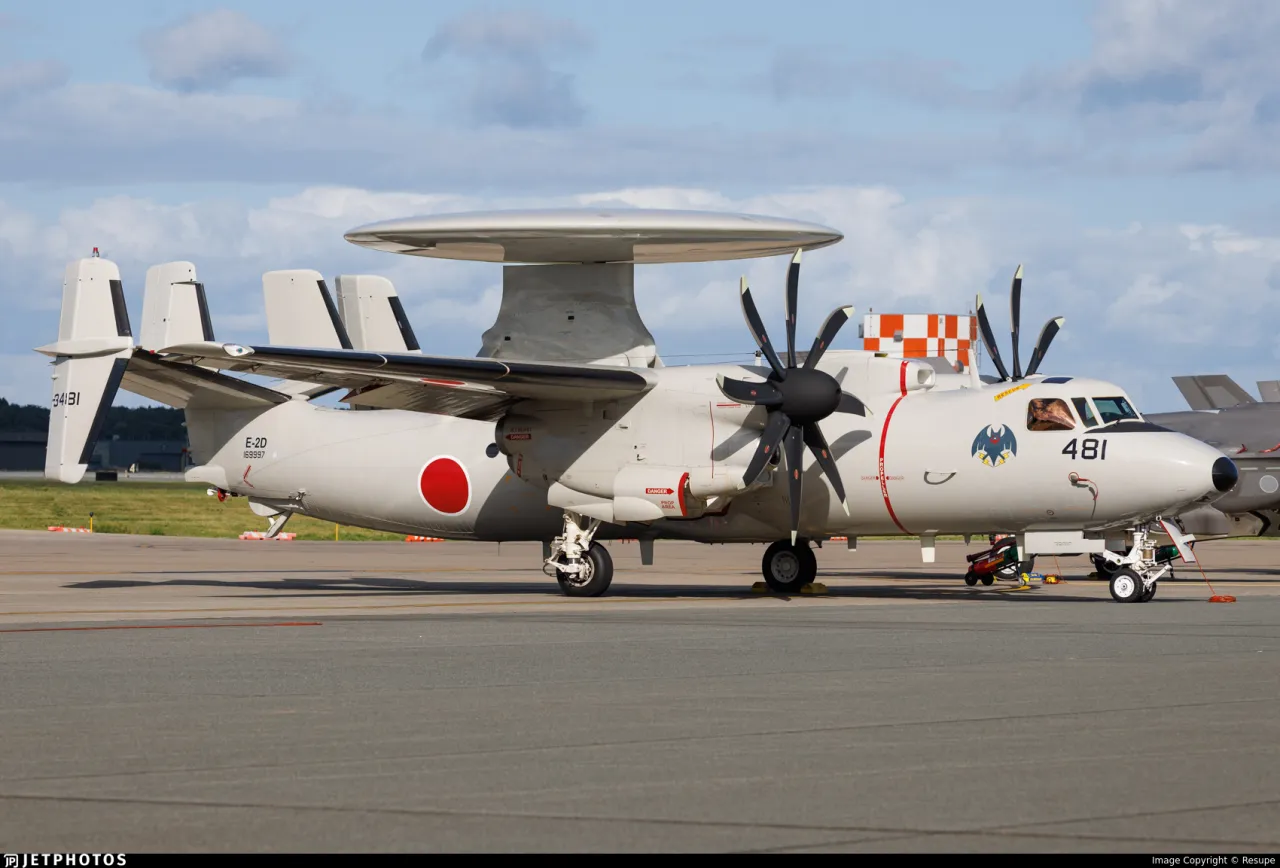
The report cited an E-2D operating over northern Australia alongside Royal Australian Air Force (RAAF) F-35 fighters, an Australian KC-30A tanker, and a Japan Air Self-Defense Force (JASDF) KC-46A tanker. The report’s authors argued that the Hawkeye was becoming an airborne command and control hub, integrating surveillance assets, combat aircraft, refueling systems, and distributed operations. A subsequent mission to the Philippines expanded the operational scope of this system to Southeast Asia.
For the Philippine Air Force, the FA-50PH fighter makes this cooperation particularly relevant. The FA-50 is currently the Philippines’ primary air defense aircraft and plays an increasingly important role in Manila’s efforts to restore fighter aircraft combat capability.
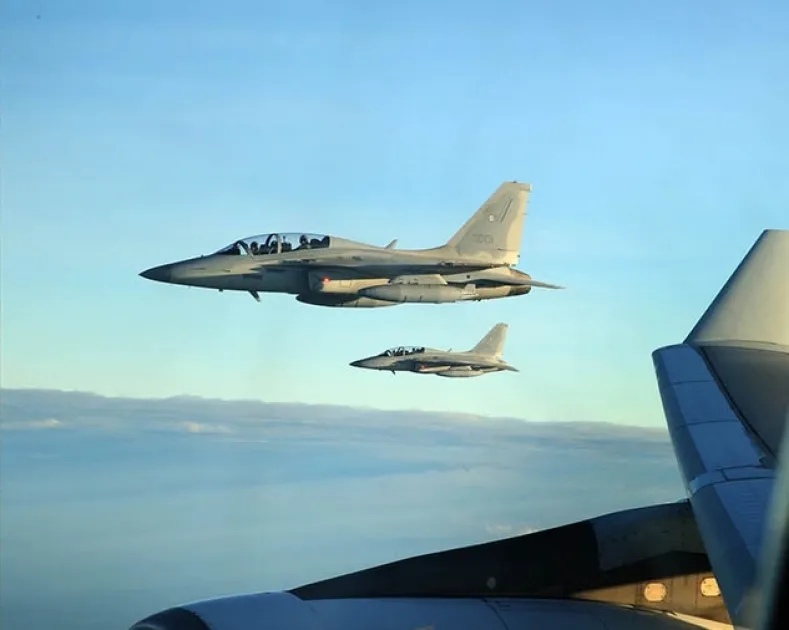
The Philippine Air Force (PAF) sent four FA-50 fighter jets, a C-130, and more than 200 personnel to exercise Pitch Black 26. Thus, Japanese E-2Ds and Philippine combat aircraft participated in the same multinational air exercise in northern Australia before the JAF’s Hawkeyes returned through Philippine airspace.
The strategic interest lies in combining different levels of capabilities.
In Australia, the E-2D demonstrated its effectiveness as part of a coalition with fifth-generation F-35A fighters and tanker aircraft. In the Philippines, it operated alongside lighter FA-50 fighters belonging to an air force whose modernization requirements differ from those of Japan or Australia.
This illustrates the broader potential of airborne command and control systems: their value lies not only in supporting the most advanced fighter groups, but also in integrating aircraft with different ranges, sensors, and mission capabilities into a broader tactical picture.
If Japan and the Philippines adopt compatible communications, secure information sharing, and common air defense procedures, the E-2D could eventually help Philippine fighters detect and respond to threats using information obtained beyond the range of their own radars.
However, creating such an architecture will require more than just joint flights. Secure communications channels, communication standards, tactical information disclosure rules, ground control systems, and extensive training will be required before a fully functional two-way data transmission system can be achieved.
The “Friends, Partners, Allies” initiative goes beyond diplomatic language and is evolving into a practical military-operational framework. Japan and the Philippines have already entered into a Mutual Access Agreement, signed a Procurement and Cross-Servicing Agreement, expanded operational cooperation, and begun working on more effective information-sharing mechanisms.
In May 2026, the defense ministers of the two countries announced their intention to develop specific bilateral and multilateral measures within the framework of the Friends, Partners, Allies initiative, as well as to expand cooperation in the Japan-Philippines-United States and Australia-Japan-Philippines-United States formats. Japan’s participation in the Balikatan 2026 exercises under the Regional Security Agreement, including the first live-fire test in the Philippines using an anti-ship missile missiles Type 88 demonstrated that relations between the countries are already reaching a higher level.
Against this backdrop, the E-2D/FA-50 mission adds an airpower component to an architecture that increasingly consists of elements such as access, logistics, information sharing, exercises, defense equipment cooperation, and combined operations.
The progress is particularly noteworthy: on the way south, the E-2D’s stop in the Philippines was devoted to access and professional exchanges; in Australia, the AWACS aircraft participated in complex multinational exercises; and on the return flight, cooperation evolved into joint flights with Philippine aircraft. This sequence of actions suggests that Tokyo and Manila are gradually moving from defense cooperation to combat engagement.
Towards a Distributed Deterrence Architecture in the Indo-Pacific, or Who Should We Befriend?
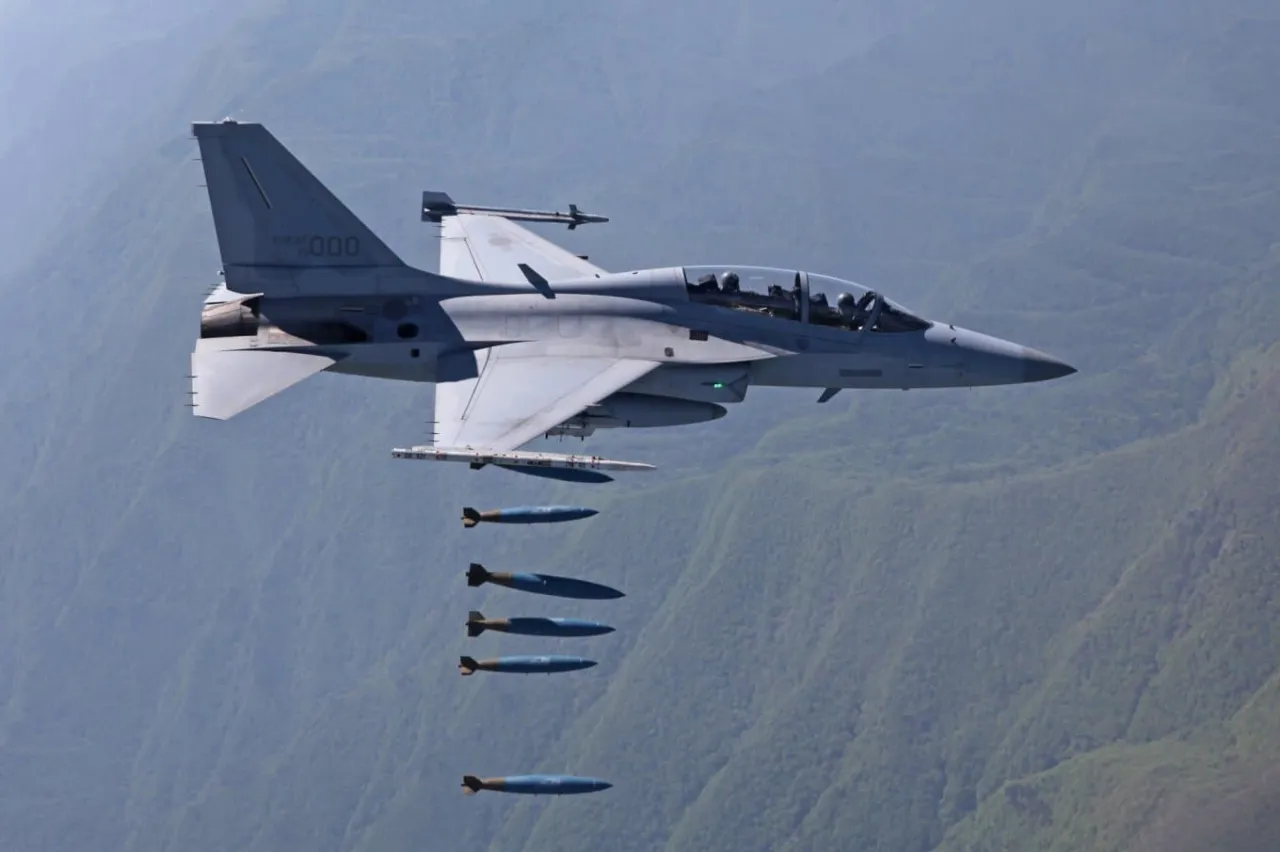
From a geostrategic perspective, in the Indo-Pacific region, this creates a north-south air power corridor in which the Philippines increasingly acts as a geographic link between Japan and Australia.
Japan provides forward surveillance, combat aircraft, and growing long-range support capabilities. The Philippines, as an archipelago, occupies a strategic position on critical approaches to the Western Pacific. Northern Australia offers strategic depth, extensive training grounds, logistics infrastructure, and operational bases located further from the most vulnerable bases in Northeast Asia. And the United States provides the broader alliance, command, and regional connections that underpin many of these actions.
Of course, there is some confusion about who the AUKUS bases in Northeast Asia are vulnerable to?
A report by the Army’s E-2D evaluation team in Australia argued that dispersal, joint support, and airborne command and control could make it difficult to detect, isolate, or suppress allied air power.
The sortie to the Philippines gave this concept a new dimension. Rather than creating a single, centralized regional air defense organization, Japan and its partners appear to be assembling the building blocks of a distributed deterrence architecture, in which aircraft, sensors, tankers, bases, and support networks can be combined depending on geography and operational needs.
In such a structure, the E-2D’s strategic contribution could be the continuous exchange of information between forces deliberately dispersed over thousands of kilometers. This advantage also creates a vulnerability: an airborne early warning aircraft is a valuable asset that itself requires fighter protection, robust communications, electronic warfare support, a safe distance for combat operations, and alternative sensors in any contested situation.
The strategic standoff is not just about who has the most combat-ready fighters, but also about which side can maintain the network that allows those fighters to see, communicate, refuel, and fight beyond the initial stages of a crisis.
The E-2D flight with Philippine FA-50 fighters is more than just a symbolic event on the way back from Australia. It demonstrates how the FOIP program is gradually evolving from diplomatic rhetoric to repeated military action: Japanese aircraft are gaining access to the region, crews are establishing ties with partner air forces, advanced platforms are training in a multinational environment, logistics mechanisms are becoming more integrated, and bilateral cooperation is expanding into the air domain.
What was described in Australia as “the emergence of the E-2D as the airborne command centre of the Japan-US-Australia distributed combat architecture” is now showing signs of geographic expansion towards the Philippines.
The deciding factor may not be the creation of a formal Indo-Pacific equivalent of a centralized alliance air defense system, but something more flexible: a network in which Japan, the Philippines, Australia, and the United States can increasingly cooperate on access, sensors, fighters, tankers, logistics, and command and control across a vast theater of operations.
If this trend continues, Japan’s E-2D could become more than just an aircraft defending Japanese airspace, but a critical air hub in an increasingly interconnected regional deterrence network.
And here we have a very interesting question: how many E-2D Advanced Hawkeyes are in service with the Japanese Self-Defense Forces? The quotation marks are more than appropriate here; self-defense 6000 km from its borders looks quite…
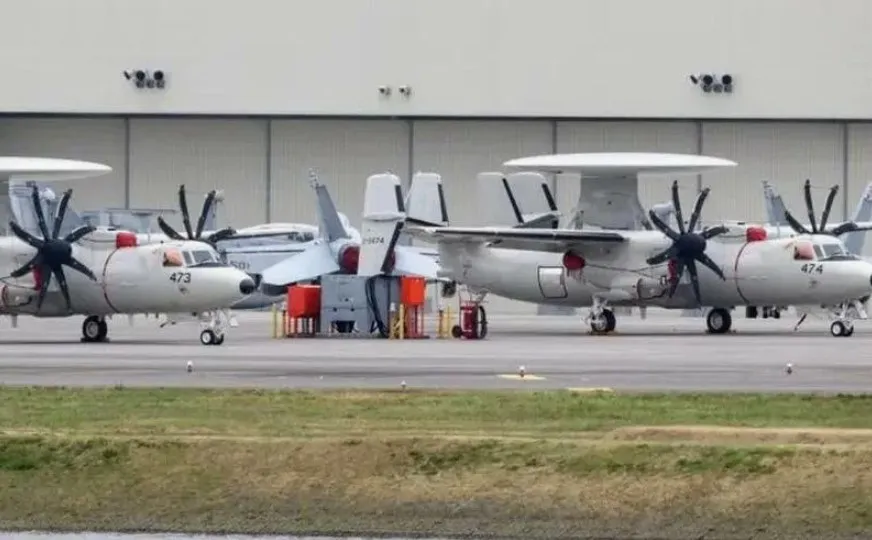
A whole 4 (four) units. This, of course, isn’t enough to build a bridge between Japan and Australia via the Philippines (a mere 6 kilometers), but there’s still one owner who owns fifty of these planes.
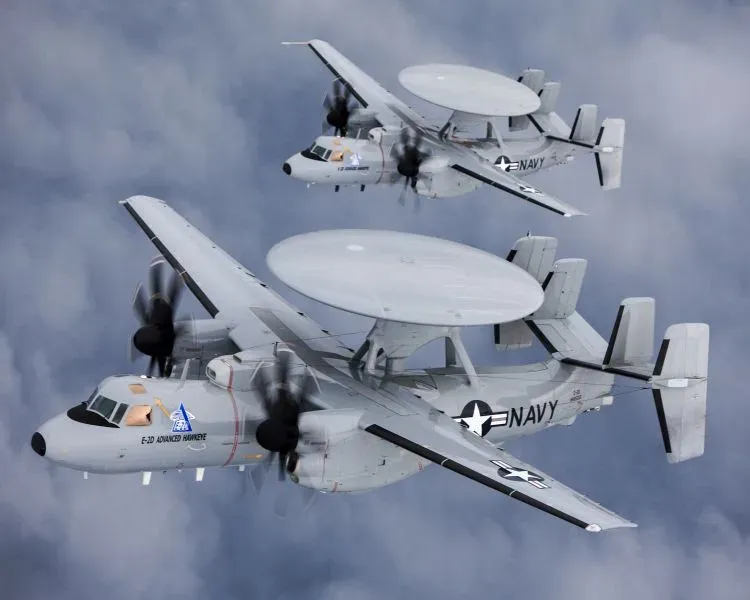
You don’t need to be an expert to understand that the US is preparing its future allies for the front lines of the battle against China. It all seems quite transparent: what interests does Tokyo have in the Australian region, and whose security is it so concerned about there?
But it’s clear that the US needs front-line fighters in that planned war with China. It’s nice to be able to sell a little military equipment and then snap your fingers, and the process will begin on its own. Units will begin organizing, mastering new weapons systems, linking into a single combat information network, and so on.
It’s clear who Japan, Australia, and the Philippines are planning to ally themselves against. It’s not entirely clear how China is threatening Australia, which is located several thousand kilometers away. But if Washington says it’s threatening, then that’s what it means. And effective measures must be taken, especially since the US has ample blocs for this purpose.
Of course, the overall involvement of just one aircraft in these programs doesn’t seem serious, but the US has many such aircraft, and it’s much easier to follow established plans. Better yet, let those who already have an idea of what needs to be done lead the way.
In essence, there is nothing new at all.