















GEOPOLITICAL INTELLIGENCE DESK — Senior Defense and Foreign Intelligence Reporting
ST. PETERSBURG, RUSSIA / LONDON, UK — In an escalation of long-range aerial campaigns, Ukrainian forces executed coordinated overnight drone strikes targeting deep-interior Russian strategic infrastructure. The primary operational objectives included the Ryazan Oil Refining Company (NPP) situated in the Ryazan Oblast, alongside the Borisoglebsk military airfield located in the Voronezh region.
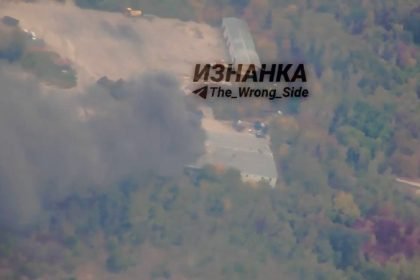
Open-source intelligence, local governor statements, and visual confirmations from civilian populations indicate that the strikes triggered localized secondary detonations and activated regional air defense perimeters. These coordinated operations highlight an ongoing shift in strategic targeting methodologies, focusing heavily on disrupting Russian aviation assets and petroleum, oil, and lubricants (POL) logistics networks far beyond the immediate front lines.
Tactical Assessment: The Ryazan and Borisoglebsk Strikes
According to preliminary defense updates, the overnight raid involved medium-to-long-range uncrewed aerial systems (UAS) launched from undisclosed staging grounds within Ukraine. The Ryazan Oil Refinery—one of the primary refining facilities supplying the central Russian federal district—reported localized industrial fires following the impact of incoming air vectors. Emergency response teams were immediately mobilized to contain the blaze across primary processing units.
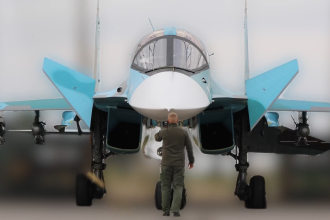
Concurrently, air defense batteries and electronic warfare (EW) units engaged multiple aerial targets over the Borisoglebsk military airfield in the Voronezh Oblast. According to assessments by regional analysts tracking the Institute for the Study of War (ISW), the airfield frequently hosts tactical aviation elements utilized in glide-bomb deployments against eastern Ukrainian defensive positions.
- Primary Targets: Ryazan Oil Refining Company (POL infrastructure) and Borisoglebsk Air Base (Tactical Aviation).
- Defensive Response: Mobile fire groups, surface-to-air missile batteries, and electronic suppression systems.
- Collateral Impact: Industrial fires, temporary flight restrictions, and localized infrastructural inspections.
Strategic Infrastructure Target: Ryazan Oblast
TECHNICAL BRIEF: STRATEGIC INFRASTRUCTURE TARGETING & GEOGRAPHIC MAP
- Primary Entity / System: Ryazan Oil Refining Company & Borisoglebsk Airfield
- Type / Classification: Strategic POL Processing Facility & Military Air Base
- Operating Parameters / Specs: Long-range asymmetric UAV integration, high-explosive fragmentation payloads
- Location & Coordinates Context: Ryazan and Voronezh Oblasts, Russian Federation
- Key Assessment / Threat Status: Critical disruption to regional aviation fuel logistics and tactical air assets
Implications for Regional Logistics and Defense Posture
The frequency of deep-penetration strikes underscores the evolving vulnerabilities inherent in wide-area territorial air defense. Analysts monitoring developments via Reuters Europe Coverage note that maintaining persistent air defense coverage over thousands of square kilometers of industrial and military installations remains a critical challenge for Russian military planners.

Best Gaming PCs 2026: Tested & Benchmarked Hardware Value and Performance Specs
Best Gaming PCs 2026: Tested Hardware & Prebuilt Buying Guide Gaming PCs…


APT28 exploits Microsoft Office flaw in Operation Neusploit
Russia-linked APT28 is behind Operation Neusploit, exploiting a newly disclosed Microsoft Office…
RADAR LOCK: The Ultimate Guide to Ace Combat’s Wildest Original Aircraft!
(Notice: Put on your flight helmet, grab your mad-catz controller, and blast…

Italian university La Sapienza still offline to mitigate recent cyber attack
Rome’s La Sapienza University was hit by a cyberattack that disrupted IT…

Large-scale data breaches hit more Japanese firms
More Japanese companies have revealed that they have experienced major customer data…
The strategic calculus behind targeting petroleum facilities aligns with broader efforts to constrain operational mobility and reduce fuel availability for mechanised units. Simultaneously, strikes on operational airfields aim to degrade tactical aviation sortie rates by forcing relocation further away from the combat zone or necessitating hardened aircraft shelters. As both sides continue to refine long-range strike capabilities and countermeasure tactics, the protection of critical national infrastructure remains a high-priority operational requirement.
[image_alt]Satellite and ground-level view of strategic industrial and military facilities targeted during overnight aerial operations.[/image_alt]
[tags]Ryazan Oil Refinery, Borisoglebsk Airfield, Voronezh Oblast, Long-Range UAVs, Russian Infrastructure, Air Defense, Strategic Logistics[/tags]