














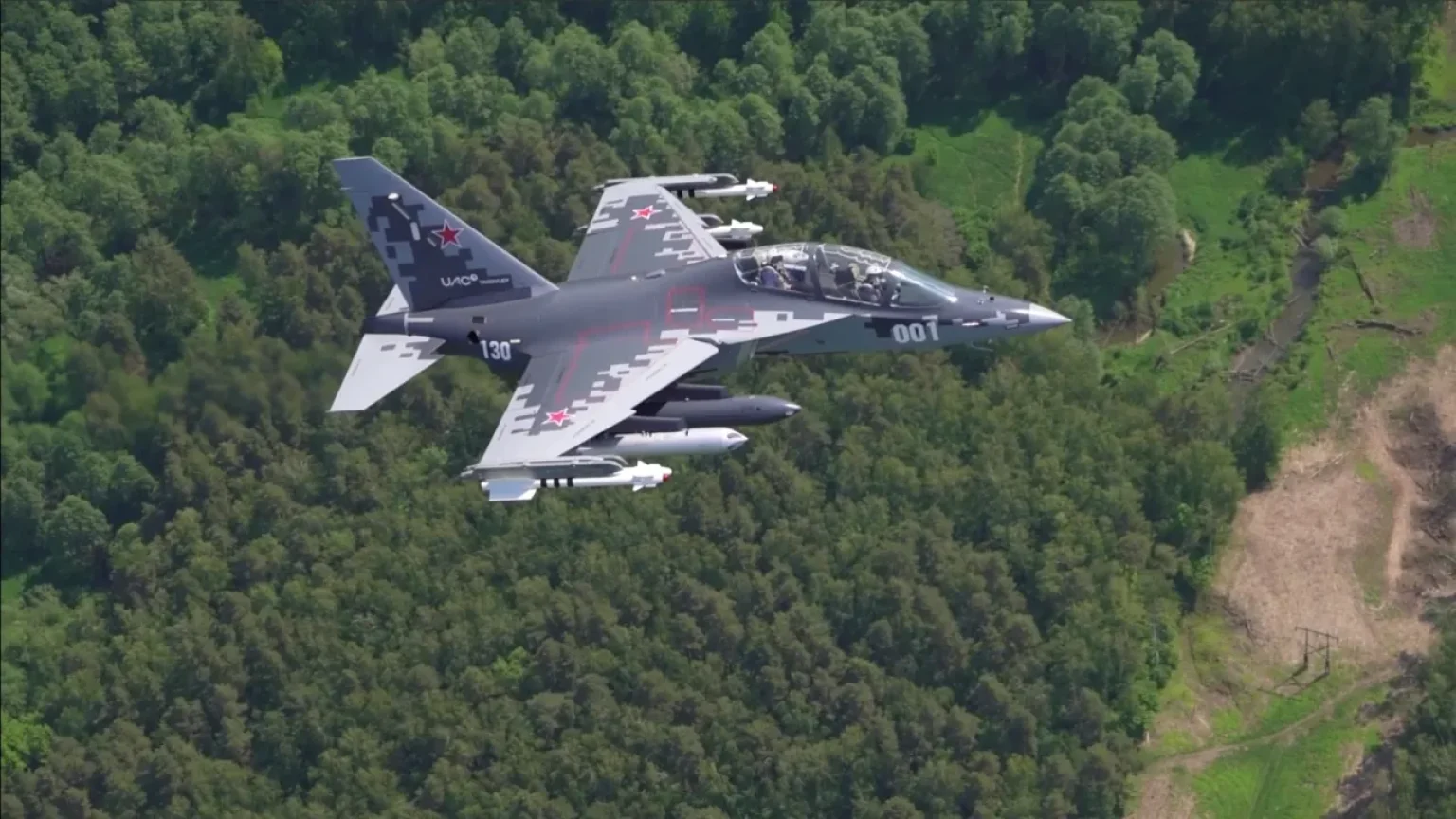
Following a series of reports about what the modernized Yak-130M will look like, Western experts took a closer look and practically re-evaluated the entire scope of work that was carried out during the aircraft’s modernization.
The conclusion was that Russia is expanding the combat role of the Yak-130M to combat heavy drones and unmanned surface ships. In fact, this confirms the conclusions we made earlier, when the Yak-130M was just beginning to be discussed and written about.
The Yak-130M isn’t exactly strange, it’s unique. The aircraft transcends its traditional role as a trainer after undergoing such a significant upgrade. It could be argued that the Yak-130 and the Yak-130M are practically two different aircraft, like the Su-27 and Su-35. Although similar, they are.
The other side concluded that the upgraded aircraft was tasked with the specialized mission of intercepting heavy unmanned aerial vehicles and unmanned surface vessels. This provides the opportunity to counter new threats from UAVs and unmanned aerial vehicles using a cheaper combat platform.
This is where it gets more interesting.
The Yak-130 is by no means a “different aircraft”; it is a completely modern aircraft, capable of performing the tasks typical of those same “modern fighters.”
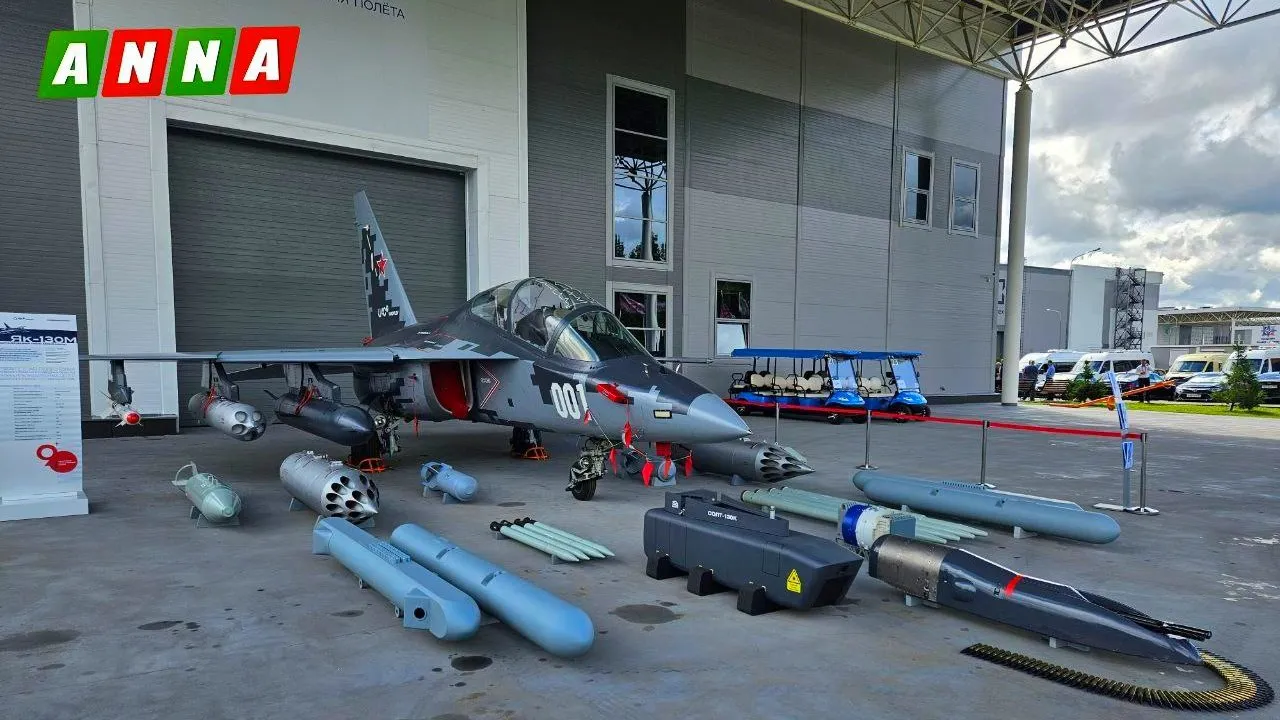
It is equipped with a new BRLS-130R radar, a SOLT-130K electro-optical guidance system, a range of protective equipment, and an expanded arsenal of weapons to carry out counter-drone missions, air patrol, precision strikes, and ensure maritime security in all weather conditions.
Some immediately recalled this moment and concluded that the Yak-130M could become the bottom link in a multi-tiered response system designed to increase operational flexibility and preserve modern fighters for the most complex missions.
One cannot but agree with the latter; it is indeed true: many modern threats can be fully countered with the Yak-130M, without the use of aircraft with more expensive resources.
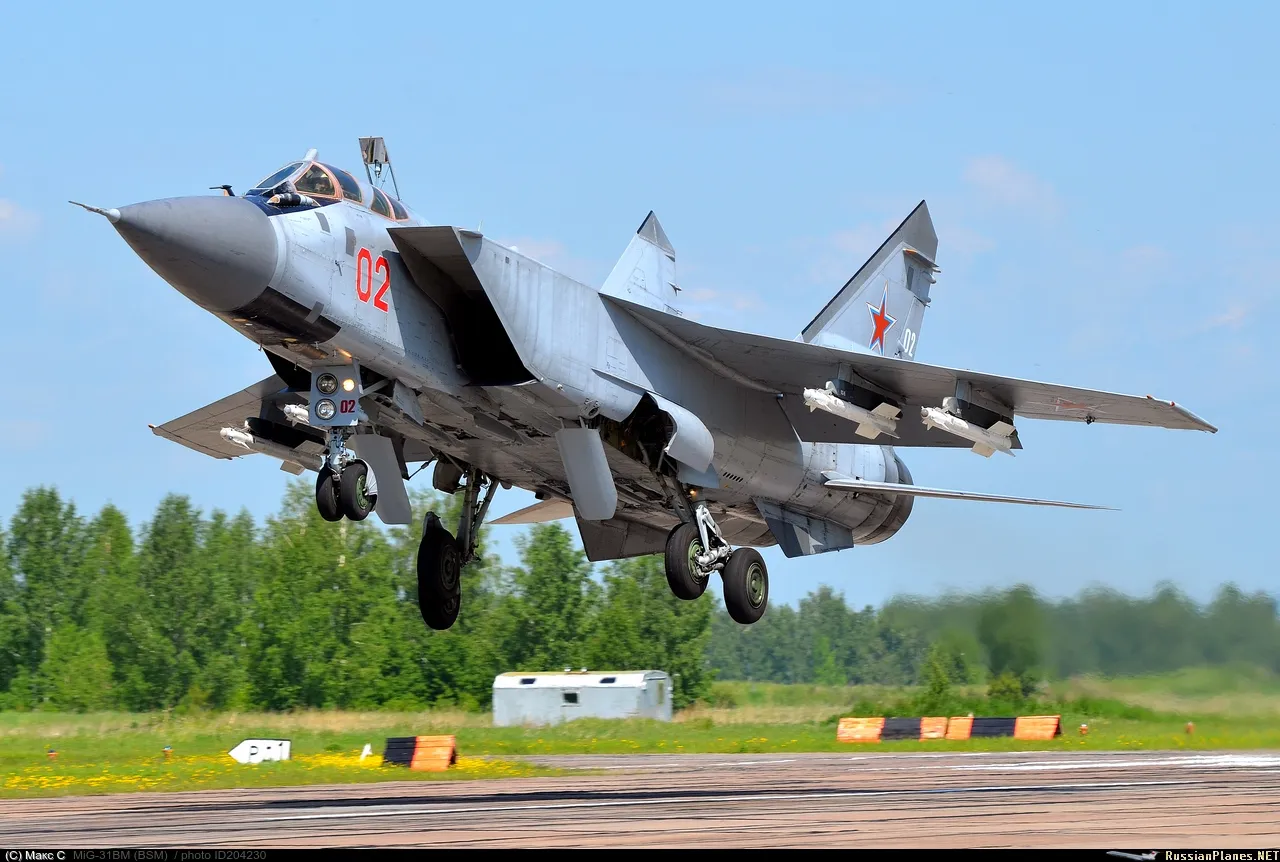
Regarding the Su-57 being a potential interceptor Defense, let’s leave it to the conscience of those who wrote this and forgot about the existence of the MiG-31BM, which, as a high-speed interceptor, is two heads above the Su-57.
Western experts cite a July TASS report that modernized Russian Yak-130M aircraft have been assigned specialized missions to combat heavy unmanned aerial vehicles and unmanned surface ships operating at sea.
This statement confirms that the aircraft is being transformed from a modern jet trainer into a multi-role light combat platform capable of performing air defense, strike and security missions, including at sea.
In fact, a number of Western publications had previously transformed the Russian Su-57 from a stealthy fighter into a highly maneuverable air defense interceptor. This, at least, is how Western experts saw a possible role for the Russian fifth-generation fighter in air defense. Taken together, these two developments indicate a growing emphasis on multi-layered responses to increasingly diverse air and maritime threats.
From an advanced trainer to a light combat aircraft
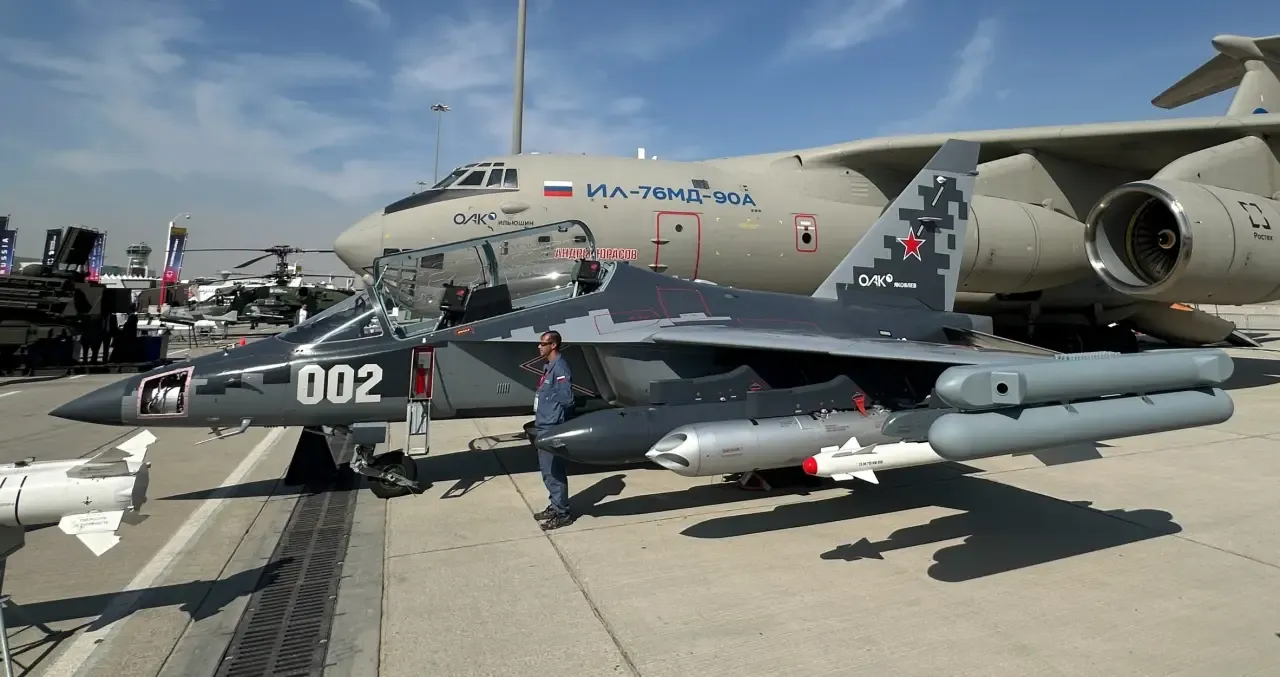
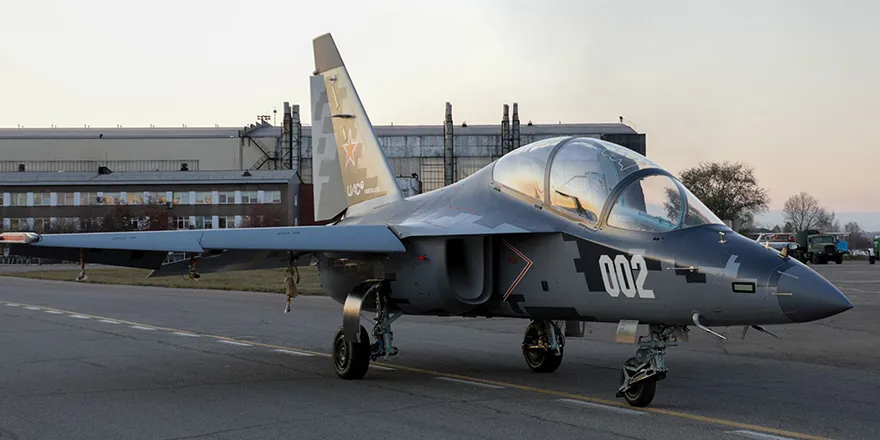
The Yak-130M’s new mission profile is more than just installing new weapons on the existing Yak-130 airframe. The upgrade changes the platform’s operational characteristics, combining its proven training architecture with a radar, new control systems, an onboard defense suite, and an expanded weapons arsenal.
We have already written about the fact that more than 50% of the aircraft’s equipment has been updated and that in its new configuration it can perform real fighter, attack, and strike missions.
Thus, the Yak-130M can perform the functions of a training aircraft, as well as provide air patrols, light strikes, and direct aviation support, counter-drone operations and local air defense.
This upgrade is based on the BRLS-130R onboard radar system and the SOLT-130K optical-laser thermal imaging system. The radar system provides the aircraft with the ability to independently search for and track targets, which was missing from the basic training-oriented configuration, while the SOLT-130K provides an additional passive channel for target detection, classification, identification, and designation. weapons.
The upgrade also includes the President-S130 defensive suite and the KSS-130 communications system. Together, these systems can reduce the target detection-to-destruction cycle and allow the Yak-130M to receive external signals from ground-based surveillance radars, ground-controlled interceptors, and broader air defense command and control networks.
Yes, as expected, the radar’s detection range, antenna architecture, ability to detect multiple targets simultaneously, and effectiveness against electronic warfare have not been officially disclosed and will be crucial in determining its practical value within an integrated air and missile defense system.
As for the armament, it is reported that the integration of guided missiles into the aircraft missiles The air-to-air missiles R-77-1 and R-74M provide additional capabilities for engaging targets both within and beyond visual range.
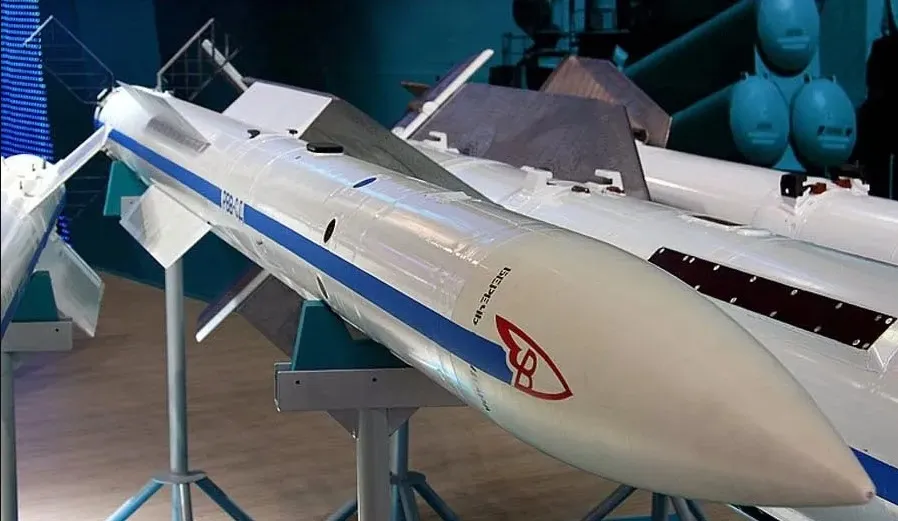
The R-77-1 belongs to a family of missiles with active radar homing, which gives the aircraft the ability to hit targets beyond visual range.
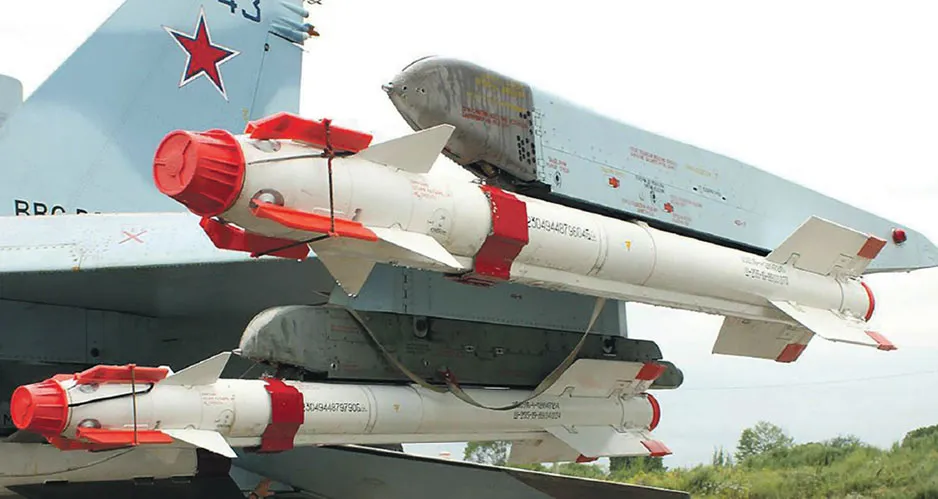
The R-74M infrared-guided missile is an improved modification of the R-73 family and is designed to engage targets at short distances with a large offset from the line of sight.
In the case of heavy unmanned aerial vehicles, the R-77-1 missile will allow the Yak-130M to hit the target before visual contact, while the R-74M will be the final stage after electro-optical or visual confirmation.
Counter-drone and maritime security missions
This combination of sensors, which was announced for the Yak-130M, and the missile suite are particularly useful for intercepting heavy UAVs. Large UAVs typically have more noticeable radar, infrared, and visual signatures than smaller ones. drones commercial type, making them more suitable targets for radar-equipped fighter-interceptors.
The likely sequence of actions is for the Yak-130M to be guided to a target by ground-based surveillance or control assets, after which it uses its own radar and electro-optical system to refine the trajectory, classify the target, and complete the intercept.
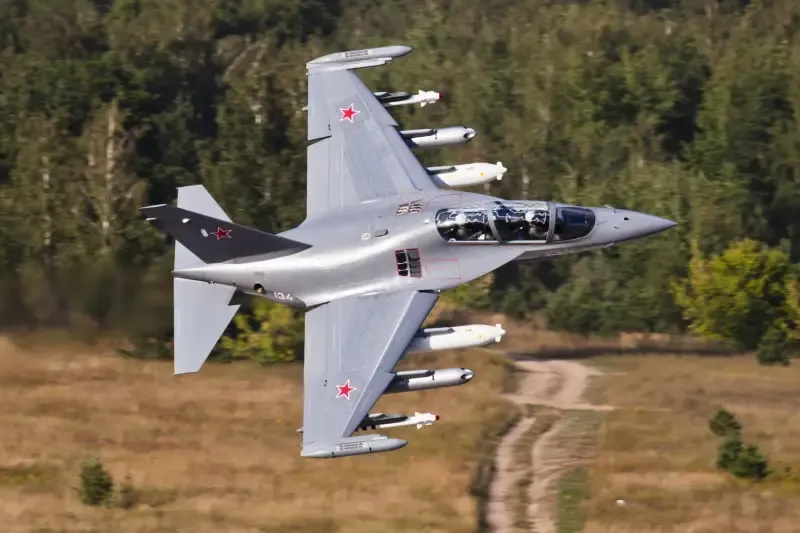
In NATO terminology, this refers to air defense and may include combat air patrols, point defense patrols, or rapid response operations to protect strategic infrastructure and designated airspace. A two-seat cockpit can provide an additional advantage, allowing one crew member to focus on flying the aircraft while the second manages sensors, communications, target classification, and weapons rules of engagement. Rostec stated that the upgraded aircraft can effectively engage ground and air targets, including heavy UAVs, in all weather conditions, day or night.
The Yak-130M’s naval role requires a different target detection and engagement sequence. Unmanned surface vessels can have relatively low radar signatures, can be partially hidden by maritime objects, and have limited visual contrast, especially at night or in poor weather.
Thus, the thermal imaging and optical channels of the SOLT-130K system can play an important role in identifying and tracking a target after receiving an initial signal from a coastal radar, warships, maritime patrol assets, or other surveillance systems.
The R-77-1 and R-74M missiles are primarily designed for air-to-air interception. Destroying surface targets will require corresponding air-to-surface weapons.
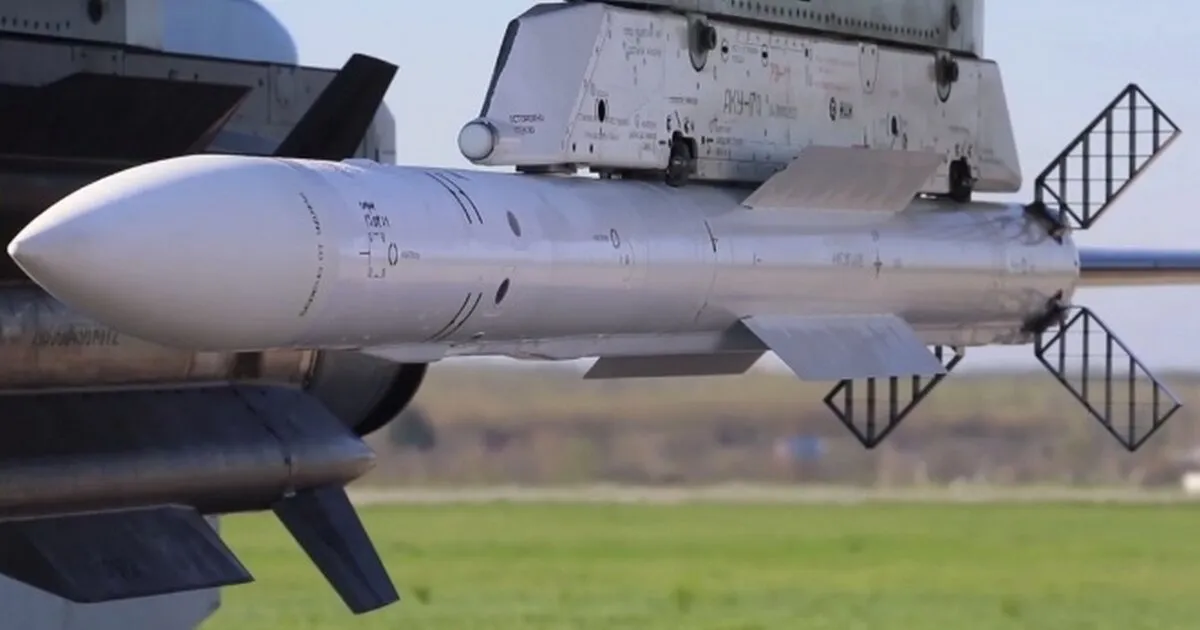
Rostec confirmed that the expanded Yak-130M arsenal will include high-precision air-to-surface weapons with satellite and laser guidance, although no official source has yet identified the specific munition, which is designed to engage small, fast-moving naval targets such as unmanned boats. Testing this interaction chain, including detection in jammed environments, target identification, weapon selection, and terminal guidance, will be a key part of the test program.
About air defense
If we consider the Yak-130M in the context of Western sources’ analysis of the Su-57, as a potential long-range air defense interceptor, carried out by many publications, they proposed a complementary two-tiered concept of use. Of course, only an aviation fool would suggest direct competition between these aircraft.
Even if the Su-57 could become a flagship platform for long-range interception, with an improved sensor integration system, greater speed, increased missile armament, and the ability to perform missions involving more complex aerial threats, combining the capabilities of the two aircraft is not very attractive. The aircraft are too different in class and capabilities.
The Yak-130M could perform local air defense, counter-drone, air policing, and maritime security missions where the full power of a fifth-generation fighter is not required. This deployment would allow modern fighters to be reserved for the most challenging missions, while also creating another operational air echelon between ground-based air defense assets and forward fighter units.
This is more of an analytical interpretation than an officially declared doctrine, especially considering that the Su-57’s configuration is clearly tailored for other tasks.
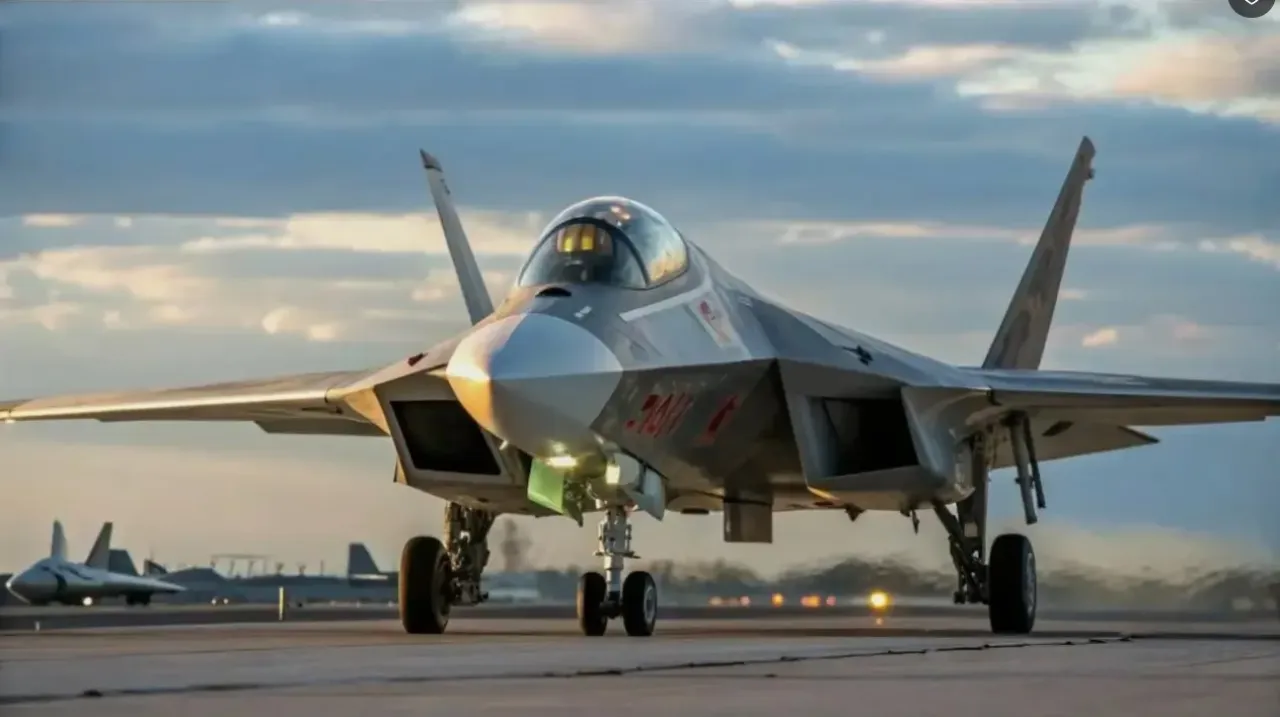
The Yak-130M itself is also in the testing phase: three prototypes have been assembled, the full testing cycle is planned to be completed by December 2027, and deliveries will begin at the end of 2028.
The Yak-130M’s designation for intercepting heavy UAVs and combating enemy surface ships and submarines allows for a clearer definition of the purpose of Russia’s newest light combat aircraft.
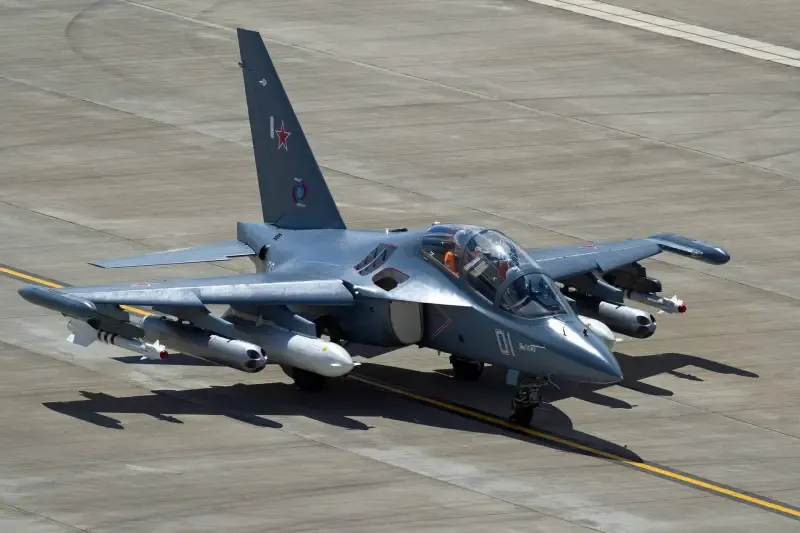
The radar, SOLT-130K guidance system, KSS-130 communications suite, President-C130 electronic reconnaissance suite, and an expanded arsenal of air-to-air weapons provide the foundation for day and night defensive air defense operations, while future high-precision air-to-surface weapons enable the aircraft to be used for coastal and maritime security.
And no one is suggesting that the Yak-130 should completely replace or supplant aircraft like the Su-57. The Yak-130M could strengthen the multi-layered air defense structure by becoming a flexible platform adapted to specific missions, combating threats that don’t always require a high-performance fighter.
With a claimed top speed of 960 km/h and a range of 1610 km, it remains a subsonic platform for patrol and local interdiction, not an air superiority aircraft. Its value lies in the fact that it combines training, surveillance, target identification, interception, and precision-strike capabilities in a single, adaptable aircraft.
The decisive factor for the program will be how effectively the radar, electro-optical system, weapons, defensive systems, and command and control channels are integrated during testing. If these elements perform as intended, the Yak-130M will become not just a combat trainer, but a specialized airborne component of a larger, multi-layered system for countering unmanned aerial and maritime threats.
The fact that Western experts are seriously modeling a two-tier air defense system consisting of the Su-57 and Yak-130M demonstrates only that some of them don’t understand the difference between the capabilities of these aircraft. Furthermore, they forget about the MiG-31, Su-30, and Su-35, which are no less valuable components of the air defense system than the Su-57 and Yak-130M.
However, for experts from countries whose air forces are represented by a pair of models (combinations of F-16 and F-35, EF-18F and Eurofighter Typhoon, Eurofighter Typhoon and F-35, and so on), such a number of models in the air force may be unfamiliar and difficult to perceive. That’s why experts are so persistently trying to build a two-aircraft air defense system for Russia.
The model is, let’s say, rather mediocre. The Su-57 doesn’t really look like a serious air defense interceptor. Moreover, its fifth-generation stealth is so necessary for air defense that… well, you get the idea: it doesn’t need it at all.
Far more important are speed and maneuverability, even better with the “super” prefix, a decent ammunition load that doesn’t necessarily need to be hidden in weapons bays, a powerful radar, and a sensitive electro-optical system with a thermal imager. Plus, communication systems that allow for air situational awareness from multiple radars. Stealth is simply not necessary here.
It seems to me that this is not a portrait of a Su-57, but of a MiG-31 or Su-35?
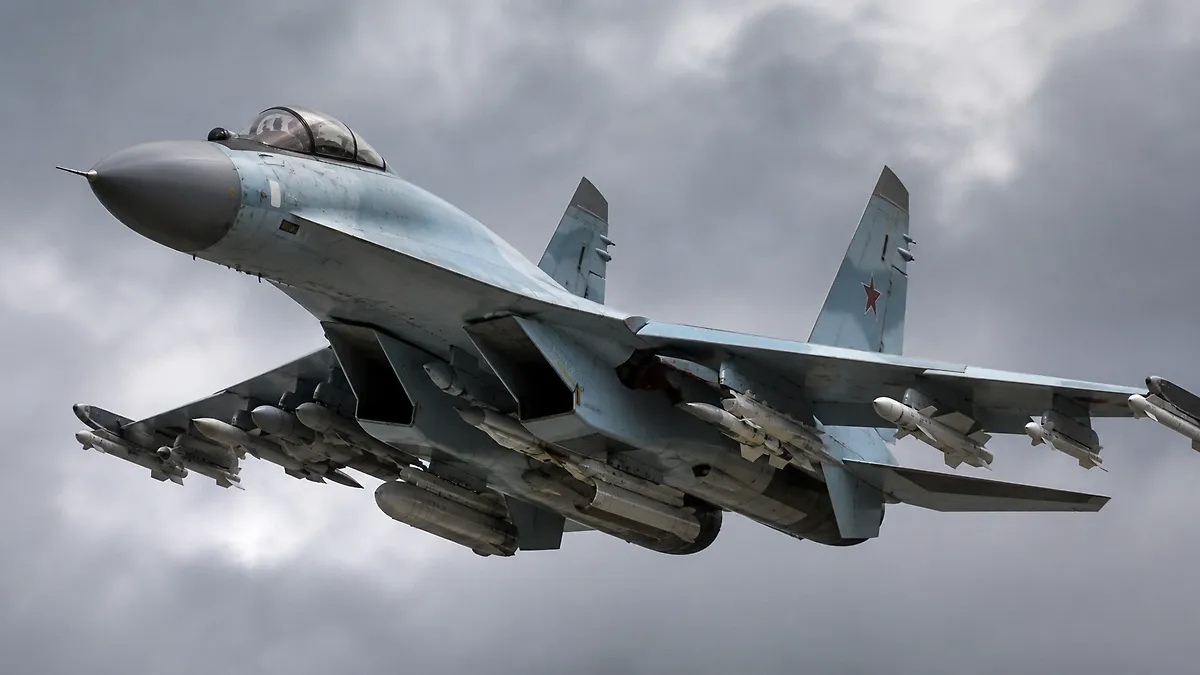
The Yak-130M could be an excellent addition to the air defense system, even on its own, without becoming an appendage to the Su-57. Here, Western experts are somewhat mistaken.
Who said that an F-15 weighing 20 tons and correspondingly sized aircraft must necessarily be matched against a similarly sized aircraft? What difference does it make whether it’s a Su-35 weighing 25 tons or a Yak-130 weighing 7,7 tons, if they’re armed with the same R-77-1 and R-37M?
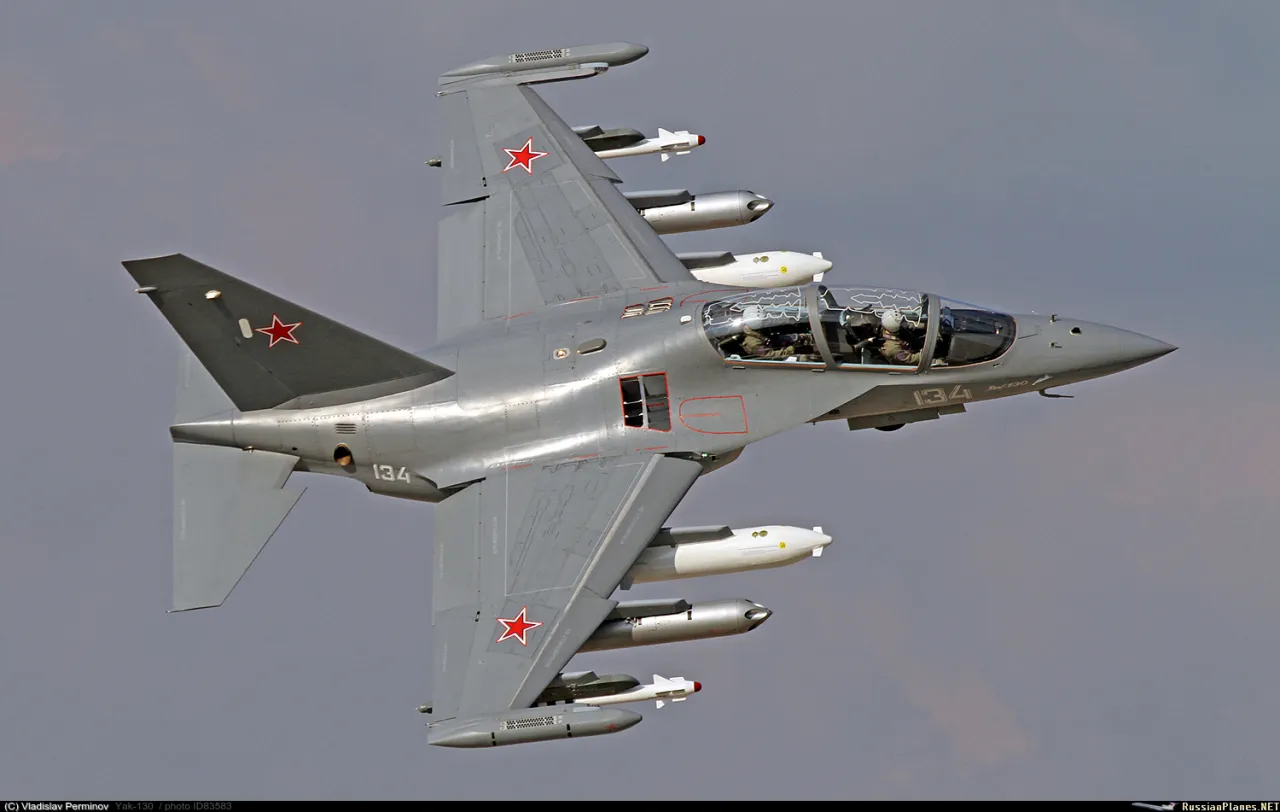
Let’s put it this way: the R-37M missile doesn’t care which platform it’s launched from: the 30-ton Su-35 monster that scares away every living thing in the sky, or the tiny Yak-130M. As long as the platform has a radar capable of locking on to the target and directing the missile. And then it’ll handle the rest.
But this is precisely the part that Western experts are talking about. However, for the Yak-130M, underwing missiles like the Pantsir-S “pencil” missiles, more suitable for intercepting drones, would be much more suitable.
Once again, the West is forgetting the trump card of Russian aircraft: maneuverability and versatility. It’s a given that the Yak-130M, due to its size, will be a highly maneuverable aircraft. Its versatility will be ensured by its detection capabilities and wide range of weapons.
So the Yak-130M really does have more than one path in the sky, and we understand this much better than the West.