
















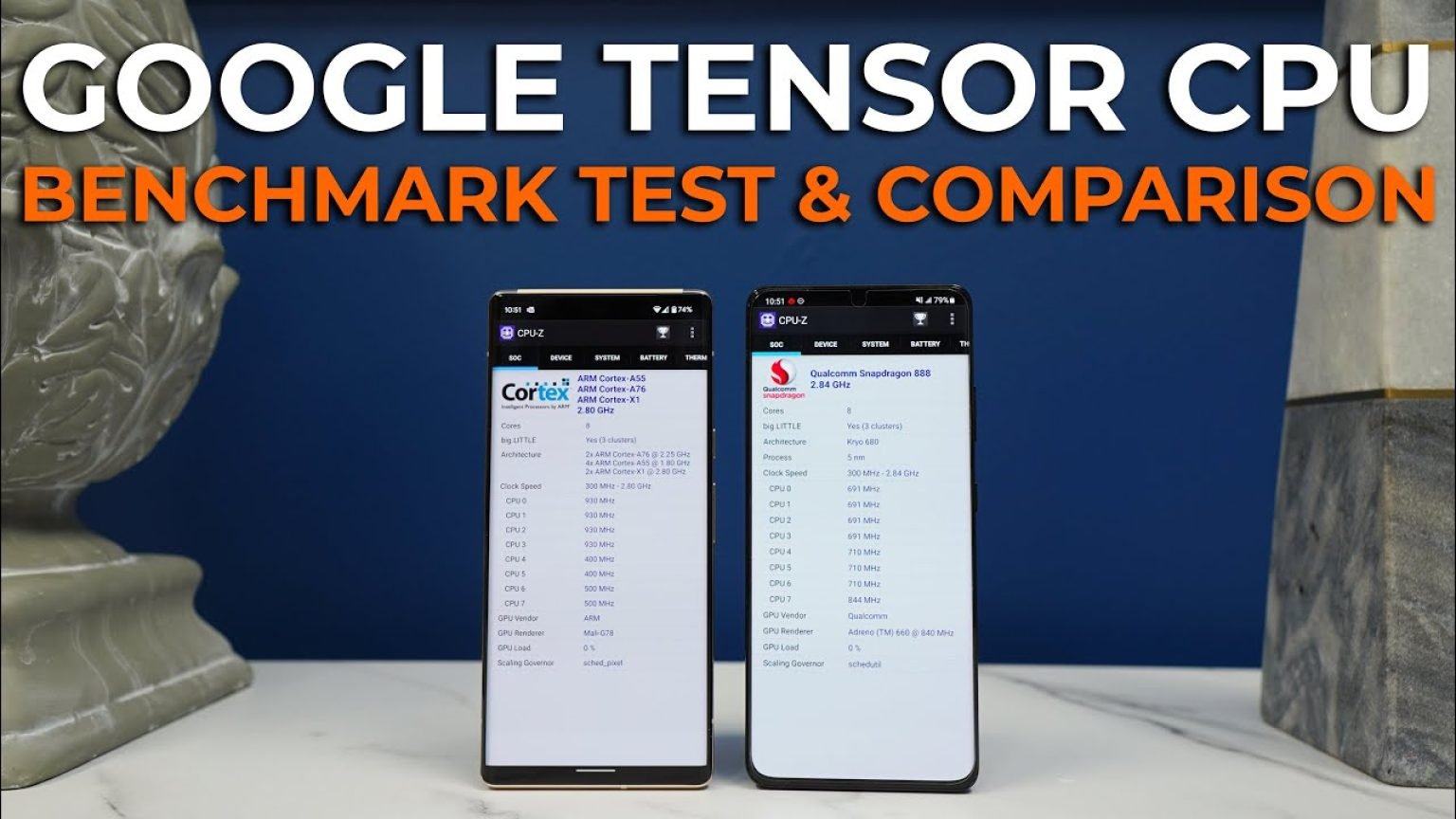
As the mobile processor landscape evolves beyond raw core counts and brute-force clock speeds, system architects are increasingly prioritizing heterogeneous computing, specialized neural processing units, and sustained thermal efficiency. In the flagship mobile arena, contrasting a bespoke silicon approach with a traditional high-performance foundry design provides critical insight into modern smartphone engineering. Today, we put Google’s custom-built Google Tensor processor head-to-head against Qualcomm’s powerhouse, the Snapdragon 888, to see how architectural philosophy translates into real-world benchmarks and day-to-day responsiveness.
Editorial Note: Draft generated for technical review. Verify live vendor pricing and compatibility before publishing.
| Component Name | Architecture/Platform | Memory Speed/Capacity | Thermal Output | Targeted Use Case |
|---|---|---|---|---|
| Google Tensor | Octa-core (2x Cortex-X1, 2x Cortex-A76, 4x Cortex-A55) + TPU | LPDDR5 | Optimized for localized ML workloads | AI-driven photography, speech recognition, and smart device experiences |
| Qualcomm Snapdragon 888 | Octa-core (1x Kryo 680 Prime, 3x Kryo 680 Gold, 4x Kryo 680 Silver) | LPDDR5 | High performance with aggressive thermal scaling under heavy load | Extreme mobile gaming, high frame-rate rendering, and general flagship compute |
Architectural Breakdown: Custom Silicon vs. Reference Design
The philosophical divide between the Google Tensor and the Qualcomm Snapdragon 888 centers on how each company approaches computing workloads. Qualcomm’s flagship relies on a proven tri-cluster layout manufactured on a 5nm process node, featuring a high-performance ARM Cortex-X1 prime core clocked up to 2.84 GHz. This design is engineered to win raw synthetic benchmarks, pushing maximum instructions per cycle across intensive compute pipelines.
Conversely, Google’s silicon strategy leverages a unique dual-core Cortex-X1 arrangement paired with legacy performance cores and a deeply integrated Tensor Processing Unit (TPU). Rather than chasing peak gigahertz figures on standard synthetic benchmarks, Google built its architecture to accelerate machine learning, natural language processing, and advanced computational photography directly on the device. For deeper specifications on underlying ARM architectures, developers and enthusiasts frequently consult documentation provided by ARM Holdings.
Benchmark Analysis and Sustained Performance
When subjected to intensive multi-core CPU and GPU benchmarks, the Snapdragon 888 consistently stretches its legs, posting higher scores in raw graphics rendering and traditional throughput tests. The Adreno 660 GPU handles high-framerate mobile gaming with notable vigor, though sustained sessions can trigger thermal throttling as the chipset approaches its maximum operating limits.
The Google Tensor, meanwhile, approaches performance through application-specific acceleration. While its traditional Geekbench scores trail slightly behind Qualcomm’s top-tier silicon, its dedicated TPU effortlessly outperforms the competition in localized machine learning tasks. Voice transcription, real-time language translation, and complex camera ISP processing happen nearly instantaneously, proving that real-world fluidity is not entirely dependent on raw CPU frequency.
Thermal Design and Platform Efficiency
Managing heat dissipation within the constrained chassis of a modern smartphone remains one of the toughest challenges in hardware design. The Snapdragon 888 has been widely documented for running warm under prolonged heavy loads, leading to performance dips as internal temperatures climb. Qualcomm addressed some of these efficiency hurdles in subsequent iterations, but first-generation implementations required aggressive thermal management strategies from device manufacturers.

School district ordered to apologize, pay $275k for forcing kids to hide Bibles
A Washington state school district must publicly apologize, pay $275,000 in attorney’s…

Shocking Crash: SUV Plows Directly Into Kensington U Haul Building Wall
PHILADELPHIA — Local authorities and emergency response crews rushed to a commercial…

Massive Rebuilding Effort Unveils Critical Progress 14 Years After Hurricane Sandy
PHILADELPHIA — Fourteen years after Superstorm Sandy carved a path of unprecedented…

Russia-linked Sandworm APT implicated in major cyber attack on Poland’s power grid
Russia-linked APT Sandworm launched what was described as the largest cyber attack…

Large-scale data breaches hit more Japanese firms
More Japanese companies have revealed that they have experienced major customer data…

Massive Late Summer Breakdown Reveals The 5 Best Prebuilt Gaming PCs Dominating 2026
As we navigate through the hardware cycles of late summer 2026, the…
Google’s implementation of the Google Tensor distributes workloads more evenly across specialized hardware blocks. By offloading computational photography and AI chores from the main CPU and GPU cores to the TPU, the system maintains a balanced thermal envelope during standard daily usage, minimizing localized hot spots during extended multitasking sessions.
Editor’s Takeaway: Who Should Buy?
Choosing between devices powered by these two distinct mobile platforms depends entirely on your usage priorities. If your workflow demands maximum graphical fidelity, high sustained frame rates in competitive mobile gaming, and brute-force processing power, platforms built around the Snapdragon 888 remain exceptionally capable.
However, for users who value deep software integration, cutting-edge computational photography, and responsive machine learning features, the Google Tensor demonstrates that intelligent silicon design often outweighs raw benchmark scores in daily user experience.
- Pros: Excellent machine learning acceleration, fluid UI integration, innovative custom hardware approach.
- Cons: Traditional synthetic CPU/GPU benchmarks lag behind direct competitors; can run warm under sustained heavy loads.
- Best For: Mobile photographers, AI application users, and enthusiasts prioritizing software intelligence over raw processing numbers.