











The 130th Airlift Wing conducted split-site operations between West Virginia and Michigan while sustaining command and control and responding to simulated drone attacks. The exercise tested how U.S. air mobility forces can remain operational from dispersed locations when major bases face precision-strike and unmanned-aircraft threats.
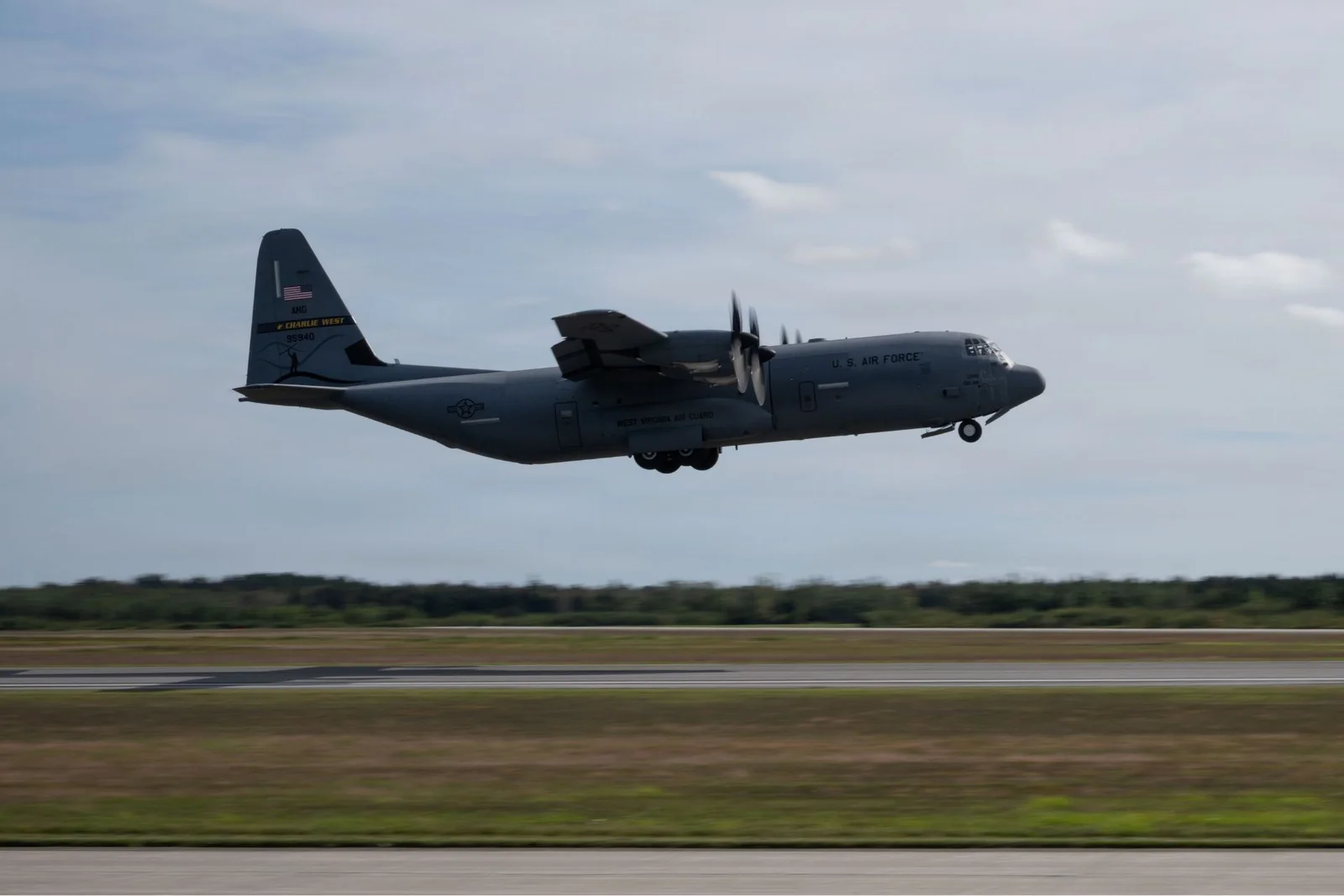
The wing deployed a forward element to Alpena Combat Readiness Training Center while retaining command functions in Charleston and using Multi-Capable Airmen to support security, maintenance, and logistics under degraded conditions. Its eight C-130J-30 Super Hercules aircraft provide the tactical airlift needed to move personnel, equipment, and spare parts between distributed sites, making mobility and local base defense central to the Air Force’s Agile Combat Employment model.
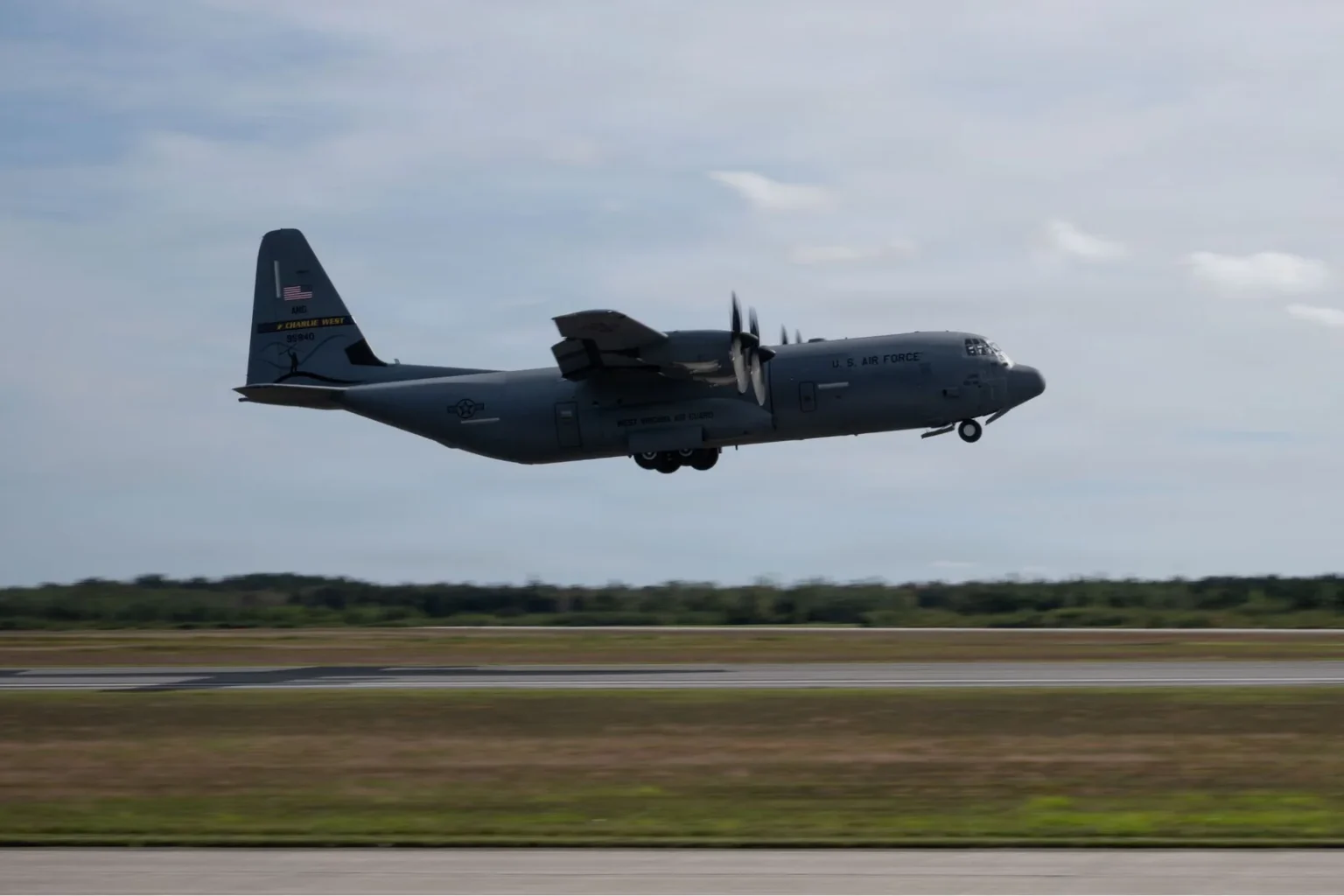
A C-130J-30 Super Hercules assigned to the 130th Airlift Wing takes off from Alpena CRTC in Michigan on September 19, 2026, during Operation Northern Vigilance, an exercise testing Agile Combat Employment and split-site operations. (Picture source: US DoD)
This approach directly reflects the Agile Combat Employment concept, or ACE, which seeks to reduce reliance on a small number of large air bases by using a wider network of smaller and dispersed locations. For the U.S. Air Force, the objective is not simply to move aircraft. It is also to complicate adversary targeting, preserve options when infrastructure becomes unavailable, and sustain operations with smaller detachments. This model accepts greater logistical complexity in exchange for improved resilience, particularly against long-range precision weapons.
According to information published on September 20, 2026, by the U.S. Department of Defense, Northern Vigilance ran from September 14 to 20 and placed the forward detachment in a simulated contested, degraded and operationally limited environment. The training included an unmanned aircraft systems threat component. Actual drones were flown over the forward location to represent hostile aircraft potentially carrying payloads, requiring personnel to identify the threat, raise the alarm and apply established base defense and protection procedures.
This aspect gives the exercise relevance beyond a routine Air National Guard training event. A smaller ACE location has less defensive depth than a major air base, while a relatively simple drone can disrupt ground operations, threaten personnel, or force temporary suspension of activity. Northern Vigilance therefore tests less the performance of an advanced interception system than a basic requirement for the survival of a dispersed location: rapid threat recognition, warning distribution and the ability to continue operating after disruption.
DKnife toolkit abuses routers to spy and deliver malware since 2019
DKnife is a Linux toolkit used since 2019 to hijack router traffic…

Hackers exploit unsecured MongoDB instances to wipe data and demand ransom
Over 1,400 exposed MongoDB servers have been hijacked and wiped by hackers,…

THE NEW WAR propaganda MACHINE: How Jon Stewart’s Production Network Built Youtube’s Top Pro-Zelensky Narrative Channel
NEW YORK — Behind the polished graphics and high-production military analysis on…

"Their Own Country": Quebec Elects Separatists Vowing To Break From Canada
Quebec's separatists are returning to government with a promise to take the…
Uprising In Ceuta: Locals Have Had Enough Of Migrant Invasion
Authored by Steve Watson via Modernity News,In the complete absence of any…

Microsoft Patch Tuesday security updates for February 2026 fix six actively exploited zero-days
Microsoft Patch Tuesday security updates for February 2026 fix six actively exploited…
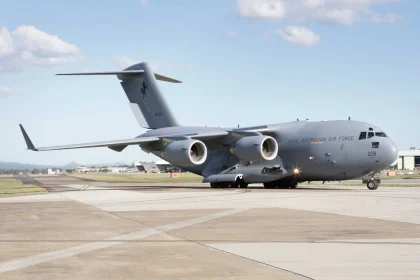
The mobility of this architecture relies in part on the 130th Airlift Wing’s eight C-130J-30 Super Hercules aircraft. The stretched variant has a fuselage approximately 4.58 meters longer than the standard C-130J and can carry up to eight 463L pallets or 128 personnel depending on configuration. It is powered by four Rolls-Royce AE 2100D3 turboprop engines driving six-bladed composite propellers. At a weight of 135,000 pounds, its published landing distance is about 914 meters, a characteristic suited to shorter runways that may be used in distributed operations.
In this context, the C-130J-30 serves a role beyond conventional cargo transport. Within an ACE structure, it can move maintenance teams, equipment, spare parts, and personnel between multiple operating locations, then redirect support if one site becomes unavailable. Tactical airlift therefore becomes part of the survivability model. The 130th Airlift Wing’s recent operational experience also supports this role. During its first operational deployment with the C-130J-30, the unit logged more than 850 flight hours and moved over 1,100 tons of cargo in East Africa.
Northern Vigilance also tests whether dispersed forces can function with fewer specialists at each location. Communications personnel take part in security-related tasks, while avionics technicians work alongside crew chiefs. This Multi-Capable Airman concept is central to dispersed operations because a force spread across several sites cannot reproduce the staffing and infrastructure of a main operating base at every location. The U.S. Air Force has already applied similar methods in the Indo-Pacific, where personnel are trained to perform tasks beyond their primary specialty in support of operations from austere positions.
The exercise also takes on an unexpected real-world dimension when an F-16 Fighting Falcon from the Texas Air National Guard’s 149th Fighter Wing crashes near Traverse City, Michigan. The pilot ejects, and members of the 130th Security Forces Squadron in the region shift from the exercise scenario to securing the actual crash site. The incident illustrates a basic requirement of ACE: dispersed units must be able to change missions quickly without waiting for a complete support structure to be rebuilt around them.
Northern Vigilance combines four elements: geographically separated command and execution, tactical airlift able to support several locations, personnel trained for multiple functions, and local defense against drone threats. This structure reduces dependence on a single point of failure, but it also introduces constraints. Smaller locations must remain supplied, connected, and protected, while dispersion increases the demand for secure communications and coordinated logistics.
For Washington and its allies, the implications extend beyond Michigan. In the Indo-Pacific, the U.S. Air Force is preparing units to operate across networks of dispersed locations to reduce exposure to long-range strikes. In Europe, the same approach is relevant as allied air forces adapt to the spread of missiles and drones capable of targeting air infrastructure. Northern Vigilance therefore illustrates how sustaining U.S. airpower increasingly depends on mobile support, resilient command arrangements, and the ability to continue operating when the air base itself becomes a target.
Written By Erwan Halna du Fretay – Defense Analyst, Army Recognition Group
Erwan Halna du Fretay holds a Master’s degree in International Relations and has experience studying conflicts and global arms transfers. His research interests lie in Security and strategic studies, particularly the dynamics of the defense industry, the evolution of military technologies, and the strategic transformation of armed forces.