















Researchers found malicious npm and PyPI packages tied to a fake recruitment campaign linked to North Korea’s Lazarus Group.
ReversingLabs researcher uncovered new malicious packages on npm and PyPI connected to a fake job recruitment campaign attributed to the North Korea-linked Lazarus Group. The campaign uses deceptive hiring themes to trick developers into downloading infected packages, continuing the group’s efforts to target the software supply chain.
“The ReversingLabs research team has identified a new branch of a fake recruiter campaign conducted by the North Korean hacking team Lazarus Group.” reads the report published by ReversingLabs. “The campaign, which the team named graphalgo, based on the first package included in this campaign in the npm repository, has been active since the beginning of May 2025.”
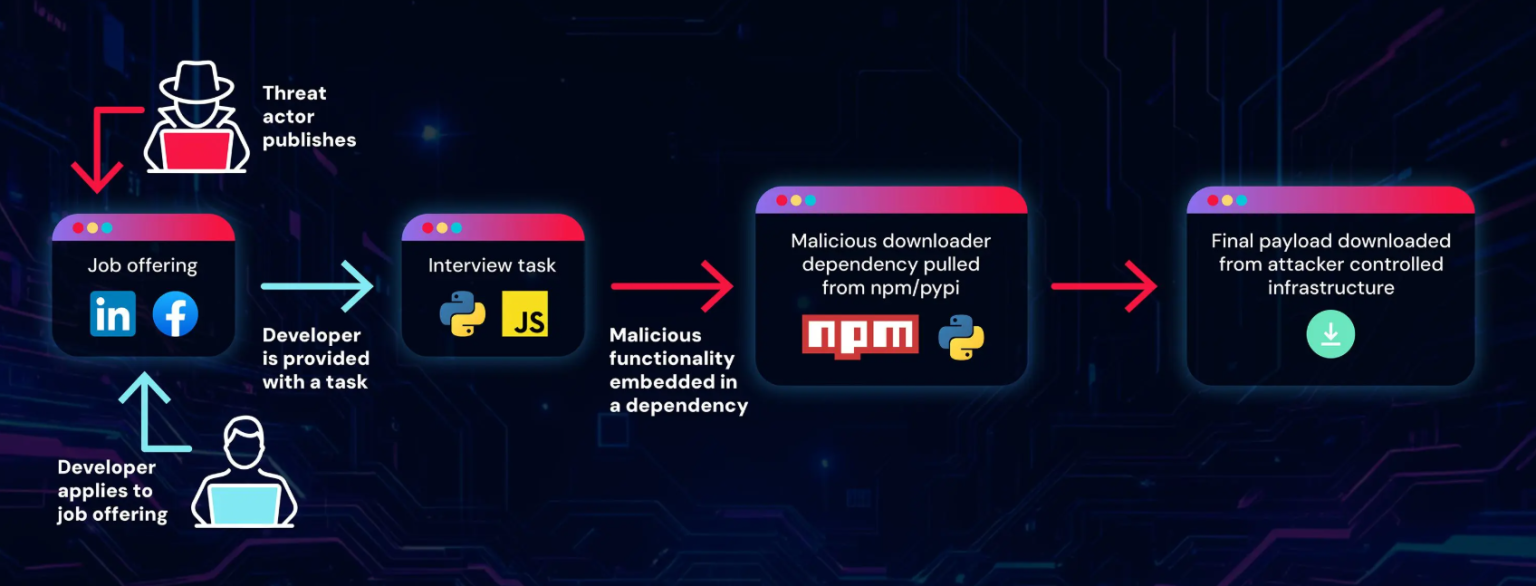
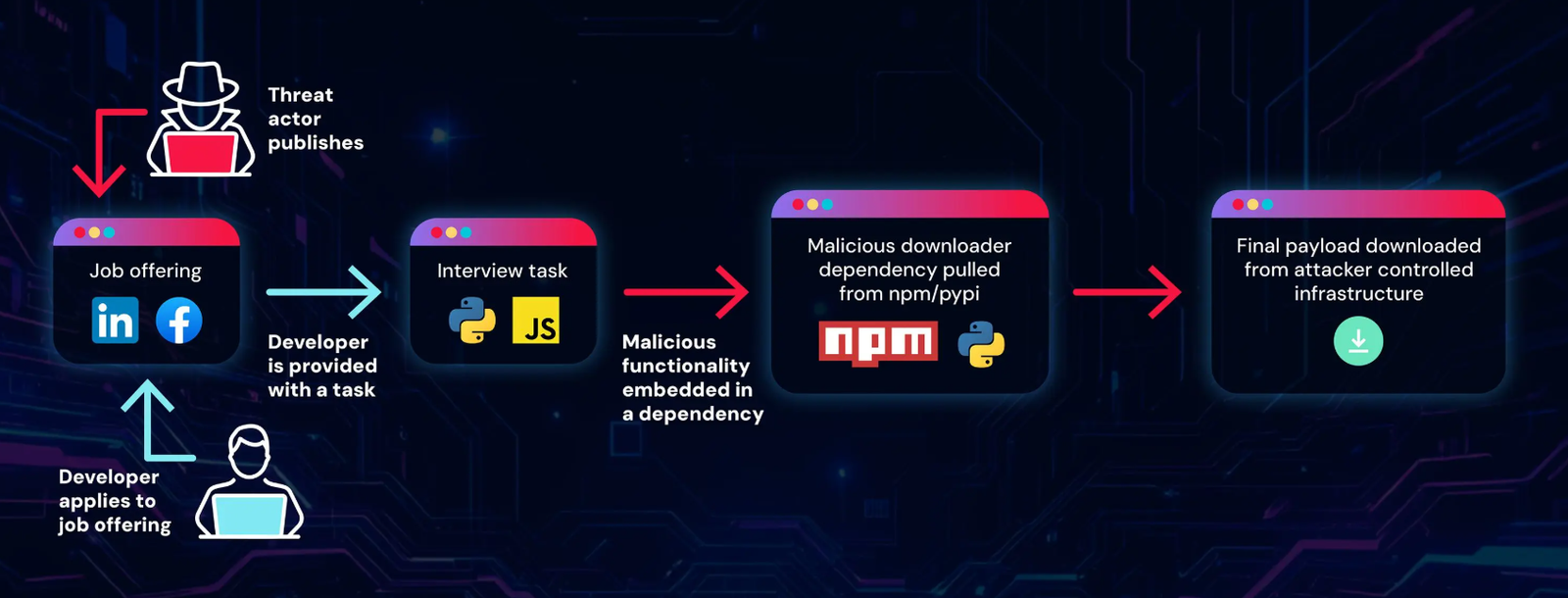
The campaign, tracked as ‘graphalgo’, has been active since May 2025 and targets JavaScript and Python developers with fake cryptocurrency recruiter tasks. Attackers approach victims on LinkedIn, Facebook, and Reddit, posing as a blockchain company. Malicious code is hidden through multiple public platforms, including GitHub, npm, and PyPI. The researchers noticed that one npm package, bigmathutils, gained over 10,000 downloads before attackers pushed a malicious update.
The Graphalgo campaign is a modular, multi-stage operation designed to stay active even if parts are exposed:
Phase 1 – Fake company:
Attackers created a fake blockchain firm, Veltrix Capital, with websites and GitHub organizations that look legitimate but lack real leadership details. When one setup risks exposure, they spin up a new company, domains, and AI-generated content to rebuild trust.
Phase 2 – Interview tasks:
The fake company publishes GitHub “job interview” repositories in Python and JavaScript. These projects look harmless, but they secretly depend on malicious npm or PyPI packages. When candidates run the tasks, the malicious dependency executes on their systems.

Why Samsung Odyssey Ark Dominates As The Best Gaming Monitor Of 2022
Welcome back to the Philly PI hardware desk, where we put the…

We’ve gathered the top pre-built gaming desktop deals. We’re constantly updating this list with the best discounts across all retailers.
We're keeping an eye out for the best deals on prebuilt gaming…

Turkey Recruits Trump Insiders For New Washington Lobbying Push
Via Middle East Eye The Turkish government hired a lobbying firm with close ties…

Xbox Is Paying A Lot Less Than Normal For Kojima’s Physint, Possibly Under $200 Million – Report
New Xbox CEO Asha Sharma has made a lot of big moves…

Uprising In Ceuta: Locals Have Had Enough Of Migrant Invasion
Authored by Steve Watson via Modernity News,In the complete absence of any…

RADAR LOCK: The Ultimate Guide to Ace Combat’s Wildest Original Aircraft!
(Notice: Put on your flight helmet, grab your mad-catz controller, and blast…
Phase 3 – Recruiting:
Victims are lured through Reddit, Facebook groups, LinkedIn, and direct recruiter messages. Some recruiters appear real, adding credibility, but disengage when questioned about the company.

Phase 4 – Malicious dependencies:
The backend relies on malicious open-source packages hosted on npm and PyPI. Early “graph-” packages impersonate popular libraries, while later “big-” packages build user trust first, then deliver malware in delayed updates.
Phase 5 – Final payload:
Infected systems download a RAT that supports file access, command execution, and process control. The malware uses token-protected C2 communication and checks for crypto wallets like MetaMask, pointing to financial theft motives.

North Korean threat actors, widely linked to the Lazarus Group, have a long track record of abusing npm and PyPI. In 2023, researchers exposed the VMConnect campaign, where fake PyPI packages tied to sham GitHub repos delivered malware. A year later, the operation evolved into fake recruiter coding tests: victims ran malicious packages disguised as interview tasks, triggering second-stage downloads. Reports from other cybersecurity firms, including Phylum, Unit 42, Veracode, and Socket, documented similar npm campaigns.
Attribution to Lazarus is based on repeated patterns: fake job interviews, crypto-focused lures, multistage encrypted malware, delayed malicious updates, token-protected C2, and GMT+9 timestamps. The campaign’s modular design allows attackers to swap fake “frontends” while reusing backend infrastructure. With new package waves and payload variants still emerging, the operation appears ongoing and highly sophisticated.
“Evidence suggests that this is a highly sophisticated campaign. Its modularity, long-lived nature, patience in building trust across different campaign elements, and the complexity of the multilayered and encrypted malware point to the work of a state-sponsored threat actor.” concludes the report. “Fake interviews as the initial contact vector, as well as a cryptocurrency-focused story and malware, together with other techniques mentioned in this blog post, point to North Korea’s Lazarus Group. “