





The greatest threat to the U.S. Dollar isn’t a shadowy cabal in Beijing or a digital coin—it’s the person in the mirror.
For decades, we’ve been told that having the world’s reserve currency is our “exorbitant privilege.” It lets us print money, export our inflation, and dominate global finance. But here is the dirty secret the ivory tower types won’t tell you: that dominance is a parasite eating our industrial heart from the inside out.
While the suits in Manhattan get rich on paper, the people in Ohio and Pennsylvania are left with shuttered factories and hollowed-out towns.
The “Uniparty” of Finance vs. The Rust Belt
Let’s get real. The dollar’s status as a global kingpin makes our currency “strong,” which sounds great until you try to sell a tractor made in Illinois to someone in Brazil. A “strong” dollar makes American goods too expensive to buy and foreign imports too cheap to resist.
Trump Regime Unraveling as War Decimates Global Energy Infrastructure
In March 2026, President Donald Trump's second term faces mounting chaos as…

Beyond the Icon: The Allegations Shaking the Legacy of Cesar Chavez
In a profound shift for American labor history, the reputation of Cesar…

More details on Jesús Luzardo’s contract extension – Phillies Nation
The Phillies on Tuesday made Jesús Luzardo’s five-year contract extension official. The…

Air Supremacy vs. “Sambush”: US Super Hornets Over Dezful
The skies over western Iran have become a playground for U.S. Navy…

The White-Collar Collapse: Why the AGI Arrival Means Your Job Is Dying
The window to "prepare" just slammed shut. The era of the comfortable…

Student Abuse Scandal Rocks Jewish Academy – Teacher Elias Farley Now Out on Bail
This is every parent's nightmare.A 26-year-old former science teacher at Donna Klein…
It’s a structural headwind that no amount of “Buy American” stickers can fix.
The benefits? They’re invisible—accruing in the “citadels of high finance” where numbers move across screens. The costs? They’re visceral. They look like lost contracts, rusted-out assembly lines, and a sense that the game is rigged. Is it any wonder populist rage is boiling over?
The Trump Tariff: A Band-Aid on a Bullet Wound
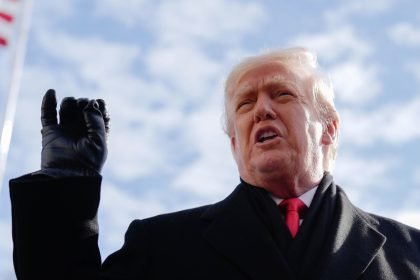
Enter Donald Trump. He saw the grievance, he felt the pulse, and he offered a “simple” cure: Tariffs.
Now, I get the appeal. Someone hits you, you hit back. But here’s the problem—tariffs are a 19th-century weapon being brought to a 21st-century structural war. Trump talks about tariffs like they’re a panacea, a magical shield that will restore our industrial prowess.
Spoiler alert: They won’t. Why? Because tariffs can’t override the gravity of a reserve currency. As long as the rest of the world is desperately shoveling their savings into U.S. markets to keep them safe, the dollar will stay artificially high. You can tax a Chinese steel beam all you want, but if the dollar keeps climbing, our own exports stay dead in the water.
“Tariffs are basically taxing the many to subsidize the few. They reshuffle the deck chairs while the Titanic is still taking on water.”
The Mirage of Easy Fixes
Mainstream economics (yeah, I know, bear with me) tells us that a trade deficit isn’t caused by “cheating” overseas—it’s caused by the gap between what we save and what we spend. If we borrow from the world to fund our lifestyle, that debt is the trade deficit.
When we slap on tariffs, it usually backfires:
-
Prices go up for you at the grocery store.
-
Supply chains break, hurting the very companies we’re trying to save.
-
The Dollar gets even stronger, as capital flees to the “safety” of our protected markets, making us even less competitive.
It’s a feedback loop of failure.
The Real Endgame: Losing the Home Crowd
Empires don’t usually collapse because their rivals find a better currency. They collapse because the people at home stop believing in the system.
The real danger to the dollar isn’t the “BRICS” or some new gold-backed rival. It’s the American voter who is tired of living with the consequences of a financial system that prioritizes Wall Street over Main Street.
If the GOP—or the Democrats, for that matter—keep fighting the wrong battle with the wrong weapons, they won’t just lose the trade war. They’ll lose the domestic consensus that makes the dollar worth the paper it’s printed on.
Are we willing to trade global financial power for a functioning middle class, or are we too addicted to the “privilege” to stop the rot?