







Remember the last time you opened an open-world RPG, took one look at the map, and instantly felt exhausted?
You know the feeling. A screen buried under a mountain of colorful question marks. A quest log that looks less like an epic adventure and more like a corporate spreadsheet. “Go here. Fetch 5 glowing mushrooms. Talk to this villager with a glowing exclamation mark over their head. Repeat.”
For a huge portion of gamers, traditional mission progression is a massive vibe-killer. It shatters immersion, treats the player like a delivery driver, and completely suffocates the joy of discovery.
When you force players down a rigid, hand-held path, you aren’t making an adventure game—you’re making a checklist simulator.

Why Can’t Pandas Get It On? The Answer to Their Poor Sex Lives May Lie in Their Intestines
Poor pandas. While the iconic bear species of China is no longer…

Falklands Emerge As US Leverage Tool Against Britain To Ramp Defense Spending
A new report from The Telegraph says the Trump administration is using…

New Fluke USB Acoustic Imager Smartphone Camera
Fluke has launched a more affordable acoustic imaging camera, model II01, that…

Wanted: Suspects for Shooting Incident in the 22nd District [VIDEO]
The Philadelphia Police Department and the Shooting Investigation Group is asking for…
THE NEW WAR propaganda MACHINE: How Jon Stewart’s Production Network Built Youtube’s Top Pro-Zelensky Narrative Channel
NEW YORK — Behind the polished graphics and high-production military analysis on…

US-Backed SDF Leader Joins Sharaa Regime As Presidential Advisor After Kurdish Force Dissolved
Via The Cradle Self-proclaimed Syrian President Ahmad al-Sharaa has appointed Kurdish leader…
The industry’s smartest developers are moving away from this structure entirely, pivoting toward a concept known as Emergent Objective Design. Instead of pushing a mission onto the player, the game builds an organic, living ecosystem where the player’s own curiosity pulls the goals out of the world.
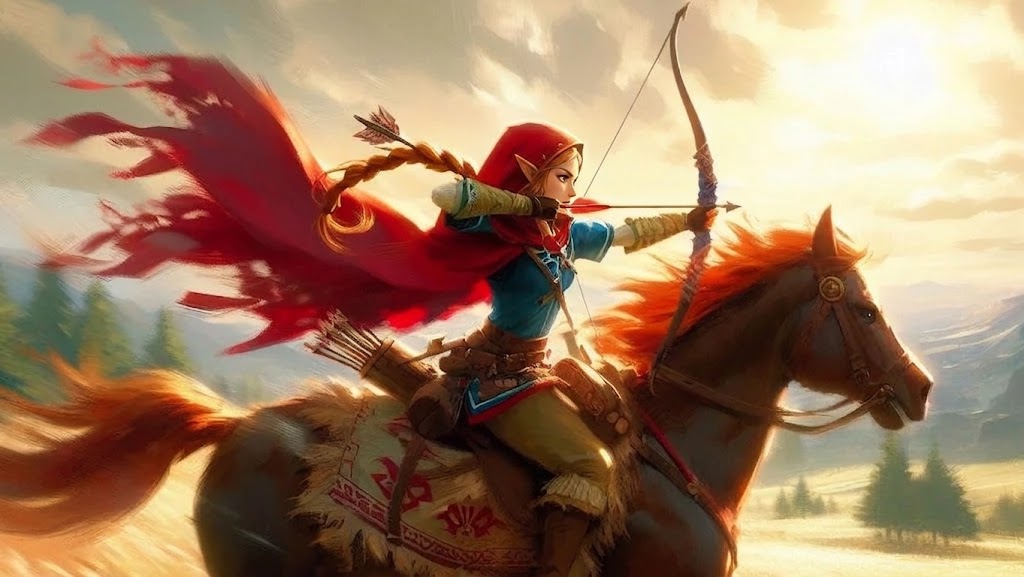
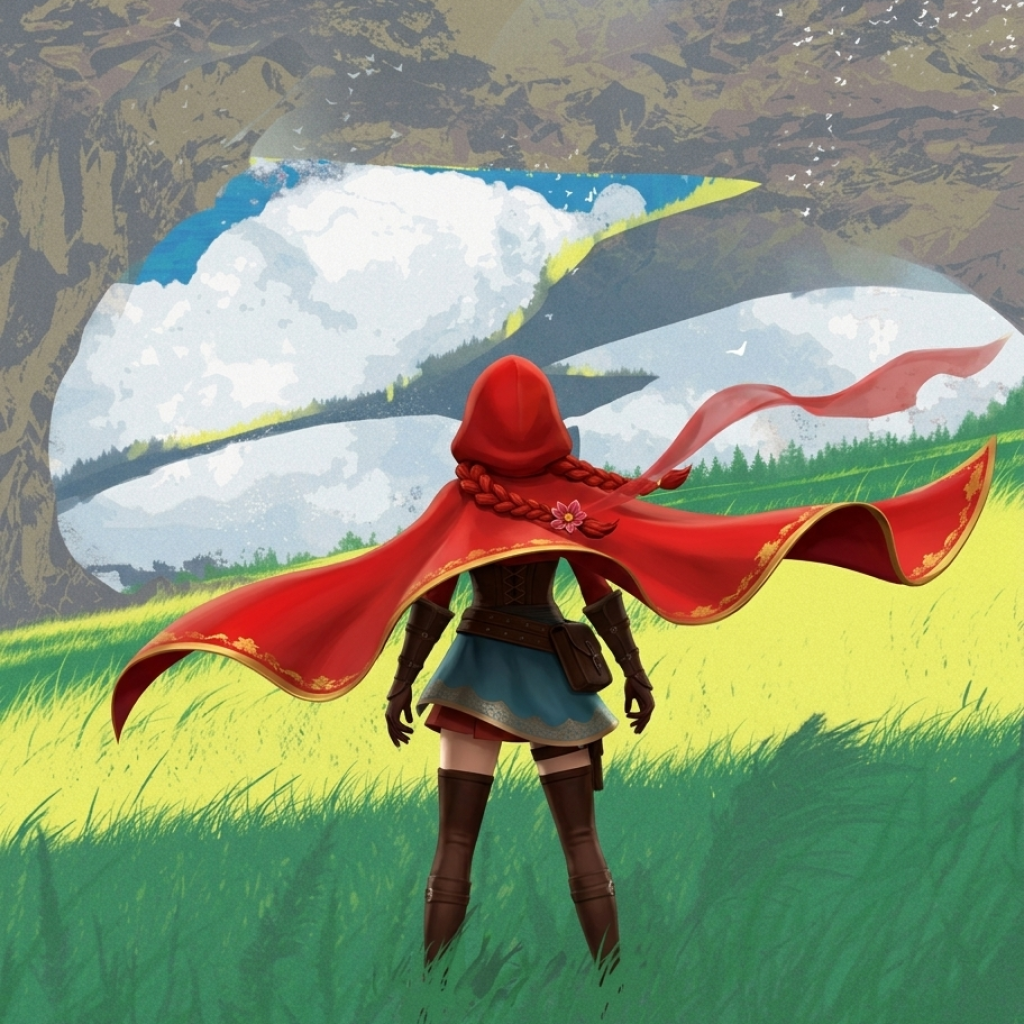
By fusing the breathtaking visual navigation of Elden Ring with the survival-driven friction of The Legend of Zelda: Breath of the Wild, upcoming indie action-RPG Little Red is designing a masterclass in organic, mission-free progression.
Here is a deep dive into how changing your UI and world-building can fix the open-world fatigue—and how Crosswind Studios is applying it to the magical world of Eldergrove.
The Core Problem with Modern Quest Logs
Traditional quest tracking relies on a passive player loop:

The issue here is psychological. When a giant golden path highlights the exact route on your mini-map, your brain stops looking at the beautiful, hand-painted environment. You start playing the UI. You aren’t exploring a mysterious forest; you’re just following a digital GPS.
Emergent Objective Design flips this completely. It relies on total player autonomy. The game sets the rules of the universe, drops a massive landmark on the horizon, and trusts you to figure out how to bridge the gap.
1. Organic Navigation: Ditching the Mini-Map for “The Crimson Guide”
If you remove the mini-map and the floating compass markers, how do you prevent the player from getting hopelessly lost? You make the world itself speak to them.
In Little Red, development is leaning into a striking, painterly visual style with high-contrast color theory. This isn’t just an art choice; it’s a core navigation mechanic.
Visual Landmarks & Map Sketches
Instead of opening a digital menu to look at a satellite map, players navigate through diegetic, in-world cues inspired by Elden Ring:
- The Spire of Rime: High up on the Frozen Heights, a corrupted, monolithic Fae structure pulses with a sickly, monochrome energy. Its stark, black obsidian architecture cuts sharply through the bright white snowfields. Because it’s visible from almost anywhere in the lower zones, it acts as a permanent north star for the player.
- Spirit Leylines: Nature spirits like the wood-sprites and Fae leave faint, glittering trails of stardust drifting through the canopy. If you pause and observe the environment, these subtle currents naturally drift toward uncorrupted groves or hidden resource caches.
- Charcoal Map Sketches: Finding an old scout’s campsite doesn’t unlock a region map. Instead, Rosalind finds a rough, hand-drawn charcoal sketch on parchment. It has no magical player-tracking arrow; it only features landmark illustrations—like a cavern shaped like a wolf’s jaw or a cluster of massive, frozen brambles. You have to match the drawing to the horizon yourself.
2. Environmental Friction: Converting the RPG Loop
To make a game feel truly organic, progression shouldn’t be gated by an arbitrary level requirement or an invisible wall. It should be gated by environmental friction, heavily inspired by Breath of the Wild and Tears of the Kingdom.
Let’s look at how Little Red is overhauling a standard RPG trope—surviving a harsh winter zone—and turning it into an emergent gameplay loop.
The Old Way:
You talk to a village NPC. They give you a quest called “The Sub-Zero Threat.” You walk to the mountain base, but a text prompt pops up: “You must be Level 15 to enter this zone.” You turn around, grind some mobs, unlock a “Cold Resistance” passive, and come back. It’s artificial, rigid, and tedious.
The Emergent Way in Little Red:
There is no text prompt. If you want to head up into the Frozen Heights, you can simply walk there. But as you ascend, the ecosystem fights back.
[Explore Mountain] ➔ [Blizzard Drains Stamina] ➔ [Retreat to Forest] ➔ [Forge Hearth-Flame Blade] ➔ [Conquer Peak]
A violent, perpetual blizzard blocks the mountain passes. The freezing alpine wind actively savages Rosalind’s stamina bar. Her movement slows, she shivers, and the environment sends a clear, systemic message: Your current gear isn’t warm enough for this.
Instead of checking a quest log, the player’s goal is born naturally out of their own survival needs. They retreat back down into the Enchanted Forests to investigate the perimeter and solve the problem.

3. Material-Driven Motivation & The Living Ecosystem
Once the environment forces the player to adapt, their progression becomes entirely logistical. They explore the lower zones not because an NPC told them to collect three wolf pelts, but because they need to craft tools to conquer the mountain.
- Contextual Discovery: While exploring the foothills, the player spots a localized corruption zone—a patch of vibrant forest dynamically turning to dead black marble. After fighting through a cluster of Corrupted Beings, they cleanse an ancient forge guarded by a spectral Rimegeist.
- The Crafting Incentive: Deep within the forge, they discover a blueprint for the Hearth-Flame Greatsword. Grounding the weapon crafting directly in the flora and fauna of Eldergrove, the blueprint calls for Ironbark Resin from petrified trees and Sprite-Spun Thread from freed wood-sprites.
- The Systemic Payoff: The player hunts these materials down entirely under their own agency. Once the Hearth-Flame Greatsword is forged, its cozy, living forge-fire magic radiates physical warmth. Simply having it equipped counteracts the sub-zero frost status effects.
The player can now brave the blizzard, scale the vertical heights using their Sylph-Step double jump, and organically confront the Frostfang Wolf—the apex threat of the icy peaks.
Why Players Crave Intrinsic Rewards
The reason this design philosophy works so beautifully is that it shifts the player’s motivation from extrinsic (doing a chore because a menu screen told you you’d get 500 XP) to intrinsic (doing a task because you genuinely want to find out what is on top of that mountain).
If a highly skilled player manages to cook a massive stockpile of stamina-boosting meals, uses clever combat maneuvers, and perfectly times their platforming moves to bypass the blizzard entirely, they can sequence-break the game and fight the Frostfang Wolf completely underpowered.
The game never tells them “No.” It simply sets up the physics and parameters of a living, high-fantasy ecosystem and gives the player the ultimate tool: absolute freedom.
As indie studios like Crosswind continue to experiment with these frictionless, immersive world designs, the era of the mandatory, cluttered quest log might finally be coming to an end. And honestly? Good riddance.