








Flaws in Anthropic’s Claude Code could allow remote code execution and theft of API keys when users open untrusted repositories.
Check Point Research team found multiple vulnerabilities in Anthropic’s Claude Code AI coding assistant that could lead to remote code execution and API key theft. The vulnerabilities abuse features such as Hooks, MCP servers, and environment variables to run arbitrary shell commands and exfiltrate Anthropic API credentials when users clone and open untrusted repositories.
“Critical vulnerabilities, CVE-2025-59536 and CVE-2026-21852, in Anthropic’s Claude Code enabled remote code execution and API key theft through malicious repository-level configuration files, triggered simply by cloning and opening an untrusted project.” reads the report published by Check Point Research.
“Built-in mechanisms—including Hooks, MCP integrations, and environment variables—could be abused to bypass trust controls, execute hidden shell commands, and redirect authenticated API traffic before user consent”
Researchers found that Claude Code’s project-level configuration files can act as an execution layer, allowing the attackers to abuse a single malicious repository as an attack vector. Simply cloning and opening a crafted repo could trigger hidden commands, bypass consent safeguards, steal Anthropic API keys, and pivot from a developer’s workstation into shared enterprise cloud environments, without visible warning.

Endangered Missing Juvenile Ayden Clardy from the 15th District Has Been Located
The Philadelphia Police Department is seeking the public’s assistance in locating endangered…

U.S. CISA adds RoundCube Webmail flaws to its Known Exploited Vulnerabilities catalog
U.S. Cybersecurity and Infrastructure Security Agency (CISA) adds RoundCube Webmail flaws to…

Google GTIG disrupted China-linked APT UNC2814 halting attacks on 53 orgs in 42 countries
Google and partners disrupted UNC2814, a suspected China-linked group that hacked 53…

Massachusetts House Democrats vote to legalize unlimited abortion up to birth
BOSTON — The Massachusetts House has passed legislation eliminating the need for…

Ontario court strikes down ban on billboard criticizing COVID mandates
A Canadian court ruled that a man’s “Charter Rights” were indeed violated…
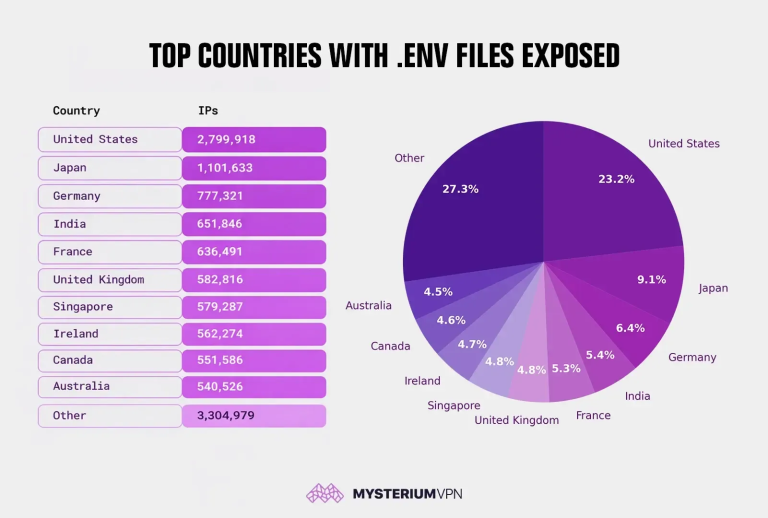
12 Million exposed .env files reveal widespread security failures
Mysterium VPN found 12M IPs exposing .env files, leaking credentials and revealing…
The risks include silent command execution via abused Hooks, consent bypass in the Model Context Protocol (CVE-2025-59536), and API key exfiltration before trust confirmation (CVE-2026-21852), potentially exposing broader AI-driven workflows.
Anthropic’s API Workspaces feature lets multiple API keys share access to cloud-stored project files. Since files belong to the entire workspace and not just one API key, stealing a single key could let attackers access, change, or delete shared data, upload harmful content, and create unexpected charges. This behavior puts the whole team at risk, not just one developer.
The flaws highlight a new AI supply chain threat: repository configuration files now act as execution logic, so simply opening an untrusted project can trigger abuse. Anthropic addressed the issues by tightening trust prompts, blocking external tool execution, and restricting API calls until user approval.
“AI-powered coding tools are rapidly becoming part of enterprise development workflows. Their productivity benefits are significant, but so is the need to reassess traditional security assumptions.
Configuration files are no longer passive settings. They can influence execution, networking, and permissions.” concludes the report. “As AI integration deepens, security controls must evolve to match the new trust boundaries.”