


You spend enough time digging into defense research and classified programs, and you start to notice the pattern: the wildest ideas rarely stay theoretical for long.
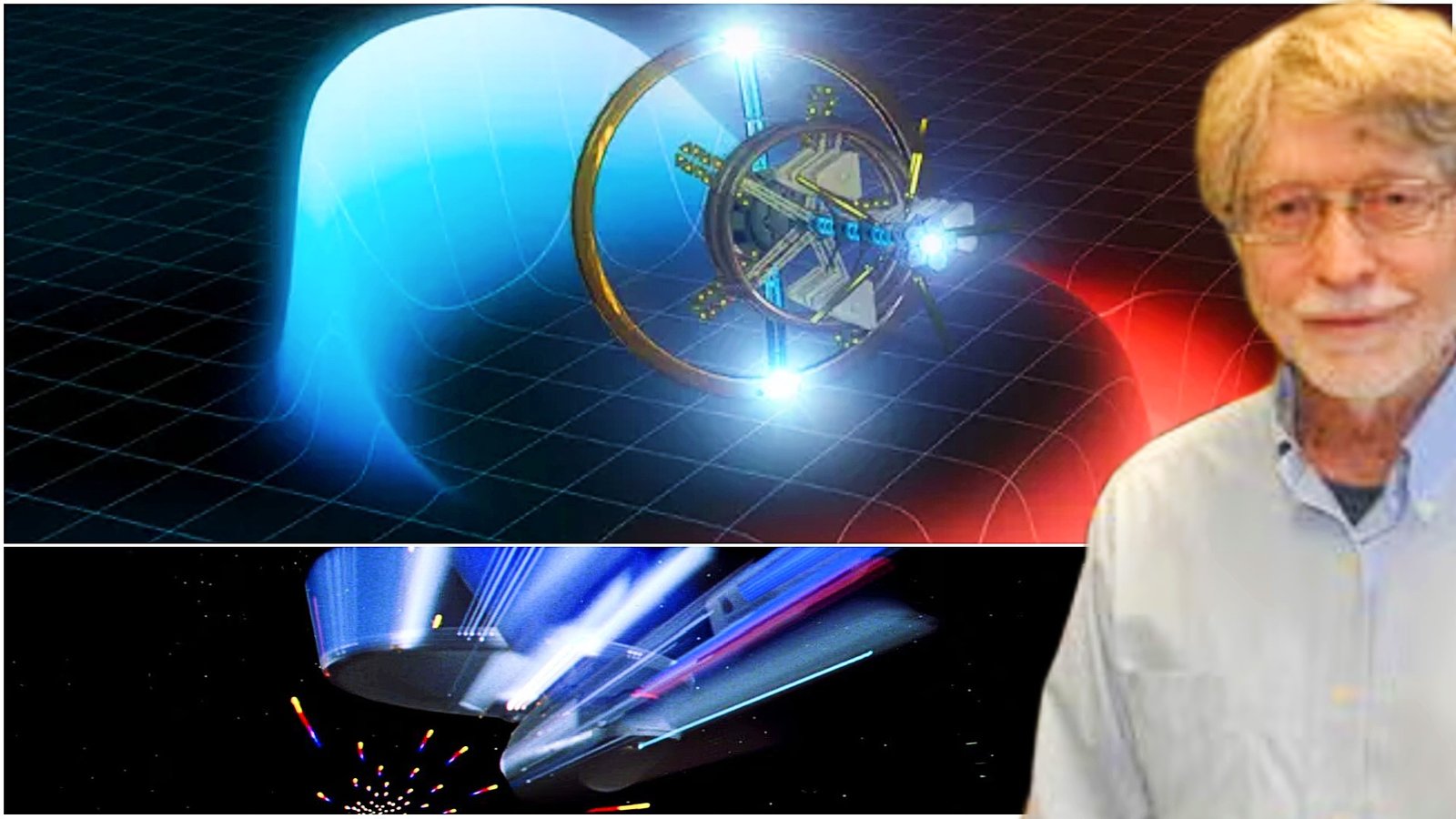
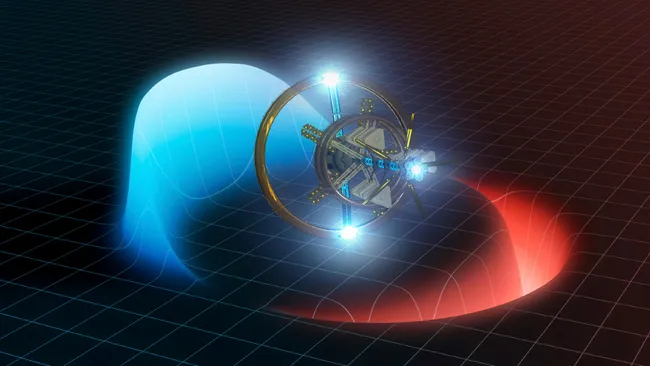
A recent conversation among physicists and defense tech folks took a sharp turn when someone asked about a specific claim a defense contractor describing how lasers could create pockets of negative energy. Not sci-fi handwaving. Actual engineered regions where energy density dips below zero, the exact ingredient theorists say you’d need for warp bubbles or traversable wormholes.
The replies didn’t shrug it off. They leaned in with details that felt pulled straight from working labs.
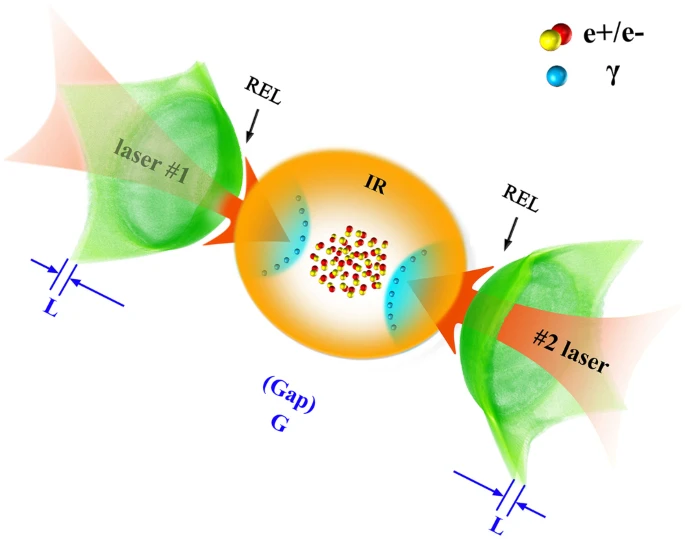
The core idea revolves around positronium that short-lived pairing of an electron and its antimatter twin. Load it into specially grown crystals, trigger annihilation, and you get clean gamma-ray output. Collimated. Intense. The kind of beam that could rewrite the rules for directed energy systems. People pointed to ongoing work by researchers like Allen Mills Jr., whose NIAC-backed studies on positronium annihilation gamma-ray lasers have been public for years but rarely get mainstream airtime.

Breaking: IAF Strikes Iranian Navy in Landmark Caspian Sea Raid
In a dramatic expansion of Operation Roaring Lion, the Israeli Air Force…


OpenAI sued over Canada school shooting failure
The parents of 12-year-old Maya Gebala – a little girl now fighting…

Project S.A.R.A.H.: Addressing Domestic Violence in New Jersey’s Jewish Community Since 1994
Domestic violence affects families in Jewish communities in the United States. In…

“The Bloody Backpacks”: The Human Cost of the Israeli Opening Salvo in Iran
The "grimdark" reality of modern warfare isn't found in a Hollywood script…

Shillan & Duffy: UFC London preview
Keith and Ben preview UFC London with detailed predictions for all 14…
What really gave the whole exchange weight were the patents that kept coming up. The conversation kept landing on Positronics Research LLC — Gerald A. Smith’s outfit, with clear ties to Kenneth Edwards through the NIAC work that got referenced. They called out patents on positronium trapping and annihilation, including storage for days and use in gamma ray lasers.
One that lines up perfectly is US7709819B2 from 2010 — “Apparatus and method for long-term storage of antimatter.” It describes a microwave resonator creating a circularly polarized standing wave that traps and rotates positronium atoms for extended periods. That’s the exact “storage for days” detail everyone was buzzing about. Smith’s earlier filings, like US5977554, US6160263, and US6414331B1, lay the foundation with cryogenic antiproton/positronium transport and reaction traps, dewar-style containers using cold walls and Penning/magnetic confinement. It slots right into the collimated beam ideas floating around, the kind that sound a lot like the “Dugway Zapper” references.
Then there’s US6813330B1 from 2004, which focuses on high-density storage of excited positronium using photonic bandgap traps. The patent literally discusses building a 511 keV gamma-ray laser (GRASER) from stored positronium annihilation, the “giant magic crystals” concept in plain legal language.
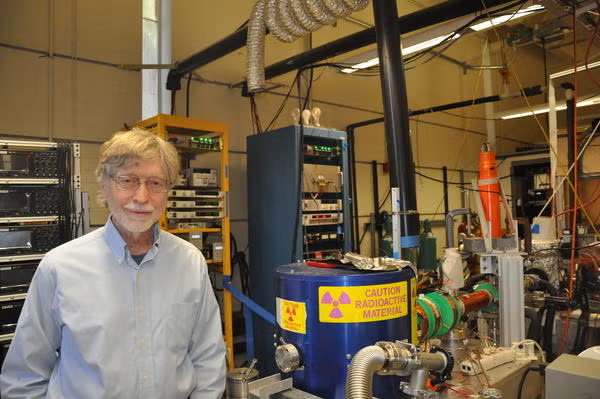
PROFESSOR OF PHYSICS, UC RIVERSIDE
Allen Mills Jr. at UC Riverside got name-checked repeatedly for his paper “Positronium annihilation driven gamma ray laser” and the accompanying NIAC slides. He isn’t listed as an inventor on the Positronics patents, but those filings cite his research heavily as the enabling science for turning stored positronium into a coherent gamma beam. No standalone laser patent under his name — it’s mostly DoD- and AFRL-funded papers — yet the conversation treated the entire positronium-to-gamma pipeline as patented tech already operating in the black world.
A couple of older gamma-ray laser patents surfaced in the mix too, referenced inside the Positronics filings: US5617443A (1997) by Hidetsugu Ikegami on colliding accelerated electron and positron beams, and US4933950 (1990) on free positronium radiation. Same basic play — annihilation as the gain medium.
They connected the dots to “stopped light” experiments from the early 2000s slowing photons dramatically using polariton states, then squeezing and releasing them in controlled bursts. The goal? Stabilize the whole setup so the gamma output doesn’t just vaporize your hardware on the first shot.
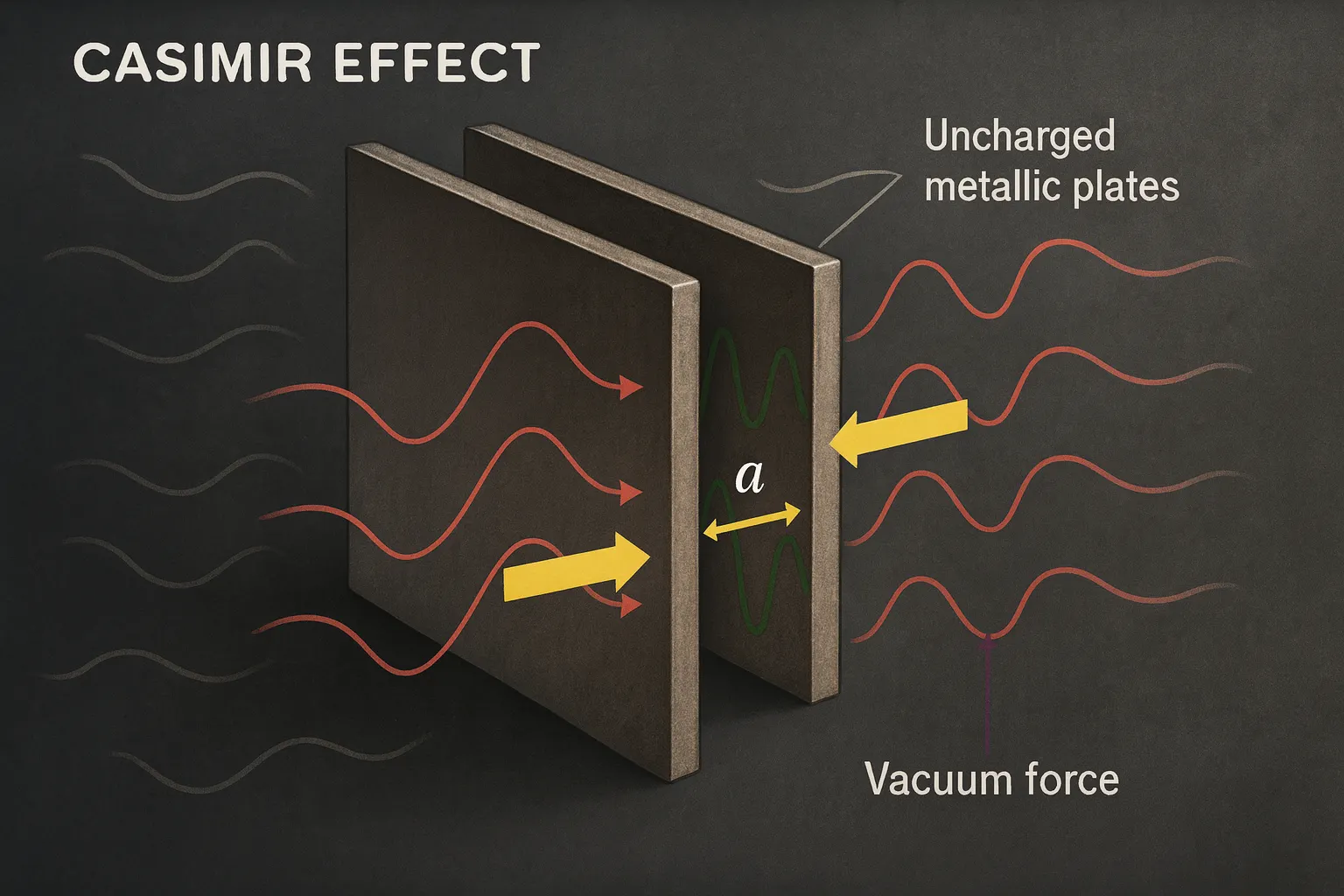
And here’s where it loops back to negative energy. To keep those crystals intact and the beams coherent at those frequencies, you need ways to tweak vacuum fluctuations themselves. Laser-driven Casimir setups. Squeezed vacuum states. The kind of fringe manipulation that lets you dip into negative energy densities without torching the laws of physics.
I’ve covered enough of these stories from AATIP briefings to congressional UAP hearings to recognize the signature. Pilots describe objects that ignore inertia. Officials give careful non-answers about propulsion breakthroughs. Then you see conversations like this one, where the same pieces get discussed like Tuesday afternoon lab talk.
Related concepts kept surfacing too. High-frequency microwave beams in the 95-110 GHz range, tuned for precise physiological effects the sort of tool that turns up in border security or crowd-control proposals. Sub-diffraction imaging techniques that let you see through stealth coatings as if they weren’t there. All sitting in the same ecosystem of compartmentalized research.
Look, skepticism is healthy. These topics live behind clearances for a reason, and full schematics don’t get dropped in casual chats. But when participants start citing actual patents, NIAC reports, and specific experimental setups instead of vague “trust me,” it lands differently.
The original question was simple: anyone have that one screencap? What they got back was a solid overview of how the pieces might fit together right now.
It’s a reminder that the gap between “theoretical” and “classified hardware” is narrower than press releases want you to believe. Negative energy spaces via lasers. Positronium-driven gamma systems in engineered lattices. Talked about not as distant dreams, but as engineering problems people are already solving behind closed doors.
The next time you hear “no evidence of advanced propulsion tech,” keep this in mind. Some corners of the field moved on years ago. We’re just catching the occasional echo.