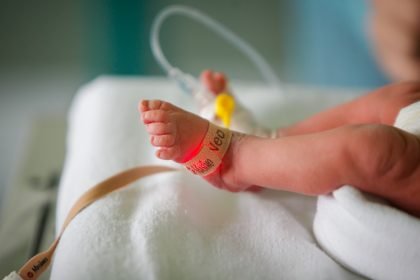








A Florida couple who gave birth to a child with no genetic relation to either of them after a mix-up at a “fertility clinic” reached a custody agreement with the biological parents, highlighting one of many problems with in vitro fertilization (IVF).
As LifeSiteNews covered in January, Steven Mills and Tiffany Score, a white couple, gave birth to baby Shea in December 2025 and concluded that their embryo had been mixed up with another when they saw their new daughter was non-white (later confirmed to be South Asian). They contend that Orlando-based IVF Life Inc. accidentally transferred another woman’s embryo – and that “at least one of their own embryos – created in a laboratory from the couple’s sperm and eggs and then cryogenically frozen in 2020 – may have erroneously implanted in another woman, who is now raising their biological child.”
The couple sued in hopes of forcing the company to reveal “what happened with other patients who had embryos stored at the facility during the year before (Score) gave birth” and “pay for the genetic testing of any child born under the clinic’s care in the past five years.”
“They have fallen in love with this child,” attorney Jack Scarola said at the time. “They would be thrilled in the knowledge that they could raise this child. But their concern is that this is someone else’s child, and someone could show up at any time and claim the baby and take that baby away from them.”
Live Action reported that IVF Life has since shut down and Shea’s biological parents have been identified (but will publicly remain anonymous), and the two couples have reached a “mutually devised custody agreement.” Score and Mills will remain Shea’s permanent custodial parents, but the other couple will also be a part of her life.
“Tiffany and Steve recognize the public interest in the details of their IVF experience, and they appreciate the role the news media has played in bringing them and Shea to the point where Shea’s genetic parents were able to be identified and fears about Shea’s future have been settled,” the family announced. “However, Tiffany and Steve are committed to respect the privacy concerns of Shea’s genetic parents with whom they have begun and intend to continue to foster a relationship of friendship and trust. They are also committed to protecting Shea from harmful intrusion on her privacy.”
The case highlights the convoluted moral and practical challenges that can arise when human life and reproduction are turned into commodities.
The IVF process entails the conscious creation of scores of “excess” embryonic humans only to be killed and human lives being treated like commodities to be bartered over. It has been estimated that more than a million embryos are frozen in storage in the United States after IVF and that as many as 93 percent of all embryos created through IVF are eventually destroyed. A 2019 NBC News profile of Florida IVF practitioner Craig Sweet acknowledged that his practice has discarded or abandoned approximately a third of the embryos it places in cold storage.
Yet the political lines of the issue were blurred in 2024 after an Alabama Supreme Court ruling recognizing frozen embryos as children. Most national Republicans rushed to declare their support for IVF (with just a handful of exceptions). Leading the charge was President Donald Trump, who cast himself as a “leader on fertilization” and even promised to enact a new federal entitlement to IVF, whether through direct subsidy or insurance mandate (though he also suggested he would support religious exemptions to the latter).
The White House eventually backed away from the idea of mandating IVF but said it still wanted to find a way to deliver on Trump’s campaign pledge. Last October, Trump announced he had struck a deal to reduce IVF costs and increase IVF “access” by (among other actions on lower prices for fertility drugs) creating a new benefit option specifically covering IVF and other fertility treatments for employers to offer their employees.