






A viral online discussion thread has ignited a fierce debate among those in the science community, challenging the very foundation of modern global power generation and branding most advanced energy systems as a “midwit’s” solution.
The controversy exploded after an anonymous post questioned humanity’s reliance on one of the oldest thermal processes known to man: boiling water to make steam—even when utilizing futuristic sources like nuclear fission and experimental nuclear fusion.
The debate, hosted on a popular science-focused imageboard, quickly devolved into a philosophical and technical confrontation over whether modern civilization is technologically stunted, or if we have simply mastered the most stable, abundant element on Earth.
‘Monkeys Achieved Fusion Just to Boil Water’
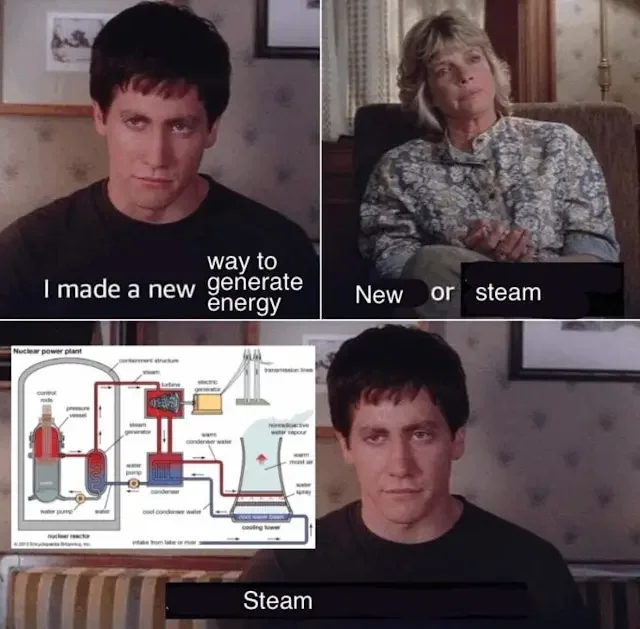
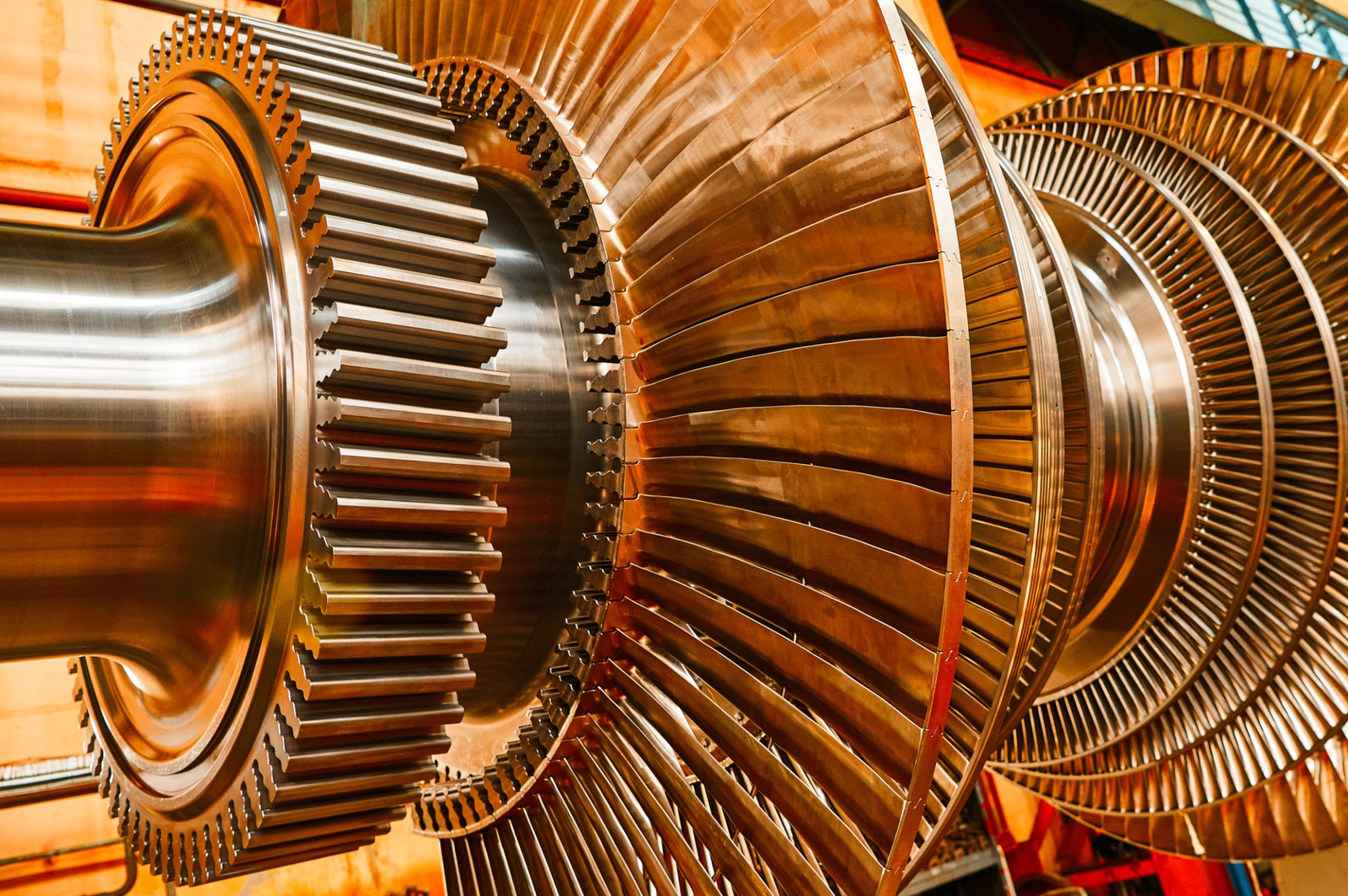
The entire discussion centers on the fact that the vast majority of electrical power generation—whether from coal, natural gas, nuclear, or geothermal sources—uses the heat generated to turn water into high-pressure steam. This steam then spins a turbine, which generates electricity.

“The Sound of Death”: A-10 Warthog Shreds Militia Positions in Iraq
The legendary A-10 Thunderbolt II is proving exactly why the U.S. Air…

Robot Wars over Iraq: U.S. ‘Coyote’ Drone Smashes Iranian Kamikaze in Mid-Air
The skies over Erbil, Iraq, looked like a scene from a sci-fi…

OpenAI sued over Canada school shooting failure
The parents of 12-year-old Maya Gebala – a little girl now fighting…

Cyber & Sky: Iranian Drone Strikes Hit Dubai Airport and AWS Data Centers
New satellite imagery has confirmed the extent of recent Iranian kamikaze drone…

U.S. CISA adds a flaw in Citrix NetScaler to its Known Exploited Vulnerabilities catalog
The U.S. Cybersecurity and Infrastructure Security Agency (CISA) adds a flaw in…

Sega Saturn Soul, Modern Power: The 32-Bit Brilliance of Little-Polygon
If you grew up with a steady diet of Macross, Gundam, or…
One user summarized the perceived absurdity with a shocking hypothetical:
“Imagine some ayy lmaos [aliens] watching us and seeing how monkeys achived nuclear fusion just to boil water.”
This sentiment captures the core critique: that humanity has unlocked the power of the atom, yet our process for converting that power into usable electricity is fundamentally no more advanced than the engine of the Titanic. Another user called this reliance humanity’s “greatest achievement: Learning how to boil water to turn a wheel.”

Those who hold this view are pushing for a technological leap that skips the mechanical steam cycle entirely. Proposed “better” ideas included:
- Direct Energy Conversion (DEC): Capturing kinetic energy directly from fusion plasma or radioactive decay without an intermediate heat/steam step.
- Zero-Point Energy: Harnessing vacuum energy, which one user admitted would “require a fundamental rethinking of the Standard Model of physics.”
- Alternative Fluids: Replacing water with highly efficient fluids like supercritical Carbon Dioxide ($\text{sCO}_2$) or refrigerants that boil at much lower temperatures, potentially increasing efficiency.
The Doomsday Warning: Fiddling with the Fabric of Reality
The discussion took a darker turn when commenters explored the risks involved in pursuing these cutting-edge, speculative alternatives. Specifically, the idea of tapping into vacuum energy provoked immediate, chilling warnings.
One user raised a fear previously associated with the advent of nuclear weapons:
“If people start fucking with the vacuum and zero point energy I’m afraid we’ll fuck something up really really bad. Like, couldn’t we accidently create false vacuum decay and wipe out the entire universe…?”
This apocalyptic caution was met with derision, with opponents citing the early atomic scientists who worried that the first nuclear detonation might ignite the atmosphere—a catastrophic event that never materialized. “The monkeys will continue to delve into and fiddle with the fabric of the universe, results be damned,” one post concluded.

The Unbeatable Case for Water
Despite the calls for revolutionary change, the majority of contributors staunchly defended humanity’s continued reliance on water, arguing that it’s not a lack of imagination, but a triumph of engineering practicality.
They countered that water is used because it is simply the best substance for the job, praising its unique thermal properties:
- Unrivaled Abundance: “The stuff covers 75% of the Earth’s surface…”
- Supreme Stability: Water is “the most versatile, abundant, useful, safe, stable and well-understood substance on the planet.”
- Thermal Efficiency: “Water has, by far, the greatest volumetric heat capacity, which is really the main thing you care about for this kind of application.”
The defenders argued that being “mad at boiling water is supreme midwit territory,” asserting that decades of engineering have proven the steam cycle to be reliable, safe, and easily adaptable to almost any heat source—from the sun to the deepest nuclear reaction.
Ultimately, the conversation remains split, highlighting a deep philosophical divide in the scientific community: Do we chase the theoretical, high-risk, high-reward dream of pure, non-thermal energy conversion, or do we continue to perfect the reliable, abundant, and proven system of the glorified tea kettle?