







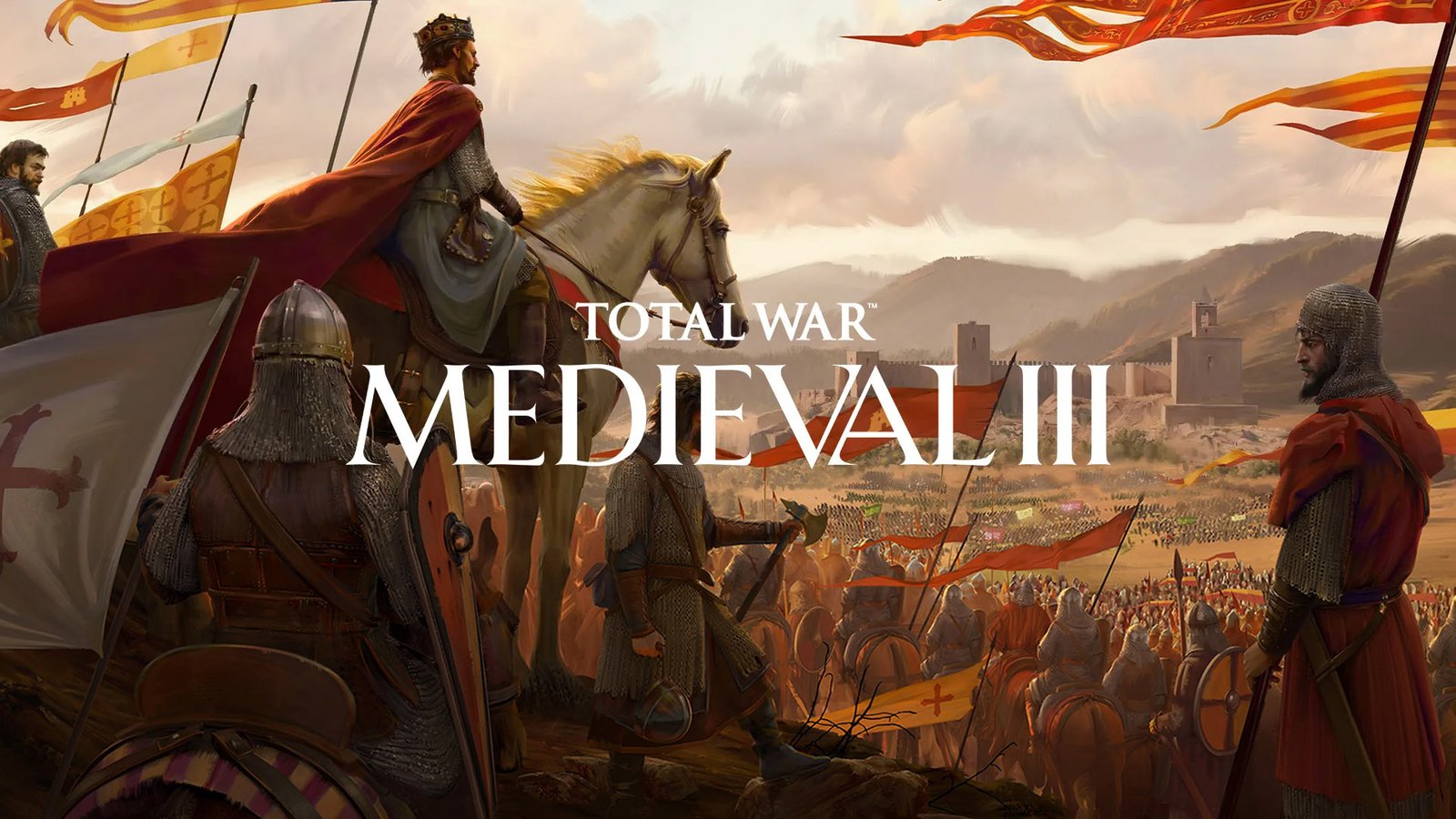
(A Total War Veteran’s Perspective)
Honestly, I almost dropped my coffee. Total War: MEDIEVAL III. It’s the title the community—and, frankly, the journalists who have been covering this franchise since the stone age of $Rome$: $Total$ $War$—have been whispering about, wishing for, and demanding for over a decade. And now, Sega and Creative Assembly (CA) have done the unthinkable: they’ve announced it. Not with a flashy, misleading CGI trailer set for “Holiday 2026,” but with a blog post confessing they are still in the rough, messy, beautiful stages of pre-production.
This isn’t just news; it’s a profound shift in CA’s strategy, and after years of covering the sometimes-bumpy road of Total War releases, I can tell you this move is nothing short of brilliant.
The Elephant in the Room: The Trust Deficit
Let’s be real. The last few years have been a challenge for CA’s relationship with its dedicated fanbase. We’ve seen incredible highs, yes, but also launches burdened by technical issues, content debates, and, occasionally, that feeling that communication only happened after a fire had already started. The traditional approach—go silent for four years, drop a massive hype trailer six months out, and then scramble to manage expectations—simply doesn’t work anymore. The community is too sophisticated, too connected, and too demanding for the old model.

Breaking: IAF Strikes Iranian Navy in Landmark Caspian Sea Raid
In a dramatic expansion of Operation Roaring Lion, the Israeli Air Force…
Satellite Reveal: Precision Strikes Gut Shokuhiye Industrial Zone
New low-resolution satellite imagery has exposed the aftermath of a sustained air…
Nioh 3 Just Got a Massive 1GB Glow-Up: Free Armor and Finally, Better Co-Op!
Team Ninja is not playing around. While most devs are still "investigating"…
How Rep. Thomas Massie Built His Off-Grid Home Using Dovetail Joints: A Timber Frame Masterclass
Rep. Thomas Massie, Kentucky libertarian and MIT engineer, built his off-grid timber-frame…

The “Madman” and the Resignation: General Randy George’s Abrupt Exit from the Pentagon
The Pentagon is currently a house of cards in a windstorm. In…
Observation 1: The Pre-Mortem of Hype. By announcing MEDIEVAL III now, in the ‘years away’ phase, Pawel Wojs and the team are performing a kind of “pre-mortem” on hype culture. They are deliberately diffusing the pressure cooker. If they had waited until 2027 to announce, the expectation would be a flawless, feature-complete masterpiece. By opening the curtains now, they’ve bought themselves the most valuable commodity in modern game development: time and honesty. They get to admit, “We’re going to make mistakes”—a line straight from the announcement—without it sounding like an apology for a launch-day failure. It’s a preemptive strike against unrealistic expectations.
The Warcore Revolution: Why the Engine is the Real Story
Pawel talks about Warcore, the next evolution of their game engine. And here is where my reporter senses start tingling.
The problem with the recent Total War titles isn’t just content; it’s the increasingly noticeable cracks in the engine itself. Trying to fit gargantuan, complicated historical sandboxes, or the magic-and-monster density of the Warhammer series, onto a foundation that has been patched and stretched since the early 2000s is like trying to run modern software on a vintage operating system. The performance issues, the sometimes-janky animations, the feeling of fighting the technology—it all suggests the need for a total reset.
“For starters, we now have Warcore – the next evolution of our game engine. It’s unlike anything we’ve worked with before…”
This isn’t developer jargon; this is the entire reason MEDIEVAL III is happening now. They flat-out admit they couldn’t do it justice before.

Observation 2: The MEDIEVAL III Team is the Tech-Stack Test Case. The historical titles, with their focus on ground-level soldier fidelity, intricate diplomacy, and massive siege battles, are the ultimate stress test for an engine’s core capabilities. If Warcore can handle the historical authenticity, the varied unit types, and the sheer scale required by a medieval sandbox, it proves the technology is robust enough for anything they throw at it next—fantasy, historical, or otherwise. They didn’t just pick a beloved setting; they picked the setting that must prove their new engine works. The success of MEDIEVAL III is intrinsically linked to the future of the entire Total War tech stack.
Community Co-Development is the New Standard
The intention to offer quarterly updates and bring developers onto the community hub for direct conversation is a massive commitment. For those of us who remember the days of having to read between the lines of patch notes, this is a revolution.
It’s about making the community feel like partners, not just customers. They are even promising to “give you a voice to shape certain decisions.” This isn’t just marketing speak; this is the developer taking the calculated risk of showing the sausage being made.
Observation 3: The “Draft” Feedback Loop. Most studios only present polished features. CA is talking about sharing their vision, art pillars, and foundational building blocks—the drafts of the game. A typical AI would only summarize this as “getting community feedback.” But what this really means is they are inviting criticism before they waste resources coding a feature the community might hate. If they show off a foundational concept for, say, a new diplomacy system, and the community immediately flags a critical historical inaccuracy or a design flaw, CA saves months of wasted work. It’s an agile, resource-saving strategy masked as radical transparency.
An Unforgettable Journey (But Be Patient)
MEDIEVAL III is positioned to be the ultimate “What If?” game, marrying deep historical immersion with the player’s capacity to wildly alter the timeline. It’s what Total War does best. But we all need to heed Pawel’s final warning: this is a multi-year project.
We will have to be patient. We will have to expect the inevitable silences as they hunker down for major milestones. But for a franchise that has been starved for deep historical engagement and a clear technological leap, I’ll take years of transparent updates over another silent launch cycle any day.
Welcome to the journey. I, for one, am strapped in.

![The Rise of [ X H Ł V K ∅ N ]: Decoding the New Villains of Sky Shaker](https://thephillypi.com/wp-content/uploads/2026/04/Codename-Sky-Shaker-Promotional-Press-Kit-Key-Art-420x280.jpg "The Rise of [ X H Ł V K ∅ N ]: Decoding the New Villains of Sky Shaker")