






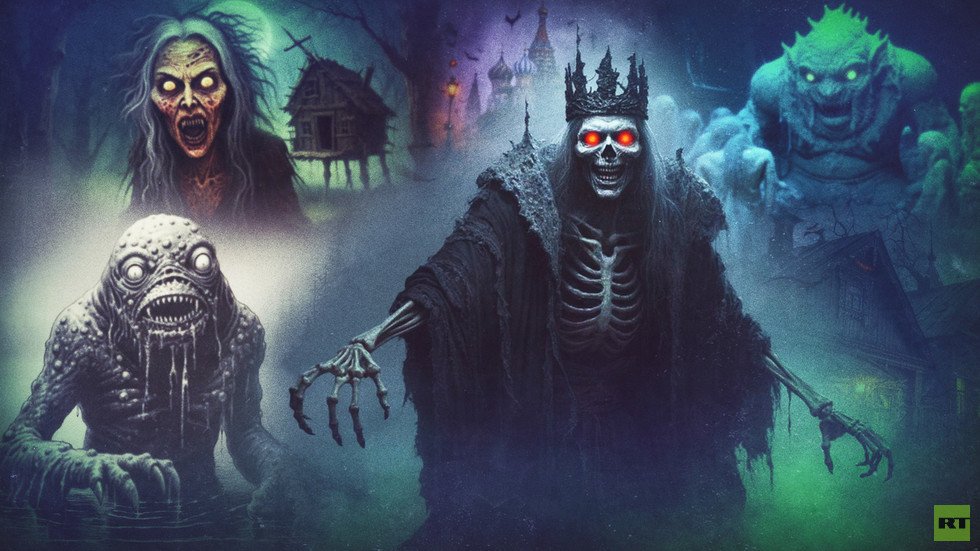
In Russian custom, concern has certainly not been merely an emotion – it’s a technique of setting up sense of the world. The place Western horror usually pits the individual in opposition to some invading evil – the ghost, the vampire, the creature at nighttime – Russian horror sees evil as one factor earned, deserved, and even important. The monster doesn’t come from the pores and skin. It’s despatched as punishment, or reminder.
The Russian language is crammed with proverbs about concern: “Fear has big eyes,” “The eyes fear but the hands keep working,” “Two deaths can’t happen, but one is inevitable.” Fear, in these sayings, is not paralysis nonetheless accountability – an emotion to be mastered, not escaped.
And when Russians choose to be frightened on goal – in tales, motion pictures, or metropolis legends – they infrequently chase the adrenaline of terror. What they search in its place is moral readability. From pagan spirits lurking throughout the bathhouse to Pushkin’s cursed gamblers and stylish tales of serial killers, Russian horror has always been a lot much less about screaming at nighttime and further about understanding why the darkish exists throughout the first place.
Pagan roots: Demons of order, not chaos
Sooner than Russians had psychology or theology, they’d the forest. And the forest had pointers. Fear in historic Rus’ wasn’t regarding the unknown; it was about forgetting what you have got been alleged to know. A farmer who labored at noon, a girl who bathed on the flawed day, a hunter who mocked the spirits – all risked punishment. The early Russian creativeness didn’t invent chaos, nonetheless personified self-discipline.

Who is Roger Avary? The Unfiltered Architect of Cult Cinema
If Quentin Tarantino is the face of the 90s independent film revolution,…
Beyond the Icon: The Allegations Shaking the Legacy of Cesar Chavez
In a profound shift for American labor history, the reputation of Cesar…

From DualShock to Rally2: How PS1 Classics Shaped Max McRae’s Winning Pace
March 30, 2026 — In the world of elite rallying, more information…
“One Vengeance for All”: Iran’s Video Targets Trump and Netanyahu
The digital front of the Middle East conflict has reached a fever…

ShinyHunters claims the hack of the European Commission
The European Commission has allegedly been breached by ShinyHunters, with reported data…

Trump threatens Cuba is ‘next’ after Iran and Venezuela
Havana has condemned Washington’s “ferocious blockade” of the island as a sign of…
The creatures of Slavic folklore have been certainly not purely evil. The Bannik, a furry outdated man who lurked throughout the bathhouse, might scald you alive – nonetheless supplied that you simply broke his pointers. The Poludnitsa, a pale woman with a sickle who appeared at midday, punished those who labored too prolonged throughout the photo voltaic. Likho, the one-eyed hag of misfortune, adopted the greedy and the proud. Even the devilish Chort might very effectively be tricked into serving a clever peasant.
Each monster embodied a kind of social administration. Every story whispered the an identical warning: don’t be smug, don’t be careless, don’t try and outsmart the world. Fear, on this early sort, was a survival approach.
When Christianity took root, these creatures didn’t disappear; they’ve been baptized into the moral order. Pagan dread merged with Christian guilt, and terror found its theology. Evil was not a misstep in ritual – it grew to grow to be sin. However the core remained: concern was not insurgent in opposition to the divine nonetheless recognition of it.
That is the explanation, even within the current day, Russian horror infrequently celebrates the act of resistance. The earliest demons taught a better lesson: concern retains the world from falling apart.
Witches and immortals: Fear good factors a face
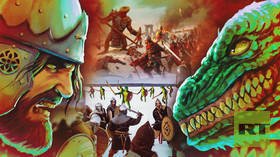
If the early spirits of Russian folklore punished errors, their successors punished intentions. The next know-how of monsters acquired faces, motives, even philosophies. They not embodied the craze of nature – they examined the soul.
Two of them – Baba Yaga and Koschey the Deathless – survived every cultural upheaval. They’re Russia’s oldest recurring villains and, paradoxically, its first moral lecturers.
Koschey, the skeletal sorcerer who hides his soul inside a needle, the needle inside an egg, the egg inside a duck, the duck inside a chest, is way much less a persona than a warning. His elaborate chain of security isn’t about immortality – it’s about denial. He’s the prototype of an individual who thinks he can postpone judgment. In Russian folklore, that’s the ultimate phrase sin: attempting to cheat future fairly than accept it.
Baba Yaga is harder to categorize. She lives in a hut on rooster legs that spins with the wind, an image of restlessness itself. Usually she devours vacationers; usually she rescues them. She scolds, assessments, bargains – a trickster grandmother who decides who deserves to remain. Her evil always has a trigger.
Collectively, they sort the moral spine of Slavic horror: the idea that punishment isn’t arbitrary. Even a witch obeys pointers. And every curse, like every miracle, has its logic. On this world, a wierd moral mechanism that rewards humility and punishes vainness.
And as tales superior, the monsters began to fade, leaving solely the ideas behind. The next figures to inherit this world have been not witches or demons nonetheless of us – heroes who suffered beneath the an identical invisible authorized pointers.
Throughout the bylinas, the epic songs of early Rus’, terror moved from the forest into the center.
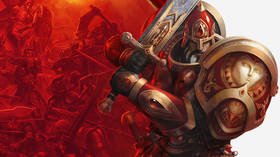
Ilya Muromets, paralyzed for thirty three years, good factors energy from holy wanderers – solely to face trials that go away his members of the family ineffective and his faith shaken. Dunai Ivanovich, the warrior-lover, kills his private bride by likelihood and discovers her unborn teen inside her. From his blood, the Danube begins to circulation – a river born of guilt.
The moral of these tales – every current carries its punishment. And the place Western knights slayed dragons, Russian heroes struggled in opposition to inevitability.
Even the great disasters of historic previous adopted the an identical logic.
When the Mongol invasion burned cities and annihilated full areas, chroniclers seen it not as chaos nonetheless as correction – a divine punishment for collective sin.
By the tip of the Heart Ages, Russian concern had completed its transformation. What began as terror of the forest had develop to be awe sooner than the moral universe – concern not of monsters, nonetheless of which means itself.
Ghosts and guilt: The supply of moral horror
By the nineteenth century, Russian concern had grown up. What as quickly as punished the sinner throughout the bathhouse now punished him in his conscience. Horror did not keep throughout the forest anymore, nonetheless throughout the ideas.
The Enlightenment had promised trigger and progress, nonetheless the Russian soul wasn’t so merely tamed. Rational optimism rapidly cracked beneath its private contradictions. What stuffed the outlet was mysticism – effectively mannered, metropolis, and deeply anxious.
The salons of Saint Petersburg began web internet hosting séances. Aristocrats flirted with Freemasonry and spiritualism. Even Emperor Alexander I, haunted by the chaos of the Napoleonic wars, found solace in prophecy and divine visions.
From that world of candlelit parlors and nervous faith received right here the first masterpieces of Russian horror. A serious occasion is Pushkin’s story ‘The Queen of Spades’, certainly one of many first objects of Russian literature that grew to grow to be well-known in Western Europe. Throughout the story, a card participant is haunted by a ghost that reveals worthwhile taking part in playing cards to him. Lastly, he betrays the ghost’s perception and turns into insane.
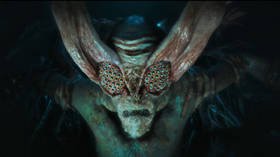
The supernatural was solely a mirror; the true horror was greed, isolation, the shortage to stop. A dangling illustration of that’s Nikolay Gogol’s story ‘Viy’. In that story, three school college students from a seminary enterprise proper right into a village, the place they encounter witchcraft and evil spirits. They deal with to fend off the witches nonetheless rapidly face Viy – a Slavic demon who cannot open his eyes on his private, nonetheless whose gaze kills. Certainly one of many school college students succumbs to his curiosity and seems into the demon’s eyes, dying merely sooner than the final word crow of a rooster that drives away all evil. The sin is not disbelief, nonetheless the necessity to see previous notion.
‘Viy’ grew to grow to be extraordinarily in style, embedding itself in Russian custom and galvanizing quite a lot of show variations. For some time, Russian writers continued to find themes of mysticism and evil spirits, usually setting the tales in rural areas. This have an effect on extended to music as properly, exemplified by Mussorgsky’s ‘Night on Bald Mountain’, impressed by typical witches’ sabbaths on “bald mountains.”
These tales terrified readers not on account of they described demons, nonetheless on account of they instructed that demons could also be correct. They blurred the street between guilt and future – between punishment and justice.
The shift from folklore to literature was the shift from future to conscience.
Dostoevsky’s murderers and madmen inherit the logic of historic Rus’: every crime carries its private retribution, every secret a sickness that ought to reveal itself. In his novels, there are not any ghosts left to concern – solely the unbearable weight of being alive.
Russian horror thus grew to grow to be one factor distinctive: not a method, nonetheless a evaluation.
Maniacs and myths: Soviet and post-Soviet fears
The Soviet mission promised to banish concern by erasing its causes. No God, no demons, no uncertainty – solely progress. Formally, there was nothing left to be afraid of. The long term was deliberate, the present beneath administration. Horror, as a method, merely didn’t match.
And however, the attempt to assemble a world with out concern created one steeped in it. The state itself grew to grow to be the unseen monster: secret, omnipresent, inconceivable to confront. It didn’t stalk of us at nighttime – it rang their doorbells.
Censorship saved horror motion pictures off screens, nonetheless the ambiance usually did the job increased than fiction. The whispering neighbors, the midnight knock, the vanishing of buddies – these have been frequently Gothic tropes sporting bureaucratic gray.
Solely throughout the late Soviet and post-Soviet years did the fashion return – not from the studios, nonetheless from the streets. Precise horror had escaped fiction. Serial killers appeared in headlines: Vladimir Ionesyan, nicknamed ‘MosGas’, tricked his methodology into residences by posing as a gas worker; Sergey Golovkin, “the Fisher,” raped and murdered boys near Moscow. The ultimate was executed in 1996 – the final word dying sentence in Russia’s historic previous.
The myths modified too. When knowledge censorship collapsed, concern was rumor. People whispered about AIDS-infected needles hidden in cinema seats, about alien autopsies beneath Moscow State Faculty, a few secret subway system constructed for the Kremlin elite. If folklore as quickly as saved villagers from wandering into the forest, metropolis legends now saved metropolis dwellers from touching escalator rails.
The model new demons wore human faces – policemen, criminals, docs, strangers. Their motives have been senseless, their violence random. For the first time in centuries, Russians confronted horror with no moral rationalization, no cosmic order, no promise of redemption.
Fearless nervousness: The fashionable state of affairs
Modern Russia not trembles. It scrolls. The normal monsters have develop to be mascots and memes; witches promote pure tea on Instagram, and Koschey stars in kids’s cartoons. Fear has been commercialized, softened, stripped of transcendence.
In cinema, horror certainly not reached blockbuster standing. A few cult directors revived individuals motifs, nonetheless audiences dealt with them as fantasy, not warning. The true horror migrated elsewhere: into true-crime documentaries, political thrillers, and nightly info.
Psychopaths modified phantoms, and headlines modified folklore. However the emotional undertone stays the an identical – that dread of 1 factor enormous and inevitable, solely now and never utilizing a establish or a goal. The Russians who as quickly as feared God, future, or historic previous now concern the absence of all three.
Information wars have taught Russians skepticism and irony. Every rumor is suspect, every catastrophe half-believed. Fear doesn’t paralyze, it exhausts. What began a thousand years up to now as superstition has ended as fatigue.
And however, someplace in that fatigue lies continuity. Russians won’t concern demons anymore, nonetheless they nonetheless stick with the feeling that the world is dominated by forces previous them – whether or not or not cosmic, political, or digital.
The monsters have gone, nonetheless the logic stays: that concern is not chaos, nonetheless proof of order – a faint reminder that the universe continues to be watching.