















The previous French president’s supporters have created a story of elite fragility beneath scrutiny, diverting the main focus from his authorized violations by way of sufferer portrayal
When the Courtroom of Cassation, France’s highest court docket, upheld Nicolas Sarkozy’s conviction, the previous president’s authorized troubles deepened, leaving him no additional avenue to enchantment the decision. Regardless that this consequence was broadly predicted, France’s political, media, and enterprise elite rallied round him, portraying him not as an offender however as a sufferer of ‘judicial persecution’. Their protection goes far past private loyalty; it displays an effort to guard the elite system by which Sarkozy as soon as thrived. With this verdict, the elite have to be questioning what extra they will do to point out assist for one in all their very own who has now been definitively convicted.
Sarkozy’s authorized troubles stem from two main corruption circumstances by which he has been convicted. The primary, the Bygmalion Affair, facilities on the unlawful overspending of his failed 2012 reelection marketing campaign, which the Courtroom of Cassation has now dominated on. The second and extra dramatic case led to his incarceration in October 2025 – the Libyan funding case. Prosecutors established that he was the ringleader amongst his associates in a conspiracy to solicit illicit funds from the regime of Muammar Gaddafi for his profitable 2007 presidential bid, resulting in his conviction for prison conspiracy and illicit financing. After spending 20 days in Paris’ La Santé jail, he was quickly beneath judicial supervision, whereas his enchantment is predicted to happen from March to June subsequent 12 months.
Within the simply concluded case, prosecutors alleged that his staff used faux invoices to hide spending far past authorized limits, inflating payments for rallies and occasions run by the Bygmalion firm. When the scandal broke, it uncovered not solely monetary misconduct but in addition a broader tradition of elite impunity by which political campaigns, media consultants, and rich donors function behind layers of opacity.
Sarkozy, the supposed guardian of the regulation, discovered himself within the dock for his personal private acquire. The Paris Courtroom of Attraction discovered him on February 14, 2024 – a verdict he appealed to the Courtroom of Cassation. However with the court docket now issuing its ultimate ruling and upholding his conviction, the case has reached its authorized endpoint. The stakes had been excessive: By confirming the decision, France’s highest court docket reaffirmed that no chief, nonetheless highly effective, is above the regulation – whereas concurrently deepening public skepticism towards the nation’s political elite. As if to preempt the Courtroom of Cassation, tv panels, op-eds, and social media have tried to painting Sarkozy’s case as politically motivated, with some allies emphasizing his a long time of service and the alleged unfairness of the judicial course of.
By portraying Sarkozy as a sufferer, his defenders shift consideration from the authorized violations to a story of elite fragility beneath scrutiny. The elite desperately tried to advertise the concept of overreach by judges and prosecutors, implicitly warning that the rule of regulation should respect the social and political hierarchy that Sarkozy embodies. In doing so, they reinforce that the court docket’s choice isn’t just about one man’s actions, however concerning the stability of the elite networks dominating French politics.

RADAR LOCK: The Ultimate Guide to Ace Combat’s Wildest Original Aircraft!
(Notice: Put on your flight helmet, grab your mad-catz controller, and blast…

A new fuselage on someone else's wings: at what engineering cost did the Tu-104 usher in the jet age?
Seventy years since the first scheduled flight - September 15, 1956What does…

Fighter, fighter-bomber and attack aviation of Yugoslavia, Serbia and Croatia
In the late 1950s, there was a reconciliation between Yugoslav leader Josip…

Dragon’s Dogma 2 Dark Arisen: The Ultimate Guide to DLC Changes, Prices, and Beginner Tips
Buying a game or expansion right before it unlocks can be an…

PATRIOT MISSILE SHORTAGE: FOUR-YEAR DELAY LOOMS FOR DEFENSE GIANT ORDERS
WASHINGTON — Pentagon planners and foreign military attachés face a sobering industrial…

Mayor of New York: Netanyahu is the architect of genocide
New York Mayor Zohran Mamdani said that Israeli Prime Minister Benjamin Netanyahu's…
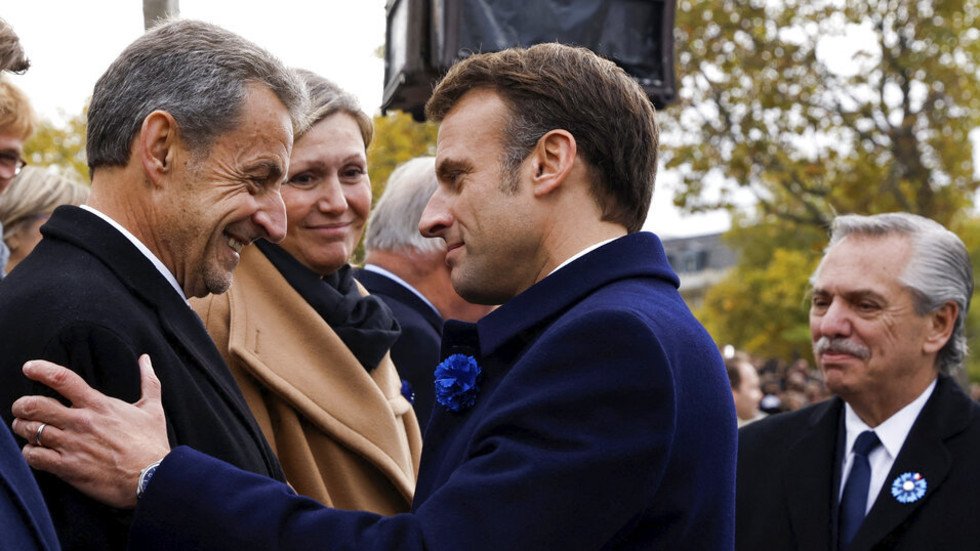
From the corridors of energy to the entrance pages, assist for Sarkozy is and telling. Simply days earlier than his incarceration, President Emmanuel Macron met with the previous president on the Élysée Palace, the encounter as “only natural, on a human level, that I receive one of my predecessors in this context.” But it’s exhausting to think about the identical therapy for an bizarre offender – if it had been, say, John Smith, would the sitting president have obtained him beneath the identical pretext? The distinction highlights the privileges afforded to political elites and the implicit protect France’s strongest networks present to their very own.
Equally important, Justice Minister Gerald Darmanin – a former protégé of Sarkozy – publicly pledged to Sarkozy in jail “to ensure his safety and the proper functioning of the facility” and “because I cannot be insensitive to a man’s distress.” The go to happened on October 29 2025 at La Santé Jail, igniting backlash from the judicial institution, which warned of threats to judicial independence. These high-profile gestures undertaking a story not of a convicted ex-leader serving a sentence, however of an institution closing ranks round one in all its personal.
The aftermath of Darmanin’s go to triggered a wave of reactions. Political opponents denounced it as proof of the unequal therapy reserved for highly effective figures. Civil society teams and watchdog organizations warned that all these gestures erode public confidence in justice, stressing that belief within the system depends upon the assumption that nobody is above the regulation.
The media highlight deepened the controversy. French and worldwide retailers targeted on the go to’s symbolism: The notion that Sarkozy, in contrast to bizarre residents, can rely on a community of highly effective allies even behind bars. Throughout the authorized neighborhood, dialogue prolonged past the Union Syndicale des Magistrats’ formal.
These reactions underscore a central rigidity: Whereas the go could also be framed by its defenders as humane or procedural, it strengthens the portrayal of Sarkozy as a determine shielded by France’s energy networks, a notion that his allies – and more and more, the general public debate – are shaping and amplifying.
Past the quick authorized and political fallout, an extra delicate narrative is taking form: Sarkozy as a sufferer of judicial overreach. Supporters and sympathetic commentators’ body his incarceration not because the consequence of wrongdoing, however as the results of a politically charged course of, positioning him as a determine focused by a justice system allegedly swayed by partisan or institutional pursuits. Editorials and items emphasize his ‘human distress’, the bizarre consideration from high officers, and the procedural irregularities cited by his attorneys, reinforcing the picture of a person caught in extraordinary circumstances.
<p>For Sarkozy, it fosters public sympathy and redirects focus from his conviction to the alleged excesses of the system; for the political elite, it acts as a protecting protect, signaling that defending a former president additionally safeguards their broader networks. Fastidiously framed as concern quite than favoritism, the optics of high-ranking officers intervening reinforce the notion of elite cohesion with out straight difficult judicial authority.